
Ashwagandha is the herb most often suggested for adrenal fatigue, and it has been tested in at least 7 randomized trials of stress and cortisol. It lowers cortisol in some 60-day studies, but it does not treat adrenal insufficiency, and some people should avoid it.
Quick Answer: Ashwagandha and Adrenal Fatigue
Ashwagandha is an adaptogenic root that lowered cortisol by about 1.16 micrograms per deciliter across 7 randomized trials, though perceived stress results are mixed. Trials used 240 to 600 mg daily for 8 to 12 weeks. It does not treat adrenal insufficiency, and pregnancy, thyroid disease and liver problems need a doctor first.
Key Takeaways
- 7 randomized trials show lower cortisol; perceived stress results are mixed.
- Trials used 240 to 600 mg daily for 8 to 12 weeks.
- Adrenal insufficiency needs blood tests and doctor-prescribed hormones, not 1 herb.
- Rare liver injury cases appeared 2 to 12 weeks after starting.
- Avoid it in pregnancy; thyroid, autoimmune or 3-month-plus use needs a doctor.
Related Products
Shop Adrenal Support™
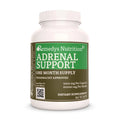
A 2-capsule daily herbal blend of 11 ingredients that includes ashwagandha root alongside licorice and rhodiola. The licorice means a blood pressure check first.
Go to ShopShop Cortisol Surfer™
Ashwagandha is one of 5 listed ingredients here, with L-theanine, rhodiola and hibiscus, plus 200 mg of vitamin C per 2-capsule serving.
Go to ShopIntroduction: Adrenal Fatigue and the Power of Adaptogenic Herbs
Adaptogens are herbs marketed for helping the body cope with stress, and ashwagandha is the most studied of them. Adrenal fatigue itself is not a recognized diagnosis, so the realistic question is whether ashwagandha eases stress and tiredness, which small trials of 60 to 64 adults suggest it may.[1]Adrenal Fatigue — Endocrine Society View source
Understanding Adrenal Fatigue and Chronic Stress
People who search for adrenal fatigue usually describe the same cluster of problems. Most of them fit ordinary burnout, poor sleep, or a medical condition that a doctor can test for:
- Constant tiredness that sleep does not fix
- Brain fog and trouble concentrating
- Feeling wired at night but drained by day
- Low tolerance for everyday stress
Because those symptoms overlap with thyroid disease, anemia, sleep apnea and depression, see a doctor before assuming a gland problem. Stress habits matter most while you wait for answers.
The Role of the HPA Axis in Stress Response
The HPA axis is the feedback loop linking the hypothalamus, the pituitary gland and the adrenal glands.[2]Role of the Hypothalamic-Pituitary-Adrenal Axis in Health and Disease — PubMed View source Under stress the loop ends with the adrenals releasing cortisol:
- The hypothalamus detects a stressor and signals the pituitary
- The pituitary releases ACTH into the blood
- The adrenal glands respond by releasing cortisol
- Rising cortisol feeds back to the brain and turns the signal down
Adaptogenic herbs are thought to act on this loop. That is a hypothesis; human trials mostly measure stress scores and cortisol, not adrenal function.
How Ashwagandha for Adrenal Fatigue Works: Mechanisms and Benefits

Ashwagandha (Withania somnifera) is a root used in Ayurvedic medicine. In human trials it lowered serum cortisol: a meta-analysis of 7 randomized trials found a drop of about 1.16 micrograms per deciliter, while its effect on perceived stress was less certain.[3]Ashwagandha Cortisol and Perceived Stress Meta-Analysis — PubMed View source
Adaptogenic Properties and Hormonal Balance
Three placebo-controlled trials give the clearest picture of what ashwagandha can do in stressed adults:
- 64 adults, 300 mg twice daily for 60 days: stress scale scores and serum cortisol fell more than with placebo (cortisol P=0.0006)[4]Ashwagandha Root Extract for Stress and Anxiety — PubMed View source
- 60 adults, 240 mg once daily for 60 days: morning cortisol and anxiety scores fell more than with placebo[5]Ashwagandha Stress-Relieving Study — PubMed View source
- 60 adults, 250 or 600 mg a day for 8 weeks: cortisol and perceived stress fell at both doses, and sleep quality improved[6]Ashwagandha Root Extract in Healthy Adults Under Stress — PubMed View source
The authors of the 240 mg trial suggest the herb may act by moderating the HPA axis, but larger studies are still needed. These trials enrolled stressed but otherwise healthy adults, not people diagnosed with adrenal insufficiency.
What the evidence does not show. No trial shows that ashwagandha repairs the adrenal glands, raises low cortisol, or cures "adrenal fatigue." Treat claims of "balancing" hormones as unproven.
Boosting Immune and Thyroid Function with Ashwagandha
Ashwagandha has been studied for thyroid hormones more than for immunity. In a trial of 50 people with subclinical hypothyroidism, 600 mg daily for 8 weeks improved TSH, T3 and T4 compared with placebo, which is also why it is a concern for people with thyroid disease.[7]Ashwagandha in Subclinical Hypothyroid Patients — PubMed View source
Immune System Support and Inflammation Reduction
Most immune findings come from lab and animal research. Human evidence is thin, so ashwagandha should not be relied on to prevent infections or lower inflammation.
- Animal and cell studies suggest immune-modulating effects
- Large human trials on infections or inflammation are lacking
- Immunosuppressant medicines may interact, so ask your prescriber
Enhancing Thyroid Activity and Metabolic Health
Because ashwagandha can change thyroid hormone levels, the NIH does not recommend it for people with autoimmune or thyroid disorders and lists thyroid medicine among possible interactions.[8]Ashwagandha — NCCIH View source
- Hyperthyroidism or Graves disease: avoid unless your endocrinologist agrees
- Hypothyroidism on levothyroxine: ask your doctor and recheck thyroid labs if you start
- Hashimoto thyroiditis: an autoimmune condition, so the autoimmune caution applies
Integrating Ashwagandha into Your Adrenal Health Regimen
A sensible plan starts with a doctor visit, one product, and a trial-based dose of 240 to 600 mg of root extract a day for 8 to 12 weeks. The NIH describes ashwagandha as possibly safe for up to 3 months, and long-term safety is not established, so plan a review point rather than open-ended use.
Lifestyle Adjustments for Stress and Energy Management
Ashwagandha will not offset a schedule that keeps stress high. Work on the root causes of your tiredness at the same time:
- Keep a fixed wake time and aim for 7 to 9 hours in bed
- Move daily at a conversational pace, such as walking or yoga
- Cut back on late caffeine if you feel wired at night
- Schedule one fixed break in the afternoon
Effective Dosage, Forms, and Administration Options
Doses vary because extracts vary. The table compares what the trials above used with the label of our own ashwagandha capsules.
| Form | Amount | Where it comes from |
|---|---|---|
| Full-spectrum root extract | 300 mg twice daily (600 mg a day), 60 days | 64-adult trial |
| Standardized extract | 240 mg once daily, 60 days | 60-adult trial |
| Aqueous root extract | 250 or 600 mg a day, 8 weeks | 60-adult trial |
| Remedy's Nutrition ashwagandha capsule | 1,000 mg of ashwagandha per vegan capsule, 1 capsule daily, 60 capsules | Label does not print a withanolide percentage, so it is not directly comparable with trial extracts |
Because the label shows root weight rather than an extract strength, treat any capsule as a starting point and ask your doctor or pharmacist about dose. Take it with food if it upsets your stomach, and note drowsiness before driving.
Scientific Research and Evidence on Ashwagandha

The research is encouraging but small: most trials enrolled 50 to 100 adults and lasted 8 to 12 weeks. Two meta-analyses reach different conclusions about perceived stress, one reporting a significant reduction across 9 trials and 558 patients, the other none.[9]Ashwagandha on Stress and Anxiety Systematic Review — PubMed View source
KSM-66 vs. Sensoril: Which Ashwagandha Extract Is Better?
Brand-name extracts such as KSM-66, Sensoril and Shoden have each been tested in separate small trials, at different doses and in different populations. The trials cited here cannot rank one brand above another.
- Choose a product that names the extract type and shows an amount per capsule
- Prefer a product that was tested by an independent lab
- Do not assume a higher milligram number means a stronger effect
Clinical Studies Highlighting Efficacy and Safety
Trial dropouts for side effects were low and events were usually mild. Rare serious problems exist, however: a case series of 5 patients described liver injury that began 2 to 12 weeks after starting ashwagandha, with liver tests normalizing within 1 to 5 months in four of them.[10]Ashwagandha-Induced Liver Injury Case Series — PubMed View source
Precautions and Individual Response Considerations
Some people feel sleepy; a few feel overstimulated or get an upset stomach. Stop the supplement and see a doctor if you notice yellow skin or eyes, dark urine, or severe itching.
Long-term trials are lacking, so avoid open-ended use. A common cautious plan is 8 to 12 weeks, then a review with your clinician.
Complementary Natural Supplements and Adaptogens for Adrenal Support
Ashwagandha is often paired with other supplements, but pairing multiplies interactions rather than benefits. Rhodiola is the one other adaptogen with a trial in stress-related fatigue: 60 people took 576 mg of a standardized extract daily for 28 days, and burnout scores improved more than with placebo.[11]Rhodiola Rosea SHR-5 in Stress-Related Fatigue — PubMed View source
| Supplement | What is known | Main caution |
|---|---|---|
| Rhodiola | One 28-day trial in stress-related fatigue; NIH rates evidence as insufficient[12]Rhodiola — NCCIH View source | Can cause dizziness or insomnia |
| Magnesium | Helpful when intake is low | Upper limit is 350 mg a day from supplements |
| B vitamins | Correct a deficiency; extra does not raise energy | Do not exceed label doses |
How to Integrate Multiple Supplements Safely
- Start with one product and wait 8 weeks before adding another
- Pair any herb with daily stress management techniques
- Bring every label to your doctor or pharmacist
- Avoid duplicating the same herb across products
- Stop any product that makes you feel worse
Who Should Be Careful With Ashwagandha
Ashwagandha is not for everyone, and most of the cautions come from the NIH and from published case reports. Talk to a doctor first if you are in any of these 6 groups, and tell any surgeon you use it.
- Pregnant or breastfeeding: should be avoided
- Thyroid disease or thyroid medicine: it can change thyroid hormone levels
- Autoimmune disease or immunosuppressants: the NIH advises against use with autoimmune disorders
- Sedatives, anti-seizure, diabetes or blood pressure medicines: it may add to their effects
- Liver disease or past liver injury: rare liver injury has been reported
- Scheduled surgery: the NIH lists the time before surgery as a reason to avoid it
Frequently Asked Questions
How does ashwagandha help with adrenal fatigue? +
Adrenal fatigue is not a recognized diagnosis, but ashwagandha has lowered cortisol and stress scores in trials of 60 to 64 stressed adults. It may moderate the HPA axis, the brain-to-adrenal loop. It has not been shown to repair or restore the adrenal glands.
How long does ashwagandha take to work for adrenal fatigue? +
Most trials measured results after 8 to 12 weeks. Some people notice calmer evenings or better sleep in 2 to 4 weeks. If nothing changes after 12 weeks, stop and review your symptoms with a doctor rather than raising the dose.
What is the best dose of ashwagandha for adrenal support? +
Trials used 240 to 600 mg a day of root extract for 8 to 12 weeks. Higher is not better. Check the label for an extract amount, not only a powder weight, and start at the low end.
Can ashwagandha raise cortisol instead of lowering it? +
Trials in stressed adults show lower cortisol on average, with a drop of about 1.16 micrograms per deciliter across 7 trials. No trial shows it raises low cortisol. If you suspect low cortisol, ask your doctor for a morning blood test.
Is ashwagandha safe to take long-term? +
Long-term safety is not established. The NIH says it may be safe for up to 3 months. Rare liver injury has been reported 2 to 12 weeks after starting, so stop it and call a doctor if you get yellow skin, dark urine or severe itching.
Can I take ashwagandha with other adrenal supplements? +
Ask first. Combining 2 or more herbs can duplicate effects, and ashwagandha may add to sedatives or change thyroid readings. Add one product at a time, 8 weeks apart, and bring every label to your pharmacist.
What should you never mix with ashwagandha? +
Check with your doctor before combining it with any of 5 drug types: sedatives, anti-seizure medicine, thyroid medicine, immunosuppressants, or diabetes and blood pressure drugs. Also tell your surgeon before any planned procedure.
Is it good to take ashwagandha before bed? +
Some people take it in the evening because it can cause drowsiness, and a 2019 trial reported better sleep quality at 250 and 600 mg a day. Others find it energizing. Try it with dinner for 1 week and keep whichever time suits you.
Why don't doctors recommend ashwagandha? +
Common reasons are limited long-term data (most trials last 8 to 12 weeks), published liver injury case reports, possible thyroid and drug interactions, and variable product quality. Tell your doctor before you start so they can monitor you.
Related Reading
- Adrenal Fatigue Symptoms and Diagnosis
- How to Choose an Adrenal Supplement
- Licorice Root for Adrenal Support: Benefits and Risks
- Rhodiola Rosea for Adrenal Fatigue
Related Products
Shop Adrenal Support™
A broader blend where ashwagandha sits beside 10 other herbs and amino acids; amounts per herb are not printed. 60 vegan capsules, 30 servings.
Go to ShopShop Cortisol Surfer™
For people who want ashwagandha together with L-theanine and vitamin C in a single serving: 60 vegan capsules and no licorice root in the formula.
Go to Shop