
Adrenal glandulars and adaptogens are 2 supplement types: dried animal adrenal tissue and plant extracts such as ashwagandha. Small trials of about 60 adults support some adaptogens for stress, while the Endocrine Society warns that adrenal hormone supplements can suppress your own glands.
This guide compares how each type is made, what the research shows, the safety risks, and who should talk to a doctor before trying either one.
Quick Answer: Adrenal Glandulars vs Adaptogens
Adaptogens have small human trials showing lower stress scores. Adrenal glandulars, made from dried cow or pig adrenal tissue, have little research and may suppress your own adrenal glands, according to the Endocrine Society. Neither treats a recognized condition, so see a doctor if tiredness lasts over 3 weeks.
Key Takeaways
- 2 supplement types are compared: animal-tissue glandulars and plant adaptogens.
- Glandulars carry 1 key risk: hormone content can suppress your own adrenals.
- Ashwagandha lowered cortisol in 3 placebo-controlled trials of about 60 adults.
- Rhodiola improved burnout scores in a 28-day trial of 60 adults.
- Fatigue lasting over 3 weeks needs a doctor, not a supplement.
Related Products
Shop Adrenal Support™
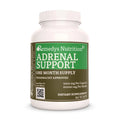
A plant-based, vegan blend of 11 ingredients, including ashwagandha and rhodiola, with no animal adrenal tissue.
Go to ShopShop Cortisol Surfer™
Ashwagandha, L-theanine, rhodiola, and hibiscus plus 200 mg vitamin C per 2 capsules; no animal-derived ingredients listed.
Go to ShopIntroduction
Many people reach for supplements when stress and tiredness pile up. Two popular choices are products made from animal adrenal tissue and herbal extracts called adaptogens. They are marketed with similar promises, but they differ greatly in evidence and risk.
The Endocrine Society states that no scientific proof supports "adrenal fatigue" as a true medical condition, and that no test can detect it.[1]Adrenal Fatigue — Endocrine Society View source Persistent fatigue has real causes that doctors can find, and the table below shows how chronic stress can affect the body.
| Body system | How chronic stress can show up | Common symptoms |
|---|---|---|
| Cardiovascular | Higher heart rate and blood pressure | Palpitations, chest tightness |
| Immune | Less resistance to infection in some people | Frequent colds, slow recovery |
| Nervous | Sleep disruption and mood changes | Insomnia, irritability, anxiety |
| Digestive | Changes in gut function and appetite | Upset stomach, appetite shifts |
Tiredness that does not lift can come from thyroid disease, anemia, sleep apnea, depression, or true adrenal insufficiency, so testing comes first. For habits that help day to day, see our guide to lifestyle and natural remedies for adrenal recovery.
Understanding Adrenal Glandulars
An adrenal glandular supplement is made from the dried adrenal gland of an animal, usually a cow or pig, ground into a capsule. It is sold as "nutritional support," but it is a tissue product whose hormone content is not standardized. It is not suitable for vegans or vegetarians.
What the Endocrine Society warns
The Endocrine Society cautions that supplements are not regulated like medicines and that a label does not guarantee what is in the bottle. It also warns that taking adrenal hormone supplements when they are not needed can suppress the adrenal glands, and that stopping them can then trigger adrenal crisis, a life-threatening emergency.
Pros and cons of glandulars
| Reported upside | Documented downside | Key consideration |
|---|---|---|
| Some users report more energy and focus | May cause jitteriness or overstimulation | Not suitable for vegan diets |
| Marketed as "direct nutritional support" | Hormone content is not standardized | Label accuracy is not guaranteed |
| Easy to take as capsules | Can suppress natural adrenal output if hormones are present | Never stop suddenly after long use without medical advice |
- How much cortisol, DHEA, or other hormone the capsule actually contains
- Which animal, which gland part, and which country it came from
- Whether the batch was tested for contaminants
- How long it is safe to take before the glands could be affected
Controlled trials of adrenal glandular products for fatigue are hard to find in the published literature, so the "boost" users describe cannot be separated from placebo effects or stimulant ingredients.
Exploring Adaptogenic Herbs for Adrenal Support

Adaptogens are plants described as increasing the body's non-specific resistance to stress. Clinical trials suggest some of them have an anti-fatigue effect and may improve attention under mental strain, while much of the mechanism data comes from animal and cell studies.[2]Effects of adaptogens on the central nervous system — Pharmaceuticals (Basel) View source
Key adaptogenic herbs
- Ashwagandha (Withania somnifera): the best-studied adaptogen for perceived stress and sleep, with small placebo-controlled trials
- Rhodiola: studied for stress-related fatigue and mental performance, with mixed overall evidence
- Eleuthero (Siberian ginseng): traditionally used for stamina; modern human evidence is limited
- Licorice root: sometimes included for "adrenal support," but it can raise blood pressure and lower potassium[3]Licorice Root — NCCIH View source
- Rehmannia: a Traditional Chinese Medicine herb with little controlled human research for stress
Their appeal is a low day-to-day risk compared with hormone products, but they are not risk-free. The ashwagandha and adrenal fatigue guide covers dosing, trials, and cautions in detail.
Adrenal Glandular vs Adaptogens: Key Comparison
The two supplement types differ in source, mechanism, and evidence. Glandulars are animal tissue that may carry hormones, while adaptogens are plant extracts studied for stress symptoms. Neither has been shown to repair adrenal glands, because healthy adrenal glands do not need repair.
| Feature | Adrenal glandulars | Adaptogenic herbs |
|---|---|---|
| Source | Dried cow or pig adrenal tissue | Plant roots and leaves |
| Claimed action | "Direct nutritional support" for the glands | Raise resistance to stress |
| Human evidence | Very limited controlled research | Small placebo-controlled trials of 60 to 80 adults |
| Main risk | Possible hormone content and adrenal suppression | Drug interactions; rare liver injury (ashwagandha) |
| Vegan-friendly | No | Yes |
| Regulation | Dietary supplement; label not guaranteed | Dietary supplement; label not guaranteed |
For a plant-based label example, Remedy's plant-based adrenal support blend is a vegan capsule formula with 11 ingredients, including ashwagandha, rhodiola, eleuthero, and licorice root, taken as 2 capsules daily. It contains no animal adrenal tissue.
Impact on Stress and Cortisol Regulation
Cortisol is released when the brain senses a threat. The hypothalamus signals the pituitary, which signals the adrenal glands, and rising cortisol shuts the signal off again. Short bursts are healthy, and long periods of unrelieved stress keep the system active.
What the cortisol data show
In an 8-week trial of 60 stressed adults, ashwagandha extract at 250 or 600 mg a day lowered serum cortisol and perceived stress compared with placebo.[4]Adaptogenic and anxiolytic effects of ashwagandha root extract — Cureus View source A 60-day trial of 240 mg a day also found lower morning cortisol and anxiety scores.[5]Stress-relieving actions of an ashwagandha extract: a randomized trial — Medicine (Baltimore) View source
These results are encouraging, but the studies are small, short, and often industry-funded. Cortisol is also not a proven marker of "adrenal fatigue," so a lower number does not prove a person feels or functions better.
Why "bidirectional" is only a theory
- Adaptogens are often said to raise low cortisol and lower high cortisol
- Human trials mostly measured stress scores and lowered cortisol in stressed volunteers
- No trial has shown that an adaptogen restores low cortisol in a person with a diagnosed disorder
Sleep matters as much as any capsule here. After one night of sleep loss, evening cortisol was 37 to 45% higher in a controlled study of young men.[6]Sleep loss and next-evening cortisol levels — Sleep View source Fixing sleep is a cheaper first move than any supplement.
Role of Vitamins and Minerals in Adrenal Health

The adrenal glands make cortisol from cholesterol using enzymes that need vitamins and minerals, so deficiencies matter. Food usually covers the need: the adult RDA is 75 to 90 mg of vitamin C and 310 to 420 mg of magnesium.[7]Vitamin C Fact Sheet for Health Professionals — NIH Office of Dietary Supplements View source[8]Magnesium Fact Sheet for Health Professionals — NIH Office of Dietary Supplements View source
| Nutrient | Adult daily need | Food sources |
|---|---|---|
| Vitamin C | 75 mg (women), 90 mg (men) | Peppers, citrus, kiwi, broccoli |
| Magnesium | 310 to 320 mg (women), 400 to 420 mg (men) | Pumpkin seeds, spinach, almonds, beans |
| B vitamins (B5, B6, B12) | Varies by vitamin | Eggs, fish, poultry, legumes, whole grains |
High doses of B vitamins can feel overstimulating in sensitive people, and magnesium supplements can cause diarrhea. Testing for B12 deficiency, anemia, and thyroid disease is more useful than guessing.
Some advice online urges people with tiredness to add extra salt because of "low aldosterone." That is only appropriate if a doctor has diagnosed a condition that causes sodium loss. For people with high blood pressure, kidney disease, or heart disease, more salt can be harmful.
Safety Considerations and Supplementation Guidelines
Any supplement can interact with medicines, and "natural" does not mean harmless. NCCIH notes that ashwagandha may be safe for up to 3 months but is not recommended for people with thyroid or autoimmune disorders, and that liver injury has been reported.[9]Ashwagandha — NCCIH View source For a broader review, read are adrenal supplements safe.
Hormone supplements need testing and supervision
DHEA and pregnenolone are hormones, not herbs. They can convert into androgens and estrogens and cause acne, hair loss, or mood changes, and the right dose depends on blood tests. Do not start them on your own.
| Supplement type | Testing advised before use | Main safety concerns |
|---|---|---|
| DHEA or pregnenolone | Yes, by a doctor | Hormonal side effects; interference with other medicines |
| Adrenal glandulars | Yes, discuss with a doctor | Possible hormone content; adrenal suppression |
| Ashwagandha | Thyroid and liver check if risk factors | Thyroid, pregnancy, liver injury, sedative interactions |
| Rhodiola | Not usually | Antidepressant and losartan interactions |
Sensitive people sometimes react to even gentle herbs with jitteriness or stomach upset. Start one product at a time, use the label dose, and stop if symptoms appear.
Scientific Research and Evidence-Based Insights
The best human data for adaptogens are small randomized trials of 60 to 80 adults. They show lower stress scores with ashwagandha and some benefit for burnout-type fatigue with rhodiola, but sample sizes are small and follow-up is short.
Ashwagandha
In a 60-day trial of 64 adults with chronic stress, 300 mg of a full-spectrum root extract twice daily reduced stress scale scores and serum cortisol versus placebo, with mild side effects.[10]Ashwagandha root extract for stress and anxiety: a randomized trial — Indian J Psychol Med View source
Rhodiola
In a 28-day trial of 60 adults with stress-related fatigue, a standardized SHR-5 extract improved burnout scores and attention.[11]Rhodiola rosea SHR-5 extract in stress-related fatigue — Planta Med View source A review of 11 trials, however, called the evidence contradictory and prone to bias.[12]Rhodiola rosea for physical and mental fatigue: a systematic review — BMC Complement Altern Med View source
- The trials cited here enrolled stressed or fatigued volunteers, not people with confirmed adrenal insufficiency
- Most trials last 4 to 12 weeks, so long-term effects are unknown
- Many trials use branded, standardized extracts that differ from store products
One more point deserves honesty. In the rhodiola trial, the placebo group also improved on burnout, depression, and attention scores, which shows how strong expectation effects are in fatigue research.
- Could a blood test explain my tiredness (thyroid, anemia, B12, blood sugar)?
- Do any of my medicines interact with this product?
- Is a supplement even needed, or are sleep and stress the bigger lever?
- How long should I try it, and what would tell us it is not working?
- Should I stop it before any surgery or lab test?
Personalized Approaches and Integrative Strategies

The best plan starts with a diagnosis. If tiredness is unexplained, ask for blood tests, then build sleep, food, movement, and stress habits that you can sustain. Supplements are optional extras, not the foundation.
Sensitive people should add one product at a time and increase slowly. For help comparing labels, our guide on how to choose an adrenal supplement lists what to check.
| Situation | Reasonable first step | Notes |
|---|---|---|
| Everyday stress and low energy | Sleep, meals, movement; adaptogen optional | Check medicines and conditions first |
| Fatigue lasting over 3 weeks | Doctor visit and blood tests | Rule out thyroid, anemia, sleep apnea, depression |
| Ongoing illness such as fibromyalgia or chronic infection | Treat the underlying condition | Supplements are secondary |
| Sensitivity to supplements | Start with a small dose, one product at a time | Stop if symptoms appear |
Who Should Be Careful With Glandular and Adaptogen Supplements
Anyone with a medical condition or a prescription should check with a clinician before using these products. Take particular care in the situations below.
- Current or past steroid use, or Addison's disease: glandulars may affect adrenal testing and treatment
- Pregnancy and breastfeeding: avoid ashwagandha, and rhodiola safety is unknown[13]Rhodiola — NCCIH View source
- Thyroid disease or autoimmune disease: ashwagandha is not recommended and may interact with thyroid medicine
- Antidepressants, sedatives, or blood pressure medicine: interactions have been reported[14]Adverse events from adaptogen and antidepressant interactions — Front Pharmacol View source
- Liver disease: ashwagandha has been linked to rare liver injury[15]Ashwagandha-induced liver injury: a case series — Liver Int View source
- Vegetarians and vegans: glandular products are animal-derived
Frequently Asked Questions
What is an adrenal glandular supplement? +
It is a capsule made from dried and powdered cow or pig adrenal tissue, usually taken 1 to 3 times daily. Content is not standardized, and some products may contain hormones or hormone precursors. Regulators treat them as dietary supplements, so labels are not guaranteed, and the Endocrine Society warns that adrenal hormone supplements can suppress the adrenal glands.
What are adaptogenic herbs and how do they work? +
Adaptogens are plants described as raising resistance to stress. Ashwagandha and rhodiola are the best known. Small trials of about 60 adults show lower stress scores, but the mechanisms are mostly from animal and cell studies, and evidence for treating any disease is limited.
Are adrenal glandulars safe? +
Safety is poorly documented. Concerns include unlisted hormone content, suppression of your own adrenal output with long use, and variable quality. The Endocrine Society warns that stopping adrenal hormone supplements can trigger adrenal crisis, which needs emergency care (call 911), so ask a doctor before starting and never stop long-term use suddenly.
Who should consider adrenal glandulars over adaptogens? +
Almost nobody needs them. True adrenal insufficiency is treated with prescription hydrocortisone-type medicine, not supplements, and tests are done in blood. If 8 to 12 weeks of lifestyle changes leave you exhausted, see a doctor for testing instead of switching products.
Can I take both adrenal glandulars and adaptogens? +
Combining them makes side effects harder to trace and is not studied. If you still want to try, tell a doctor first, add only 1 product at a time, and stop if you notice a racing heart, poor sleep, or mood changes. Do not combine them with steroid medicines.
Which is better: adrenal glandulars or adaptogens? +
Adaptogens have more human research, with small trials of 60 to 80 adults showing lower stress scores. Glandulars have almost none and carry a hormone-suppression warning. Neither is proven to treat adrenal fatigue, which is not a recognized diagnosis, so persistent fatigue needs a medical work-up.
Can ashwagandha help with adrenal fatigue? +
Adrenal fatigue is not a recognized diagnosis, but ashwagandha has lowered stress scores and cortisol in trials of about 60 adults over 8 to 9 weeks. NCCIH says it may be safe for up to 3 months. Avoid it in pregnancy and with thyroid or autoimmune disease.
What adaptogens lower cortisol levels? +
Ashwagandha has the most data: 3 placebo-controlled trials of 60 to 64 adults reported lower serum or morning cortisol. Rhodiola changed the cortisol awakening response in one burnout trial of 60 people. Results come from stressed volunteers, not from people with diagnosed cortisol disorders.
What's the difference between nootropics and adaptogens? +
Nootropics are substances taken to improve memory, focus, or learning, such as caffeine or L-theanine. Adaptogens are marketed to raise stress resistance and reduce fatigue. The categories overlap, since rhodiola is studied for both, but neither term is a medical classification, and typical trials last only 4 to 12 weeks.
What autoimmune diseases cause low cortisol levels? +
Autoimmune Addison's disease is a common cause of primary adrenal insufficiency, where the immune system damages the adrenal cortex. It causes fatigue, weight loss, and low blood pressure, and is diagnosed with blood tests, including a 2-step ACTH stimulation test. It needs prescription hormone replacement, not supplements.
Related Reading
- Adrenal fatigue symptoms and diagnosis: the complete overview
- Rhodiola rosea for adrenal fatigue
- Licorice root for adrenal support: benefits and risks
Related Products
Shop Adrenal Support™
A plant-based, vegan blend of 11 ingredients, including ashwagandha and rhodiola, with no animal adrenal tissue.
Go to ShopShop Cortisol Surfer™
Ashwagandha, L-theanine, rhodiola, and hibiscus plus 200 mg vitamin C per 2 capsules; no animal-derived ingredients listed.
Go to Shop