
Adrenal supplements are sold for tiredness and stress, yet no supplement category has been shown to repair the adrenal glands. This guide gives you 5 plain label checks, the 240 to 600 mg ashwagandha doses trials tested, and the point where a blood test should come before any capsule.
Quick Answer: How to Choose an Adrenal Supplement
Choose an adrenal supplement by checking five things: a doctor has ruled out other causes of fatigue, every ingredient lists its own dose, doses match human trials (ashwagandha 240 to 600 mg a day), an independent lab tests the product, and you start with one product for 8 weeks.
Key Takeaways
- Adrenal fatigue is not a diagnosis; test for 5 common causes first.
- Look for doses printed per ingredient; trials used 240 to 600 mg ashwagandha.
- Proprietary blends hide per-herb amounts, so you cannot compare them with 1 trial.
- Give any product 8 weeks, and stop it if symptoms get worse.
- See a doctor first if pregnant, or on 1 or more daily medicines.
Related Products
Shop Adrenal Support™
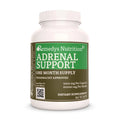
An 11-ingredient herbal blend (licorice root, ashwagandha, rhodiola and more) taken as 2 vegan capsules a day. It contains licorice, so read the cautions below first.
Go to ShopShop Cortisol Surfer™
A 2-capsule daily formula with 200 mg of vitamin C plus ashwagandha, L-theanine, rhodiola and hibiscus. Capsules are vegan, with 30 servings per bottle.
Go to ShopOverview of Adrenal Fatigue and Its Impact on Health
Adrenal fatigue is a popular name for tiredness, brain fog and low stress tolerance, but it is not a medical diagnosis. The Endocrine Society says no scientific proof supports it as a true condition.[1]Adrenal Fatigue — Endocrine Society View source A 2016 review of 58 studies called it unsubstantiated.[2]Adrenal Fatigue Does Not Exist: A Systematic Review — PubMed View source
The symptoms people feel are real, though, and they deserve a proper work-up. Fatigue is also the most common complaint in true adrenal insufficiency, which is a different and serious condition.[3]Adrenal Insufficiency and Addison Disease — NIDDK View source
Symptoms That Send People Looking for Supplements
People usually describe a mix of the following before they start shopping for a product:
- Deep tiredness that sleep does not fix
- Brain fog and trouble concentrating
- Feeling wired at night but exhausted by day
- Cravings for salt or sugar
- Feeling more anxious or overwhelmed than usual
Each of these also fits thyroid disease, anemia, sleep apnea, depression, vitamin B12 deficiency and diabetes. A doctor can check most of them with routine blood tests, which is why testing comes before supplements. Our guide to testing for adrenal fatigue with a doctor lists what to ask for.
What Cortisol Normally Does
Cortisol is the main stress hormone made by the adrenal glands. It is normally highest in the morning and lower by evening, which is why labs time blood draws for the morning.[4]Cortisol Test — MedlinePlus View source
Supplement labels often promise to "balance" this rhythm. No product has been shown to do that in people with ordinary stress-related tiredness, so treat that wording as marketing.
How Chronic Stress Influences Adrenal Gland Function
Long-term stress keeps the HPA axis, the brain-to-adrenal signaling loop, active for months. A meta-analysis of chronic-stress studies found cortisol patterns depend on the type of stressor and on timing: output is high at the start and can fall as time passes.[5]Chronic Stress and the HPA Axis in Humans — PubMed View source
- Cortisol rises at stressor onset, then often drifts lower over time
- Threats that feel uncontrollable are linked with a high, flat daily curve
- A person's own response to the situation shapes the result
That variability is the first reason one supplement cannot fit everyone. Two people with the same tiredness can have opposite cortisol patterns, or completely normal ones.
Why Hormone Language on Labels Misleads
Labels often split people into "high cortisol" and "low cortisol" types. In practice that sorting needs a clinician and a validated test, and home saliva kits are not validated for diagnosing adrenal fatigue, as the Endocrine Society and the 2016 review above both note.
Choosing a product by a self-assigned "stage" is a guess. A safer way to choose is to start with the safety profile and the evidence for a single ingredient.
How to Choose Adrenal Supplement

Five checks separate a defensible adrenal supplement from a risky one: a doctor has ruled out other causes, each ingredient lists its own dose, doses match human trials, an independent lab tests the product, and you can name the reason you are taking each herb.
- Rule out other causes first. Ask for thyroid, blood count, glucose and B12 tests, and a sleep apnea screen if you snore.
- Read the dose of every ingredient. A blend total such as 2,000 mg does not tell you how much of any single herb you get.
- Compare doses with trials. The next sections list what researchers used.
- Look for independent testing. A USP or NSF seal means a lab checked identity and contaminants; it does not prove the herbs work.
- Start with one product. Add nothing else for 8 weeks so you can tell what is helping or hurting.
The NIH explains why this matters: a supplement label may not match what is in the bottle, and the FDA is not authorized to review supplements for safety and effectiveness before they are sold.[6]Using Dietary Supplements Wisely — NCCIH View source
A Worked Example With Two Real Labels
Here is how those checks apply to two formulas we sell. Both list one combined total per serving, which is typical for blends:
| Product | Serving | What the label lists | What it does not list |
|---|---|---|---|
| Adrenal Support capsules | 2 vegan capsules, 30 servings | One 2,000 mg blend of 11 ingredients, including licorice root, ashwagandha, rhodiola and ginkgo | The amount of each herb |
| Cortisol Surfer | 2 vegan capsules, 30 servings | Vitamin C at 200 mg, plus a blend of ashwagandha, L-theanine, rhodiola and hibiscus | The amount of each herb in the blend |
The point is not that blends are bad. It is that you cannot compare a blend with a trial dose, so you should treat it as a general formula and keep your expectations modest.
Exploring Supplement Options for Adrenal Support
Adrenal-marketed supplements fall into three groups: adaptogenic herbs, basic vitamins and minerals, and specialty nutrients. Only a few of them have randomized trials in stressed or fatigued people, and those trials measured stress scores and cortisol rather than adrenal function itself.
Herbal Supplements: Ashwagandha, Rhodiola and Ginseng
Adaptogenic herbs are the best-studied group. In a 60-day trial of 64 chronically stressed adults, 300 mg of ashwagandha root extract twice a day lowered stress scores and serum cortisol versus placebo.[7]Ashwagandha Root Extract for Stress and Anxiety — PubMed View source
A rhodiola trial gave 60 people with stress-related fatigue 576 mg of a standardized extract daily for 28 days. Burnout scores and the cortisol response to waking improved more than with placebo.[8]Rhodiola Rosea SHR-5 in Stress-Related Fatigue — PubMed View source The NIH still rates the overall evidence for rhodiola as insufficient.[9]Rhodiola — NCCIH View source
Vitamins, Minerals and Specialty Nutrients
- Magnesium: useful if your diet is short on it; the upper limit from supplements is 350 mg a day for adults.[10]Magnesium Fact Sheet for Health Professionals — NIH Office of Dietary Supplements View source
- B vitamins and vitamin C: correct deficiencies, but taking more than you need does not raise energy in people who are not deficient.
- L-theanine: an amino acid from tea used for relaxation; evidence for adrenal outcomes is thin.
| Category | Best-supported use | Main caution |
|---|---|---|
| Adaptogenic herbs | Perceived stress and cortisol in short trials | Liver, thyroid and pregnancy cautions |
| Vitamins and minerals | Correcting a known deficiency | Upper limits for magnesium and vitamin C |
| Specialty nutrients | Relaxation or sleep support | Little adrenal-specific evidence |
Individual responses vary widely. Keep a short log of sleep, energy and mood so you can see whether a product is doing anything at all.
Benefits and Potential Risks of Adrenal Supplements
The realistic upside of an adrenal supplement is modest: lower perceived stress and somewhat better sleep in some people over 8 to 12 weeks. Meta-analyses of ashwagandha trials report lower cortisol, yet one pooled analysis found no clear change in perceived stress, while another did.[11]Ashwagandha, Cortisol and Perceived Stress Meta-Analysis — PubMed View source[12]Ashwagandha on Stress and Anxiety Meta-Analysis — PubMed View source
- Possible gains: calmer mood, easier sleep onset, fewer stress symptoms
- Common side effects: drowsiness, stomach upset, loose stools
- Rarer problems: liver injury, blood pressure changes, thyroid effects
- Not shown: repairing, resetting or "rebuilding" the adrenal glands
Possible Side Effects and Interactions
Ashwagandha has been linked to rare cases of liver injury. In one case series of 5 patients, jaundice and itching started 2 to 12 weeks after beginning the supplement, and liver tests normalized within 1 to 5 months in four of them.[13]Ashwagandha-Induced Liver Injury Case Series — PubMed View source
Stop any product and call your doctor if you notice dark urine, yellow skin or eyes, severe itching, or persistent nausea. For more on side effects, read our guide to whether adrenal supplements are safe.
Hormone-Like Products Are a Different Category
Adrenal glandular extracts and hormone-containing products can interfere with your own hormone production. The Endocrine Society warns that taking adrenal hormones when they are not needed can stop the glands from working and may lead to adrenal crisis.
Understanding Dosages and Delivery Systems

Dose matters more than the delivery system. Ashwagandha trials used root extract at 250 to 600 mg a day for 8 to 12 weeks, and a rhodiola trial used 576 mg a day for 4 weeks.[14]Ashwagandha Root Extract in Healthy Adults Under Stress — PubMed View source
| Ingredient | Dose used in human trials | Length | Note |
|---|---|---|---|
| Ashwagandha root extract | 240 to 600 mg a day | 8 to 12 weeks | Standardized extracts; powder is not equivalent |
| Rhodiola SHR-5 extract | 576 mg a day | 28 days | Single 4-week trial in stress-related fatigue |
| Magnesium (supplement) | Stay under 350 mg a day | Ongoing | Upper limit applies to supplements, not food |
| Adaptogen blends | No trial dose | None | Per-herb amounts are usually not disclosed |
Capsules, Powders and Extract Strength
Capsules are the simplest way to control the dose. Powders and tinctures work too, but amounts are easier to get wrong. The NIH notes that "standardized" does not by itself guarantee quality or consistency, so ask for a certificate of analysis if a brand offers one.
- Fancy delivery claims such as liposomal or "high absorption" have little adrenal-specific evidence
- Spend on a lab-tested product at a trial dose before paying extra for a new format
- Start at the low end of a dose range and wait 7 days before increasing
- Add one new product at a time so side effects are easy to trace
Integrating Supplements with Lifestyle and Dietary Changes

Supplements work best as an add-on to sleep, food and stress habits, because those habits have the strongest evidence for stress-related tiredness. A review of fatigue in primary care recommends regular physical activity such as walking and stretching as part of treating every type of fatigue.[15]Fatigue: An Overview — PubMed View source
- Eat regular meals with protein, fiber and healthy fats to avoid energy dips
- Keep a fixed wake time and aim for 7 to 9 hours in bed
- Walk daily at a conversational pace instead of hard interval training
- Cut back on late caffeine if it makes you feel wired at night
For meal ideas, see our step-by-step diet for adrenal support.
When Lifestyle Is the Main Treatment
If your tiredness began after a clear stressor such as a job change, a new baby or illness, habits are the first lever. Add a supplement only after two weeks of steady sleep and meals, so you can judge its effect on its own.
Who Should Be Careful With Adrenal Supplements
Most adrenal formulas contain several active herbs, so one person's safe product can be another person's risk. Talk to a doctor or pharmacist before starting if any of these 7 situations apply to you.[16]Ashwagandha — NCCIH View source
- Pregnant or breastfeeding: ashwagandha should be avoided; licorice and rhodiola have limited safety data
- Thyroid or autoimmune disease: ashwagandha may affect thyroid hormone levels and interacts with thyroid medicine
- High blood pressure, heart or kidney disease: licorice root can cause serious adverse effects, especially with a high-salt diet[17]Licorice Root — NCCIH View source
- Sedatives, diabetes or blood pressure medicines: ashwagandha may add to their effects
- Blood thinners or surgery planned: some herbs, including ginkgo, can raise bleeding risk, so tell your surgeon before any procedure
- History of liver problems: avoid ashwagandha unless your doctor approves
- Depression or bipolar disorder: stimulating herbs such as rhodiola can worsen mood or sleep
Bring the product label to the appointment. Because blends do not list per-herb amounts, your pharmacist needs the full ingredient list to check for interactions.
Frequently Asked Questions
What type of adrenal supplement is best for me? +
There is no proven best type. Ashwagandha has the most human trials for stress, at 240 to 600 mg a day for 8 to 12 weeks. Rhodiola has fewer trials. Pick a single herb with a printed dose, and check with a doctor first if you take medicine.
What is the difference between adrenal support and adrenal glandular? +
Adrenal support products usually combine 2 or more herbs, vitamins or minerals. Glandulars contain dried animal adrenal tissue and may carry hormone residues. Taking adrenal hormones unnecessarily can suppress your own glands, so glandulars carry more risk than herbal formulas and are not advised without medical advice.
How do I read an adrenal supplement label? +
Check 5 things: each ingredient has its own dose, extracts state their strength, doses match trials (ashwagandha 240 to 600 mg), a USP or NSF seal is present, and allergens are listed. A single blend total, such as 2,000 mg, hides the amount of each herb.
Are expensive adrenal supplements worth it? +
Price does not predict quality. Pay for printed per-ingredient doses and independent testing, not branding. A single herb at a trial dose is more useful than a 2,000 mg blend that lists only a total weight.
How long should I take an adrenal supplement before judging results? +
Give one product 8 weeks, because most trials ran 8 to 12 weeks. Track sleep, energy and stress weekly. If you feel worse at any point, or notice yellow skin or dark urine, stop and contact your doctor.
Can I take multiple adrenal supplements at once? +
It is safer not to. Start one product, wait 8 weeks, then change one thing at a time. Stacking 2 or more herbal products can duplicate ingredients, raise liver and blood pressure risks, and make it impossible to tell what helps.
Do adrenal supplements help lower cortisol? +
Some ashwagandha trials show lower cortisol over 8 to 12 weeks. A 2025 meta-analysis found about 1.16 micrograms per deciliter lower cortisol but no clear change in perceived stress. Lower cortisol on a lab test is not the same as repaired adrenals.
When is the best time of day to take adrenal support supplements? +
Follow the label. Stimulating herbs such as rhodiola are usually taken in the morning or at lunch to avoid sleep problems, while calming ingredients such as ashwagandha are often taken with food in the evening. Keep the timing the same for 8 weeks.
Related Reading
- Adrenal Fatigue Symptoms and Diagnosis
- Best Nutrients and Supplements for Adrenal Health
- Licorice Root for Adrenal Support: Benefits and Risks
- What Is Ashwagandha and How Does It Help Adrenal Fatigue?
Related Products
Shop Adrenal Support™
Our broadest adrenal-focused blend: 60 vegan capsules, 30 servings, and one combined 2,000 mg blend. Check the licorice and ginkgo cautions before you start.
Go to ShopShop Cortisol Surfer™
A formula built around ashwagandha and L-theanine: 60 vegan capsules with vitamin C listed at 200 mg per serving, and no licorice root in it.
Go to Shop