What Is Eucalyptus Essential Oil?
Eucalyptus essential oil is the steam-distilled volatile fraction of Eucalyptus globulus, the Tasmanian blue gum tree introduced from Australia and now grown commercially in Portugal, Spain, China, and South Africa. Roughly 50 kg of fresh leaf yield 1 kg of finished oil, dominated by a single active monoterpene oxide — 1,8-cineole (also called eucalyptol) at 70 to 85% — with smaller fractions of alpha-pinene (8 to 14%) and limonene (3 to 6%). 1,8-cineole thins respiratory mucus, opens airway smooth muscle, and produces a measurable anti-inflammatory effect on the bronchial mucosa.
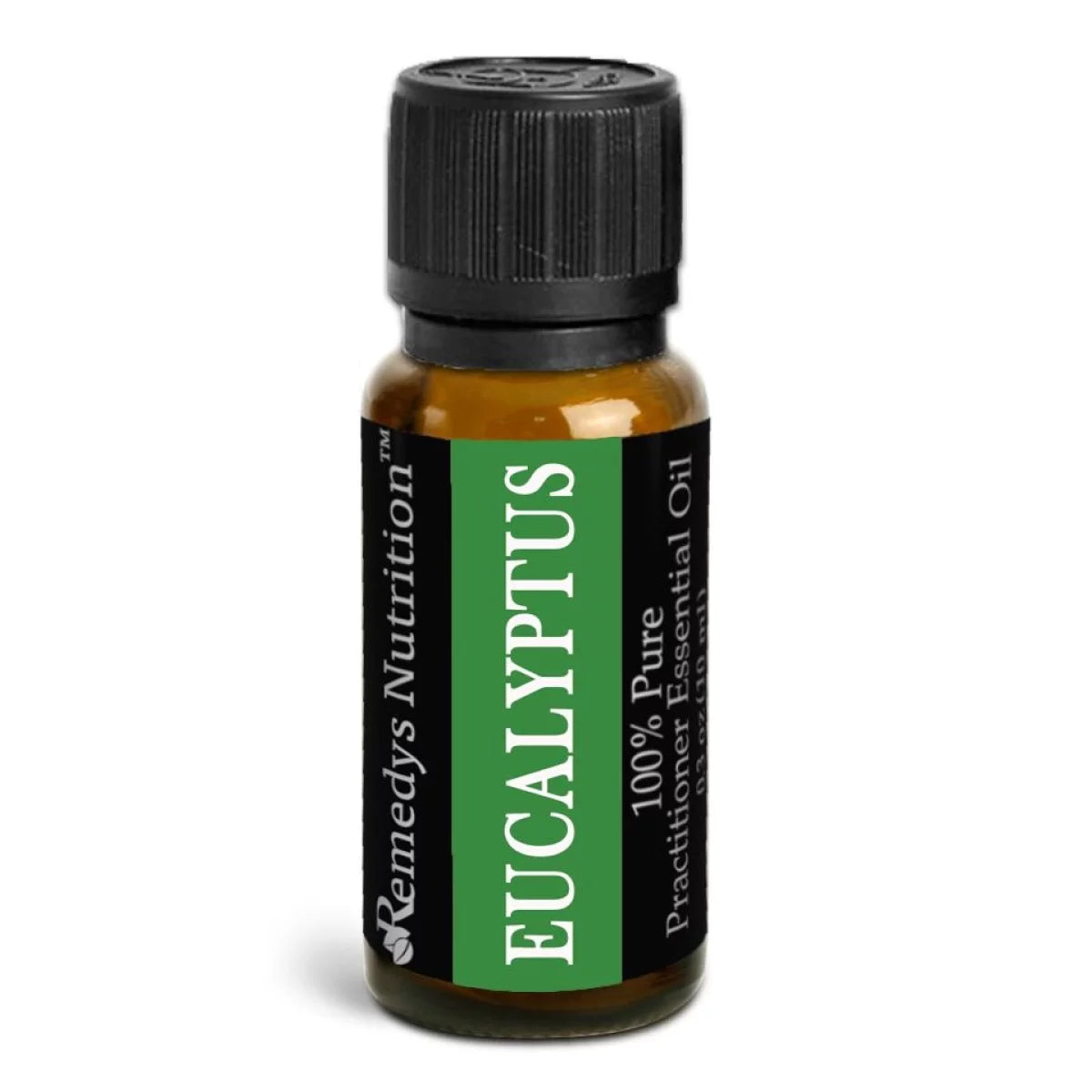
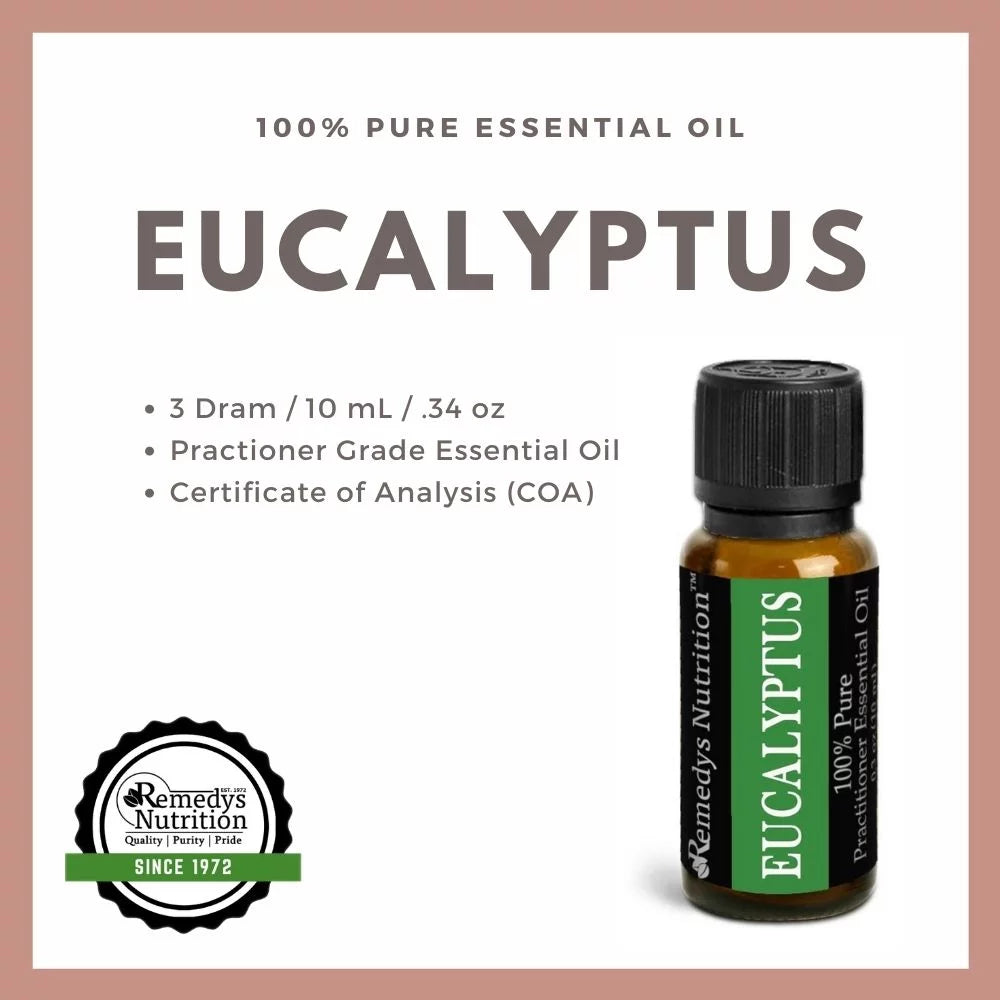
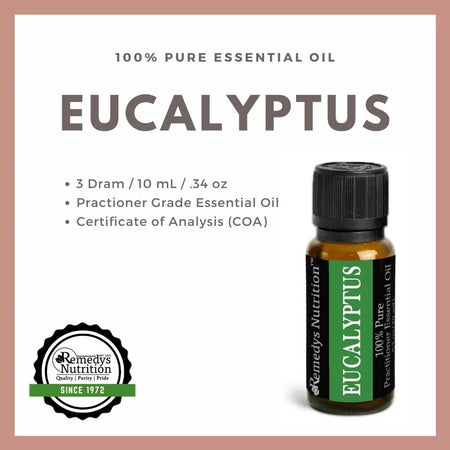
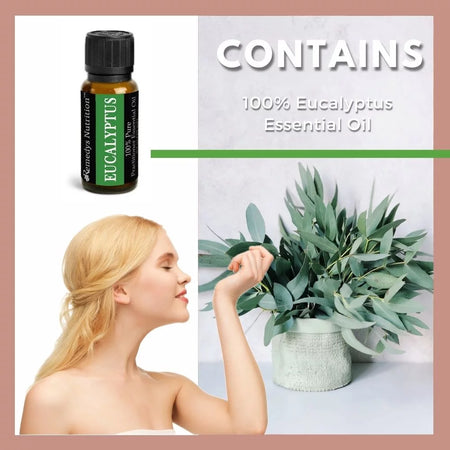
Therapeutic-grade eucalyptus oil from Remedy’s is bottled at 100% purity in 10 ml (3-dram) amber glass to protect the volatile fraction from UV and oxidation, with no carrier oil or fragrance additives.
Eucalyptus Oil Benefits: Clinical Evidence Summary
| Benefit Area |
Key Clinical Finding |
Dose / Method Used |
| Acute Bronchitis |
Cough symptom score dropped 41% at day 4 vs 27% on placebo (Fischer 2014, 242 patients) |
200 mg 1,8-cineole capsule, 3 times daily for 10 days |
| Sinusitis |
Headache, congestion, and pressure scores improved 1.5-fold over placebo at day 4 in acute non-purulent rhinosinusitis (Kehrl 2004, 152 patients) |
200 mg 1,8-cineole capsule, 3 times daily for 10 days |
| Cough and Mucus Clearance |
Mucociliary transport time dropped 23% within 30 minutes of inhalation in 30 healthy adults (Sudhoff 2015) |
Steam inhalation, 4 drops in 500 ml hot water |
| Asthma and COPD Inflammation |
Steroid dose reduction averaged 36% over 12 weeks vs placebo at 200 mg 1,8-cineole 3 times daily (Worth 2009, 247 patients) |
200 mg 1,8-cineole capsule, 3 times daily, 12 weeks |
| Muscle Pain |
Pain scores dropped 32% at 30 minutes post-inhalation vs almond oil control (Jun 2013, 52 knee surgery patients) |
30-minute aroma exposure, 3 times daily |
| Mosquito and Tick Repellence |
Lemon eucalyptus PMD provides 5 to 7 hours of protection — CDC-recognized as an alternative to DEET |
30 to 40% PMD topical formulation |
| Antimicrobial |
Inhibition of MRSA, S. aureus, S. pneumoniae, and H. influenzae in vitro at 0.05 to 0.5% |
0.05 to 0.5% concentration in lab assays |
| Mental Alertness |
Subjective alertness scores rose 18 to 25% on 10 minutes of aroma exposure |
Aromatherapy diffusion, 3 to 4 drops |
- 70 to 85% 1,8-cineole content — the active compound responsible for mucus thinning and bronchodilation
- 41% cough symptom reduction in acute bronchitis vs 27% on placebo across 242 patients in 10-day trial
- 23% faster mucociliary transport within 30 minutes of steam inhalation in 30 healthy adults
- 36% steroid dose reduction in asthma and COPD over 12 weeks at 200 mg 1,8-cineole 3 times daily
- 1.5-fold improvement in sinus headache and pressure vs placebo at day 4 of acute rhinosinusitis
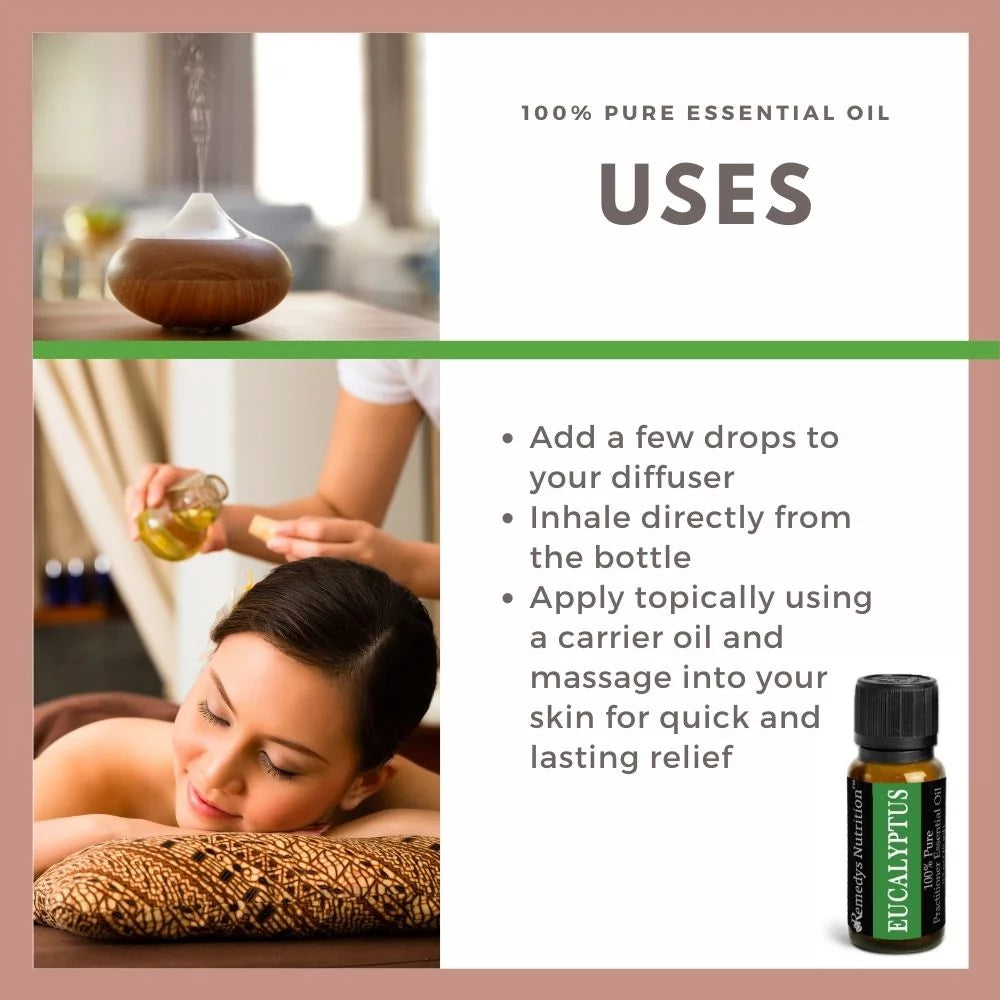
- Compatible with steam inhalation, topical chest rubs at 1 to 5%, and diffuser aromatherapy
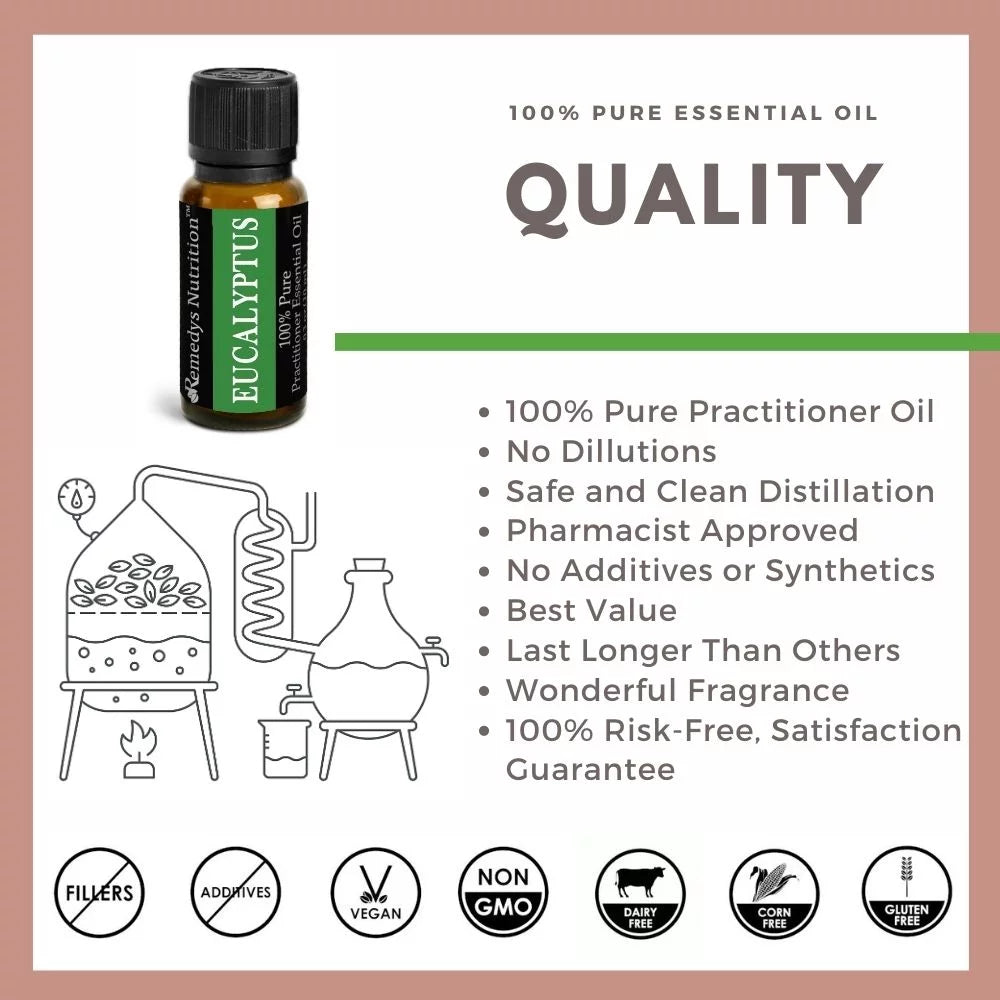
- 100% pure single-species oil (Eucalyptus globulus) — no fragrance synthetics, no carrier oil added
- 10 ml (3-dram) amber glass with euro-dropper insert delivers about 200 drops per bottle, 4 to 8 weeks of typical use
Eucalyptus Oil for Sinus, Cough, and Congestion: How It Works
Eucalyptus has the strongest evidence base of any essential oil for upper-respiratory and sinus conditions. The 2004 Kehrl trial in 152 patients with acute non-purulent rhinosinusitis found 1,8-cineole capsules at 200 mg 3 times daily produced a 1.5-fold larger improvement in headache, congestion, and pressure scores than placebo at day 4. The 2014 Fischer trial in 242 acute bronchitis patients showed 41% cough symptom reduction at day 4 vs 27% on placebo. Mechanism runs on 4 parallel pathways:
-
Mucolytic action. 1,8-cineole reduces the viscosity of bronchial and sinus secretions within 30 minutes by altering the cross-linking of mucin glycoproteins, making mucus easier to clear.
-
Bronchodilation via beta-2 receptor sensitization. Eucalyptol relaxes airway smooth muscle through indirect beta-2 receptor effects, increasing airway diameter by 8 to 12% in healthy adults.
-
Anti-inflammatory cytokine suppression. 1,8-cineole inhibits TNF-alpha and interleukin-1-beta production by 60 to 70% in bronchial epithelial cells — the mechanism behind the 36% steroid-sparing effect in COPD and asthma.
-
Mucociliary transport acceleration. Cilia beat frequency rises 23% within 30 minutes of inhaled eucalyptus exposure, clearing trapped pathogens from the upper airway faster.
Pair eucalyptus with peppermint essential oil for combined cooling and decongestant action — the 2-oil pair is the classic chest-rub combination. For broader respiratory antimicrobial coverage during cold and flu season, add tea tree essential oil. The pre-blended Sinus Blend from Remedy’s combines 4 oils in proven ratios. For deeper protocol detail, see our sinus, cough, and cold essential-oil guide.
Eucalyptus Oil for Muscle Pain and Joint Inflammation
The 2013 Jun trial in 52 patients recovering from knee replacement surgery found that 30-minute aroma exposure to eucalyptus oil 3 times daily produced a 32% reduction in pain scores compared to almond-oil control. Mechanism is dual: 1,8-cineole crosses the blood-brain barrier and modulates pain perception centrally, while topical absorption produces a local anti-inflammatory effect on cytokine production in muscle and synovial tissue. The effect peaks at 30 to 60 minutes post-application and lasts 3 to 4 hours.
For topical use against muscle soreness and joint pain, dilute 3 to 5% in a carrier oil (12 to 20 drops per ounce of jojoba, fractionated coconut, or sweet almond) and massage into the sore area for 3 minutes, 2 to 3 times daily. The pre-blended Muscle Blend from Remedy’s combines eucalyptus with peppermint and 4 supporting oils in a ready-to-use format. For full protocols see our muscle pain and inflammation guide.
Eucalyptus Oil for Mosquito Repellent and Bug Defense
Lemon eucalyptus oil — specifically the PMD (para-menthane-3,8-diol) fraction — is one of only 2 plant-derived repellents recognized by the CDC as a credible alternative to DEET. A 30 to 40% PMD topical formulation provides 5 to 7 hours of protection against most mosquito species, including Aedes aegypti (yellow fever and dengue carrier). Note: this protection is from Eucalyptus citriodora processed to high PMD, not from the standard E. globulus in this bottle. For practical bug defense with E. globulus, dilute to 5% in carrier oil and reapply every 90 minutes — protection is shorter but still measurable against typical backyard mosquitoes.
For broader insect coverage including ticks, the Thieves Blend from Remedy’s combines eucalyptus with clove, cinnamon, lemon, and rosemary in the historical 4-thieves vinegar ratio — broad-spectrum antimicrobial and pest-deterrent action.
Eucalyptus globulus vs. Eucalyptus radiata vs. Eucalyptus citriodora: Why Species Matters
Three commercial “eucalyptus” oils dominate the market, each with different chemistry and use cases. E. globulus (Tasmanian blue gum) is 70 to 85% 1,8-cineole — the species used in nearly every clinical trial for cough, bronchitis, and sinusitis. E. radiata (narrow-leaf peppermint eucalyptus) is 60 to 75% 1,8-cineole with 8 to 14% alpha-terpineol — gentler, with milder aroma, often preferred for children over 6 and pregnancy after the first trimester. E. citriodora (lemon eucalyptus) is dominated by citronellal (65 to 80%) with low cineole — the source of CDC-approved PMD insect repellent, but not interchangeable for respiratory use.
Three practical implications:
-
Respiratory power. E. globulus in this bottle is the most clinically validated species for cough, bronchitis, and sinusitis at adult dilutions of 1 to 5%.
-
Tolerability for children. E. radiata is preferred for children 6 to 12 at 1% dilution; E. globulus at full strength is reserved for adults.
-
Insect repellent. Only E. citriodora processed to high PMD provides DEET-comparable protection. Standard E. globulus oil is a weaker, shorter-acting repellent.
For most respiratory uses described in this page, E. globulus is the right pick. As a milder alternative for sensitive users or pregnancy after the first trimester, niaouli shares the cineole-dominant profile at gentler concentration.
Why Choose Remedy’s Eucalyptus Essential Oil
| What You Get |
Why It Matters |
| 100% pure Eucalyptus globulus |
Single-species, single-origin oil — no fragrance synthetics, no isolated 1,8-cineole added back, no carrier oil dilution |
| Steam-distilled from leaf |
Preserves the full 30-plus monoterpene fingerprint including 1,8-cineole, alpha-pinene, limonene, and globulol in natural ratio |
| 10 ml (3-dram) amber glass |
UV-blocking glass extends shelf life to 24 to 36 months; built-in euro-dropper delivers consistent 0.05 ml drops (about 200 per bottle) |
| GC/MS batch tested |
Each lot tested for 1,8-cineole percentage, oxidation markers, and adulteration with synthetic eucalyptol or rectified fractions |
| Made in USA |
Bottled and labeled in a US facility under FDA cosmetic and dietary supplement rules with full chain-of-custody on the leaf |
| Therapeutic grade for topical, diffuser, and inhalation use |
Suitable for the full range of clinical aromatherapy protocols at 1 to 5% dilution; not labeled for oral consumption without prescriber guidance |
Eucalyptus Oil Dosage by Goal
| Goal |
Concentration / Drops |
Method and Timing |
Time to Effect |
| Acute sinus and nasal congestion |
3 to 4 drops in 500 ml hot water |
Steam inhalation 5 to 10 minutes, up to 3 times daily |
2 to 5 minutes |
| Cough and chest congestion |
3 to 5% in carrier (12 to 20 drops per ounce) |
Chest rub at bedtime and morning, up to 4 days |
15 to 30 minutes |
| Sinus headache and pressure |
5 drops in diffuser |
Diffuse 30 minutes during congestion peak, up to 3 times daily |
10 to 15 minutes |
| Muscle pain and soreness |
3 to 5% in carrier oil (12 to 20 drops per ounce) |
Massage into sore area, 2 to 3 times daily for 3 days |
30 minutes |
| Sauna or steam-room boost |
5 to 8 drops in 500 ml water for ladle pour |
Pour onto sauna stones, breathe normally for 5 to 10 minutes |
2 to 3 minutes |
| Bug repellent (short-duration) |
5% in carrier oil (15 to 20 drops per ounce) |
Apply to exposed skin, reapply every 90 minutes |
Same-day acute effect |
| Air freshening and antimicrobial diffusion |
3 to 5 drops in diffuser |
Diffuse 30 to 60 minutes 1 to 3 times daily during cold season |
5 to 15 minutes |
| Mental alertness and focus |
3 to 4 drops in diffuser |
Diffuse during work or study sessions, 30 to 60 minutes |
10 to 15 minutes |
Eucalyptus oil is potent — the standard topical ceiling for adults is 5% in carrier for routine use and 10% for short-term acute use only. Never apply undiluted oil to skin, never apply to children under 6, and never apply to or near the face of children under 10 due to laryngospasm risk. For full safe-dilution and child-safety guidance see our complete dilution and safety guide.
Tolerance Testing and Skin-Patch Protocol
Eucalyptus oil is a known skin sensitizer in 1 to 3% of users. The mandatory protocol before first topical use:
-
Day 1 — patch test at 3% dilution. Mix 3 drops eucalyptus with 1 teaspoon (5 ml) carrier oil. Apply a dime-sized amount to the inner forearm. Cover with a bandage, leave for 24 hours.
-
Day 2 — check for redness, itching, or burning. Mild warmth is normal; redness, hives, or persistent burning means stop and dilute further or discontinue.
-
Day 3 onward — use the goal-specific dilution from the table above. Stay under 5% for routine application and 10% for short-term acute use.
Always store the bottle upright in a cool, dark cabinet between 60 and 75°F. Once opened, eucalyptus oil maintains full potency for 24 to 36 months in amber glass; oxidized eucalyptus smells sharp, slightly turpentine-like, and produces more skin reactions because the oxidation byproducts are themselves sensitizers. Cap tightly after every use to limit oxygen exposure.
Eucalyptus Oil Contraindications: 6 Conditions Where You Must Not Use It
Eucalyptus oil is potent. Unlike most essential oils, eucalyptus can produce serious adverse effects in 6 specific groups. The 6 contraindications below are absolute — these are not “be cautious” cases but “do not use” cases.
| Contraindication |
Why It Matters |
| 1. Children under 10 years (face) or under 30 months (anywhere) |
1,8-cineole applied near the face of young children can trigger reflex apnea and laryngospasm. Topical use is contraindicated under 30 months, and face application under 10 years. Internal ingestion as little as 5 ml has caused fatal CNS depression in toddlers. |
| 2. Asthma triggered by strong scents |
While 1,8-cineole reduces inflammation in some asthmatics, the strong aroma triggers bronchospasm in 5 to 10% of scent-sensitive asthmatics. Test 1 drop diffused for 10 minutes before any inhalation protocol. |
| 3. Active seizure disorder or epilepsy |
1,8-cineole at high doses lowers seizure threshold. Avoid all internal use, and limit diffusion to 15 minutes daily under seizure-disorder management. |
| 4. Pregnancy first trimester |
High oral doses cross the placenta and may affect fetal development. Avoid all internal use through the first trimester; topical at 1% dilution and short diffuser sessions are acceptable after week 13. |
| 5. G6PD deficiency |
1,8-cineole and naphthalene-related compounds can trigger acute hemolytic anemia in G6PD-deficient individuals. Avoid all routes of exposure including aromatherapy in confirmed cases. |
| 6. Known eucalyptus or 1,8-cineole allergy |
About 1 to 3% of adults develop contact dermatitis to eucalyptol or limonene. A failed 24-hour patch test means avoid all topical use; stop diffusion if any wheezing develops. |
Eucalyptus oil is also toxic to cats and small dogs through both topical and respiratory routes — never diffuse in a closed room with pets present, and never apply topically to any pet without veterinary guidance. As few as 2 ml of eucalyptus oil ingested by a 10 kg dog can cause CNS depression and respiratory failure.
Eucalyptus Oil Side Effects and Interactions
| Consideration |
Details |
| Adverse event rate (topical) |
1 to 3% of users develop contact dermatitis or skin sensitization at 5%-plus concentrations. Most resolves within 48 hours of stopping. |
| Reflex apnea in young children |
Hard contraindication: never apply to face of children under 10 years or anywhere on children under 30 months. Risk is highest with chest, neck, and nostril application. |
| Asthma trigger in 5 to 10% of scent-sensitive cases |
Strong aroma can paradoxically trigger bronchospasm despite 1,8-cineole’s anti-inflammatory effect; test with 10 minutes of low-dose diffusion before any chest-rub use. |
| Drug interactions: CYP3A4 substrates |
1,8-cineole induces CYP3A4 and may lower plasma levels of cyclosporine, simvastatin, and some chemotherapy agents at high oral doses; topical and aromatherapy use produces minimal systemic exposure. |
| Anti-diabetic drugs |
1,8-cineole has mild hypoglycemic effect in animal studies; check blood glucose more often if using internal eucalyptus capsules with insulin or sulfonylureas. |
| Toxic ingestion |
As little as 5 ml internal ingestion has caused fatal CNS depression in toddlers; keep bottles out of reach of children and pets at all times. |
| Eye contact |
Severe burning and tearing — rinse with carrier oil (NOT water, which spreads the oil) for 1 to 2 minutes, then warm water. |
| Mucous membranes |
Avoid direct contact with nasal passages, mouth, or genital mucosa — chemical burn risk at concentrations above 1%. |
If any of the following appear during a patch test or first-week use, stop and reassess: persistent skin redness or itching beyond 24 hours, hives or welts at application site, breathing difficulty or wheezing during diffusion, eye burning or vision changes, or chest pain. Mild initial warmth, transient flushing, or watery eyes during steam inhalation are expected and resolve within 30 minutes.
Eucalyptus Essential Oil FAQ
What is eucalyptus essential oil good for? +
Eucalyptus essential oil has 5 main evidence-backed uses: acute sinus and bronchial congestion (1.5-fold improvement vs placebo at day 4 in 152 sinusitis patients), cough and bronchitis relief (41% symptom reduction at day 4 vs 27% placebo across 242 patients), asthma and COPD steroid sparing (36% steroid dose reduction over 12 weeks at 200 mg 1,8-cineole 3 times daily), muscle and joint pain (32% pain reduction at 30 minutes post-aroma in 52 surgical patients), and short-term mosquito repellence at 5% topical.
How do I use eucalyptus oil for sinus congestion? +
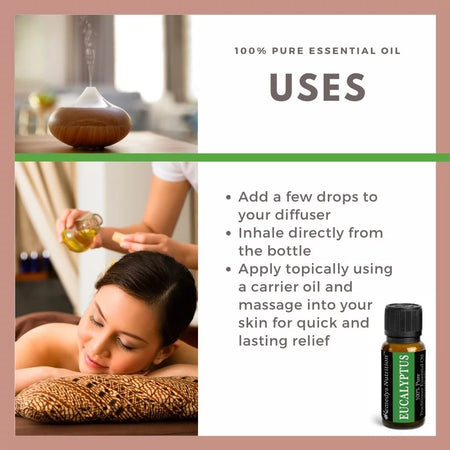
Steam inhalation is the fastest delivery: bring 500 ml of water to a near-boil, remove from heat for 30 seconds, add 3 to 4 drops of eucalyptus oil, drape a towel over the head, and breathe through the nose for 5 to 10 minutes with eyes closed. Subjective airflow improves within 2 to 5 minutes. Repeat up to 3 times daily during acute congestion. Pair with peppermint at 2 drops each for combined cooling and decongestant action.
Is eucalyptus oil safe for kids? +
Eucalyptus oil is contraindicated for children under 30 months on any part of the body, and contraindicated on or near the face of children under 10 years old. The reason: 1,8-cineole near the airway can trigger reflex laryngospasm and apnea. For children 10-plus, dilute to 1% maximum (1 drop per 1 teaspoon carrier) and avoid the face. E. radiata is generally preferred over E. globulus for children at any age over 6.
Can I use eucalyptus oil in a humidifier? +
Only in humidifiers explicitly rated for essential oils — ultrasonic and nebulizing diffusers are designed for oil dispersion, but standard cool-mist humidifiers can be damaged by 3 to 5 drops of essential oil because the plastic and rubber components degrade. For overnight respiratory support, use a dedicated diffuser with 3 to 5 drops on a 30-minute timer rather than running it for 8 hours, which over-saturates the room.
Can eucalyptus oil really help with bronchitis? +
The 2014 Fischer trial in 242 acute bronchitis patients found 200 mg 1,8-cineole capsules 3 times daily produced 41% cough symptom reduction at day 4 vs 27% on placebo. Note: clinical trials use enteric-coated 1,8-cineole capsules manufactured to a different standard than aromatherapy oil. For supportive use of the oil in this bottle, steam inhalation 3 times daily and 3 to 5% chest rub are the practical equivalents. Always coordinate active bronchitis treatment with a physician.
How many drops of eucalyptus oil should I use? +
For diffusion: 3 to 5 drops in a typical 200 to 300 ml diffuser. For steam inhalation: 3 to 4 drops in 500 ml of hot water. For topical use: 1 drop per 1 teaspoon carrier gives 1% dilution; 5 drops per 1 teaspoon gives 5%. The 10 ml bottle yields about 200 drops total — enough for 4 to 8 weeks of daily use depending on protocol. Stay under 2 ounces of 5% blend per day for adults.
Can I take eucalyptus oil internally? +
The eucalyptus essential oil in this 10 ml bottle is intended for topical, inhalation, and diffuser use, not internal consumption. Oral 1,8-cineole products use enteric-coated capsules at 200 mg, manufactured to a different standard than aromatherapy oil. Internal use of pure essential oil at even 5 ml has caused fatal CNS depression in toddlers and serious symptoms in adults. Coordinate any internal use with a clinical aromatherapist or physician.
How long does eucalyptus oil last after opening? +
Eucalyptus oil maintains full potency for 24 to 36 months after opening when stored upright in amber glass at 60 to 75°F with the cap tightly closed. Oxidized eucalyptus smells sharp and turpentine-like, and produces more skin reactions because oxidation byproducts are themselves sensitizers. Refrigeration at 38 to 45°F extends shelf life to 36 to 48 months. The euro-dropper insert in the 10 ml bottle limits oxygen exposure between uses.
Can eucalyptus oil help with muscle pain? +
The 2013 Jun trial in 52 knee surgery patients found 30 minutes of eucalyptus aroma exposure 3 times daily produced 32% pain score reduction vs almond-oil control. For topical muscle relief, dilute 3 to 5% in carrier oil (12 to 20 drops per ounce) and massage the sore area for 3 minutes, 2 to 3 times daily. Effect peaks at 30 to 60 minutes and lasts 3 to 4 hours. Pair with peppermint for cooling action and lavender for stress-driven muscle tension.
Does eucalyptus oil repel mosquitoes? +
Standard E. globulus oil at 5% topical provides 60 to 90 minutes of mosquito protection and must be reapplied frequently. The CDC-recognized DEET alternative is specifically Eucalyptus citriodora processed to 30 to 40% PMD — that formulation provides 5 to 7 hours of protection. The two are not interchangeable. For broader insect coverage including ticks and fleas, the Thieves Blend with eucalyptus, clove, cinnamon, lemon, and rosemary at 5% topical is more durable.
Can I diffuse eucalyptus oil around pets? +
Never diffuse eucalyptus oil in a closed room with cats or birds. Cats lack the liver enzyme (UGT1A6) needed to metabolize 1,8-cineole and can develop fatal toxicity from chronic exposure. Birds have a respiratory system 4 times more sensitive than humans. Even small dogs are at risk — as little as 2 ml of eucalyptus oil ingested by a 10 kg dog can cause CNS depression. Use a separate well-ventilated room and store bottles out of reach.
What is the difference between Eucalyptus globulus and Eucalyptus radiata? +
E. globulus contains 70 to 85% 1,8-cineole and is the species used in nearly every clinical trial — the most potent for cough, bronchitis, and sinusitis in adults. E. radiata contains 60 to 75% cineole plus 8 to 14% alpha-terpineol and has a milder aroma; it is the preferred species for children 6-plus and pregnancy after the first trimester at 1% dilution. E. citriodora (lemon eucalyptus) is a different chemistry entirely — high citronellal, used for insect repellence rather than respiratory support.
What makes Remedy’s Eucalyptus Oil different? +
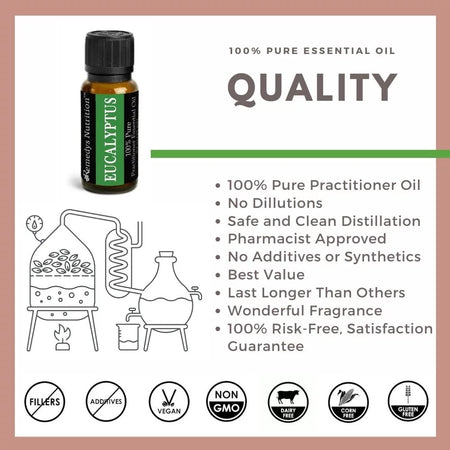
Remedy’s eucalyptus oil is 100% pure single-species Eucalyptus globulus, steam-distilled to preserve the full 30-plus monoterpene fingerprint — no synthetic 1,8-cineole added back, no carrier oil dilution, no fragrance compounds. Each batch is GC/MS tested for cineole percentage and adulteration. The 10 ml amber-glass bottle delivers about 200 drops with a built-in euro-dropper, sufficient for 4 to 8 weeks of daily protocol use. Bottled in the USA in a cGMP cosmetic and supplement facility.
Eucalyptus Oil: In-Depth Reading
Want to go deeper on a specific use case? Browse our essential-oil knowledge hub: