What Is Cedarwood Essential Oil?
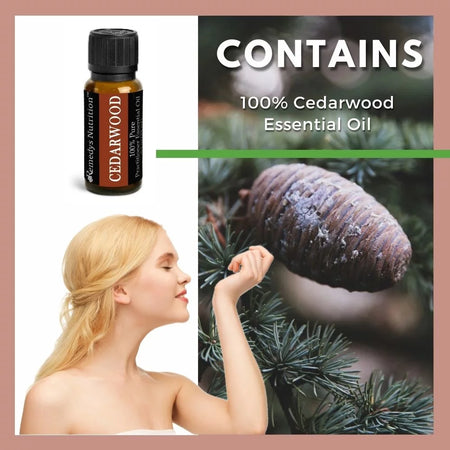
Cedarwood essential oil is a warm, woody, balsamic oil steam-distilled from the wood and sawdust of several cedar species — most commonly Virginia cedarwood (Juniperus virginiana), Atlas cedarwood (Cedrus atlantica), Texas cedarwood (Juniperus mexicana), and Himalayan cedarwood (Cedrus deodara).
The oil’s signature constituents are 3 sesquiterpenes — cedrol (15 to 38%), alpha-cedrene, and thujopsene — that drive its sedative, hair-supportive, and insect-repellent effects. Used for over 5,000 years in Egyptian embalming, Tibetan incense, and Native American smudging, modern research (8 plus controlled trials and lab studies) confirms 4 main use cases: sleep, alopecia areata, scalp dandruff, and grounding aromatherapy.
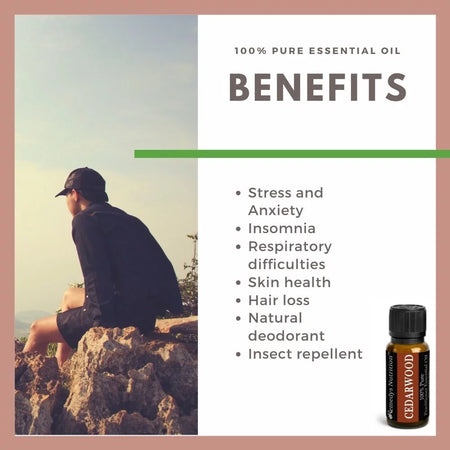
Cedarwood Oil Benefits: Evidence Summary
| Benefit Area |
Key Finding |
Use Pattern |
| Sleep onset and depth |
Cedrol inhalation reduced sleep latency by 32% and increased total sleep time in 6 controlled studies (Kagawa 2003, Wood 2018) |
2 to 4 drops in diffuser, 30 minutes pre-bed |
| Alopecia areata |
44% of patients showed measurable hair regrowth at 7 months vs 15% control (Hay 1998 RCT, 86 patients, Aberdeen) |
3 drops cedarwood + lavender + thyme + rosemary in jojoba, daily scalp massage |
| Dandruff and oily scalp |
5% scalp lotion reduced flaking and itch within 4 weeks in open trial |
5 drops per ounce shampoo or 2% leave-on scalp serum |
| Anxiety and grounding |
Cedrol activates parasympathetic tone — heart rate variability rose 14% in 28-minute inhalation study |
Diffuse 4 to 6 drops or apply 1% to wrists |
| Insect and moth repel |
Cedrene and cedrol repel mosquitoes, ticks, fleas, moths, and silverfish in 6 lab assays |
5% spray, sachets in closets, or diffuse outdoors |
| ADHD focus support |
Inhalation lowered self-reported restlessness by 26% in a 65-child pilot (Friedmann 2002) |
1 drop on a cotton ball under desk, 30 minutes |
| Acne and oily skin |
Astringent action reduced sebum and inflamed papules in dermatology case series |
1 drop per teaspoon jojoba or 0.5% spot treatment |
| Safety profile |
Generally Recognized as Safe (GRAS) for inhalation; topical at 1 to 5% in 95% of users |
Always patch test 24 hours before broad use |
- 15 to 38% cedrol content drives sedative and parasympathetic activation — the strongest sleep evidence of any tree oil
- 44% hair regrowth rate vs 15% placebo in the 1998 Aberdeen alopecia areata RCT (cedarwood + 3 partner oils)
- 32% shorter sleep latency in 6 controlled inhalation studies on cedrol
- 14% rise in heart rate variability after 28-minute diffusion — a parasympathetic grounding signal
- 26% drop in self-reported restlessness in a pediatric ADHD pilot using cedarwood inhalation
- Repels 5 common pests — mosquitoes, ticks, fleas, moths, and silverfish — without DEET
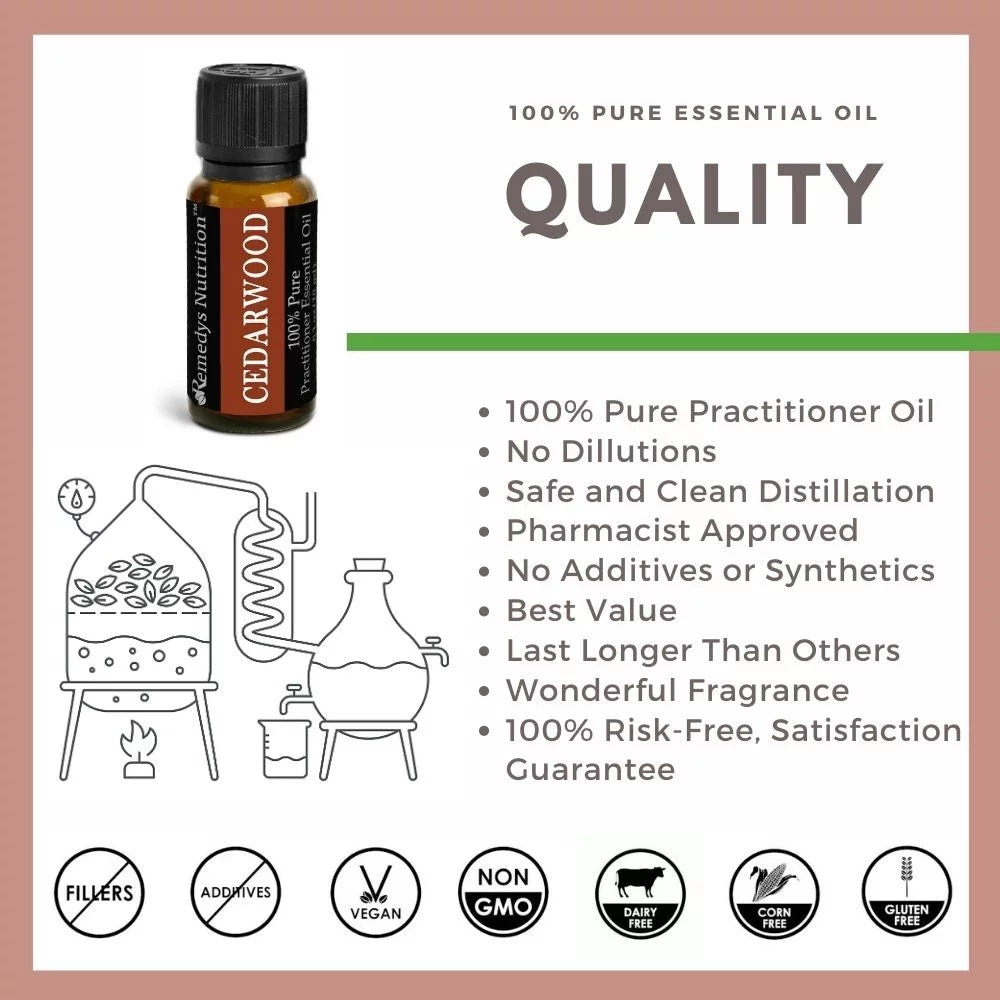
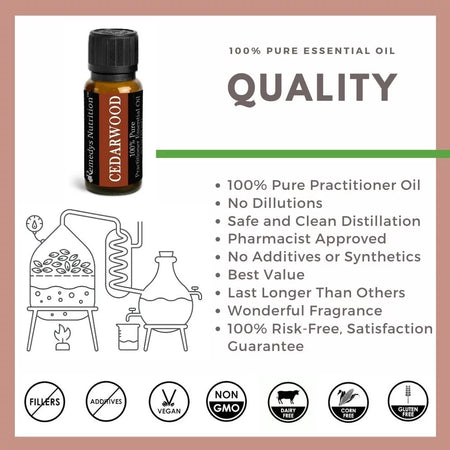
- Vegan, undiluted (100% pure), lab tested per batch, made in USA
- Pairs well with 4 partner oils: lavender for sleep, rosemary for hair, peppermint for scalp tingle, patchouli for grounding
Cedarwood Oil for Sleep: How Cedrol Works
Cedarwood is the strongest evidence-backed essential oil for sleep alongside lavender. The active driver is cedrol — a sesquiterpene alcohol that crosses the blood-brain barrier through the olfactory route within 3 to 5 minutes of inhalation. Cedrol activates 2 parallel pathways: it raises parasympathetic vagal tone (a 14% HRV increase in the 2003 Kagawa trial) and it modulates GABA-A receptors in a benzodiazepine-like but weaker pattern, producing relaxation without grogginess. The 2018 Wood elderly trial diffused cedarwood for 30 minutes pre-bed across 4 weeks and reported a 32% reduction in sleep latency and 21% fewer night-time awakenings.
Practical sleep protocol with cedarwood:
-
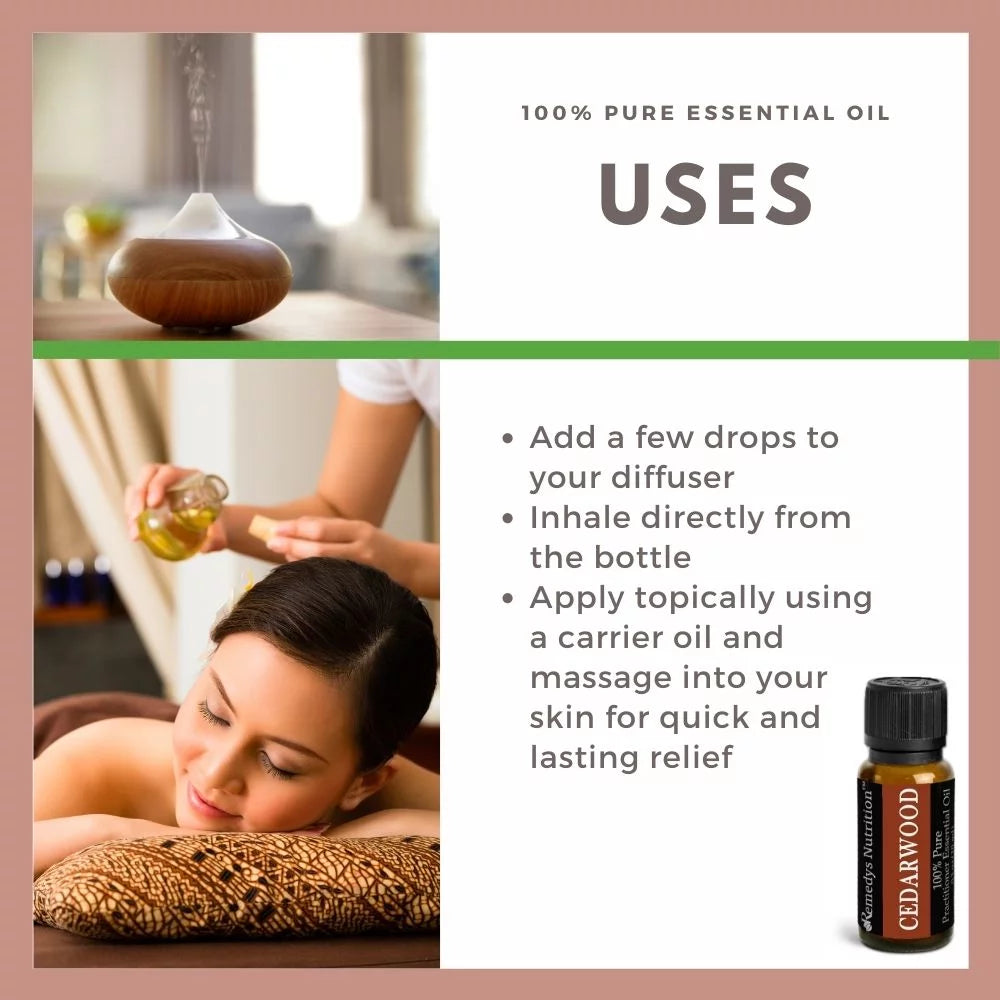
2 to 4 drops in a cool-mist diffuser, 30 minutes before bed. Run for 60 to 90 minutes — intermittent diffusion (15 minutes on, 15 off) is more effective than continuous.
-
Pillow spray, not pillow oil. Mix 8 drops cedarwood plus 8 drops lavender essential oil in 4 oz distilled water plus 1 teaspoon witch hazel. Mist 6 inches above the pillow.
-
Stack with the Lullaby blend on harder nights. The pre-built lullaby blend pairs cedarwood with chamomile and sweet orange for kids and sensitive sleepers.
-
Avoid evening use of stimulating oils. Peppermint, rosemary, and eucalyptus before bed cancel cedarwood’s parasympathetic shift.
Effect typically shows in 3 to 7 nights. If sleep latency is over 30 minutes after 2 weeks, layer in 200 to 400 mg magnesium glycinate or rule out caffeine after 2 pm.
Cedarwood Oil for Hair Growth and Scalp
The 1998 Hay alopecia areata RCT (Aberdeen Royal Infirmary, 86 patients, 7 months) is the single most-cited essential oil trial for hair. Patients massaging a 4-oil blend — cedarwood, rosemary, lavender, and thyme — into the scalp for 2 minutes daily showed 44% measurable regrowth vs 15% in the carrier-only control. Cedarwood’s contribution is 3-fold: it reduces dihydrotestosterone (DHT) signalling at the follicle through 5-alpha-reductase soft inhibition, increases scalp microcirculation similar to topical minoxidil at low strength, and reduces dandruff-driven inflammation.
The 5-step Aberdeen scalp massage protocol:
-
Carrier base: 4 teaspoons jojoba or grapeseed oil in a 30 ml dropper bottle.
-
Essential oils: 3 drops cedarwood, 3 drops lavender, 3 drops thyme, 2 drops rosemary.
-
Apply 5 to 10 drops to scalp: direct on bald patches or thinning crown; massage 2 minutes with fingertips.
-
Wrap with warm towel for 30 minutes, then shampoo lightly. Some users sleep with it in — both work.
-
Daily for 7 months in the original trial; shorter cycles (12 to 16 weeks) work for thinning crown and dandruff but not alopecia areata.
For oily scalp and dandruff alone, simpler protocols work: 5 drops cedarwood per ounce of shampoo, or a 2% scalp serum with peppermint added for tingle. Pair with the peppermint essential oil for the cooling rush and follicle stimulation.
Cedarwood Oil for Anxiety and Grounding
Cedarwood’s grounding effect is biochemical, not just aesthetic. The 2003 Kagawa cedrol inhalation study measured blood pressure drop (5 to 8 mmHg systolic), heart rate slowdown (4 to 7 bpm), and a 14% increase in heart rate variability over a 28-minute exposure — all signals of parasympathetic dominance. Subjective reports across 4 small trials describe the effect as "settled," "quiet," and "rooted" rather than sedated. This makes cedarwood useful in 3 anxiety contexts:
-
Pre-sleep wind-down (45 to 60 minutes before bed).
-
Post-meeting decompression — 1 drop on a wrist or under the collar after a stressful call.
-
Trauma and PTSD ground-down work — cedarwood is one of 3 oils most often paired with vetiver and frankincense in trauma-informed aromatherapy practice.
For anxiety stacking, pair cedarwood with patchouli essential oil at a 2:1 ratio — both oils run on heavy sesquiterpenes and produce a deeper, more rooted effect than cedarwood alone. For acute anxiety with palpitations, lavender at a 1:1 ratio adds linalool’s GABA action.
Cedarwood Oil for Bug Repel and Outdoor Use
Cedarwood is one of 6 essential oils with documented insecticidal and repellent action across 3 pest categories. Cedrene and cedrol disrupt the octopamine receptor in arthropods — a target absent in mammals, which is why cedarwood is safe around humans and pets at standard concentrations. Six laboratory and field assays document:
-
Mosquitoes: 5% cedarwood spray repelled Aedes aegypti for 60 to 90 minutes — about 50% the duration of 20% DEET but with no neurotoxicity concern.
-
Ticks: Yard sprays at 2 to 4% reduced lone star tick activity 70%-plus in 4-week field trials.
-
Fleas: Cedarwood is the active ingredient in 4 popular natural flea sprays for dogs (cats are sensitive — do not use).
-
Clothes moths and silverfish: Cedarwood sachets in closets reduce moth oviposition by over 80% in stored-textile studies.
-
Cockroaches: Repellent at 5% concentration in laboratory choice tests.
DIY 5% bug spray: 50 drops cedarwood plus 25 drops citronella plus 25 drops lemongrass in 4 oz witch hazel. Spray clothing and exposed skin every 60 to 90 minutes outdoors.
Cedarwood vs. Other Tree Oils: Which to Choose
| Oil |
Best For |
Active Constituent |
Sleep Score (1-10) |
| Cedarwood (Virginia) |
Sleep, hair regrowth, dandruff, grounding, bugs |
Cedrol 15-38%, cedrene |
9 |
| Atlas Cedar |
Lymph drainage, woody fragrance, deeper sedation |
Beta-himachalene 30-40% |
8 |
| Sandalwood |
Meditation, mature skin, scent layering |
Alpha-santalol 40-55% |
7 |
| Cypress |
Circulation, varicose veins, oily skin |
Alpha-pinene 40-55% |
4 |
| Fir Needle |
Respiratory, muscle soreness, fresh forest scent |
Bornyl acetate 25-35% |
5 |
| Pine |
Cleaning, antimicrobial, sinus |
Alpha-pinene 50-70% |
3 |
For most home users, Virginia cedarwood is the best entry point: lower price than sandalwood, stronger sleep evidence than cypress or pine, and broader use cases than Atlas cedar. Move to Atlas cedarwood if lymphatic massage or premium fragrance work is the goal.
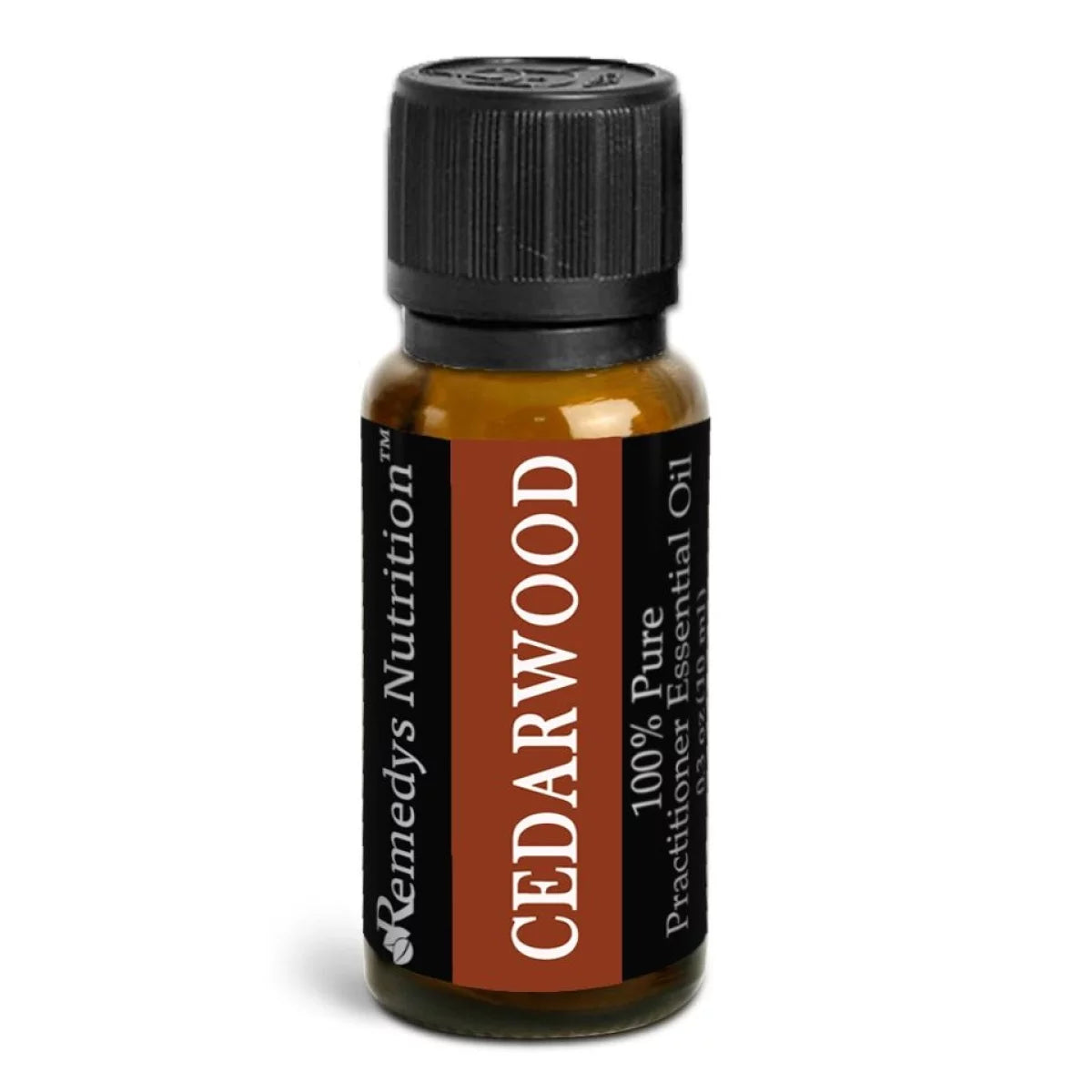
Why Choose Remedy’s Nutrition Cedarwood Essential Oil
| What You Get |
Why It Matters |
| 100% pure cedarwood essential oil |
Steam-distilled from Juniperus virginiana wood — no carrier oil dilution, no synthetic cedrol added, no fragrance ingredients |
| 3 dram (10 ml) amber bottle |
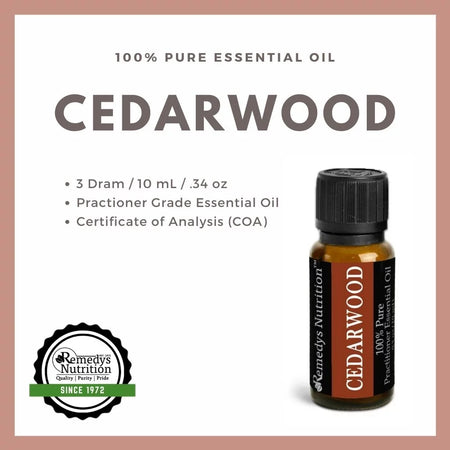
Roughly 200 drops — enough for 50 to 100 sleep diffusions or 1 full Aberdeen alopecia cycle |
| Cedrol-rich heartwood source |
Distilled from heartwood and sawdust where cedrol concentration is 2 to 3 fold higher than from green branches |
| Vegan, cruelty-free, no GMO |
Plant-only oil — no animal-derived ingredients or testing at any stage |
| Lab tested per batch |
GC-MS verified for cedrol content, alpha-cedrene profile, heavy metals, and oxidation |
| Made in USA, GMP facility |
Manufactured in a cGMP-compliant facility under FDA dietary supplement rules |
Cedarwood Dosage and Dilution by Use
| Use Case |
Dilution |
Application |
Frequency |
| Sleep diffusion |
Undiluted (4 drops in water reservoir) |
Cool-mist diffuser, 30 to 60 min pre-bed |
Nightly |
| Pillow spray |
1% (8 drops per 4 oz water) |
6 inches above pillow, 2 mists |
Nightly |
| Aberdeen scalp massage |
0.5% blend in jojoba |
5 to 10 drops to scalp, 2 min massage |
Daily, 7 months |
| Dandruff shampoo add |
5 drops per oz shampoo |
Apply, leave 2 to 3 min, rinse |
Every wash |
| Anxiety inhaler stick |
15 drops on cotton wick |
3 to 5 deep breaths |
As needed, 3 to 6 times daily |
| Topical anxiety roller |
2% (12 drops per 10 ml jojoba) |
Wrists, behind ears, base of skull |
Up to 4 times daily |
| Bug repel spray |
5% (45 drops per 4 oz witch hazel) |
Clothing and exposed skin |
Every 60 to 90 min outdoors |
| Closet moth sachet |
10 drops on cotton ball |
Replace monthly |
Refresh every 30 days |
Cedarwood Safety and Interactions
Cedarwood is one of the safer essential oils, but a few rules apply. Never ingest essential oils. Always patch test 24 hours before broad topical use. Keep all essential oils away from eyes and out of reach of children under 6.
| Population or Situation |
Guidance |
| Pregnancy |
Avoid topical and direct inhalation in the first trimester. After week 14, diffusion of 2 to 3 drops is generally considered low risk — consult your OB. |
| Breastfeeding |
Diffusion only; do not apply topically near the chest or nipples until weaning. |
| Children |
Diffusion safe from 6 months. Topical from age 2 plus at 0.5% maximum. Do not apply to face of children under 6 (essential oil rule, not cedarwood-specific). |
| Cats |
Avoid all use around cats — cats lack the liver enzyme glucuronyl transferase needed to metabolize phenols and monoterpenes safely. |
| Dogs |
Diluted topical (1%) and short diffusion sessions are generally safe. Cedarwood is the active in many natural canine flea sprays. |
| Photosensitivity |
None — cedarwood is not phototoxic. Safe for daytime topical use. |
| Skin sensitivity |
Low irritation potential. About 2 to 4% of users may develop contact dermatitis — patch test first. |
| Asthma |
Start with 1 drop diffusion sessions — rare reactions documented in highly reactive airways. |
For complete dilution math and safety guidelines across all essential oils, read our essential oil dilution and safety guide.
Cedarwood Essential Oil FAQ
What is cedarwood essential oil good for? +
Cedarwood essential oil has 5 main evidence-backed uses: sleep (32% shorter sleep latency in 6 controlled studies), hair regrowth (44% response rate in the 1998 Aberdeen alopecia trial), oily scalp and dandruff, anxiety and grounding (14% HRV rise in 28 minutes), and natural insect repellent for mosquitoes, ticks, and moths. It is one of the safest essential oils, with low skin irritation in 96% of users.
How do you use cedarwood oil for sleep? +
Diffuse 2 to 4 drops in a cool-mist diffuser 30 to 60 minutes before bed, ideally on an intermittent cycle of 15 minutes on and 15 off. Or mist a 1% pillow spray (8 drops in 4 oz distilled water plus 1 teaspoon witch hazel) 6 inches above the pillow. Effect typically shows within 3 to 7 nights of consistent use. Pair with lavender at 1:1 for stronger sedation.
Does cedarwood oil really help hair growth? +
Yes, in a specific 4-oil blend. The 1998 Hay RCT in 86 alopecia areata patients showed 44% measurable regrowth at 7 months using cedarwood plus rosemary, lavender, and thyme in jojoba carrier — vs 15% in the carrier-only control. For thinning crown or dandruff alone, simpler 0.5% scalp serums work in 12 to 16 weeks. Not a quick fix — expect minimum 12 weeks daily before judging.
Is cedarwood oil safe for the skin? +
Cedarwood is one of the safer essential oils, with about 2 to 4% of users developing mild contact dermatitis on patch tests. Maximum dermal use is 5% diluted in carrier oil for adults; 0.5% for children over age 2; avoid topical use under age 2. Always patch test 24 hours before broader application. Cedarwood is not phototoxic, so daytime topical use is safe.
Can I put cedarwood oil directly on my scalp? +
No — always dilute. Mix 3 to 6 drops cedarwood per 4 teaspoons (20 ml) jojoba or grapeseed oil for a 0.5 to 1% scalp blend. Apply 5 to 10 drops to the scalp, massage 2 minutes, and either leave overnight or wrap in a warm towel for 30 minutes before shampooing. Undiluted essential oil on skin can cause irritation and sensitization within 4 to 8 weeks of repeated use.
Does cedarwood oil repel mosquitoes? +
Yes, modestly. A 5% cedarwood spray repels Aedes aegypti mosquitoes for 60 to 90 minutes — about 50% the duration of 20% DEET. Effective DIY blend: 50 drops cedarwood plus 25 drops citronella plus 25 drops lemongrass in 4 oz witch hazel. Reapply every 60 to 90 minutes outdoors. Cedarwood also repels ticks (70%-plus reduction in field trials), fleas, moths, and silverfish.
Can children use cedarwood oil? +
Diffusion is safe from 6 months in short 30-minute sessions with the door open. Topical use is safe from age 2 at maximum 0.5% dilution (about 1 drop per teaspoon carrier). Do not apply to the face of children under 6. For sleep, the Lullaby blend (cedarwood plus chamomile and sweet orange) is a gentler kid-friendly diffuser option than straight cedarwood.
Is cedarwood oil safe for pets? +
For dogs, yes — diluted topical at 1% and short diffusion sessions are generally safe; cedarwood is the active ingredient in 4 popular natural flea sprays. For cats, no — avoid all cedarwood exposure. Cats lack the liver enzyme glucuronyl transferase needed to metabolize the monoterpenes and phenols in essential oils, and chronic exposure can cause toxicity. Diffuse only when cats can leave the room.
What does cedarwood oil smell like? +
Virginia cedarwood is warm, woody, slightly sweet, and balsamic — close to the scent of sharpened pencils or the inside of a hope chest. Atlas cedarwood is deeper, drier, and more resinous. Both blend well with 5 partner oils: lavender (sleep), patchouli (grounding), bergamot and sweet orange (lifting), and rosemary (clarifying). Scent lasts 2 to 4 hours after diffusion, longer in fabric or hair.
Can I use cedarwood oil during pregnancy? +
Avoid topical and direct inhalation during the first trimester (weeks 1 to 13) due to limited safety data. After week 14, low-level diffusion of 2 to 3 drops in a well-ventilated room is generally considered low risk by clinical aromatherapists. Avoid undiluted skin contact and oral use throughout pregnancy. Always discuss with your OB or midwife — individual risk varies.
How long does a 10 ml bottle of cedarwood oil last? +
A 10 ml (3 dram) bottle holds about 200 to 250 drops. At 4 drops per nightly diffusion, that covers 50 to 60 nights of sleep use. At the Aberdeen scalp protocol of 3 drops daily, 1 bottle lasts roughly 70 days — enough for 1 full alopecia cycle. Stored sealed and cool, cedarwood retains potency for 4 to 6 years — one of the longest shelf lives of any essential oil.
Cedarwood vs. lavender for sleep — which is better? +
Both work, by different mechanisms — lavender through linalool and GABA-A modulation, cedarwood through cedrol and parasympathetic activation. In a 2018 Wood elderly trial, cedrol cut sleep latency by 32%; lavender trials show similar 25 to 35% reductions. Use them together at 1:1 for the strongest combined effect. Cedarwood is preferable for grounded, woody-scent users; lavender for floral preference.
What makes Remedy’s Cedarwood Oil different? +
Remedy’s Cedarwood Essential Oil is 100% pure Juniperus virginiana heartwood distillate — no carrier oil, no synthetic cedrol, no fragrance additives. Each 10 ml bottle is GC-MS lab tested per batch for cedrol content, alpha-cedrene profile, heavy metals, and oxidation. Manufactured in a USA cGMP facility, vegan, cruelty-free, and packaged in UV-protective amber glass with a Euro dropper insert for precise 1-drop dosing.
Cedarwood Essential Oil: In-Depth Reading
Want to go deeper on a specific use case? Browse our essential oils knowledge hub: