
Vitamin E for breast pain beat placebo in a 150-woman trial, yet vitamin B6 did not in a 2025 meta-analysis. Magnesium has one 38-woman premenstrual trial, iodine trials used doses far above the daily requirement, and none of them shrinks a lump.
This article covers what the published evidence actually shows: trials for vitamin E, B6, magnesium, iodine and chasteberry, plus safety limits.
Quick Answer: Supplements for Breast Pain
Vitamin E has the best evidence for breast pain: pooled placebo trials found lower severity (SMD -0.51). But 400 IU a day or more links to higher mortality, and high doses raise bleeding risk with blood thinners. B6, magnesium and iodine are weaker or riskier, and no supplement is shown to shrink a lump.
Key Takeaways
- Vitamin E lowered cyclic pain severity (SMD -0.51) in pooled trials.
- Vitamin B6 showed no significant effect across 3 placebo-controlled studies.
- Vitamin E at 400 IU a day or more links to higher mortality.
- The US adult upper limit for vitamin B6 is 100 mg daily.
- Iodine trials ran 6 months at doses far above daily needs.
Related Products
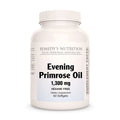
Shop Evening Primrose Oil 1300 mg
1300 mg per softgel. The 3,000 mg used in one US pilot trial would be 2 to 3 softgels, so read the evidence first.
Go to ShopShop Vitamin E Softgels
200 IU (100 softgels) or 400 IU (50 softgels). Trials used 200 to 1,200 IU; 400 IU or more links to higher mortality.
Go to ShopWhich Supplements Have Breast Pain Trials?
Four supplements have breast-pain trials: vitamin E (best, but mixed), vitamin B6 (no significant effect in a 2025 meta-analysis), magnesium (one 38-woman premenstrual trial) and iodine (high-dose trials with thyroid risk). Evening primrose oil, tested in 13 trials, has its own page. None of these has been shown to shrink a lump.
| Supplement | Best evidence | Result | Verdict |
|---|---|---|---|
| Vitamin E | 11 trials pooled; a 150-woman placebo trial | Lower cyclic pain severity (SMD -0.51), high heterogeneity; no benefit on benign findings in 105 women | Best evidence, for pain only; dose limits apply |
| Evening primrose oil | 13 trials, 1,752 women | No better than placebo | Not shown to work; has its own page |
| Vitamin B6 | 3 placebo-controlled studies | No significant effect, very low certainty | Weak; US upper limit 100 mg a day |
| Magnesium | 1 crossover trial, 38 women | Premenstrual fluid-retention symptoms, including breast tenderness, eased in cycle 2 | Indirect and small |
| Iodine | 1 trial, 111 women, 6 months | Pain improved with dose; 18% to 31% of treated women dropped out | Doses far above daily need; thyroid risk; no dose given here |
| Chasteberry | No trial in our sources | NCCIH: low-quality evidence, safety flags | See the flags below |
Most of these trials enrolled women with cyclic mastalgia, pain that follows the menstrual cycle, so they cannot speak to pain with no cycle pattern.
Get Any New Lump Examined and Imaged
- A new lump or thickening needs a clinical exam, and usually imaging, before any supplement.
- A supplement cannot tell a harmless lump from a serious one.
- Tell your clinician about every supplement you take, including doses.
Vitamin E for Breast Pain: The Trials
Vitamin E is the best-studied option for cyclic pain, but only for pain. A double-blind trial of 150 women found it beat placebo at 2 and 4 months.[1]Therapeutic effects of vitamin E on cyclic mastalgia — The Breast Journal (2009) View source
| Trial | Women | Dose and length | Result |
|---|---|---|---|
| Iran, 2009 | 150 | Vitamin E twice daily for 4 months (dose not given in the abstract) | Beat placebo at 2 and 4 months |
| Meta-analysis, 2019 | 11 trials pooled | Varied | Lower severity (SMD -0.51); herbal medicines did better; high heterogeneity |
| Crossover trial, 1990 | 105 | 600 mg alpha-tocopherol acetate, 3-month phases | No significant subjective or objective effect on benign breast disease |
| US pilot, 2010 | 85 enrolled, 41 completed | 1,200 IU a day for 6 months | Pain improved within the group (p=0.04), not significantly versus placebo (p=0.10) |
A pooled analysis of the trials found lower severity (SMD -0.51), with high heterogeneity.[2]Effect of vitamin E on severity and duration of cyclic mastalgia: A systematic review and meta-analysis — Complementary Therapies in Medicine (2019) View source
- SMD
- Standardized mean difference, a way to compare pain scores from different scales. A negative value here means lower pain than placebo.
- Heterogeneity
- How much the pooled trials disagree. High values mean the average hides big differences between studies.
- Crossover trial
- Each woman takes both the treatment and the placebo in turn, with a separate phase for each.
For lumps, a 105-woman crossover trial showed no benefit.[3]Vitamin E and benign breast disease — Surgery (1990) View source Its authors warned that treating undiagnosed breast disease with vitamin E could delay a cancer diagnosis.

Vitamin E Doses, Limits and Blood Thinners
Trials that stated an IU dose used 200 IU to 1,200 IU a day, and the safety signal sits in that range. A meta-analysis of 19 trials linked 400 IU a day or more to higher all-cause mortality, 39 more deaths per 10,000 people.[4]Meta-analysis: high-dosage vitamin E supplementation may increase all-cause mortality — Annals of Internal Medicine (2005) View source
| Source | Dose | Note |
|---|---|---|
| Iran 2015 trial, 80 women | 200 IU a day for 2 months | Compared with B6 40 mg a day; no placebo arm |
| US pilot, 2010 | 1,200 IU a day for 6 months | 85 enrolled, 41 completed |
| Crossover trial, 1990 | 600 mg alpha-tocopherol acetate | Two 3-month phases |
| Meta-analysis, 19 trials | 400 IU a day or more | Pooled mortality difference of 39 per 10,000 people |
| Our softgels (label facts) | 200 IU (100 softgels) or 400 IU (50 softgels) | Alpha-tocopherol; this is not a dose recommendation |
High doses also raise bleeding risk with warfarin and aspirin.[5]Vitamin E (alpha-Tocopherol): Emerging Clinical Role and Adverse Risks of Supplementation in Adults — Cureus (2025) View source The high-dose trials in the mortality analysis were often small and in people with chronic disease, so the result may not apply to healthy adults. Ask a clinician before choosing any amount.
Vitamin E With Primrose Oil: One US Pilot
The US pilot tested vitamin E 1,200 IU, primrose oil 3,000 mg, both, or placebo in 85 women; 41 completed 6 months. Pain improved within each treatment group, not significantly against placebo.[6]Vitamin E and evening primrose oil for management of cyclical mastalgia: a randomized pilot study — Alternative Medicine Review (2010) View source Across 13 trials, evening primrose oil for breast pain did no better than placebo.
| Arm | Dose | Within-group p | Versus placebo p |
|---|---|---|---|
| Vitamin E | 1,200 IU a day | 0.04 | 0.10 |
| Evening primrose oil | 3,000 mg a day | 0.005 | 0.18 |
| Both together | 1,200 IU plus 3,000 mg | 0.05 | 0.16 |
| Placebo | None | 0.93 | Not applicable |
- The within-group p-values come from an intent-to-treat analysis of all 85 women, while only 41 finished.
- The authors concluded the doses may decrease severity, from a pilot study.
- Pain in the placebo group did not change (p=0.93).
- The pooled primrose oil result covers 13 trials and 1,752 women, with no difference from placebo.[7]A Systematic Review and Meta-Analysis of the Efficacy of Evening Primrose Oil for Mastalgia Treatment — International Journal of Environmental Research and Public Health (2021) View source
If you take primrose oil, our evening primrose softgels each hold 1300 mg. The 3,000 mg used in the US pilot works out to 2 to 3 softgels (3,000 / 1,300 = 2.3), while the label directs one softgel a day with food. Ask your clinician before taking more than the label says.
Vitamin B6 for Breast Tenderness and Its Limit
Vitamin B6 has weak breast-pain evidence and a real ceiling. A 2025 meta-analysis of 3 placebo-controlled studies found no significant effect, with very low certainty.[8]The effectiveness of vitamin B6 in reducing mastalgia: a systematic review and meta-analysis — BMC Women's Health (2025) View source
- Head to head: In 80 women, B6 40 mg and vitamin E 200 IU a day both lowered pain over 2 months, with no placebo arm.[9]Clinical effectiveness of vitamin E and vitamin B6 for improving pain severity in cyclic mastalgia — Iranian Journal of Nursing and Midwifery Research (2015) View source
- Upper limit: The US adult upper limit is 100 mg a day, and 5.1% of US adult B6 products direct at least that much.[10]Vitamin B6 Doses on United States Dietary Supplement Labels Relative to the Tolerable Upper Intake Level: A Census of the National Institutes of Health Dietary Supplement Label Database — Cureus (2026) View source
- Neuropathy: High B6 from supplements can cause a sensory neuropathy that improves after stopping.[11]The Role of Vitamin B6 in Peripheral Neuropathy: A Systematic Review — Nutrients (2023) View source
- Our tablet (label): Vitamin B-6 (pyridoxine) 100 mg, 100 tablets, so one tablet equals the US adult upper limit.
Read the label before you add B6 to a multivitamin that already contains it, and ask your clinician about your total daily intake.

Magnesium and Premenstrual Breast Tenderness
Magnesium has indirect evidence only. In a 38-woman crossover trial, 200 mg of magnesium (as oxide) for two cycles eased premenstrual fluid-retention symptoms, including breast tenderness, in the second cycle (p=0.009).[12]Magnesium supplementation alleviates premenstrual symptoms of fluid retention — Journal of Women's Health (1998) View source
- Measured: A 22-item symptom diary grouped into 6 categories; nothing changed in cycle 1.
- Not measured: Breast pain on its own; we found no breast-pain-only magnesium trial.
- The limit: The US supplemental upper level for adults is 350 mg a day, set because of diarrhea. A 2023 perspective argued it should be re-evaluated.[13]Perspective: Call for Re-evaluation of the Tolerable Upper Intake Level for Magnesium Supplementation in Adults — Advances in Nutrition (2023) View source
Our magnesium glycinate capsule lists 970 mg of magnesium glycinate in a 1000 mg blend. The label does not state the elemental magnesium, so it cannot be matched to the 200 mg trial figure.
Iodine, Chasteberry and Other Herbs: Flags
Iodine and chasteberry come with flags, not doses. A 6-month trial in 111 women gave three iodine levels, all far above the daily requirement; pain improved with dose, but 18% to 31% of treated women dropped out.[14]The effect of supraphysiologic levels of iodine on patients with cyclic mastalgia — The Breast Journal (2004) View source
That trial enrolled women with normal thyroid function, so it says nothing about thyroid disease. We found no second trial that repeated it. Excess iodine can cause hypothyroidism or hyperthyroidism.[15]Risks of Iodine Excess — Endocrine Reviews (2024) View source Ask a clinician first if:
- You have a thyroid condition or take thyroid medicine.
- You are pregnant, breastfeeding or planning a pregnancy.
- You plan to start any iodine product on your own.
Some research suggests chasteberry might reduce PMS symptoms such as breast pain, but higher-quality evidence is needed, and it may be unsafe in pregnancy.[16]Chasteberry — National Center for Complementary and Integrative Health View source Ask first if:
- You are pregnant or breastfeeding.
- You have had breast, uterine or ovarian cancer, or another hormone-sensitive condition.
- You use hormonal birth control or hormone therapy, or take any regular medicine.
For the bigger picture of cycle-linked lumpiness and tenderness, see our guide to fibrocystic breast tissue.
Who Should Ask a Clinician First
Ask first in any of 6 situations. They are pregnancy or breastfeeding, a history of breast, uterine or ovarian cancer, hormone therapy, blood thinners or aspirin, thyroid disease or medicine, and a new lump. The reasons are on record: chasteberry cautions, bleeding with high-dose vitamin E and iodine-related thyroid dysfunction.
| Situation | Concern | Action |
|---|---|---|
| Pregnant or breastfeeding | Chasteberry may be unsafe (NCCIH) | Ask before any supplement |
| History of breast, uterine or ovarian cancer | Chasteberry may not be safe with hormone-sensitive conditions | Ask first |
| Hormone therapy or hormonal birth control | NCCIH: some herbs and medicines interact in harmful ways | Ask first |
| Warfarin, other blood thinners or aspirin | High-dose vitamin E raises bleeding risk | Ask first |
| Thyroid disease or thyroid medicine | Excess iodine can cause hypothyroidism or hyperthyroidism | Ask first |
| A new lump or other breast change | No supplement can tell a harmless lump from a serious one | Exam and imaging first |
A Lump Needs Imaging, Not a Supplement
- Book an exam for any new lump, thickening, discharge or skin change.
- Do not start a supplement to see whether a lump changes; the 1990 vitamin E authors warned that this may delay a diagnosis.

Frequently Asked Questions
Does vitamin E help breast tenderness? +
Pooled placebo trials found lower cyclic pain severity (SMD -0.51), and a 150-woman trial agreed, but heterogeneity was high. The US pilot of 1,200 IU a day was not significant against placebo (p=0.10). Doses of 400 IU a day or more link to higher mortality, so ask a clinician before starting.
Which vitamin is best for breast pain? +
Vitamin E has the most trials: 11 were pooled and showed lower severity (SMD -0.51). Vitamin B6 showed no significant effect across 3 studies, and no vitamin has been shown to shrink a lump. Choosing among them is a question for your clinician, especially with blood thinners, thyroid problems or hormone therapy.
What does vitamin E do for breasts? +
Vitamin E is studied for cyclic breast pain, not for lumps: a 105-woman crossover trial found no benefit on benign breast disease findings after 3 months. The pain trials ran 2 to 6 months. No trial shows vitamin E changes breast tissue, and any lump still needs an exam. Ask a clinician about any dose.
How much vitamin E should I take for breast pain? +
There is no recommended dose here. The trials that stated one used 200 IU to 1,200 IU a day for 2 to 6 months, and a meta-analysis of 19 trials linked 400 IU a day or more to higher all-cause mortality. High doses add bleeding risk with warfarin and aspirin. Ask a clinician before choosing any amount.
Can vitamin E and B6 help with breast pain? +
An 80-woman trial found 200 IU of vitamin E and 40 mg of B6 a day both lowered cyclic pain over 2 months, but it had no placebo group, so it cannot show either beat placebo. A 2025 meta-analysis of 3 placebo-controlled studies found no significant effect of B6. High B6 intake can cause sensory neuropathy.
Does magnesium reduce breast pain? +
Only indirect evidence exists. In 38 women, 200 mg of magnesium (as oxide) eased premenstrual fluid-retention symptoms, including breast tenderness, in the second cycle (p=0.009). We found no trial of magnesium for breast pain alone. The supplemental upper level for adults is 350 mg a day. Ask a clinician first if you take regular medicines.
What herb helps with breast pain? +
No herb has strong proof. NCCIH says some research suggests chasteberry might reduce PMS symptoms such as breast pain, but higher-quality evidence is needed. It may be unsafe in pregnancy and with hormone-sensitive cancer. Check with a clinician about these 3 flags: pregnancy, cancer history and any medicine you take.
What can I take for aching breasts? +
Start with a clinical exam, because the cause decides which options fit. This page compares 6 supplement options, with mixed evidence, and none is shown to shrink a lump. If aching is new, one-sided or comes with a lump, get it examined and imaged before trying anything. Tell your clinician about every supplement you already take.
Is iodine safe for fibrocystic breasts? +
Safety is not established. A 6-month trial in 111 women used doses far above the daily requirement, and 18% to 31% of treated women dropped out. Excess iodine can cause hypothyroidism or hyperthyroidism in susceptible people. We give no dose, so talk to a clinician and ask about your thyroid first.
Is vitamin B6 safe to take every day for breast pain? +
The US adult upper limit is 100 mg a day, and high B6 intake can cause sensory neuropathy that improves after stopping. One in 20 US adult B6 products directs at least 100 mg a day, so read labels. Across 3 placebo-controlled studies, B6 showed no significant effect on breast pain.
Can I take evening primrose and vitamin E together? +
The US pilot gave both for 6 months, vitamin E 1,200 IU plus primrose oil 3,000 mg a day. Pain improved within the group (p=0.05) but not significantly against placebo (p=0.16). That is a trial dose, not advice: ask a clinician first, especially on blood thinners, because high-dose vitamin E raises bleeding risk.
Related Reading
- Are Lumpy Breasts Normal?
- Fibrocystic Breast Disease vs Cancer
- Fibrocystic Breasts and Caffeine
- Fibrocystic Breast Ultrasound and Mammogram
- Benign Breast Lump: Fibroadenoma, Cyst or Change
Related Products