
Fibrocystic breasts and breast cancer can both feel like a lump, so no home check can tell them apart. About 1 in 10 women with a breast lump or abnormal mammogram has cancer, so the answer comes from an exam, imaging and sometimes a biopsy.
This article covers what the published evidence actually shows: why feel and pain cannot decide, the real risk numbers, the warning signs and the questions to ask.
Quick Answer: Fibrocystic Breasts vs Breast Cancer
Fibrocystic breast changes are benign and cancer is not, but both can cause a lump. Pain cannot separate them: 6% of breast cancers present with pain. Only an exam plus imaging, and sometimes a biopsy, tells them apart. About 1 in 10 women with a lump or abnormal mammogram has cancer.
Key Takeaways
- About 1 in 10 women with a lump or abnormal mammogram has cancer.
- Breast cancer presents as a lump in 83% of women.
- Breast pain was a presenting symptom in 6% of cancers.
- Biopsy-proven benign changes carry relative risks from 1.27 to 4.24.
- A lump needs 3 steps: exam, imaging, then biopsy if suspicious.
Related Products
Get Any New Lump Examined and Imaged First
No home check separates fibrocystic tissue from cancer. About 1 in 10 women with a breast lump or an abnormal mammogram has breast cancer.[1]Evaluation of abnormal mammography results and palpable breast abnormalities — Annals of Internal Medicine (2003) View source The safe first step is a clinical exam plus imaging, not waiting for the next period.
Book an Exam and Imaging for Any New Lump
- Any new lump, whether it hurts or not
- Any lump that stays the same through a whole menstrual cycle
- Any new nipple discharge, especially if it is bloody or clear
- A past fibrocystic diagnosis does not change this advice
A lump was the presenting symptom in 83% of women with breast cancer in a national audit of 2,316 women.[2]Typical and atypical presenting symptoms of breast cancer and their associations with diagnostic intervals: Evidence from a national audit of cancer diagnosis — Cancer Epidemiology (2017) View source So a new lump is always worth checking.
A work-up usually has 3 parts.
- History: your symptoms, family history and any medicines or supplements you take.
- Clinical breast exam: a clinician examines the breasts and notes what they find.
- Imaging, then sampling if needed: a mammogram, an ultrasound or both, and a biopsy if a finding looks suspicious.
If you have been sent for imaging, our guide to a breast lump on mammogram explains how the results are reported.
What Fibrocystic Changes and Cancer Share
Fibrocystic changes and breast cancer overlap on the features women check at home. Pain and a lump can occur with either. About 1 in 6 breast cancers present with something other than a lump. A lump that stays the same through a whole cycle is considered suspicious.[3]Fibrocystic breasts — MedlinePlus Medical Encyclopedia (NIH) View source
| Feature | What fits fibrocystic tissue | Why it cannot settle the question |
|---|---|---|
| Pain | Aching, tender breasts, usually worse before a period | Pain was a presenting symptom in 6% of breast cancers |
| A lump | Lumps that change size with the period | A lump was the presenting symptom in 83% of breast cancers |
| Change through the cycle | Lumps and tenderness that change with the period | A lump that stays the same through a cycle is considered suspicious, and a new lump needs imaging either way |
| Nipple discharge | Not a feature to self-diagnose; any new discharge is a reason to call a provider | Nipple abnormalities were a presenting symptom in 7% of breast cancers |
American College of Radiology (ACR) criteria put the cancer association with pain alone, with no lump or discharge, at 0% to 3.0%.[4]ACR Appropriateness Criteria Breast Pain — Journal of the American College of Radiology (2018) View source Low is not zero, and a lump that changes with the cycle still needs imaging.

Does a Cancerous Breast Lump Hurt?
Pain is a poor guide in both directions. Breast pain was a presenting symptom in 6% of women with breast cancer. StatPearls puts cancer at 2% to 7% of women who have breast pain,[5]Mastalgia — StatPearls, NCBI Bookshelf (2025) View source while ACR criteria give 0% to 3.0% for pain with no lump or discharge.
- Raises concern: pain in one spot, covering under 1 quadrant of the breast.
- Raises concern: pain that persists and does not follow the menstrual cycle.
- Raises concern: any pain that comes with a lump or nipple discharge.
- Less concerning alone: diffuse, nonfocal or cyclical pain, which needs no imaging beyond routine screening when there is no lump or discharge.
The two ranges count different groups of women, so they are not interchangeable.
Neither range makes a painless lump safe. Pain level cannot rule cancer in or out, and neither can how a lump feels.
Fibrocystic Changes and Your Cancer Risk
Most benign breast findings raise cancer risk little or not at all. In 9,087 women followed a median of 15 years, relative risk was 1.27 for nonproliferative lesions, 1.88 for proliferative lesions without atypia and 4.24 for atypical hyperplasia.[6]Benign breast disease and the risk of breast cancer — The New England Journal of Medicine (2005) View source
| Biopsy finding | Share of women (Hartmann) | Relative risk (Hartmann) | Risk vs nonproliferative (Dupont) |
|---|---|---|---|
| Nonproliferative | 67% | 1.27 | Reference group |
| Proliferative, no atypia | 30% | 1.88 | 1.9 times |
| Atypical hyperplasia | 4% | 4.24 | 5.3 times |
- Cysts alone: no substantial rise in risk among 10,366 biopsies; cysts plus a family history carried 2.7 times the risk.[7]Risk factors for breast cancer in women with proliferative breast disease — The New England Journal of Medicine (1985) View source
- No family history: Hartmann found no increase with nonproliferative findings, and in the Dupont cohort 70% of women with a benign biopsy were not at increased risk.
- Atypia and LCIS: atypical hyperplasia and lobular carcinoma in situ are benign but raise future risk, so clinicians offer closer surveillance.[8]Management of breast complaints and high-risk lesions — Best Practice & Research. Clinical Obstetrics & Gynaecology (2022) View source
Cysts, fibroadenomas and fibrocystic change are each a kind of benign breast lump. Our comparison sets out how they differ.
Do Supplements Change Any of This?
No supplement can tell a benign lump from cancer, and we make no claim that any supplement changes a lump. Only 3 steps can: a clinical exam, imaging and, if something looks suspicious, a biopsy. Your supplements do not change that work-up.
- Every supplement and medicine you take, with the amounts on the label
- Any hormone therapy or hormonal contraceptive
- Your own breast cancer history and your family history
If you have had breast cancer or take hormone therapy, ask your oncology team or prescriber before starting any supplement.
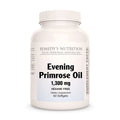
Nothing in a bottle helps you tell a lump apart. On the label, our single-ingredient evening primrose oil is 1300 mg of seed oil per softgel. If you already take it, keep it separate from the lump question and list it for your clinician.

How a Doctor Tells Them Apart
Doctors separate benign from malignant lumps in steps: history and clinical exam, imaging, then a biopsy if anything looks suspicious. About 1 in 10 women with a lump or abnormal mammogram has cancer. Each step is designed to find or exclude it.
- History and exam: your symptoms, family history, medicines and a clinical breast exam.
- Imaging: a mammogram, an ultrasound or both, as your clinician advises.
- Biopsy if suspicious: a sample of tissue is examined to confirm what the lump is.
- Follow-up plan: agree when you will be re-checked and what would change the plan.
Knowing what fibrocystic breasts feel like helps you describe changes accurately at the exam. It never replaces the exam.
Warning Signs That Need Prompt Imaging
Get imaging promptly for a new lump or a lump that stays the same through a cycle. The same goes for new bloody or clear nipple discharge and focal pain that persists. About 1 in 6 breast cancers present without a lump, so nipple changes and focal pain count too.
Get Prompt Imaging For
- A new lump, even a painless one
- A lump that stays the same through a whole menstrual cycle
- New nipple discharge, especially if it is bloody or clear
- Any change to the nipple
- Pain in one spot, under 1 quadrant, that persists and does not follow the cycle
- Pain that comes together with a lump or discharge
- Any other new change you notice in the breast, nipple or underarm
In the national audit, women whose cancer presented without a lump waited longer before seeking help. That gap is why this list goes beyond lumps.
What to Ask Your Clinician
Go with questions in hand. Start with 5. Which test do you need, and why? What does the BI-RADS result mean? Is a biopsy needed? When should you be re-checked? How does your family history change the plan? Writing the answers down turns an anxious visit into a plan.
- Which imaging test do I need, and why that one?
- What does the BI-RADS category (the standard scale for reporting breast imaging) on my report mean?
- Is a biopsy needed, and what will it tell us?
- Does my family history change the plan?
- Does any hormone therapy or contraceptive I use change the plan?
- When should I be re-checked, and what should I watch for before then?
- Whom do I call if I notice a change before that date?
- Should any supplement or medicine I take be reviewed?
Bring the list on paper and write the answers down. Ask for your results in writing.

Frequently Asked Questions
Can fibrocystic breasts become cancerous? +
Fibrocystic change is not cancer, but some biopsy findings carry a higher risk. In 9,087 women, relative risk was 1.27 for nonproliferative lesions, 1.88 for proliferative lesions without atypia and 4.24 for atypical hyperplasia. Ask for your pathology result, because it shows which of the 3 groups you are in.
When to worry about fibrocystic breasts? +
Get imaging for a new lump, a lump that stays the same through 1 full cycle, or new bloody or clear nipple discharge. Focal pain in under 1 quadrant that persists also needs imaging. Diffuse, cyclical tenderness with no lump or discharge needs no imaging beyond routine screening, but any new finding still needs an exam.
How do I know if a breast lump is serious? +
You cannot tell by touch, and about 1 in 10 women with a breast lump or abnormal mammogram has cancer. A clinical exam and imaging come first, and a biopsy follows if anything looks suspicious. Book the exam promptly rather than waiting for your next period, because feel alone cannot rule cancer in or out.
What kind of breast lumps should you worry about? +
Any new lump needs an exam, and 3 features raise concern further: a lump that stays the same through 1 cycle, a lump that is new, and a lump with new bloody or clear nipple discharge. Imaging decides, not hardness or softness, because texture, size and tenderness cannot rule cancer in or out.
Do cancerous lumps hurt when pressed? +
Not reliably: breast pain was a presenting symptom in only 6% of women with breast cancer. A painless lump can be cancer and a painful lump can be benign, so pressing a lump settles nothing. Any new lump needs an exam and imaging, whether it hurts or not. Book the exam promptly rather than watching to see whether the lump hurts more or less.
What do cancerous lumps feel like in breasts? +
Feel cannot answer this, and no texture reliably separates benign from cancerous lumps. What is known is that a lump was the presenting symptom in 83% of 2,316 women with breast cancer. So treat every new lump the same way, with a clinical exam and imaging, rather than judging it as hard, soft, round or tender.
Do most breast cancers present with a lump? +
Yes: a lump was the presenting symptom in 83% of 2,316 women with breast cancer in a national audit. About 1 in 6 presented with something else, such as nipple abnormalities (7%) or breast pain (6%). Those women tended to wait longer before seeking help, so changes without a lump deserve the same prompt check.
What are the early signs of a breast tumor? +
In a national audit of 2,316 women, the most common presenting signs were a new lump (83%), nipple abnormalities (7%) and breast pain (6%). Some women had more than one. Any of these warrants an exam and imaging, and so does any other new change you notice, even without a lump.
How do I know if it's a lump or just breast tissue? +
Fibrocystic tissue can feel lumpy and change with the period, while a distinct lump that stays the same through 1 cycle is considered suspicious. You cannot be sure by touch, because about 1 in 10 women with a lump or abnormal mammogram has cancer. A clinician's exam and imaging settle it.
How do you tell if a breast lump is a cyst or tumor? +
You cannot tell by touch; it takes 3 steps. A clinical exam comes first, then imaging, then a biopsy if anything looks suspicious. About 1 in 10 women with a lump or abnormal mammogram has cancer, so each lump is worked up rather than guessed. Ask your clinician what your imaging report says.
Are breast lumps usually cancer? +
No: about 1 in 10 women with a breast lump or abnormal mammogram has cancer, so most do not. That is not a reason to wait, because each lump still needs an exam and imaging to find the 1 that is. Never assume a lump is harmless without those 2 steps.
Related Reading
- Fibrocystic Breast Disease: Causes and Treatment
- Cyclical Breast Pain and What It Means
- Caffeine and Breast Cysts: What Studies Found
- Which Vitamin Is Best for Breast Pain?
Related Products
Shop Evening Primrose Oil 1300 mg
Single ingredient, 1300 mg per softgel. Keep it separate from the lump question and tell your clinician you take it.
Go to ShopShop Calcium and Magnesium 1:1
Calcium and magnesium in a 1:1 vegan capsule. We offer it for daily minerals, never to assess a breast lump.
Go to Shop