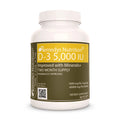

The best vitamin D gummies provide 1,000–2,500 IU of D3 per serving, with third-party testing and low sugar. Most adults need only 600–800 IU a day, so a gummy dose of 1,000–2,000 IU covers maintenance for many people.
This guide compares D2 and D3, reviews three popular chewable options, and explains how to check quality, absorption, and dosage before you buy.
Quick Answer: Best Vitamin D Gummies
The best vitamin D gummies use D3, list the exact IU per gummy, carry NSF or USP third-party testing, and keep sugar near 2–4 grams per serving. Most provide 1,000–2,500 IU, which suits maintenance; for 5,000 IU correction doses, softgels are usually more practical. Take them with a meal containing fat.
Key Takeaways
- Vitamin D gummies typically provide 1,000–2,500 IU of D3 per serving.
- D3 raised blood 25(OH)D more than D2 in a 2012 meta-analysis.
- Look for 2 third-party seals, NSF or USP, to confirm dose accuracy.
- Gummies suit maintenance but need many servings to reach 5,000 IU daily.
- Taking gummies with your largest meal may improve D3 absorption in 1 study.
Related Products
Many adults have nutritional gaps, and a chewable vitamin D is an easy way to close one. This guide covers vitamin D's critical roles, from bone strength to immune function, and points you to our overview of best vitamin d supplements for deficiency: top d3 picks if you need a higher dose than a gummy can provide.
You will find a roundup comparing popular gummies on ingredients, quality standards, and value, along with research-backed guidance so you can choose with confidence.
Understanding Vitamin D & Its Role in Health

Vitamin D supports calcium absorption, bone strength, muscle function, and immune defenses, and the recommended intake is 600–800 IU daily for most adults. A national survey found that 41.6% of US adults had 25(OH)D at or below 20 ng/mL, which is why many people turn to supplements such as gummies.[1]Prevalence and correlates of vitamin D deficiency in US adults — Nutrition research (New York, N.Y.) View source
One of its most critical jobs is supporting bone health. It helps your system absorb calcium, which is essential for maintaining strong bone density as you age.[2]Vitamin D Fact Sheet for Health Professionals — NIH Office of Dietary Supplements View source
Vitamin D's Impact on Bone Health and Immunity
This nutrient is also a major supporter of your immune system. It helps your body respond to common illnesses by supporting its natural defense pathways, and adequate levels matter year-round.[3]Vitamin D and the immune system — J Investig Med View source
It also plays a role in muscle function and movement, and proper amounts support strength and coordination.[4]The roles of vitamin D in skeletal muscle: form, function, and metabolism — Endocr Rev View source Adequate vitamin D is part of osteoporosis prevention programs as well.[5]Vitamin D and osteoporosis prevention — International Osteoporosis Foundation View source
| Body System | Primary Function | Benefit |
|---|---|---|
| Skeletal System | Calcium Absorption | Strong Bones |
| Immune System | Pathway Support | Illness Defense |
| Muscular System | Function & Coordination | Strength & Movement |
The Importance of Monitoring Vitamin Levels
Maintaining adequate levels is a widespread concern, and a significant portion of the population has insufficient amounts. This makes vitamin deficiency a common nutritional issue.
Low levels can accompany fatigue, low mood, and weakened immunity over time. Regular testing can give valuable insight into your personal status.
Comparing Vitamin D2 and Vitamin D3

Vitamin D supplements come in two forms: D2 (ergocalciferol), made from yeast and mushrooms, and D3 (cholecalciferol), made from lanolin or lichen and identical to the form skin makes from sunlight. A 2012 meta-analysis found that D3 raised blood 25(OH)D more than D2, so most gummies and capsules use D3.[6]Comparison of vitamin D2 and vitamin D3 supplementation in raising serum 25-hydroxyvitamin D status — Am J Clin Nutr View source
To choose a strength, start with our guide on how much vitamin d should you take daily, then match the gummy dose to your need.
Why Vitamin D3 Outperforms D2
Both forms need conversion in the liver and kidneys to become active, but after that process their effectiveness diverges. D3 generally produces higher and more sustained blood levels at the same dose.[7]Vitamin D(3) is more potent than vitamin D(2) in humans — The Journal of clinical endocrinology and metabolism View source
That makes D3 the usual choice for supplementation, and vegan gummies often use lichen-derived D3 rather than D2.
| Feature | Vitamin D2 | Vitamin D3 |
|---|---|---|
| Primary Sources | Plant-based (Mushrooms, Yeast) | Lanolin or lichen, and sunlight |
| Bioavailability | Lower | Higher |
| Impact on Blood Levels | Less Effective, Shorter Duration | More Effective, Longer Lasting |
Choosing the D3 form means you are using a version that mirrors what your body produces naturally, which makes it the most practical option for supporting your health.
Best Vitamin D Gummies: Product Roundup

Three widely sold chewables illustrate the range, with 1,000 IU, 2,000 IU, and 2,500 IU of D3 per serving. They differ in added K2, organic sourcing, and dietary suitability, so confirm the current label before you buy.
Judge any gummy on 4 factors:
- Ingredient sourcing and the use of the D3 form
- Independent lab testing
- Dose accuracy per gummy, not per serving of several gummies
- Sugar and other additives
The table below shows example options and what each is known for. Formulations change often, so treat it as a starting point rather than a ranking, and always compare the IU per single gummy on the current label.
| Brand & Product | D3 per Serving (IU) | Key Features | Dietary Notes |
|---|---|---|---|
| Pure Encapsulations Nutrient Chew | 2000 | No artificial flavors, third-party tested | Gluten-Free, Non-GMO |
| Nordic Naturals Sunshine Gummies | 1000 | Citrus taste, includes added K2 | Vegetarian-Friendly |
| Garden of Life mykind Organics | 2500 | Whole food sourced, organic ingredients | Vegan, Certified Organic |

While chewables are popular, liquid drops offer another convenient form. In a systematic review, vitamin D in an oil vehicle produced a greater 25(OH)D response than vitamin D in powder or ethanol, so oil-based softgels and oil drops are sound choices for precise dosing.[8]Evaluation of vehicle substances on vitamin D bioavailability: a systematic review — Mol Nutr Food Res View source
Gummies are effective for maintenance dosing at 1,000–2,000 IU per day. For deficiency correction requiring 5,000 IU, softgels in oil are more practical and cost-effective. Remedy sells capsules and drops rather than gummies; a single Vitamin D3 5000 IU vegan capsule supplies 5,000 IU, which would take 2 to 5 gummies at typical strengths. Both forms work best alongside a meal containing dietary fat.
Identifying Quality in Vitamin D Supplements
Supplements are not pre-approved by the FDA for dose accuracy, which makes independent verification essential. Look for NSF or USP verification, and check that the label lists the exact IU per gummy, since not all products deliver what they promise.
Third-Party Testing and Certifications
Third-party testing is your first line of defense because it confirms that what manufacturers claim is actually in the supplement, including correct amounts and a screen for contaminants.

- NSF Certified: verifies label claims and screens for contaminants
- USP Verified: confirms identity, potency, and purity
- Clean Label Project: tests for heavy metals
Ingredient Transparency and Purity
Reputable brands provide clear ingredient lists showing the specific forms used and any additives. Request certificates of analysis when possible; these documents confirm potency and the absence of harmful substances.
| Label Check | What to Look For |
|---|---|
| Vitamin D form | D3 (cholecalciferol), with lichen-derived D3 for vegan products |
| IU per gummy | The dose per single gummy, not per 2 or 3 gummies |
| Sugar | About 2–4 grams per serving or less |
| Seal | NSF Certified or USP Verified |
| Other ingredients | Fewer artificial colors and flavors |
| Allergens | Gelatin, gluten, or dairy flags if you avoid them |
| Lot number and expiry | Printed on the bottle, so a certificate of analysis can be matched to your batch |
While third-party verified supplements may cost slightly more, the confidence in dose accuracy is worth the investment. A gummy that skips these label details is harder to trust, whatever its front-of-pack claims say.
How to Optimize Vitamin D Absorption

Vitamin D is fat-soluble, so your system needs dietary fat to absorb it well. In a small cohort of 17 patients, taking vitamin D with the largest meal of the day led to higher 25(OH)D levels after 2 to 3 months.[9]Taking vitamin D with the largest meal improves absorption and results in higher serum levels of 25-hydroxyvitamin D — Journal of bone and mineral research View source
The study was small and uncontrolled, so treat it as a practical hint rather than proof.
Pairing Supplements with Healthy Fats
Take your supplement with a meal containing healthy fats such as avocado, nuts, seeds, fatty fish, olive oil, or full-fat dairy. Oil-based capsules and liquid forms already contain fat, which is one reason they are popular. Here are simple tips to get the most from your supplement:
- Take it with breakfast, like eggs cooked in a bit of olive oil.
- Enjoy it with a smoothie that includes avocado or nut butter.
- Pair it with a lunch that contains a source of healthy fat.
This simple habit helps your body use what you are taking and is an easy way to maximize your wellness investment.
Dietary Sources and Sun Exposure Guidelines

Eating smart and spending time in the sun can boost your vitamin D reserves, and these natural approaches work alongside supplements. Fatty fish such as salmon and tuna rank among the richest food sources, while most other foods supply far less.[10]Vitamin D — Harvard T.H. Chan School of Public Health, The Nutrition Source View source
Fortified Foods and Natural Sources
Fatty fish and egg yolks are natural sources. Fortified products make it easy to increase your intake: dairy and plant-based milks typically contain added vitamin D, and many breakfast cereals and orange juices add it along with calcium.
| Food Category | Specific Examples | Key Benefits |
|---|---|---|
| Fatty Fish | Salmon, Tuna, Sardines | High natural content |
| Fortified Dairy | Milk, Yogurt | Combined with calcium |
| Eggs & Mushrooms | Whole eggs, UV-treated varieties | Plant and animal options |
Safe Sunlight Exposure Practices
Sunlight is a free way to make vitamin D, since your skin creates it when exposed to UVB rays. Age, skin tone, location, and season all influence how much you make, and experts suggest about 15 minutes of daily sun exposure without sunscreen to help maintain healthy levels.
- Balance matters: excessive unprotected exposure carries skin risks
- Cooking with healthy fats like olive oil also enhances absorption from food sources
Many adult vitamin D gummies contain 2–4 grams of sugar per serving. Always verify the exact IU per gummy on the label, as some brands list the dose per 2 gummies rather than per piece. At higher doses you may need several gummies daily, and the sugar adds up quickly.
Expert Tips for Correct Dosage and Supplementation
Many people assume that taking more of a beneficial nutrient gives better results, but vitamin D is fat-soluble and stored in tissues, and the upper intake level for adults is 4,000 IU daily.[11]The 2011 report on dietary reference intakes for calcium and vitamin D from the Institute of Medicine: what clinicians need to know — The Journal of clinical endocrinology and metabolism View source Before you choose a strength, see how much vitamin D fits your situation.
Both insufficient amounts and excessive intake can create health challenges, which makes proper dosing crucial.[12]Vitamin D Toxicity-A Clinical Perspective — Frontiers in endocrinology View source
Consulting Healthcare Professionals
Before starting any new regimen, consult a healthcare professional who can assess your needs and interpret blood test results accurately.
Certain medications such as corticosteroids and anticonvulsants may interfere with how your body processes vitamin D, and very high amounts can raise the risk of kidney stones when combined with calcium. Professional oversight keeps the balance safe.
Recommended Dosage Based on Testing
A simple blood test is the only reliable way to determine your current vitamin levels, which removes guesswork from supplementation decisions.
If testing shows no deficiency, 1,000-2,000 IU daily typically maintains healthy levels. For severe deficiency, your provider may recommend higher temporary dosing.
| Blood Level Status | Recommended Daily IU | Monitoring Frequency |
|---|---|---|
| Normal Range | 1,000-2,000 IU | Annual Test |
| Mild Deficiency | 2,000-4,000 IU | 6-Month Test |
| Severe Deficiency | Prescription Dose | 3-Month Test |
Regular monitoring through blood work keeps your supplement program effective and safe, so taking a vitamin supplement should always be an informed decision based on actual need.
Customer Experiences and Trusted Brands
Trusted brands build their reputation through consistent quality and transparent labeling. Customer reviews can add practical detail on taste, texture, and how many gummies make up a serving, but read them alongside the label rather than instead of it.
Spotlight on Nordic Naturals
Nordic Naturals is a long-established supplement brand that markets a citrus-flavored gummy with added K2, as listed in the comparison above. Check the brand's current website for certificates of analysis and testing details before you buy.
- Rigorous third-party testing
- Strong manufacturing standards such as GMP
- Published certificates of analysis
- Consistent customer feedback on taste and dose
Who Should Be Careful With Vitamin D
Most healthy adults can use 600–2,000 IU of vitamin D daily, but gummies add a few extra cautions. People with hypercalcemia, sarcoidosis, primary hyperparathyroidism, kidney stones, or advanced kidney disease should speak with a doctor first, and anyone who takes several gummies a day should count the total IU.[13]Vitamin D Fact Sheet for Consumers — NIH Office of Dietary Supplements View source
- Hypercalcemia, hyperparathyroidism, or sarcoidosis: extra vitamin D can raise blood calcium
- Kidney stones or kidney disease: dosing and calcium intake need individual guidance
- Thiazide diuretics: these reduce calcium loss in urine, so high vitamin D doses add hypercalcemia risk
- Children: gummies look like candy, so store them out of reach to avoid accidental overdose
- Diabetes or sugar restriction: count the 2–4 grams of sugar per serving
Conclusion
The most common mistake when choosing vitamin D is selecting the wrong form or dose. D3 raised blood levels more than D2 in trials, so look for D3, third-party testing, and an exact IU per gummy.
- Choose gummies for maintenance at 1,000–2,000 IU
- Choose softgels or capsules for 5,000 IU correction doses
- Take vitamin D with your largest meal
Safe sun exposure and annual blood testing with a healthcare professional round out an approach that supports bone strength, muscle function, and overall wellness. We wish you success in finding the right approach for your needs.
Frequently Asked Questions
Are vitamin D gummies as effective as capsules? +
Gummies can be equally effective at raising blood levels if the dose is adequate (typically 1000–2000 IU). However, some gummies contain less vitamin D per serving than labeled, and the sugar matrix may slightly reduce absorption compared to oil-based softgels.
How much sugar is in vitamin D gummies? +
Most vitamin D gummies contain 2–4 grams of sugar per serving (2 gummies). Sugar-free options using sugar alcohols or stevia are available. At 2 gummies daily, the sugar impact is minimal, but it adds up if you take multiple gummy supplements.
What are the best vitamin D gummies for adults? +
Look for adult gummies providing 2000+ IU of D3 per serving, with third-party testing, natural colors and flavors, and under 3g sugar. Brands with USP or NSF certification offer the best quality assurance for accurate dosing.
Are gummies suitable for children? +
Vitamin D gummies formulated for children (typically 400–1000 IU) are widely available and popular. They improve compliance since children enjoy the taste. Choose options with minimal sugar, no artificial colors, and appropriate dosing for the child’s age.
Do gummies contain enough vitamin D? +
Many gummies provide 1000–2000 IU per serving, which is adequate for maintenance but may be insufficient for deficiency correction. For therapeutic dosing (5000 IU), you would need to take multiple gummies, making softgels more practical and cost-effective.
Is it better to take vitamin D pills or gummies? +
Neither is universally better. Gummies suit people who cannot swallow pills and work well at 1,000–2,000 IU, while pills and softgels pack 5,000 IU into 1 serving and avoid added sugar. Oil-based softgels also carry their own fat, which helps absorption.
What food not to take with vitamin D? +
No food is strictly off-limits. Fat helps vitamin D absorb, so take gummies with a meal. What to separate are medicines that block fat absorption, such as orlistat, bile-acid binders like cholestyramine, and mineral oil laxatives, usually by at least 2 hours. Ask your pharmacist about your own prescriptions.
What are 8 medications I should avoid when taking vitamin D? +
Few are strictly avoided, but 8 need spacing or monitoring: thiazide diuretics, corticosteroids, orlistat, cholestyramine, phenobarbital, phenytoin, rifampin, and digoxin. Interactions matter most above 4,000 IU daily, while 1,000–2,000 IU gummy doses carry minimal risk for most people. Tell your pharmacist.
Which drink is rich in vitamin D? +
Fortified milk, fortified plant milks, and fortified orange juice are the main drinks, usually providing about 100–120 IU per cup, though amounts vary by brand. Drinks alone rarely reach the 600–800 IU daily recommendation, which is why many people add a supplement.
Related Reading
- Vitamin D basics before you buy
- Vitamin d and k2: what to know
- Understanding vitamin d and weight loss