
Vitamin C supplements differ most in form and dose: adults need 75 to 90 mg a day, yet many labels list 1,000 mg. The upper limit is 2,000 mg, absorption falls as single doses rise, and the form you pick changes stomach comfort, cost and convenience.
This guide compares ascorbic acid, buffered calcium ascorbate and chewables, then shows how to read any label. Remedy's Nutrition sells the three vitamin C products featured below, so we are not a neutral third party. Each appears as one example, with its real label facts.
Quick Answer: How to choose a vitamin C supplement
Choose the form first, then the dose. Plain ascorbic acid is the most studied and cheapest, buffered calcium ascorbate is less acidic, and many chewables add sweeteners and acid. Most adults need 75 to 90 mg daily, and 2,000 mg is the upper limit. Ask a clinician if you take medicines.
Key Takeaways
- Daily need is 75 mg for women and 90 mg for men.
- The 2,000 mg upper limit applies to all sources combined each day.
- Plasma levels plateau near 100 to 200 mg, so megadoses add little.
- Buffered calcium ascorbate is less acidic, but 13 studies give limited proof.
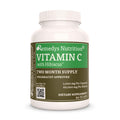
- Remedy's capsule label lists 800 mg vitamin C inside its 1,000 mg blend.
What to Check on Any Vitamin C Label
Read four things on a vitamin C label: the amount of actual vitamin C per serving, the chemical form, the serving size and the other ingredients. A "1,000 mg" headline can describe a blend, so the Supplement Facts line for vitamin C is the number that counts.
- Vitamin C per serving: look for a line such as "Vitamin C (as ascorbic acid)" with its own mg amount, not only a blend total.
- Form: ascorbic acid, calcium ascorbate, sodium ascorbate, or an ester or liposomal blend.
- Serving size and servings per container: you need both to work out the cost per day.
- Other ingredients: binders, sweeteners, colors and allergen statements.
- Proof of quality: a third-party seal or a certificate of analysis you can request from the seller.
Storage matters too. Light and heat break vitamin C down, so choose an opaque bottle and keep it closed in a cool cupboard. MedlinePlus gives the same advice for orange juice, which keeps better in a carton than in a clear bottle[1]Vitamin C: MedlinePlus Medical Encyclopedia — U.S. National Library of Medicine View source.
Vitamin C Forms Compared in One Table
Most vitamin C supplements use one of 5 forms: plain ascorbic acid, a mineral ascorbate such as calcium ascorbate, an ester-type blend, a liposomal preparation, or vitamin C with plant extracts. All of them deliver ascorbate, so the practical differences are acidity, added minerals, price and how much human evidence exists.
| Form | What it is | Strengths | Watch-outs |
|---|---|---|---|
| Plain ascorbic acid | The standard form in most capsules, tablets and powders | Most studied; usually the lowest cost per mg | Acidic; can upset a sensitive stomach at higher doses |
| Calcium or sodium ascorbate | Ascorbate bound to a mineral, so less acidic ("buffered") | Often chosen for sensitive stomachs; also supplies calcium or sodium | Evidence for better tolerance is limited; check the mineral amount |
| Ester-type or metabolite blends | Calcium ascorbate sold with vitamin C breakdown products, often under a brand name | Some small human trials report higher white-blood-cell levels | Often branded and priced higher; the benefit over plain forms is not settled |
| Liposomal vitamin C | Vitamin C wrapped in phospholipid spheres, usually a liquid or gel | Marketed for higher absorption | Usually costs more; human studies are few and the benefit is not settled |
| With plant extracts | Vitamin C plus rose hips, acerola, citrus bioflavonoids or hibiscus | Adds plant compounds some people like | Steady-state human studies show no absorption edge over synthetic vitamin C |
Does "natural" beat synthetic? A review of human steady-state studies found no difference in bioavailability between synthetic and food-derived vitamin C[2]Synthetic or Food-Derived Vitamin C: Equally Bioavailable? — PubMed View source. Paying extra for a "natural" label is hard to justify on absorption alone.
Liposomal products add cost and have thinner human data. Our liposomal versus standard vitamin C comparison walks through the trade-offs in more depth.
How Much Vitamin C Is Enough Each Day?
Adults need 75 mg (women) to 90 mg (men) of vitamin C a day, with 35 mg more for smokers. The upper limit is 2,000 mg from all sources, and a typical supplement of 500 to 1,000 mg sits well above the requirement but under that ceiling[3]Vitamin C Fact Sheet for Health Professionals — NIH Office of Dietary Supplements View source.
| Group | Recommended daily amount |
|---|---|
| Adult women | 75 mg |
| Adult men | 90 mg |
| Pregnancy (adults) | 85 mg |
| Breastfeeding (adults) | 120 mg |
| Smokers or secondhand-smoke exposure | Add 35 mg |
| Upper limit, adults (all sources) | 2,000 mg |
Is 500 mg or 1,000 mg better? Absorption is the deciding fact. Healthy adults reach adequate to saturating plasma levels at about 100 to 200 mg a day[4]Vitamin C and Immune Function — PubMed View source.
In one study, a single 1.25 g oral dose peaked at about 135 µmol/L in plasma, compared with 885 µmol/L for the same dose given intravenously, because the body tightly regulates oral vitamin C[5]Vitamin C Pharmacokinetics: Oral and Intravenous Use — PubMed View source. A bigger dose therefore mostly raises cost and the chance of stomach upset. If you do want 1,000 mg, two doses of 500 mg work better than one large dose.
- 250 to 500 mg: covers the daily requirement several times over and is a common label dose.
- 1,000 mg: still under the limit; split it across the day if you notice stomach upset.
- Above 1,000 mg: only with clinician guidance, since the 2,000 mg limit counts food and other supplements too.
For the full numbers by age and life stage, see our guide to vitamin C dosage and safety limits.

Capsules, Crystals or Chewables: Our Three Labels
Remedy's Nutrition sells 3 vitamin C formats: a 60-capsule bottle, an 8.8 oz jar of crystals and 180 chewable tablets. Their label facts differ more than their names suggest, so the table lists what each product page and label actually state, with cost per serving where the label allows it.
| Product | Form | Vitamin C per serving | Size | Price | Cost |
|---|---|---|---|---|---|
| Vitamin C with Hibiscus | Ascorbic acid plus 200 mg hibiscus, vegan capsule | 800 mg per capsule (1,000 mg blend) | 60 capsules, 1 a day | $17.99 | About $0.30 a capsule, or $0.37 per 1,000 mg of vitamin C |
| Vitamin C Crystals | Calcium ascorbate powder (buffered, non-acidic) | Not stated on the product page; check the jar panel | 8.8 oz (250 g) jar, ¼ teaspoon a day | $19.00 | About $2.16 per ounce of powder |
| Orange Chewable C | Vegetarian chewable tablet | 500 mg per tablet | 180 tablets, 1 to 2 a day | $35.00 | About $0.19 a tablet, or $0.39 per 1,000 mg of vitamin C |
One detail worth knowing: the capsule is named "1000 mg", but its Supplement Facts show a 1,000 mg proprietary formula made of 800 mg vitamin C (as ascorbic acid) plus 200 mg hibiscus. That still delivers roughly 9 to 11 times the daily requirement. The capsule label directs 1 capsule daily, so a bottle lasts 60 days.
Cost per 1,000 mg of vitamin C is nearly the same for the capsule and the chewable, so choose by format rather than by price. Our vitamin C with hibiscus capsule suits people who want a fixed once-a-day dose.
- Capsules: no taste, a fixed dose and easy to travel with.
- Crystals: an adjustable dose that mixes into water or juice, but you must measure it.
- Chewables: no water needed and easy for people who dislike swallowing capsules.
Stomach Comfort, Timing and How to Take It
Plain ascorbic acid is acidic, and doses near the 2,000 mg limit commonly cause stomach upset and loose stools. Splitting a 1,000 mg day into 2 doses of 500 mg, taking it with food, or switching to a buffered form such as calcium ascorbate are the usual fixes.
- Take it with a meal rather than on an empty stomach.
- Start at 250 to 500 mg and raise the dose only if you need to.
- Stir powder into a full glass (8 oz) of water or juice.
- Stop or lower the dose if loose stools appear.
Evidence for buffered forms is limited. A 2025 systematic review of 13 studies reported fewer stomach complaints with one calcium ascorbate blend[6]Alternative Vitamin C Supplement Forms, Systematic Review — PubMed View source, while a 2024 crossover trial in 93 healthy adults found no difference at a 250 mg dose[7]Ascorbic Acid vs. Calcium Ascorbate in Healthy Adults — PubMed View source. Treat "gentler" as plausible, not proven.
One buffered option is our calcium ascorbate vitamin C crystals. As for timing, no trial shows a best time of day, so pick the time you will remember. Some people report heartburn or restlessness late in the evening, but that is anecdotal.
Chewable Vitamin C: Sugar, Acid and Enamel
Chewable vitamin C adds two extras to weigh: acid on tooth enamel and, in many products, sweeteners. A 1983 dental case report linked 3 years of daily chewing of vitamin C tablets with severe enamel erosion[8]Dental Erosion From Chewable Vitamin C Tablets — PubMed View source. One case does not prove risk for everyone, but it is a reason to rinse with water afterward.
- Check the Supplement Facts and Other Ingredients for added sugar or sugar alcohols.
- Note the sweetener type if you avoid specific ones.
- Keep chewables out of reach of children, since they can taste like candy.
- Rinse your mouth with water after chewing.
The product page for our orange chewable vitamin C 500 mg lists 500 mg per vegetarian tablet, taken 1 to 2 times daily, but it does not list the sweetener or sugar content, so read the bottle panel before you buy. If sugar or sweeteners matter to you, a capsule or crystals flavored with juice avoids the question.

Safety, Interactions and Who Should Ask First
Vitamin C is among the better-tolerated supplements, but doses above the 2,000 mg limit can cause diarrhea, nausea and stomach cramps, and rarely kidney stones. Pregnancy, kidney problems, iron overload and some medicines change the advice, so check with a clinician first.
| Situation | Why it matters | What to do |
|---|---|---|
| History of kidney stones or kidney disease | High doses are rarely linked with kidney stones | Ask a clinician before supplementing above the daily requirement |
| Iron overload conditions | Vitamin C helps the body absorb iron | Ask a clinician before using any vitamin C supplement |
| Pregnancy or breastfeeding | Large doses are not recommended in pregnancy; needs are 85 mg and 120 mg | Stay near the daily requirement and ask your prenatal clinician |
| Chemotherapy or radiation | Antioxidant supplements may interact with treatment | Do not start without your oncology team |
| Statin plus niacin, aluminum-containing antacids, or blood thinners such as warfarin | Interactions with high-dose vitamin C have been reported for some of these | Ask your pharmacist to review the combination |
The interactions column is a prompt to ask, not a complete list. Bring the bottle to your pharmacist along with your medicine list.
What the Research Does and Does Not Show
Vitamin C supports several immune cell functions and the skin barrier*, and it accumulates in white blood cells such as neutrophils. That is a different claim from preventing illness, and the evidence for high doses in healthy people is more mixed than product marketing suggests.
Across 29 trial comparisons and 11,306 participants, routine supplementation did not reliably change how often people caught colds in the general community (pooled risk ratio 0.97)[9]Vitamin C for Preventing and Treating the Common Cold — Cochrane via PubMed View source. Regular use was linked with modestly shorter colds, by 8% in adults.
- Solid: vitamin C is essential, and 75 to 90 mg a day meets the requirement for most adults.
- Mixed: benefits of high doses, buffered forms and liposomal forms in healthy people.
- Unknown: whether a "natural" source beats synthetic vitamin C once absorption is equal.
A Five-Step Way to Choose
Use this order when comparing any 2 vitamin C products. It keeps price and marketing from deciding before dose and form do, and it takes about 5 minutes with both labels in hand. Write down each answer, then compare the products side by side.
- Set your target dose: the requirement of 75 to 90 mg, or a supplement of 250 to 500 mg if your diet falls short.
- Pick a form for your stomach: plain ascorbic acid, or buffered if acid bothers you.
- Pick a format you will take every day: capsule, crystals or chewable.
- Compare cost per 1,000 mg of actual vitamin C, not cost per bottle.
- Check your medicines and conditions against the safety table above.
*These statements have not been evaluated by the Food and Drug Administration. These products are not intended to diagnose, treat, cure, or prevent any disease.

Frequently Asked Questions
Is it better to take 500 mg or 1,000 mg of vitamin C? +
For most adults 500 mg is plenty: the requirement is 75 to 90 mg, and plasma levels level off at roughly 100 to 200 mg a day. A 1,000 mg dose mostly adds cost and the chance of stomach upset. If you prefer 1,000 mg, split it into 2 doses of 500 mg.
Is 1,000 mg of vitamin C too much per day? +
No for most healthy adults: 1,000 mg is half of the 2,000 mg upper limit. It is still about 11 to 13 times the daily requirement, and absorption drops as doses rise. Loose stools and stomach upset are the usual first signs. Ask a clinician first if you have kidney stones or iron overload.
Can I take 2,000 mg of vitamin C in a day? +
Adults can stay within 2,000 mg from all sources, but that number is a ceiling, not a target. Diarrhea and stomach cramps become likely near and above it. Because absorption falls as single doses rise, splitting the amount into 2 or more doses works better than 1 large dose.
How much vitamin C per day does a woman need? +
Adult women need 75 mg a day, rising to 85 mg in pregnancy and 120 mg while breastfeeding. Smokers need 35 mg more. Typical label doses of 500 to 1,000 mg are several times higher than that need, so a lower dose or diet alone is often enough.
Is it better to take vitamin C in the morning or at night? +
No trial shows a best time, so choose a time you will remember, ideally with a meal. Some people report heartburn or restlessness when taking it late in the evening, which is anecdotal. Splitting 1,000 mg into 2 doses of 500 mg, one in the morning and one with dinner, is a common approach.
Can I take vitamin D and vitamin C together? +
Yes. Vitamin C is water-soluble and vitamin D is fat-soluble, and no widely reported conflict exists at standard doses. Take vitamin D with a meal that contains fat, and keep vitamin C under 2,000 mg a day. If you take 5 or more medicines, ask your pharmacist to review the combination.
What should you never mix with vitamin C? +
Nothing is banned outright, but 3 situations need a clinician: chemotherapy or radiation, iron overload conditions, and aluminum-containing antacids or blood thinners such as warfarin. Vitamin C also boosts iron absorption, which matters with iron pills. Bring your medicine list to a pharmacist.
What are the signs you may be taking too much vitamin C? +
Loose stools, diarrhea, nausea, stomach cramps and heartburn are the common signs, usually at doses above 2,000 mg a day and sometimes lower in sensitive people. High doses are rarely linked with kidney stones. Lower the dose to settle digestive symptoms, and seek care for pain or blood in the urine.
How does vitamin C support the immune system? +
Vitamin C supports the function of immune cells such as neutrophils, which accumulate it, and it supports the skin barrier.* Intakes of 100 to 200 mg a day are enough for adequate to saturating plasma levels in healthy adults. Large reviews do not show that routine high doses change how often people catch colds.
Which form of vitamin C is gentlest on the stomach? +
Buffered forms such as calcium ascorbate are less acidic than plain ascorbic acid and are often chosen by people with sensitive stomachs. A 2025 review of 13 studies reported fewer stomach complaints with one calcium ascorbate blend, though evidence is limited. Taking any form with food also helps.
Do chewable vitamin C tablets harm tooth enamel? +
They can wear enamel over time, because vitamin C tablets are acidic. A 1983 case report linked 3 years of daily chewing with severe erosion. This is a single case, not proof of risk for everyone. Rinse with water after chewing, or choose a capsule if enamel is a concern.
Related Products
Looking for More Options?
 Letter Vitamins A–K
Single-letter vitamins from A to K — foundational nutrients, clinician-curated.
 Vitamins & Supplements
Our full vitamins and supplements library — every formula in one place.
 Daily Essentials
Foundational everyday supplements that cover the nutritional basics.