
PubMed lists 1,010 records on Hibiscus sabdariffa, the plant behind hibiscus tea, and 22 of its trial records measured blood pressure. Garden hibiscus is a different plant, with 268 records of its own.
That is a lot of reading for a red tea, so this page counts what the human evidence shows, where it disagrees, and what it does not cover.
Quick Answer: What Are the Benefits of Hibiscus Tea?
Hibiscus tea is brewed from the dried calyces of Hibiscus sabdariffa, or roselle. Its best-supported effect is a modest fall in blood pressure: 5 meta-analyses report about 4.7 to 7.6 mmHg systolic, mostly in people with raised readings who were not on medication. The 2021 Cochrane review rated that evidence very low certainty. Weight results are null.
Key Takeaways
- Hibiscus tea is the dried calyx of Hibiscus sabdariffa, 1 specific plant.
- PubMed holds 1,010 records on it, and 45 are tagged as trials.
- Meta-analyses report systolic drops of about 4.7 to 7.6 mmHg.
- The 2021 Cochrane review found 1 eligible trial and very low certainty.
- Weight loss trials found a 0.27 kg difference, which is no real effect.
Related Products
The Plant in the Cup Is Not Garden Hibiscus
Hibiscus tea comes from Hibiscus sabdariffa, also called roselle, sorrel or sour tea. The part used is the calyx, the fleshy red cup of sepals that wraps the seed pod after the flower falls. The showy garden hibiscus is usually Hibiscus rosa-sinensis, a different species that no blood pressure trial used.
- Roselle: Hibiscus sabdariffa, grown for its tart red calyces.
- Garden hibiscus: Hibiscus rosa-sinensis or Hibiscus syriacus, grown for flowers.
- Other names for the drink: bissap, karkade, zobo, agua de jamaica.
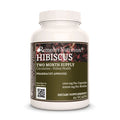
- Our capsule: 1,000 mg of Hibiscus sabdariffa; its product page lists flowers and leaves.
The calyces are rich in anthocyanins, organic acids and polysaccharides, and reviewers have asked for a standard chemical fingerprint to control quality.[1]A review on phytochemistry and therapeutic uses of Hibiscus sabdariffa L. — Biomedicine and Pharmacotherapy (2018) View source That variation is one reason results differ, as how far the tea lowered blood pressure shows.
How Much Research There Really Is
Hibiscus is often called well studied, and by herbal standards it is. Most of the work, though, is chemistry and animal research, and the human trials are small. These counts came off PubMed on 8 October 2026, and anyone can rerun them.
| What PubMed holds on Hibiscus sabdariffa (roselle) | Count |
|---|---|
| Records mentioning any hibiscus | 2,203 |
| Records on Hibiscus sabdariffa, roselle or sour tea | 1,010 |
| Records naming garden hibiscus (H. rosa-sinensis) | 268 |
| Roselle records tagged as human | 272 |
| Roselle records tagged as clinical trials | 45 |
| Trial records that measured blood pressure | 22 |
| Systematic reviews or meta-analyses | 21 |
| Human trials in pregnancy | 0 |
The 268 records on garden hibiscus are a reminder that the word alone is not enough. Every number on this page refers to Hibiscus sabdariffa, roselle or sour tea.

What the 22 Blood Pressure Trials Tested
Blood pressure is the claim that brings most people to hibiscus, and it is the best studied. We read every record PubMed tags as a trial that measured blood pressure, because that one label hides very different designs.
| What the blood pressure trial was testing | Records |
|---|---|
| Brewed drink vs a placebo drink or water | 4 |
| Sour tea vs black or green tea, or no tea | 3 |
| Hibiscus vs a blood pressure drug | 7 |
| Capsules or extract vs a placebo capsule | 4 |
| Blends with lemon verbena | 3 |
| A one-morning mechanism study | 1 |
Only 1 of the 4 drink-versus-placebo trials ran for weeks in people with raised readings. Most comparisons with drugs had no placebo group, so they cannot show how much of the fall came from the tea itself.
The Trial Most Pages Quote
In 2010, a US trial gave 65 adults with prehypertension or mild hypertension either hibiscus tea or a look-alike placebo drink. None were taking blood pressure medicine. They drank 3 servings a day for 6 weeks, and their pressure was checked every week.
- Dose: 3 servings of 240 mL of brewed tea a day.
- Systolic: down 7.2 mmHg, against 1.3 mmHg on placebo.
- Diastolic: down 3.1 mmHg, not significantly different from placebo.
- Pattern: the higher the starting reading, the bigger the fall.
That is a real, modest effect in a specific group of untreated adults.[2]Hibiscus sabdariffa L. tea (tisane) lowers blood pressure in prehypertensive and mildly hypertensive adults — The Journal of Nutrition (2010) View source
Where the Reviews Agree and Where They Do Not
Five meta-analyses have pooled these trials, and they agree on a systolic fall of roughly 4.7 to 7.6 mmHg. The Cochrane review asked a stricter question, accepted only placebo-controlled trials in diagnosed hypertension, and reached a different answer.
- 2015: 5 trials, 390 people, systolic down 7.58 mmHg and diastolic 3.53.
- 2020: 7 trials, 362 people, systolic down 4.71 mmHg.
- 2025: 26 trials, 1,797 people, a fall that grew with the dose.
- Cochrane 2021: 1 eligible trial, 60 people, very low certainty.
The 2015 analysis also found bigger falls in people with higher starting pressure.[3]Effect of sour tea (Hibiscus sabdariffa L.) on arterial hypertension: a systematic review and meta-analysis of randomized controlled trials — Journal of Hypertension (2015) View source Cochrane's single trial used capsules in people with diabetes and found no clear effect.[4]Roselle for hypertension in adults (Cochrane review update) — Cochrane Database of Systematic Reviews (2021) View source
The trials that report it also enrolled people who were not on blood pressure drugs. That gap is why we list separately which medicines it interacts with.

Claims That Do Not Hold Up
Hibiscus is also sold for weight, cholesterol, blood sugar and the liver. The trials behind those claims are fewer, and several of the better ones found little or nothing worth acting on.
- Weight: 6 trials, 339 people, a 0.27 kg difference from control.
- Cholesterol: a 2013 review of 6 trials found no effect; a 2020 one found LDL lower.
- Blood sugar: fasting glucose about 4 mg/dL lower in pooled trials.
- Liver: 2 small trials in fatty liver disease, too few to rely on.
The weight result is the clearest null finding in the literature.[5]Clinical effects of Hibiscus sabdariffa Linn. on obesity treatment: A systematic review and meta-analysis of randomized controlled trials — Complementary Therapies in Medicine (2024) View source The lipid reviews disagree with each other.[6]Effects of Hibiscus sabdariffa L. on serum lipids: a systematic review and meta-analysis — Journal of Ethnopharmacology (2013) View source
Who Should Be Careful
Hibiscus is an everyday drink in many countries, and short trials report few side effects. The cautions come from what it does well, lowering blood pressure, and from how it changes some medicines. If you are expecting, read whether it is safe in pregnancy first.
- Blood pressure drugs or diuretics: effects could add up.
- Chloroquine: 1 study found blood levels cut by about 71%.
- Pregnancy: 0 human trials, and the rat studies give reasons to avoid it.
- Kidney disease: ask your specialist first.
None of these cautions is rare in a household medicine cabinet, so check yours before the first cup.
If You Want to Try It
For a healthy adult with mildly raised readings who takes no medicine, hibiscus is a reasonable thing to test. These terms follow the best trial as closely as possible and give you your own answer rather than an average.
- Amount: 3 cups a day at a steady strength, as in the 2010 trial.
- Length: 6 weeks.
- Measure: home readings at the same time each morning.
- Stop: if you feel dizzy or faint.
Speak to a Clinician Before Taking Hibiscus If
- You take blood pressure medicine or a diuretic such as hydrochlorothiazide
- You take chloroquine, simvastatin, warfarin or another medicine with a narrow margin
- You take insulin or another glucose-lowering medicine
- You are pregnant, trying to conceive or breastfeeding
- You have kidney disease, kidney stones or blood pressure that already runs low
If you prefer a fixed amount without brewing, a 1,000 mg hibiscus capsule is 1 option, though no trial used exactly that form.

Frequently Asked Questions
What organ is hibiscus good for? +
No trial shows hibiscus targets 1 organ. The best human evidence is for blood pressure, with systolic falls of about 4.7 to 7.6 mmHg in pooled trials of people with raised readings.
Can you eat hibiscus flowers? +
The calyces of Hibiscus sabdariffa are eaten in jams, sauces and drinks in many countries. Garden hibiscus is a different species, so do not assume a plant from your yard is the same 1.
Which is healthier, green tea or hibiscus tea? +
They do different things. In a 2013 trial of 100 people with diabetes, 3 cups a day of either lowered blood pressure by similar amounts over 4 weeks. Hibiscus has no caffeine.
Does hibiscus tea help with constipation? +
We found 0 trials testing hibiscus for constipation. It does increase urine output, which is a different effect from a laxative.
Can I lose belly fat by drinking hibiscus tea? +
Unlikely. A 2024 review of 6 trials with 339 people found weight only 0.27 kg lower than control, and waist size barely changed.
What disease is cured by hibiscus? +
None. Hibiscus is not proven to cure any disease. Its best evidence is a modest fall in blood pressure, about 4.7 to 7.6 mmHg systolic in pooled trials.
Is hibiscus tea made from the same plant as garden hibiscus? +
Usually not. Hibiscus tea is the calyx of Hibiscus sabdariffa. Most garden hibiscus is Hibiscus rosa-sinensis, which has 268 PubMed records but no blood pressure trials.
Does hibiscus tea lower cholesterol? +
The evidence is split. A 2013 review of 6 trials found no effect, while a 2020 analysis found LDL about 7.8 mg/dL lower.
Is hibiscus tea an antioxidant? +
In the lab, yes. A 2021 analysis of 109 foods placed roselle among those with the highest antioxidant activity. Whether that matters inside the body is much less clear.
How strong is the evidence for hibiscus? +
Moderate at best. 5 meta-analyses agree on a systolic fall, but the 2021 Cochrane review found 1 eligible trial and rated the certainty very low.
Related Reading
- How to Make Hibiscus Tea at Trial Strength
- Hibiscus Capsules vs Tea: The Dose Arithmetic
- Hibiscus Tea, Kidney Stones and Oxalate
Related Products