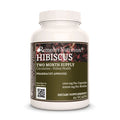

Hibiscus trials have used everything from a 500 mg capsule to 10 g of calyx brewed every day. A 1,000 mg capsule sits near the bottom of that range, so the arithmetic matters.
This page lays the doses side by side, says what a capsule can and cannot stand in for, and how to take it.
Quick Answer: How Much Hibiscus Should You Take?
Tea trials used 1.5 to 10 g of dried calyx a day, usually as 2 to 3 cups. Capsule trials used 450 to 1,000 mg a day and disagreed: a 500 mg powder capsule lowered systolic pressure in 2016, while a 1,000 mg extract did nothing in 2025. Our capsule is 1,000 mg, 1 a day.
Key Takeaways
- Tea trials brewed 1.5 to 10 g of dried calyx each day.
- One 1,000 mg capsule equals 1 g of plant, not a brewed cup.
- A 500 mg powder capsule lowered systolic pressure versus placebo in 2016.
- A 1,000 mg extract showed no blood pressure effect over 12 weeks.
- Rats drinking 30 to 60 g per litre had higher blood pressure.
Related Products
Every Dose the Trials Used
A dose only means something next to the form it came in. These are the daily amounts in the human trials we read, from the lightest tea to the strongest brew, with the capsule trials alongside so you can see where a capsule fits.
| Form | Daily amount | Trial | Blood pressure result |
|---|---|---|---|
| Tea | 3 g (1.5 g per cup, 2 cups) | 2008 urine study | Not measured |
| Tea | 3 cups of 240 mL | 2010 US trial | -7.2 vs -1.3 mmHg |
| Brew | 10 g of calyx | 2004 and 2021 trials | Similar to captopril |
| Calyx powder capsule | 500 mg | 2016, metabolic syndrome | Systolic lower than placebo |
| Calyx powder capsule | 640 mg (320 mg twice) | 2017, Senegal | -11.2 mmHg, less than ramipril |
| Sour tea capsule | 450 mg | 2021, fatty liver | Lower than placebo |
| Aqueous extract | 1,000 mg | 2025, Thailand | No difference from placebo |
| Extract capsules | 5,600 mg in total | The 1 Cochrane trial | No clear effect |
For the plant and its evidence in 1 place, see the hibiscus evidence map.
Capsule Versus Cup: The Arithmetic
A 1,000 mg capsule of whole hibiscus powder contains 1 g of plant. A trial cup steeped 1.5 to 5 g of calyx in water, and you drank the water, not the calyx. The 2 are not interchangeable in either direction.
- To match 1 trial cup by weight: 1.5 to 5 capsules.
- To match a 10 g daily brew: 10 capsules, a sixth of a bottle.
- What a capsule adds: the whole plant, including the fibre tea leaves behind.
- What tea adds: water-soluble acids and pigments, in volume.
Absorption also differs from what any label suggests. In 6 volunteers, only about 0.018% of the anthocyanins in a hibiscus drink appeared intact in urine within 7 hours.[1]Pharmacokinetics of anthocyanidin-3-glycosides following consumption of Hibiscus sabdariffa L. extract — Journal of Clinical Pharmacology (2005) View source
That is 1 reason a 2026 analysis pointed to hibiscus acid, not anthocyanins, as a main active compound.[2]Is the antihypertensive activity of Hibiscus sabdariffa affected by factors such as origin of the plant and time of decoction? — Journal of Human Hypertension (2026) View source

What the Capsule Trials Found
Capsule trials are the closest guide to a capsule, and they disagree. The ones that used plain calyx powder or a sour tea capsule at 450 to 640 mg a day saw falls, while a larger 1,000 mg extract trial saw none.
- 2016, 40 people: 500 mg calyx powder once daily for 4 weeks; systolic lower than placebo.
- 2017, 125 people: 320 mg powder twice daily; -11.2 mmHg, ramipril did better.
- 2021, 61 completers: 450 mg sour tea capsule for 8 weeks; pressure lower than placebo.
- 2025, 108 people: 1,000 mg extract for 12 weeks; no blood pressure effect.
The 2016 trial is the closest to a whole-powder capsule.[3]Evaluation of the effects of roselle (Hibiscus sabdariffa L.) on oxidative stress and serum levels of lipids, insulin and hs-CRP in adult patients with metabolic syndrome — Journal of Complementary and Integrative Medicine (2016) View source The tea results are in the blood pressure trials, cup by cup.
The 2025 trial found no change in pressure, glucose or lipids versus placebo.[4]Efficacy of Hibiscus sabdariffa L. extract on metabolic parameters in participants with abdominal obesity and mild metabolic syndrome — Complementary Therapies in Medicine (2025) View source None used our product, so treat them as a range, not a promise.
How Much Is Too Much
More is not better with hibiscus. Rats that drank strong infusions as their only fluid developed higher, not lower, blood pressure, and a 2025 review asked for monitoring of long-term and therapeutic doses.
- Rats at 30 and 60 g per litre: systolic pressure and inflammation markers rose.
- A strong human brew: 10 g in 500 mL is 20 g per litre.
- 2025 review: a minor liver enzyme rise, no increase in adverse events.
- Practical ceiling: stay within trial amounts and do not stack forms.
The rat study tested 15, 30 and 60 g per litre as drinking water.[5]Excessive Consumption Hibiscus sabdariffa L. Increases Inflammation and Blood Pressure in Male Wistar Rats via High Antioxidant Capacity — Cells (2022) View source The review pooled 26 trials with 1,797 people.[6]Efficacy and safety of Hibiscus sabdariffa in cardiometabolic health: An overview of reviews and updated dose-response meta-analysis — Complementary Therapies in Medicine (2025) View source

When and How to Take It
No trial compared morning with evening, or food with no food. The label direction for our capsule is 1 a day, with or without food, morning or evening. For tea, how to brew a measured cup gives the grams and steeping time.
- Capsules: 1 a day, at the same time.
- Tea: spread 2 to 3 cups through the day.
- With tablets: take medicines with water, not with hibiscus.
- Duration: judge it at 4 to 6 weeks.
Keeping to the same time each day matters more than which time you choose.
Count Every Source
Hibiscus turns up in more products than people realise, so your real daily amount is the total of everything you take. Add them up before deciding on a capsule or another cup.
- Capsule: 1,000 mg each.
- Tea bags: weight not published on our Hibiscus Citrus Tea.
- Vitamin C with Hibiscus: hibiscus is an ingredient.
- Blends: Pressure Balance and Anti-Oxidant Tea both contain it.
Speak to a Clinician Before Taking Hibiscus If
- You take blood pressure medicine or a diuretic such as hydrochlorothiazide
- You take chloroquine, simvastatin, warfarin or another medicine with a narrow margin
- You take insulin or another glucose-lowering medicine
- You are pregnant, trying to conceive or breastfeeding
- You have kidney disease, kidney stones or blood pressure that already runs low
If you want 1 known number, our 1000 mg hibiscus capsule is the easiest to count.

Frequently Asked Questions
What is hibiscus supplement used for? +
Mostly for blood pressure. Capsule trials of 450 to 640 mg a day lowered systolic pressure, but a 2025 trial of a 1,000 mg extract found no effect.
Is it safe to take hibiscus every day? +
A 2025 review of 26 trials found no rise in adverse events, though long-term safety at therapeutic doses still needs monitoring. Skip it in pregnancy and ask first if you take medicine.
Do hibiscus pills lower blood pressure? +
Sometimes. A 500 mg powder capsule lowered systolic pressure in 40 people over 4 weeks, but a 1,000 mg extract had no effect in 108 people over 12 weeks.
How many cups of hibiscus tea is safe to drink daily? +
Trials used 2 to 3 cups a day for up to 6 weeks, and up to 10 g of calyx daily for 6 months. There is no established upper limit, so staying within those amounts is sensible.
When should you stop drinking hibiscus tea? +
Stop if you feel dizzy or faint, if you become pregnant, or before starting a new medicine without advice. In 1 trial, pressure rose again within 3 days of stopping.
How many capsules equal a cup of hibiscus tea? +
There is no exact conversion. By weight a trial cup used 1.5 to 5 g of calyx, about 1.5 to 5 capsules, but a capsule delivers the whole plant rather than an infusion.
Is hibiscus tea or a capsule better? +
For blood pressure, tea has more trials behind it. A capsule gives a known 1,000 mg with no brewing, which suits people who want 1 fixed amount.
When should I take a hibiscus capsule? +
0 trials compared timings. Take 1 a day at the same time, morning or evening, with or without food, as the label says.
How long does 1 bottle last? +
60 capsules last 2 months at 1 capsule a day.
Related Reading
- Who Should Not Take Hibiscus
- Hibiscus During Pregnancy and Breastfeeding
- Hibiscus, Uric Acid and Stones
Related Products