
Hibiscus tea has more blood pressure trials behind it than most herbs, and 5 meta-analyses put the systolic fall at about 4.7 to 7.6 mmHg. The 2021 Cochrane review rated the same evidence very low certainty.
Both are honest readings of one small literature, and this page shows you why, cup by cup.
Quick Answer: Does Hibiscus Tea Lower Blood Pressure?
Modestly, in people with raised readings. A 2010 trial of 65 adults found 3 cups a day for 6 weeks lowered systolic pressure 7.2 mmHg, against 1.3 on placebo. Meta-analyses report about 4.7 to 7.6 mmHg. Cochrane rated the evidence very low certainty, and most trials enrolled people not on medication.
Key Takeaways
- 3 cups a day for 6 weeks lowered systolic pressure 7.2 mmHg.
- Placebo drinkers in that 2010 trial dropped only 1.3 mmHg.
- Five meta-analyses agree on a systolic fall of 4.7 to 7.6 mmHg.
- Cochrane found only 1 eligible trial in 2021 and very low certainty.
- At least 6 trials enrolled only people not taking blood pressure medicine.
Related Products
Who Was Actually Studied
Before the numbers, the people. Hibiscus trials mostly enrolled adults with prehypertension or mild to moderate hypertension who were not yet on treatment. That matters, because they are not the group most likely to be reading this with a pill organiser on the table.
- 2010 US trial: 65 adults aged 30 to 70, not taking blood pressure medicine.
- 2009 Iranian trial: 60 people with diabetes, on no blood pressure or lipid drugs.
- 2004 Mexican trial: patients off treatment for at least 1 month.
- 2015 and 2017 Nigerian trials: newly diagnosed patients, untreated.
For the plant itself and why the calyx matters, start with what hibiscus tea is made from.
The Trials, Cup by Cup
Every result below is tied to what people drank and for how long, because that decides whether it applies to you. The biggest falls come from trials without a placebo group, where some of the drop reflects time and attention.
| Trial | What people took | How long | Systolic result |
|---|---|---|---|
| 2010, 65 adults, US | 3 cups of 240 mL tea a day vs placebo drink | 6 weeks | -7.2 vs -1.3 mmHg |
| 1999, 54 patients, Iran | Sour tea vs a control group | About 2 weeks | Down 11.2% |
| 2009, 60 with diabetes, Iran | Sour tea twice a day vs black tea | 1 month | 134.4 to 112.7 mmHg |
| 2004, 75 analysed, Mexico | 10 g calyx in 500 mL daily vs captopril | 4 weeks | 139 to 124 mmHg, no different from the drug |
| 2007, 171 analysed, Mexico | Extract, 250 mg anthocyanins vs lisinopril | 4 weeks | -17.1 mmHg, less than lisinopril |
| 2021, 219 patients, Senegal | 10 g calyx brew a day, or tablets, vs captopril | 6 months | About -19.5 mmHg, similar to the drug |
The 2010 trial is the cleanest test of tea against a look-alike drink.[1]Hibiscus sabdariffa L. tea (tisane) lowers blood pressure in prehypertensive and mildly hypertensive adults — The Journal of Nutrition (2010) View source The 2004 trial matched captopril at 50 mg a day, but it had no placebo arm.[2]Effectiveness and tolerability of a standardized extract from Hibiscus sabdariffa in patients with mild to moderate hypertension — Phytomedicine (2004) View source
None of these used a capsule like ours, so see how a capsule compares with those cups before choosing a form.

What the Reviews Concluded
Pooling trials is how you see past small samples, and 6 reviews have done it for hibiscus. Five agree on a modest systolic fall. The sixth, Cochrane, accepted only placebo-controlled trials in diagnosed hypertension, found 1, and could not see an effect.
| Review | What it pooled | Systolic result | The caveat |
|---|---|---|---|
| 2015 meta-analysis | 5 trials, 390 people | Down 7.58 mmHg | Bigger fall with higher baseline |
| 2020 meta-analysis | 7 trials, 362 people | Down 4.71 mmHg | Diastolic down 4.08 mmHg |
| 2022, Nutrition Reviews | 17 trials | Down 7.10 mmHg vs placebo | Heterogeneity 95% |
| 2022, cardiology journal | 13 trials, 1,205 people | Down 6.67 mmHg vs placebo | Not significant in metabolic syndrome |
| 2025 umbrella review | 26 trials, 1,797 people | Fall grows with dose | Drug comparisons had no placebo |
| 2021 Cochrane review | 1 trial, 60 people | No clear effect | Very low certainty |
The 2022 review that found 7.10 mmHg also reported heterogeneity of 95%, so the trials disagreed with each other far more than chance explains.[3]A systematic review and meta-analysis of the effects of Hibiscus sabdariffa on blood pressure and cardiometabolic markers — Nutrition Reviews (2022) View source
Cochrane rated its evidence very low certainty, citing method limits, imprecision and indirectness.[4]Roselle for hypertension in adults (Cochrane review update) — Cochrane Database of Systematic Reviews (2021) View source
The Higher Your Reading, the Bigger the Fall
Every analysis that looked found the same pattern: people who start higher fall further. That is encouraging if your readings are raised, and a reason for caution if they are already normal or low. It also explains part of the spread between trials.
- 2010 trial: starting systolic and the fall correlated at -0.42.
- Its higher-pressure half: systolic 129 or above at the start, down 13.2 and 6.4 mmHg.
- 2022 review: significant in hypertension alone, not in metabolic syndrome.
- 2025 umbrella review: falls over 10 mmHg most credible in people over 50.
The subgroup figures come from the trial's own report to the American Heart Association, which also notes the placebo drink used artificial hibiscus flavour.[5]Study Shows Consuming Hibiscus Tea Lowers Blood Pressure — USDA Agricultural Research Service View source The age and duration pattern is from the 2025 review.[6]Efficacy and safety of Hibiscus sabdariffa in cardiometabolic health: An overview of reviews and updated dose-response meta-analysis — Complementary Therapies in Medicine (2025) View source
If You Already Take Blood Pressure Medicine
This is the question the trials were not built to answer. We found only 2 trials that added hibiscus to a blood pressure drug, both in Iran, both supervised. Animal studies of the combination point in opposite directions.
- 2024 trial: 72 people with mild kidney disease on valsartan, plus a 350 mg pill twice daily.
- Its result: pressure fell in both arms over 90 days; lipids fell more with hibiscus.
- Rats on captopril: hibiscus cut drug levels sharply.
- Rats on losartan: hibiscus roughly doubled drug levels.
The valsartan trial compared hibiscus with hydrochlorothiazide as the add-on, not with nothing.[7]Roselle (Hibiscus sabdariffa L.) extract as an adjunct to valsartan in patients with mild chronic kidney disease — Avicenna Journal of Phytomedicine (2024) View source Effects that run both ways in animals are the reason to involve your prescriber before taking it alongside blood pressure medicine.

How Fast It Works, and What Happens When You Stop
The trials measured weeks, not hours. Headlines about lowering pressure within an hour come from single-morning studies, and the 2 in PubMed found no significant fall in blood pressure that morning.
- About 2 weeks: the shortest trial already saw a fall.
- 4 to 6 weeks: when most trials took their main measurement.
- 3 days after stopping: systolic pressure rose 7.9% again in 1999.
- 6 months: the Senegal trial still held its effect.
The rebound after stopping suggests the effect lasts only while you keep drinking it.[8]The effect of sour tea (Hibiscus sabdariffa) on essential hypertension — Journal of Ethnopharmacology (1999) View source The Senegal trial suggested brews could start at a lower dose.[9]Hypertension treatment with Combretum micranthum or Hibiscus sabdariffa, as decoction or tablet: a randomized clinical trial — Journal of Human Hypertension (2021) View source
How to Test It on Yourself
If you take no blood pressure medicine and your clinician agrees, you can rerun the 2010 trial on yourself. It costs little, and it gives you your own answer rather than a pooled average.
- Take 1 week of baseline readings, at the same time each morning.
- Drink 3 cups a day of tea brewed at a measured, steady strength.
- Take readings again in weeks 2, 4 and 6.
- Compare weekly averages, not single readings.
Keep everything else the same for those 6 weeks, including salt, exercise and other supplements, so the tea is the only change.
What Hibiscus Does Not Replace
Hibiscus is a drink with a modest effect, not a treatment for hypertension. In 2 of the drug-comparison trials, lisinopril and ramipril lowered pressure more than hibiscus did, and no trial measured heart attacks or strokes.
- Does not replace: prescribed blood pressure medicine.
- Do not stop: any medicine in order to try a herb.
- Was not tested for: preventing heart attack or stroke.
- Reasonable for: a 6-week test in untreated mild hypertension, with agreement.
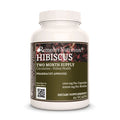
Used that way, our hibiscus capsules or a measured cup give you a clear before and after.
Speak to a Clinician Before Using Hibiscus for Blood Pressure If
- You take blood pressure medicine or a diuretic such as hydrochlorothiazide
- You take chloroquine, simvastatin, warfarin or another medicine with a narrow margin
- You take insulin or another glucose-lowering medicine
- You are pregnant, trying to conceive or breastfeeding
- You have kidney disease, kidney stones or blood pressure that already runs low

Frequently Asked Questions
How much hibiscus tea do I need to drink to lower my blood pressure? +
The best placebo-controlled trial used 3 cups of 240 mL a day for 6 weeks. Other trials used 2 cups a day, or 10 g of dried calyx brewed in 500 mL.
How long does hibiscus take to lower high blood pressure? +
Most trials measured the effect at 4 to 6 weeks. The shortest saw a fall within about 2 weeks, and it faded within 3 days of stopping.
What is the best tea to bring down high blood pressure? +
Hibiscus has more blood pressure trials than any other herbal tea we checked. In 1 trial of 100 people with diabetes, green tea lowered pressure by a similar amount over 4 weeks.
What drink lowers BP fast? +
No drink is a safe way to bring a high reading down quickly. The 2 single-morning hibiscus studies found no significant fall within 2 to 4 hours. A very high reading needs medical advice.
What herb gets rid of high blood pressure? +
No herb is proven to cure high blood pressure. Hibiscus lowers systolic pressure by about 4.7 to 7.6 mmHg in pooled trials, which helps but does not remove the condition.
When is the best time to drink hibiscus tea to lower blood pressure? +
0 trials compared timings. The 2004 trial used 1 infusion before breakfast, and the 2010 trial spread 3 cups through the day. Consistency matters more than the hour.
Which tea should I avoid if I have high blood pressure? +
Licorice root tea is the 1 most worth asking about, because licorice can raise blood pressure in large amounts. Check the labels of blends too.
Does hibiscus tea lower diastolic pressure? +
Less consistently. In the 2010 trial the diastolic fall of 3.1 mmHg was not significant. Pooled analyses report about 3.5 to 4.4 mmHg.
Is hibiscus tea as strong as blood pressure medicine? +
In 2004 it matched 50 mg of captopril a day over 4 weeks, but in 2007 lisinopril did better. Neither trial had a placebo group.
Does hibiscus tea work if my blood pressure is normal? +
Probably less. Falls were larger in people who started higher; in the 2010 trial, starting systolic and the fall correlated at -0.42.
Related Reading
Related Products