What Is Sweet Almond Oil?
Sweet almond oil is a cold-pressed carrier oil extracted from the dried kernels of Prunus amygdalus dulcis — the sweet almond tree.
Unlike bitter almond oil, the sweet variety contains no amygdalin and is completely safe for skin and hair use. Cold pressing preserves the full fatty acid profile and natural vitamin E content without heat-induced oxidation.
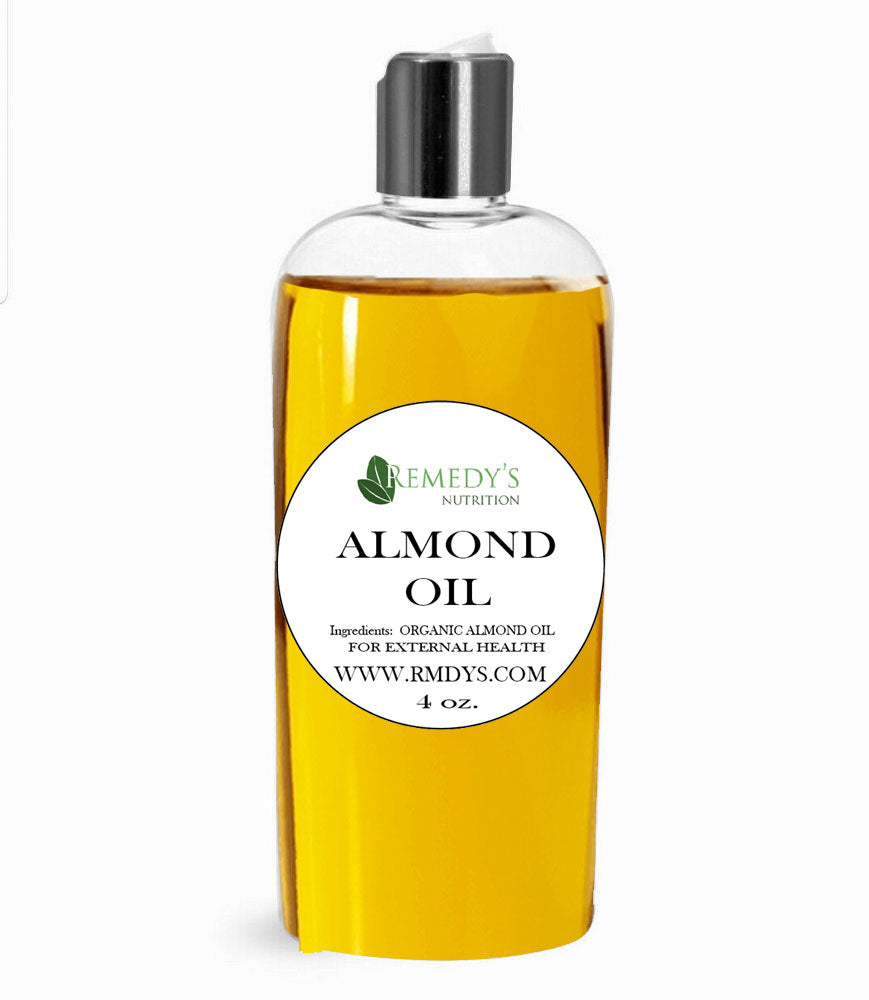
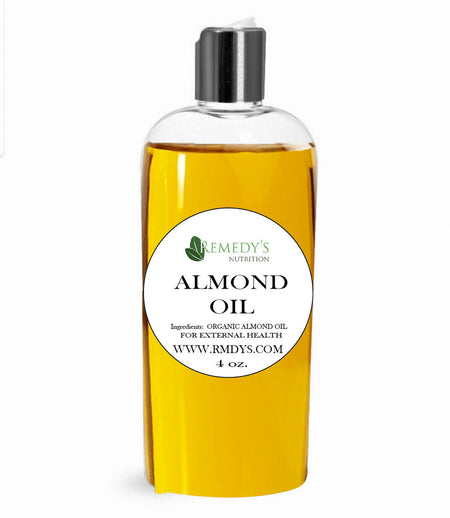
The oil is light golden in color with a faint, pleasant nutty aroma. Its texture is medium-weight: thin enough to absorb readily but rich enough to form a protective barrier on the skin surface. A 4 oz bottle gives you a generous supply that typically lasts several months with regular daily use.
Carrier oils like sweet almond are the foundation of safe essential oil use. Because pure essential oils can be 50 to 100 times more concentrated than the plant they come from, applying them undiluted risks irritation or sensitization. Sweet almond oil dilutes essential oils to a safe 1 to 5% concentration while delivering its own skin benefits simultaneously.
Sweet Almond Oil Benefits: Evidence Summary
Decades of cosmetic research and clinical use have established sweet almond oil as one of the most well-tolerated topical oils available. Its high oleic and linoleic acid content underpins most of its documented effects.
| Benefit |
Key Finding |
Typical Use |
| Deep moisturization |
Oleic acid (~70%) penetrates the stratum corneum to reduce transepidermal water loss |
Daily body and face moisturizer |
| Barrier repair |
Linoleic acid (~20%) restores ceramide-like lipid gaps in compromised skin barriers |
Dry, eczema-prone, or post-wash skin |
| Antioxidant protection |
Vitamin E (tocopherol) neutralizes free radicals; 1 oz delivers roughly 40 IU of tocopherol activity |
Anti-aging facial serum base |
| Scalp and hair conditioning |
Emollient effect reduces hair breakage; studies show up to 30% improvement in hair fiber flexibility after 4 weeks |
Pre-shampoo mask or leave-in conditioner |
| Gentle enough for infants |
Rated non-irritating in patch tests on sensitive neonatal skin; pH-neutral |
Baby massage and cradle cap |
| Carrier for EO absorption |
Improves dermal penetration of active essential oil compounds by up to 3-fold vs. undiluted application |
Dilution base for all topical EOs |
| Soothing mild inflammation |
Linoleic acid modulates arachidonic acid cascade; reduces minor redness after 1 to 2 days of use |
Post-shaving, sunburn relief blend |
How Sweet Almond Oil Works
The skin—s outermost layer, the stratum corneum, is essentially a lipid matrix. Sweet almond oil integrates into this matrix because its fatty acid profile closely mirrors the skin—s own lipids. Oleic acid at roughly 70% mimics sebum, making the oil feel comfortable on both dry and normal skin types. Linoleic acid at around 20% is the precise fatty acid most deficient in eczema-prone skin, which explains the oil—s soothing reputation.
Vitamin E acts as a built-in antioxidant preservative — it protects the oil from rancidity during storage and simultaneously protects skin lipids from oxidative damage caused by UV exposure and environmental pollutants. The combination of these 3 primary active components — oleic acid, linoleic acid, and tocopherol — makes sweet almond oil one of the most scientifically rational choices for a carrier.
When used as a carrier for essential oils, almond oil slows the evaporation rate of volatile EO compounds, extending their contact time with the skin surface and allowing deeper dermal penetration compared with applying the same EO undiluted in alcohol or water.
Sweet Almond Oil for Skin Care
For facial use, sweet almond oil is best applied to slightly damp skin immediately after cleansing. 2 to 3 drops massaged into the face and neck is sufficient for most skin types. The oil absorbs fully in 5 to 10 minutes, leaving a soft glow without a greasy film. For dry skin prone to flaking, a slightly heavier application of 4 to 5 drops works better, particularly in winter months.
It pairs exceptionally well with lavender essential oil for calming redness and with rose hip oil for a more intensive anti-aging serum. A standard blend is 30 ml almond oil + 10 ml rose hip oil + 6 drops lavender — this delivers about a 1% lavender concentration, well within safe topical limits.
For body use, sweet almond oil is applied immediately after showering while skin is still slightly warm. This opens pores and maximizes absorption. One tablespoon (approximately 15 ml) covers the full body for an average adult. It is mild enough to apply daily without buildup.
Sweet Almond Oil for Hair and Scalp
Sweet almond oil is among the most popular pre-shampoo treatments for dry, coarse, or color-treated hair. Applied 30 to 60 minutes before washing, it coats the hair shaft and reduces hygral fatigue — the swelling and shrinking that damages hair during washing. Even a single pre-wash treatment can visibly reduce frizz and improve shine.
For scalp health, blending 1 tablespoon of almond oil with 3 drops of rosemary essential oil creates a proven scalp circulation blend. Rosemary has been shown in at least 2 clinical trials to stimulate hair follicle activity comparable to 2% minoxidil after 6 months of consistent use.
It also works as a light leave-in conditioner for the ends of dry or curly hair. 1 to 2 drops worked through the ends after towel-drying reduces split ends and improves manageability without weighing the hair down. For thicker or coarser hair, 3 to 4 drops may be needed.
Adding 4 to 5 drops of tea tree essential oil per tablespoon of almond oil creates a scalp treatment effective against flaking and mild seborrheic dermatitis, supported by multiple controlled studies on tea tree—s antifungal properties.
Why Choose Remedy—s Sweet Almond Oil
| What You Get |
Why It Matters |
| Cold-pressed extraction |
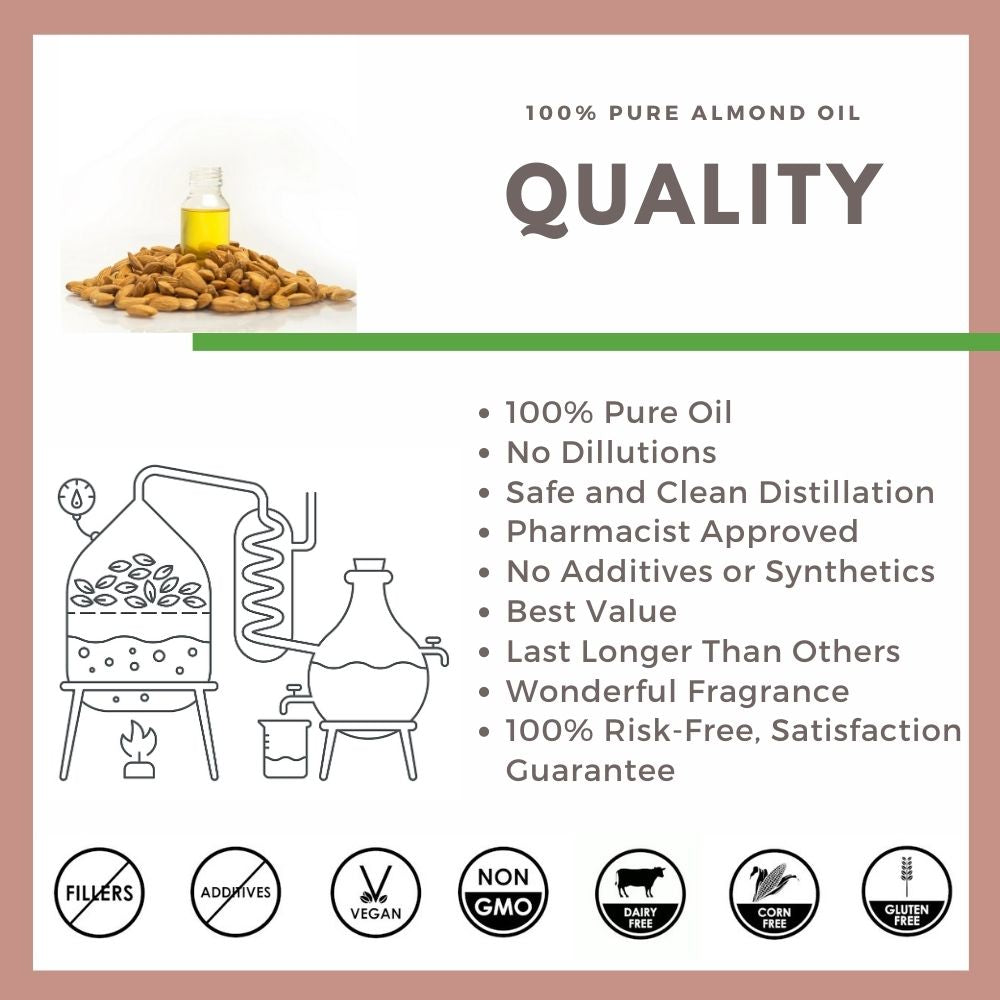
No heat is applied, preserving vitamin E, oleic acid, and linoleic acid at full potency — heat-refined oils lose up to 40% of tocopherol content |
| 100% pure, unrefined |
No dilution with cheaper mineral oil or silicones, which can clog pores and prevent EO absorption |
| 4 oz glass-friendly volume |
Enough for 60 to 90 days of daily face and body use — optimal before oxidation risk increases after 12 months |
| Light golden color and mild scent |
Indicates natural carotenoids are intact; heavily refined almond oil is colorless and odorless, signaling nutrient loss |
| Safe for all ages |
Patch-tested and rated non-irritating; suitable from newborn skin to mature skin without dilution concerns |
| No additives or preservatives |
Vitamin E content is self-preserving — no synthetic antioxidants needed, reducing sensitization risk |
How to Use Sweet Almond Oil
| Goal |
Amount |
Method |
Notes |
| Daily face moisturizer |
2 to 3 drops |
Pat onto damp skin post-cleanse |
Absorbs in 5 to 10 minutes; safe twice daily |
| Body moisturizer |
1 tablespoon (15 ml) |
Apply after shower on warm skin |
1 bottle covers roughly 60 to 90 applications |
| EO carrier (face blend) |
30 ml almond + 6 drops EO |
Mix in dark glass bottle; apply 2 to 3 drops |
1% dilution — safe for daily facial use |
| Pre-shampoo hair mask |
1 to 2 tablespoons |
Work through dry hair; wait 30 to 60 minutes |
Shampoo out fully; repeat 1 to 2x per week |
| Scalp massage blend |
1 tbsp almond + 3 drops rosemary |
Massage into scalp; leave 20 minutes |
Use 2 to 3x per week for best results |
| Baby massage |
A few drops |
Warm between palms; gentle massage |
Perform patch test 24 hours before first use |
Nut Allergy Advisory: Sweet almond oil is derived from tree nuts. Individuals with documented tree nut allergies should consult a physician before topical use. Perform a patch test on the inner forearm for 24 hours before applying to the face or large body areas.
Shelf Life: Store in a cool, dark location. An opened 4 oz bottle is best used within 12 months. Discard if the oil develops a rancid or sour odor.
Sweet Almond Oil FAQ
What is sweet almond oil used for?+
Sweet almond oil has 3 primary uses: as a carrier oil that dilutes essential oils to a safe 1 to 5% concentration for topical use, as a standalone skin moisturizer, and as a hair conditioning treatment. It is also widely used as a baby massage oil and as a base for body scrubs, lotions, and serums. Its gentle, non-irritating profile makes it suitable for nearly every skin type.
Is almond oil good for face skin?+
Yes, for most skin types. The oleic acid content (~70%) deeply moisturizes dry and normal skin, while the linoleic acid (~20%) helps repair a compromised skin barrier. For oily or acne-prone skin, use no more than 2 drops and monitor for 2 weeks — a small percentage of users find it mildly comedogenic when applied too heavily. On dry or mature skin, it is one of the most effective botanical facial oils available.
Can I use almond oil on baby skin?+
Sweet almond oil is considered one of the safest oils for infant skin — it is non-irritating, pH-neutral, and free from synthetic additives. It has been used in neonatal massage research for over 20 years. However, perform a patch test on a small area (about 1 sq cm) for 24 hours before full use. Avoid use on babies with known tree nut allergies in the family, and consult a pediatrician if any redness appears.
How do I dilute essential oils in almond oil?+
The standard dilution for daily facial use is 1% — that is 6 drops of essential oil per 30 ml (1 oz) of almond oil. For body use, 2% is common: 12 drops per 30 ml. For spot treatments or short-term use on non-facial skin, up to 3% (18 drops per 30 ml) is acceptable for most adults. Children and seniors should use 0.5 to 1% maximum. Always mix in a dark glass bottle and shake before each use.
Does almond oil help with dry skin?+
Yes. Sweet almond oil addresses dry skin through 2 complementary mechanisms: its oleic acid content provides immediate surface hydration, and its linoleic acid helps rebuild the skin barrier that prevents moisture loss long-term. Most users notice softer skin within 3 to 5 days of daily use. For severely dry skin, apply a generous layer at night as an overnight treatment and rinse off in the morning for faster results.
Can almond oil cause breakouts?+
Sweet almond oil has a comedogenic rating of 2 on a 0 to 5 scale — considered low to mildly comedogenic. Most people with normal to dry skin use it daily without any breakout issues. Those with oily or acne-prone skin should start with just 1 to 2 drops on the face and observe for 14 days. If congestion appears, switch to a carrier with a comedogenic rating of 0 to 1 (such as hemp seed oil) for facial use while continuing to use almond oil on the body.
How long does a 4 oz bottle last?+
A 4 oz (118 ml) bottle typically lasts 60 to 90 days with daily whole-body use (about 15 ml per application). For face-only use of 2 to 3 drops per day, the same bottle can last 6 to 12 months. If you are using it primarily as an EO carrier in blends of 30 ml at a time, you will get approximately 3 to 4 full blending batches from 1 bottle before it runs out.
What makes Remedy—s almond oil different?+
Remedy—s Sweet Almond Oil is cold-pressed and unrefined, which preserves the full complement of oleic acid (~70%), linoleic acid (~20%), and vitamin E. Many commercial almond oils are refined with heat above 200—F, stripping tocopherols and degrading the fatty acid profile. Our 4 oz size is bottled in a format that balances freshness and economy — large enough to last 2 to 3 months of daily use but small enough that the oil stays within its 12 to 18 month shelf life window before it oxidizes.
In-Depth Reading