
Taurine has a clean safety record in trials, and a formal risk assessment found strong evidence of safety up to 3 g a day. Most worries trace back to energy drinks, which pack 1000 mg a can.
This page covers the side effects that have and have not been seen, who should be careful, and how much makes sense.
Quick Answer: Is Taurine Bad for You?
Not for healthy adults at usual amounts. A risk assessment found strong evidence of safety up to 3 g a day, and pooled trials of 0.5 to 6 g a day found no significant adverse effects against placebo. Take care with blood pressure or diabetes medicines, in pregnancy, in children and with kidney disease.
Key Takeaways
- The observed safe level for taurine is 3 g a day.
- Animal studies set a no-adverse-effect level of 1000 mg/kg daily.
- Pooled trials of 0.5 to 6 g reported no significant adverse effects.
- A typical diet supplies about 40 to 400 mg a day.
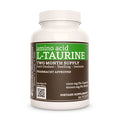
- One capsule holds 1000 mg, a third of the observed safe level.
Related Products
What the Safety Data Say
Taurine is unusual among supplements in that researchers could not find a dose that reliably caused harm in people. That is why its safe level is expressed as the highest amount with strong evidence of safety, rather than as a toxic threshold.
- Observed safe level: 3 g a day for healthy adults.
- Animal no-adverse-effect level: 1000 mg/kg a day, cited by Health Canada.
- Health Canada limit for drinks: 3 g of taurine a day.
- Pooled trials: 0.5 to 6 g a day, no significant adverse effects.
The 2008 assessment chose 3 g because data above it were too thin for a confident long-term conclusion, not because harm appeared.[1]Risk assessment for the amino acids taurine, L-glutamine and L-arginine — Regulatory Toxicology and Pharmacology (2008) View source
Health Canada's 2021 review pairs that level with an animal no-adverse-effect level of 1000 mg/kg.[2]Caffeinated energy drinks in the Canadian context: health risk assessment with a focus on cardiovascular effects — Applied Physiology, Nutrition, and Metabolism (2021) View source The benefits these limits protect are weighed in the wider evidence on taurine.
Side Effects: What Has and Has Not Been Seen
Most fears about taurine are really fears about energy drinks, liver strain or heart rhythm. Checked against the trials, each one either belongs to caffeine or points the other way, with one exception worth respecting: blood pressure.
| Common worry | What the trials show |
|---|---|
| Jitters after an energy drink | Caffeine raised blood pressure in trials; taurine did not |
| Liver strain | Liver enzymes AST and ALT fell in pooled trials |
| Heart rhythm | Heart rate about 3.6 beats lower, with no significant adverse effects |
| Low blood pressure | Systolic falls about 4 mmHg; matters if already low or medicated |
In a 2019 trial, caffeine raised blood pressure while taurine and glucuronolactone did not.[3]Energy Drinks Induce Acute Cardiovascular and Metabolic Changes Pointing to Potential Risks for Young Adults — Journal of Nutrition (2019) View source The liver enzyme figures come from a 2026 pooling of 34 trials.[4]Effects of Oral Taurine Supplementation on Cardiometabolic Risk Factors: A Meta-analysis of Randomized Clinical Trials — Nutrition Reviews (2026) View source
The heart figures come from a 2024 analysis of 20 trials and 808 people.[5]Insights into the cardiovascular benefits of taurine: a systematic review and meta-analysis — Nutrition Journal (2024) View source

Who Should Not Take Taurine Without Advice
A good safety record in healthy adults does not cover everyone. The groups below are either untested, on medicines that taurine could nudge, or in a situation where a recent animal finding calls for a conversation first.
- Blood pressure medicine: A 4 mmHg drop could add to the drug.
- Diabetes medicine: Fasting glucose fell about 5.90 mg/dL in pooled trials.
- Pregnancy, breastfeeding, children: The 3 g safe level covers healthy adults only.
- Kidney disease: Taurine leaves the body in urine, so ask first.
- Blood cancer: A 2025 animal finding, described below.
In mice and patient-derived cells, aggressive myeloid leukaemias depended on taurine made in the bone marrow niche.[6]Taurine from tumour niche drives glycolysis to promote leukaemogenesis — Nature (2025) View source It did not test supplements, but anyone being treated for a blood cancer should ask their oncologist first.
For teenagers, a 2017 review concluded that adolescents are unlikely to benefit from taurine or caffeine supplementation.[7]Taurine, caffeine, and energy drinks: Reviewing the risks to the adolescent brain — Birth Defects Research (2017) View source
How Much Taurine to Take
There is no official daily requirement for taurine, because the body makes it. The label directions for vegan taurine capsules like ours are 1 capsule a day. The table puts that beside food, trial doses and the observed safe level, counted in 1000 mg capsules.
| Source | Amount | Capsules of 1000 mg |
|---|---|---|
| Typical diet, meat eaters | 40 to 400 mg a day | 0.04 to 0.4 |
| One 250 mL energy drink | About 1000 mg | 1 |
| Blood pressure trial | 1.6 g a day | 1.6 |
| Type 2 diabetes trial | 3 g a day | 3 |
| Observed safe level | 3 g a day | 3 |
| Mouse lifespan dose, converted | About 4.9 g a day at 60 kg | About 5 |
Going to trial doses of 1.5 to 3 g is a step to discuss with a clinician, especially if you take any medication.

Timing and What to Take It With
Timing advice for taurine is mostly guesswork. We found no trial comparing morning with evening dosing, and the only timing data come from exercise studies, where taurine was taken 1 to 3 hours before training.
- Morning or night: 0 trials we found compared them.
- Sleep: Taurine did not act as a stimulant in caffeine comparisons.
- With caffeine: Count the caffeine; that is the stimulant.
- With food: We found no fed versus fasted comparison.
If you already drink energy drinks, add their taurine to your total; taurine versus caffeine in a can explains which ingredient keeps you awake.
The Bull Myth and the Synthetic Question
A surprising share of searches ask whether taurine comes from bulls. It does not: the name comes from ox bile, where it was first found, and the taurine in supplements and drinks is generally made by chemical synthesis.
- The name: From Bos taurus, the ox, because it was isolated from bile.
- Industrial source: Chemical synthesis is the established route.
- Newer route: Microbial fermentation, still in development in 2026.
- Vegan question: Synthetic taurine needs 0 animal material.
A 2026 engineering paper describes fermentation as an alternative to chemical synthesis for taurine production.[8]Engineering a hybrid chemical-biological system for efficient de novo taurine production — Bioresource Technology (2026) View source The naming and the labels are untangled in whether L-taurine differs from taurine.
Speak to a Clinician Before Taking Taurine If
- You take blood pressure medicine, or your blood pressure runs low
- You take insulin, metformin or another glucose-lowering medicine
- You are pregnant, breastfeeding, or buying for a child or teenager
- You have kidney disease, or are being treated for a blood cancer
- You plan to take more than 3 g a day, the observed safe level

Frequently Asked Questions
Is 1000 mg of taurine too much? +
No. It is a third of the 3 g observed safe level, and about what a typical 250 mL energy drink contains.
What are the downsides of taurine? +
In healthy adults, few have been documented: pooled trials found no significant adverse effects. Its 4 mmHg blood pressure drop is the effect to plan around.
What not to mix with taurine? +
Ask first if you take blood pressure or diabetes medicine, since taurine lowered systolic pressure about 4 mmHg and fasting glucose about 5.90 mg/dL.
Who should not take taurine? +
People on blood pressure or diabetes medicine without advice, pregnant or breastfeeding women, children, and anyone with kidney disease or a blood cancer. The 3 g safe level covers healthy adults.
What is the best time of day to take taurine? +
No trial has compared times of day. Exercise studies gave it 1 to 3 hours before training; otherwise take it when you will remember.
Why do I feel weird after taking taurine? +
Trials of 0.5 to 6 g a day found no significant adverse effects. If it came in an energy drink, look at the caffeine first; otherwise stop and ask.
Why do they say taurine is bad for you? +
Mostly because of energy drinks and a myth about bulls. In a 2019 trial, caffeine raised blood pressure and taurine did not.
Is taurine good for babies? +
Babies get taurine from breast milk, and supplements are not meant for them. Ask a pediatrician before giving any supplement to a child under 1 year.
Is 500mg of taurine a lot? +
No. It is near the top of the 40 to 400 mg a typical diet supplies, and a sixth of the 3 g safe level.
Is too much taurine bad for you? +
Above 3 g a day the safety data become thin rather than alarming. Higher amounts have been tested, but not enough to call them safe long term.
Does taurine cause cancer? +
No human data show that. A 2025 mouse study found aggressive leukaemias used taurine to grow, so people treated for blood cancer should ask first.
Related Reading
Related Products