
A typical 250 mL energy drink holds about 1000 mg of taurine and 80 mg of caffeine. Only 1 of those 2 ingredients is a stimulant.
This page looks at the trials that split the drink into its parts, and at what that means for taking taurine without the can.
Quick Answer: What Does Taurine Do in Energy Drinks?
Less than the label implies. Trials that tested taurine and caffeine separately found the alertness, faster reactions and blood pressure rise came from caffeine. A typical 250 mL can holds about 1000 mg of taurine. Health Canada judges up to 3 g a day of taurine from these drinks unlikely to harm healthy adults.
Key Takeaways
- A typical 250 mL energy drink carries about 1000 mg of taurine.
- In a 48-person trial, caffeine improved attention; 2000 mg taurine did not.
- A 2019 trial found caffeine, not taurine, raised blood pressure.
- Health Canada caps taurine from energy drinks at 3 g daily.
- A 2012 review found no ingredient besides caffeine boosted performance.
Related Products
How Much Taurine Is in an Energy Drink
Energy drinks vary, but the common pattern is a 250 mL can with about 80 mg of caffeine and 1000 mg of taurine. Larger 473 mL cans roughly double both. That puts 1 small can at the same taurine content as 1 of our capsules.
- Typical 250 mL can: 80 mg caffeine, 1000 mg taurine.
- Typical 473 mL can: 160 mg caffeine, about 2000 mg taurine.
- Range across products: 3 to 3000 mg taurine per serving.
- Normal diet: About 40 to 400 mg a day from food.
Those figures are from Health Canada's 2021 review of energy drinks sold in Canada.[1]Caffeinated energy drinks in the Canadian context: health risk assessment with a focus on cardiovascular effects — Applied Physiology, Nutrition, and Metabolism (2021) View source The dietary range is quoted in a 2017 review of energy drink risks.[2]Taurine, caffeine, and energy drinks: Reviewing the risks to the adolescent brain — Birth Defects Research (2017) View source
Taurine itself is introduced in our overview of taurine.
The Trials That Split the Drink Apart
The useful studies did not test an energy drink against water. They gave caffeine alone, taurine alone, both together and a placebo, so each ingredient's share of the effect could be seen. The pattern across them is consistent.
| Trial | What was compared | Result |
|---|---|---|
| 2012, 48 adults | 2000 mg taurine vs 200 mg caffeine | Caffeine improved attention and memory |
| 2013, 19 women | 1000 mg taurine vs 80 mg caffeine | Caffeine sped reaction time; taurine tended to blunt it |
| 2014, 14 soldiers | 1000 mg taurine, 80 mg caffeine, both | No differences in fitness or memory tests |
| 2019, 38 adults | Drink parts given separately | Caffeine, not taurine, raised blood pressure |
The 2012 trial concluded caffeine, not taurine or glucose, was likely responsible for reported cognitive changes.[3]Differential cognitive effects of energy drink ingredients: caffeine, taurine, and glucose — Pharmacology Biochemistry and Behavior (2012) View source
The 2014 trial found 0 differences in fitness or memory between any of its 5 drinks.[4]Effects of energy drink major bioactive compounds on the performance of young adults in fitness and cognitive tests — Journal of the International Society of Sports Nutrition (2014) View source

Is Taurine a Stimulant?
No. A stimulant raises alertness and heart rate, and in head-to-head trials that is what caffeine did. Taurine produced no stimulant pattern, and in 2 trials it pulled slightly in the opposite direction.
- Vigor: Taurine reversed caffeine's increase in vigor in 1 trial.
- Reaction time: Adding 1000 mg tended to blunt caffeine's benefit in another.
- Heart rate: No effect from either ingredient in the 2012 trial.
- Review verdict: No evidence that non-caffeine ingredients improve performance.
In the 19-woman trial, combining taurine with caffeine tended to weaken caffeine's reaction-time effect.[5]Energy drink ingredients. Contribution of caffeine and taurine to performance outcomes — Appetite (2013) View source A 2012 review of 32 articles found an overwhelming lack of evidence for any ingredient other than caffeine.[6]Do energy drinks contain active components other than caffeine? — Nutrition Reviews (2012) View source
What Actually Raises Blood Pressure
Energy drinks do raise blood pressure for a few hours, and taurine is often blamed, although the record on the documented side effects and dose limits of taurine shows no such rise. The trial that tested the parts separately found caffeine raised it, while taurine and glucuronolactone did not.
- Whole drink: Systolic rose from 116.9 to 120.7 mmHg after 1 hour.
- Caffeine alone: Also raised blood pressure.
- Taurine alone: Did not.
- Duration: Back to normal within a few hours.
That trial gave 38 young adults 750 or 1000 mL in one sitting.[7]Energy Drinks Induce Acute Cardiovascular and Metabolic Changes Pointing to Potential Risks for Young Adults — Journal of Nutrition (2019) View source
A 9-person pilot found a full energy drink raised 24-hour pressure more than caffeine alone, so the whole drink is not the sum of 2 parts.[8]Comparison of the effects of energy drink versus caffeine supplementation on indices of 24-hour ambulatory blood pressure — Annals of Pharmacotherapy (2012) View source

Taurine Without the Can
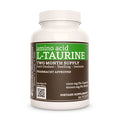
If what you want is taurine, our L-taurine capsules give you the energy drink's taurine and nothing else. If what you want is the lift, that is caffeine, and a taurine capsule will not supply it.
- Same taurine: 1000 mg, as in a typical 250 mL can.
- No caffeine: 0 mg, so no jolt and no crash.
- No sugar: 0 g, where many cans are sweetened.
- Different purpose: Taurine studies target blood pressure, not alertness.
That is the honest case for a capsule: the taurine from 1 can, without the ingredient that does the stimulating.
Who Should Avoid Energy Drinks
The cautions on energy drinks are about caffeine dose, and Health Canada's position is clear on who should not drink them at all. A 2017 review adds that adolescents are unlikely to benefit from either ingredient.
- Children: Should not consume caffeinated energy drinks.
- Pregnant or breastfeeding: Should not consume them.
- Caffeine-sensitive people: Should not consume them.
- Healthy adults: Up to 500 mL a day of a typical drink judged safe.
The same Health Canada review recommends healthy teenagers keep to no more than 2 typical 250 mL servings a day. Where the taurine itself comes from, and why it is not from bulls, is in the origin of the taurine in a can.
Speak to a Clinician Before Taking Taurine If
- You take blood pressure medicine, or your blood pressure runs low
- You take insulin, metformin or another glucose-lowering medicine
- You are pregnant, breastfeeding, or buying for a child or teenager
- You have kidney disease, or are being treated for a blood cancer
- You plan to take more than 3 g a day, the observed safe level

Frequently Asked Questions
Why is taurine put in energy drinks? +
Makers do not publish trial evidence for it. In controlled trials the effects came from caffeine, and a 2012 review of 32 articles found no other ingredient helped.
Is taurine in energy drinks good for you? +
The taurine is unlikely to harm healthy adults; Health Canada judged up to 3 g a day acceptable. The caffeine and sugar are the parts to watch.
Is taurine worse than caffeine? +
No. In a 2019 trial caffeine raised blood pressure and taurine did not. Taurine's observed safe level is 3 g a day.
Why does Monster have taurine in it? +
Brands do not publish a tested reason. A typical 473 mL can carries about 2000 mg, and the trials we cite found no energy effect from taurine itself.
Is taurine a stimulant? +
No. In a 48-person trial, 200 mg of caffeine improved attention and memory, while 2000 mg of taurine did not act as a stimulant.
Does taurine keep you awake? +
Not in the trials. It reversed caffeine's increase in vigor in 1 study, so it is not the ingredient that keeps you up.
Can you mix taurine in coffee? +
Yes. In 1 trial, 1000 mg of taurine with 80 mg of caffeine tended to blunt caffeine's reaction-time benefit, so expect the coffee to do the work.
How much taurine is in Red Bull? +
In published trials, a Red Bull serving provided 1000 mg of taurine and 80 mg of caffeine per 8.3 oz.
What is the safest energy drink to drink? +
We do not rank brands. Health Canada judges up to 500 mL a day of a typical drink safe for healthy adults, and none for children.
Is taurine calming or energizing? +
Neither is established in people. In 2 trials it slightly weakened caffeine's effects, which suggests taurine does not energize.
Related Reading
Related Products