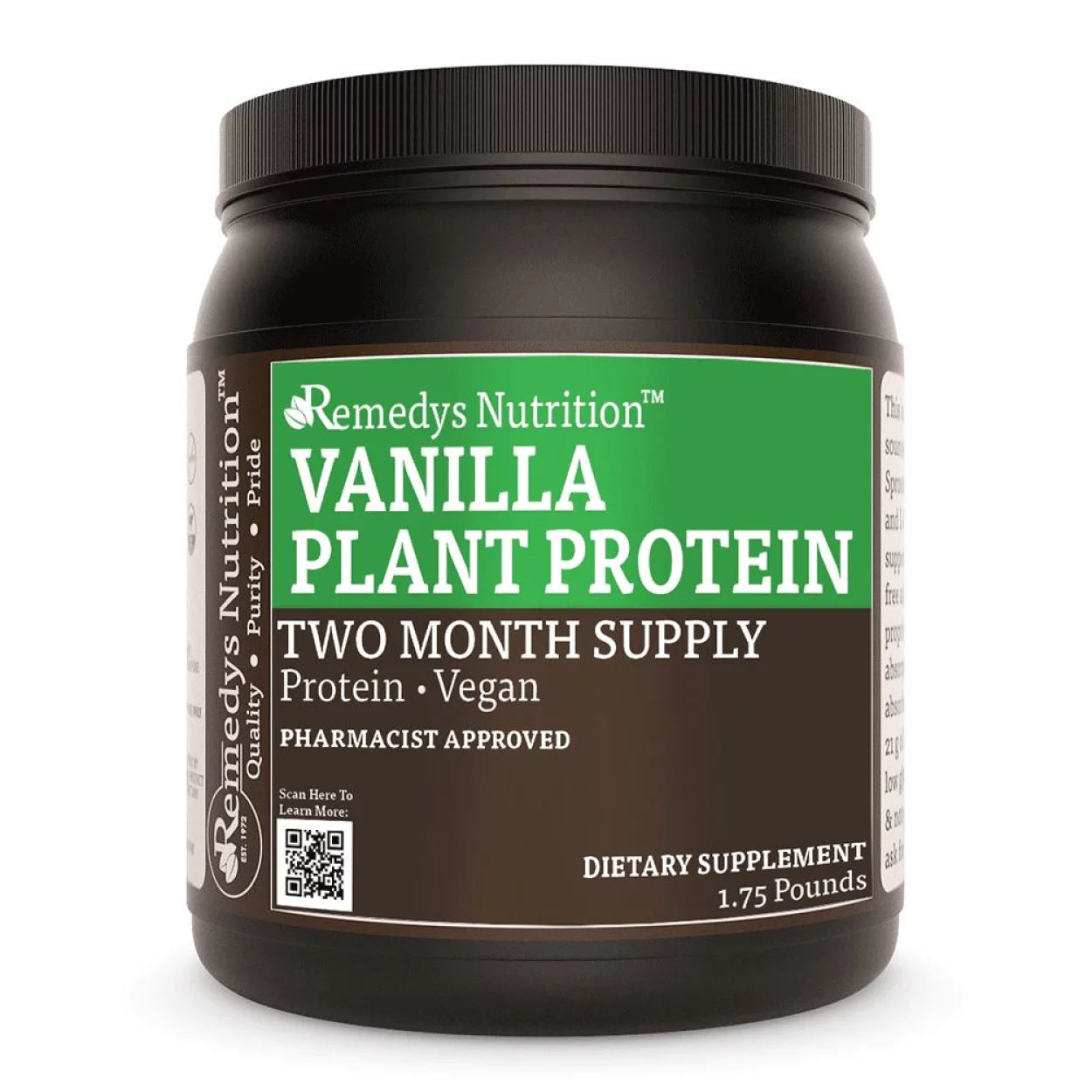
What Is Vanilla Vegan Plant Protein?
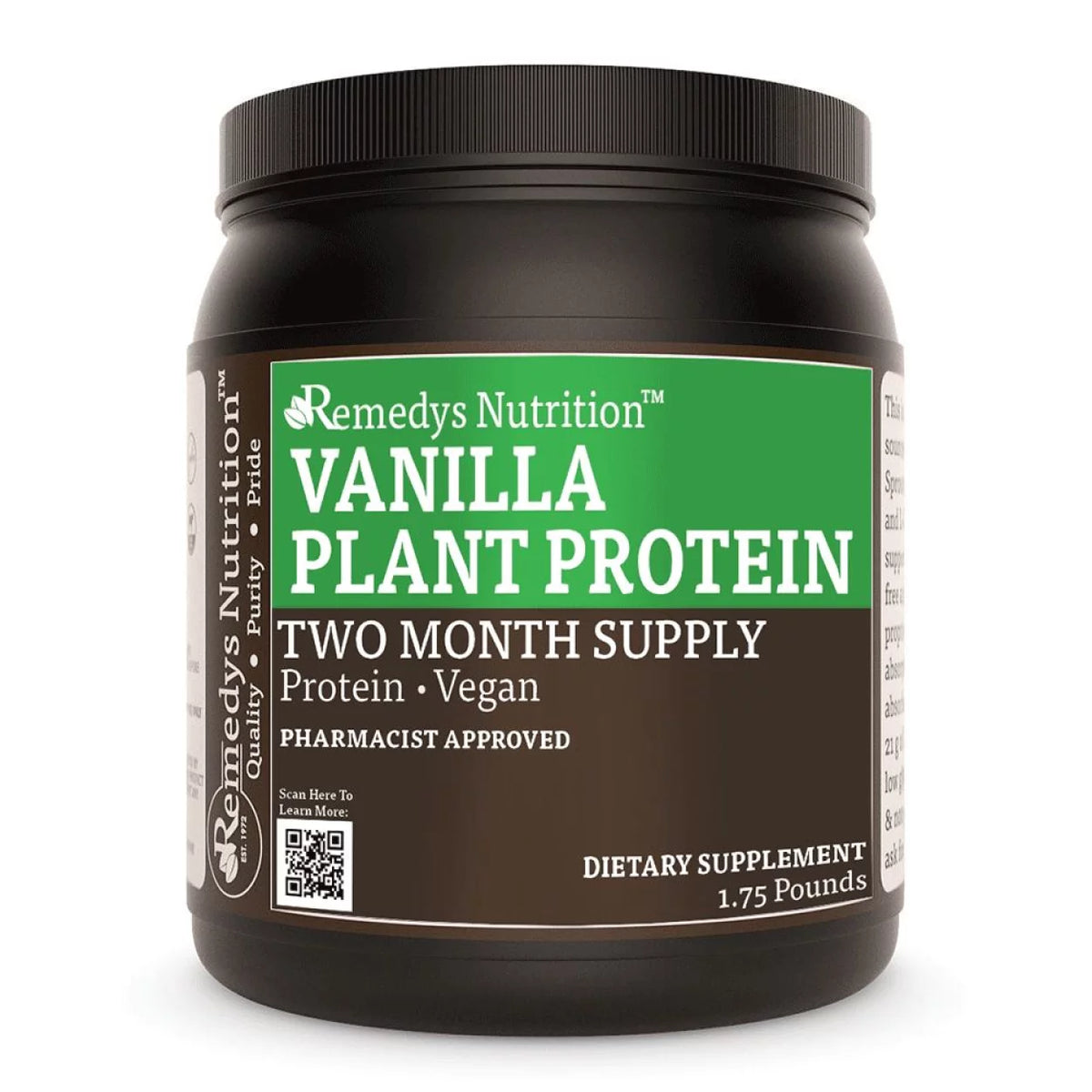
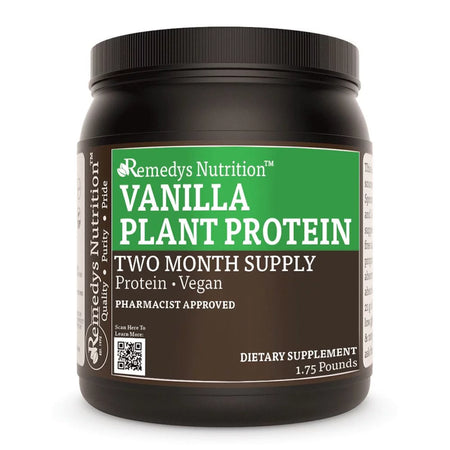
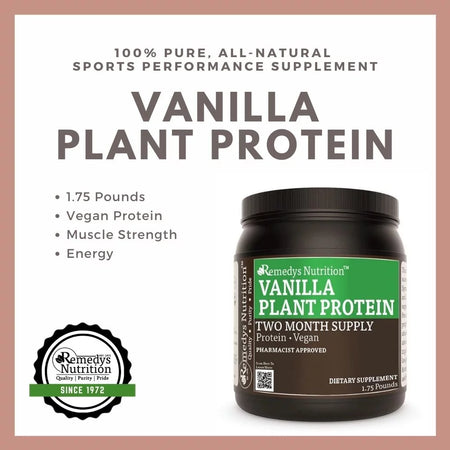
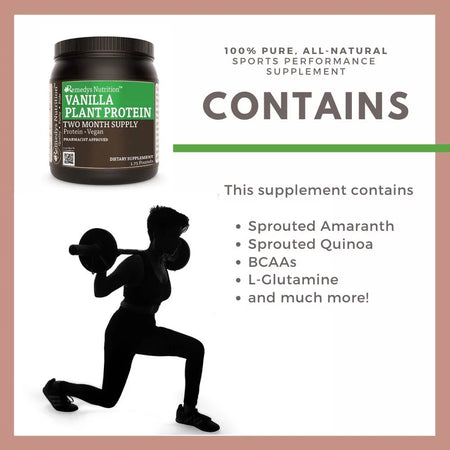
Remedy's Nutrition® Vanilla Vegan Plant Protein is a multi-source blend built on pea protein isolate, combined with sprouted quinoa, sprouted amaranth and whole algae protein. Each 30 g scoop delivers 22 g of protein from a 25 g infused protein blend.
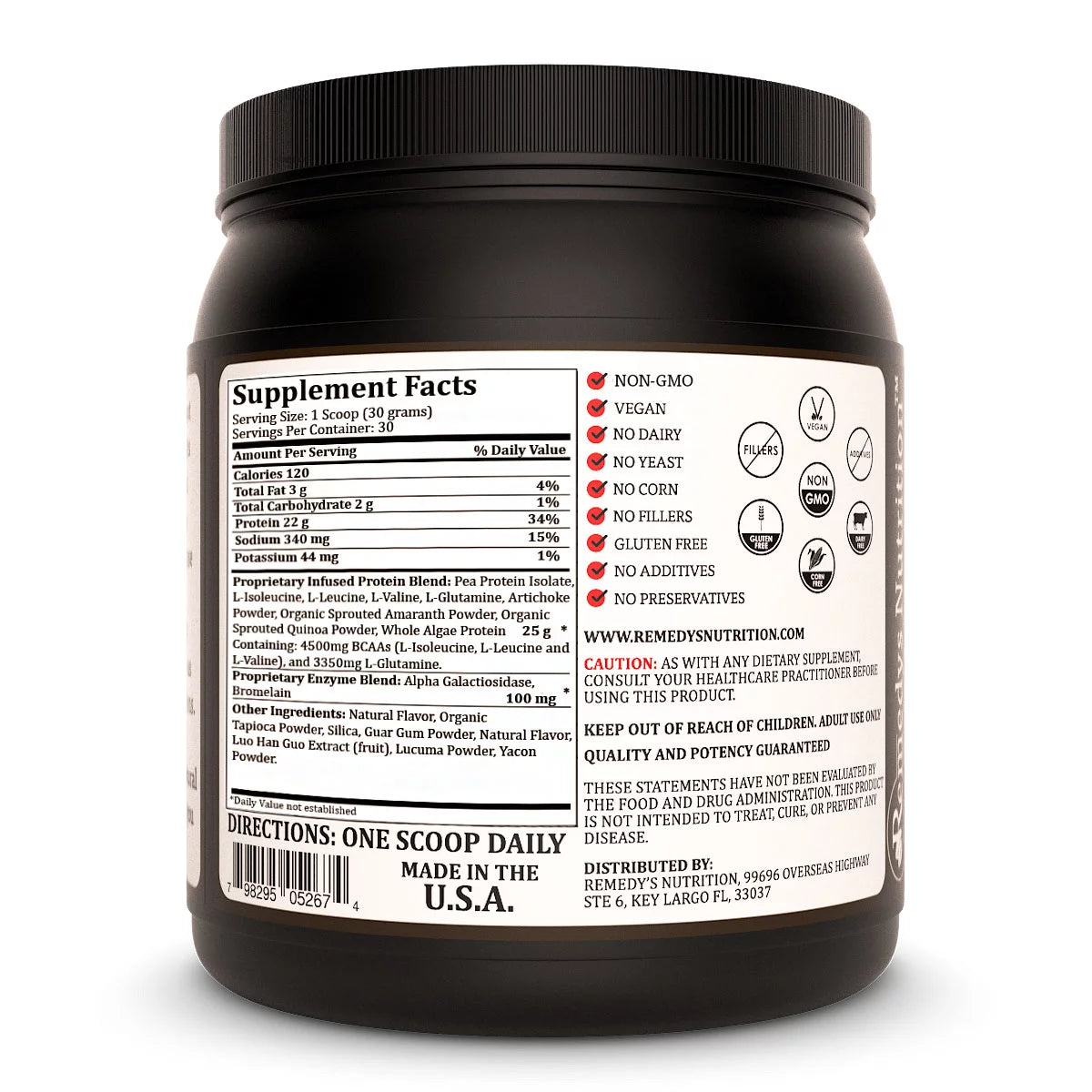
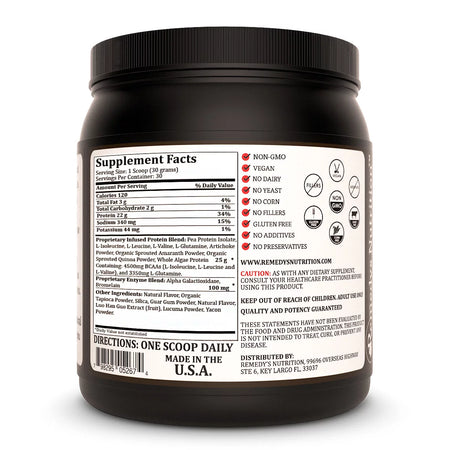
Supplement Facts
Serving size: 1 Scoop (30 grams). Servings per container: 30.
| Amount Per Serving |
Amount |
% Daily Value |
| Calories |
120 |
|
| Total Fat |
3 g |
4% |
| Total Carbohydrate |
2 g |
1% |
| Protein |
22 g |
34% |
| Sodium |
340 mg |
15% |
| Potassium |
44 mg |
1% |
|
Proprietary Infused Protein Blend — Pea Protein Isolate, L-Isoleucine, L-Leucine, L-Valine, L-Glutamine, Artichoke Powder, Organic Sprouted Amaranth Powder, Organic Sprouted Quinoa Powder, Whole Algae Protein |
25 g |
* |
| Containing 4500 mg BCAAs (L-Isoleucine, L-Leucine and L-Valine) and 3350 mg L-Glutamine |
|
|
|
Proprietary Enzyme Blend — Alpha Galactiosidase [sic], Bromelain |
100 mg |
* |
* Daily Value not established.
Other ingredients: Natural Flavor, Organic Tapioca Powder, Silica, Guar Gum Powder, Natural Flavor, Luo Han Guo Extract (fruit), Lucuma Powder, Yacon Powder
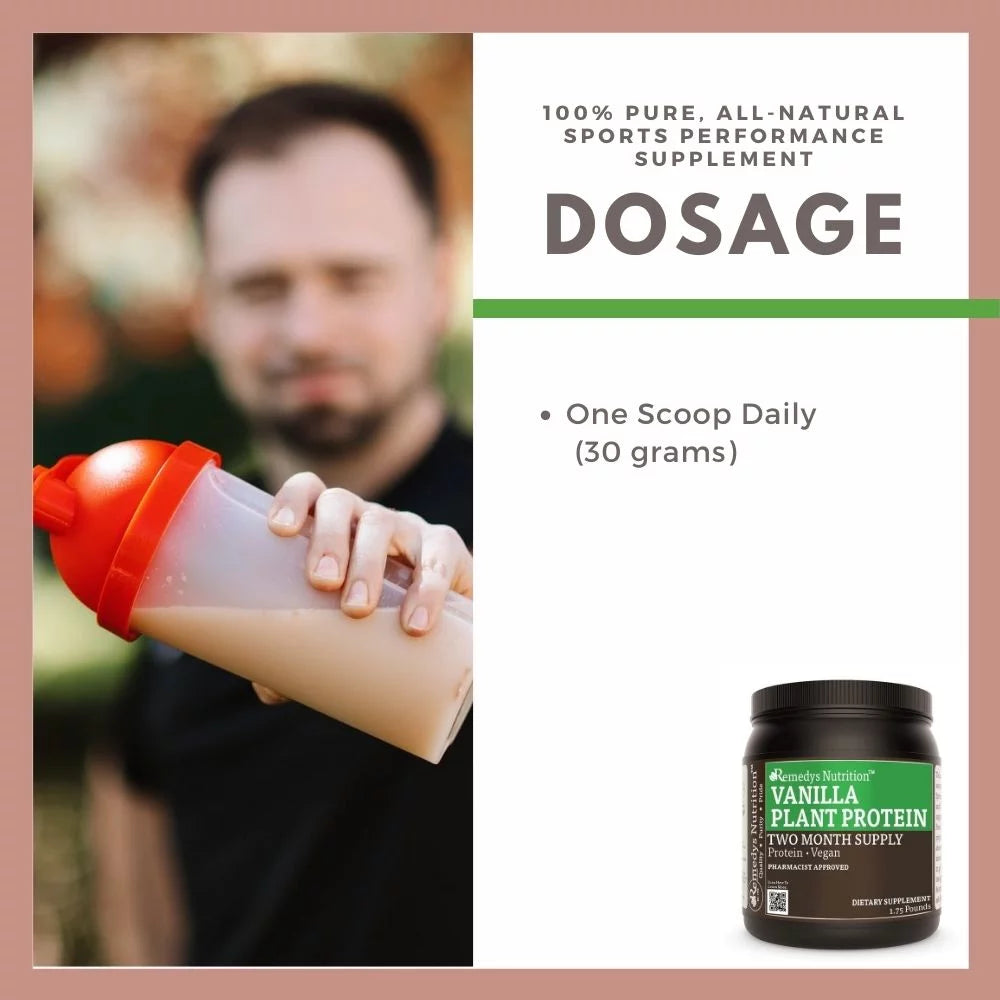
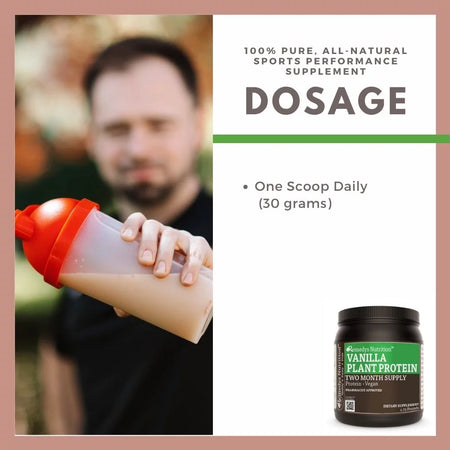
Directions: One scoop daily.
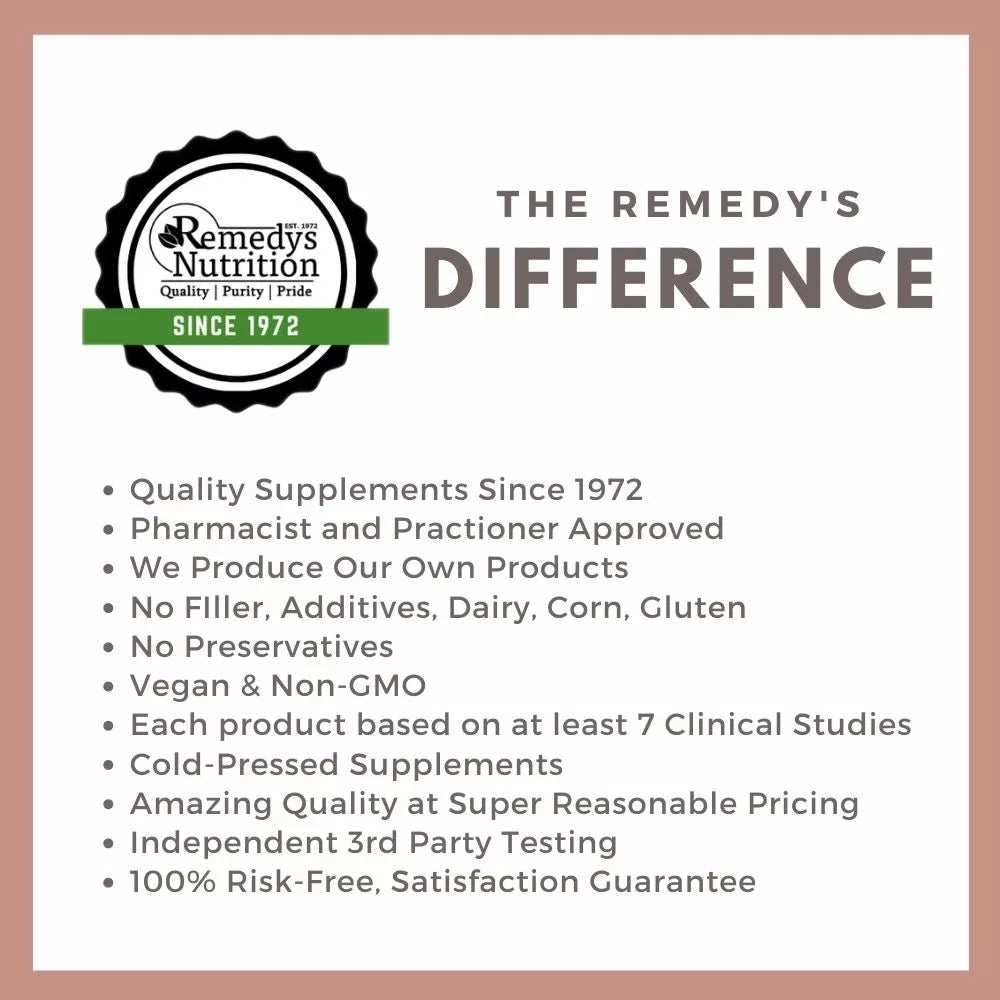
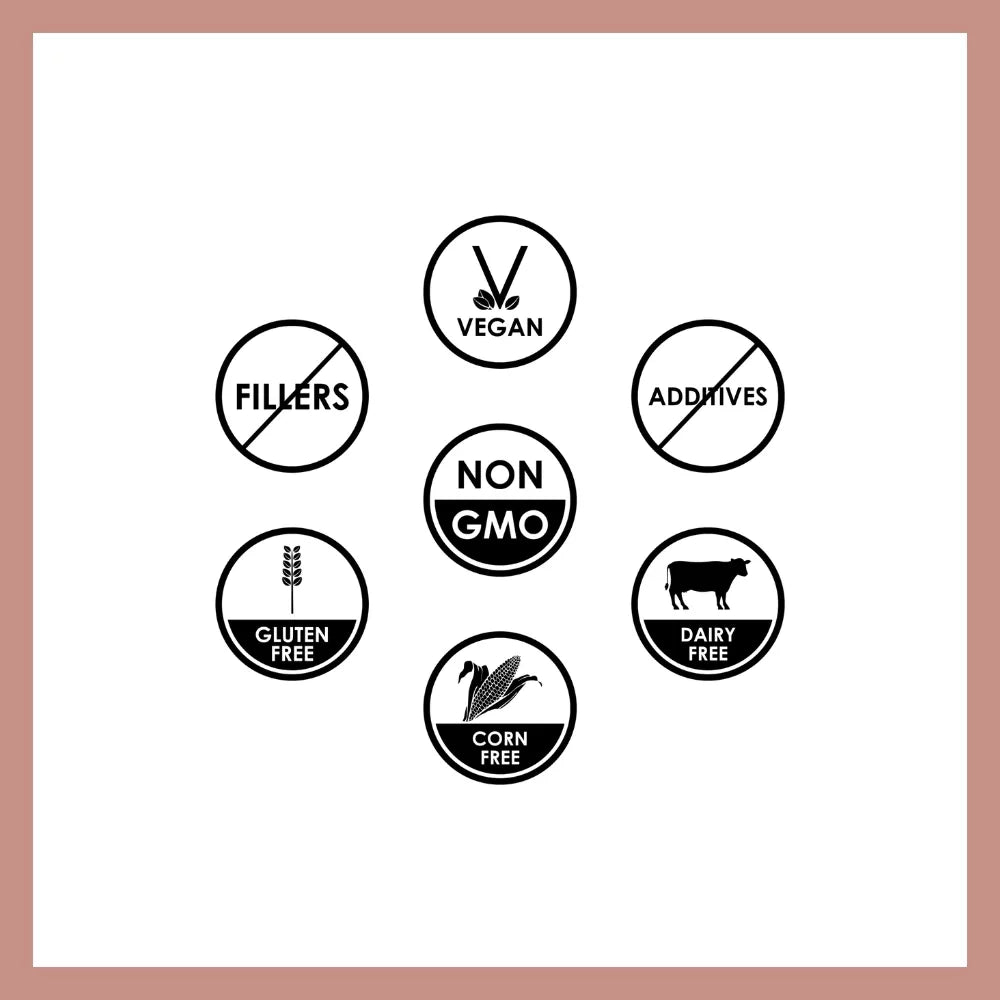
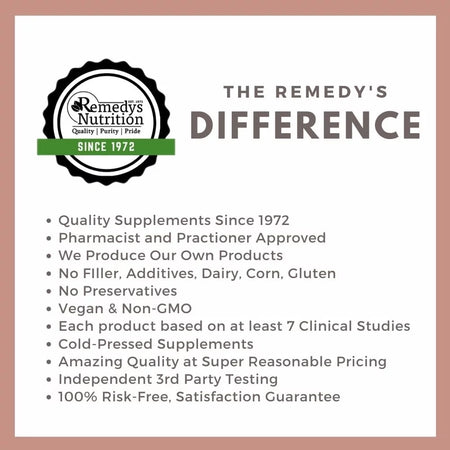
Non-GMO, vegan, no dairy, no yeast, no corn, no fillers, gluten free, no additives, no preservatives. Made in the USA.
Vanilla exists for a specific reason. Chocolate is a finished flavour that works on its own with water or milk; vanilla is a neutral base, which means it disappears into whatever you put it in. If you intend to blend, bake or stir your protein into food rather than drink it straight, this is the version that behaves. For where a powder fits alongside meals at all, see our evidence-based protein reference.
Supplement Facts Per Scoop
Plant blends vary enormously between brands, so the per-serving numbers matter more here than with dairy protein. These are the published figures for this formula.
| Per 1 Scoop (30 g) |
Amount |
Practical Meaning |
| Protein |
22 g |
73% of the scoop by weight is protein |
| Calories |
120 |
Adds protein to a recipe without loading calories |
| Total fat |
3 g |
From whole-food plant sources, not added oil |
| Total carbohydrate |
2 g |
Will not disrupt a low-carb or keto plan |
| BCAAs |
4,500 mg |
Built into the blend, not sold separately |
| L-glutamine |
3,350 mg |
The most abundant amino acid in muscle |
| Servings per tub |
30 |
1.75 lb, a full month at one scoop daily |
What to Mix Vanilla Protein With
A neutral base is only useful if you know what to do with it. The table below shows what one scoop does to ordinary foods, using the protein figures for each base.
| Base |
Protein Before |
With 1 Scoop |
Notes |
| Porridge or oats |
About 5 g |
About 27 g |
Stir in after cooking so it stays smooth |
| Smoothie with banana |
About 2 g |
About 24 g |
Vanilla suits fruit far better than chocolate |
| Greek-style plant yogurt |
6–10 g |
28–32 g |
Makes a full meal out of a snack |
| Coffee or a latte |
About 1 g |
About 23 g |
Blend rather than stir to avoid clumping |
| Overnight oats |
About 5 g |
About 27 g |
Mix dry before adding liquid |
| Water alone |
0 g |
22 g |
The fastest option when time is short |
The oats example is the one worth noticing. Breakfast is where most people fall shortest, often under 10 g against a 25 to 40 g per-meal target, and a single scoop closes that gap without adding a separate meal. The reasoning behind per-meal targets is in why spreading protein across the day matters.
Baking and Cooking With Plant Protein
Vanilla plant protein holds up in baking better than chocolate, because cocoa dries out a batter and shifts the flavour balance. A few practical rules make the difference between a good result and a dense one.
-
Replace no more than a third of the flour by weight, or texture suffers.
-
Add extra liquid. Protein powder absorbs moisture, so add 1 to 2 tablespoons.
-
Keep below 350F. Higher heat firms the proteins and dries the crumb.
-
Do not overmix. Fold it in at the end rather than beating it through.
Pancakes, muffins and energy balls all work well. The protein itself is not damaged by cooking in any way that matters; heat changes texture, not the amino acids your body uses.
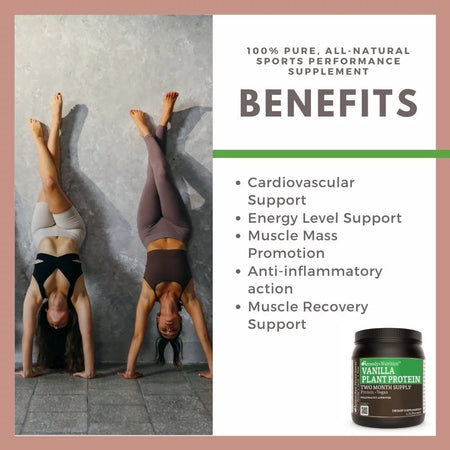
Plant Protein Benefits: Clinical Evidence Summary
| Benefit Area |
Key Clinical Finding |
Intake Used in Research |
| Lean Mass & Strength[1]Animal Protein versus Plant Protein for Lean Mass and Strength — Nutrients View source |
Systematic review found broadly similar outcomes for animal and plant protein where total intake was adequate |
Adequate daily protein |
| Training Adaptations[2]Plant-Based versus Omnivorous Diet for Resistance Training — Sports Medicine View source |
Protein-matched plant-based diet produced comparable resistance training results to an omnivorous diet |
Protein matched between groups |
| Total Intake Ceiling[3]Protein Supplementation and Resistance Training Meta-Analysis — British Journal of Sports Medicine View source |
Across 49 studies, benefit rose to roughly 1.6 g per kg daily then flattened |
Up to 1.6 g per kg |
| Where Supplements Help[4]Effects of Protein Supplements on Muscle Mass, Strength and Power — Sports Medicine View source |
Review of 34 trials found the clearest effect where training was present and baseline intake was low |
Varied by trial |
| Appetite Control[5]Dietary Protein in Satiety, Energetics and Weight Loss — British Journal of Nutrition View source |
Protein is the most satiating macronutrient and raises the thermic effect of feeding |
1.2–1.6 g per kg daily |
Reaching Your Target on a Plant-Based Diet
Plant-based eaters usually need to add 10 to 20% to their protein band, because single plant sources score lower on digestibility and carry less leucine per gram than animal sources.
This blend handles the leucine question directly with 4,500 mg of BCAAs already inside it, so one scoop reaches the roughly 2.5 to 3 g leucine threshold rather than needing one and a half. Why single plant proteins fall short alone, and how combining them fixes it, is explained in what makes a protein complete.
Vanilla Plant Protein for Weight Loss
At 120 calories for 22 g of protein, the ratio suits a calorie deficit well. Without enough protein, 20 to 30% of the weight lost in a deficit can be lean tissue rather than fat.
Vanilla has a practical edge here over chocolate: it turns low-protein foods you already eat into filling ones, rather than becoming a separate dessert-flavoured drink you have to want. How protein protects muscle while cutting is set out in keeping muscle while losing fat.
Why Choose Remedy's Nutrition® Vanilla Plant Protein
| What You Get |
Why It Matters |
| Neutral vanilla base |
Disappears into oats, coffee, smoothies and batter |
| 22 g protein per 30 g scoop |
73% protein density, high for a plant blend |
| Four protein sources |
Pea, quinoa, amaranth and algae cover each other's gaps |
| 4,500 mg BCAAs included |
Reaches the leucine threshold in a single scoop |
| 100 mg enzyme blend |
Bromelain and alpha-galactosidase to ease digestion |
| No fillers or artificial sweeteners |
Sweetened with luo han guo, lucuma and yacon |
Dosage and How to Take It
Directions are one scoop daily, morning or evening. The number of scoops you need depends on the gap between your daily target and what your meals already provide.
| Goal |
Daily Protein Target |
Scoops Per Day |
Best Use |
| General health |
1.0–1.2 g per kg |
1 when meals fall short |
Stirred into breakfast |
| Building muscle |
1.6–2.2 g per kg |
1–2 |
Breakfast and post-training |
| Losing fat |
1.2–1.6 g per kg |
1–2 |
Turning a snack into a meal |
| Fully plant-based |
Add 10–20% to your band |
1–2 |
Spread across the day |
| Adults 50 and over |
1.0–1.2 g per kg |
1 |
Whichever meal is lightest |
To find your own figure rather than a general band, use our free protein intake calculator. If you are weighing this against a dairy option, the honest whey comparison covers where each one wins.
Safety and Who Should Take Care
Plant protein is well tolerated, and long-term intakes near 2 g per kg have been studied in healthy adults without evidence of harm.[6]Dietary Protein Intake and Human Health — PubMed View source The points below are specific rather than general cautions.
| Consideration |
Details |
| Kidney disease |
Protein is prescribed and often restricted. Your clinician sets the amount |
| Liver disease |
Requirements are individual and need medical guidance |
| Initial bloating |
Introduce over 1 to 2 weeks. The enzyme blend exists to reduce this |
| Pregnancy |
Needs rise, but the target should be set by your provider |
| Under 18 |
Growth-stage needs differ. Ask a pediatrician or dietitian |
Needs rise rather than fall with age, and appetite typically drops 20 to 30% at the same time, which is why a mixable powder suits older adults well. That case is made in protein after 50 and around menopause, and the underlying arithmetic in setting your grams per day.
Remedy's Nutrition® Vanilla Plant Protein Is Often Taken With:
You May Also Like
Frequently Asked Questions
How much protein is in one scoop? +
22 g per 30 g scoop, from a 25 g infused protein blend, alongside 120 calories, 3 g of fat and 2 g of carbohydrate. That is 73% protein by weight, which is high for a plant blend. Each 1.75 lb tub holds 30 servings.
Should I choose vanilla or chocolate? +
The formula is identical at 22 g per scoop, so it comes down to use. Choose vanilla if you plan to mix it into oats, coffee, fruit smoothies or baking, where it stays neutral. Choose chocolate if you mostly drink it straight with water or milk and want a finished flavour.
Can you bake with protein powder? +
Yes, with 3 adjustments. Replace no more than a third of the flour by weight, add 1 to 2 extra tablespoons of liquid because protein absorbs moisture, and keep the oven below 350F. Heat changes texture but does not damage the amino acids your body uses.
Will it clump in coffee? +
It can if stirred into hot liquid directly. Blend it instead, or make a paste with 2 tablespoons of cold liquid first and then add the coffee. That single step removes the problem, and vanilla suits coffee considerably better than a cocoa-based powder.
Is plant protein as effective as whey? +
When total protein is matched, yes. A systematic review of animal versus plant protein found broadly similar lean mass and strength outcomes, and a protein-matched trial found comparable training adaptations. The leucine gap is the one real difference, and 4,500 mg of added BCAAs closes it.
How is it sweetened? +
With luo han guo, also called monk fruit, plus lucuma and yacon, all fruit-derived. There are 0 artificial sweeteners such as sucralose or aspartame, and no added cane sugar. That also means the sweetness is mild, which is what makes it usable as a neutral base.
Does it contain soy or gluten? +
Neither. The protein comes from 4 sources: pea isolate, sprouted quinoa, sprouted amaranth and whole algae protein. The formula is also free from dairy, yeast and corn, which covers the most common sensitivities without needing a separate specialist product.
Is it suitable for keto? +
Yes. One scoop contains 2 g of total carbohydrate with 22 g of protein and 120 calories, which fits inside most ketogenic targets. The fruit-derived sweeteners contribute negligible carbohydrate compared with a sugar-sweetened powder.
How many scoops should I take a day? +
Usually 1, occasionally 2. Set your daily target first, 1.2 to 1.6 g per kg if active or 1.6 to 2.2 g per kg if building muscle, then use scoops only for the shortfall. Plant-based eaters generally add 10 to 20% to whichever band applies.
Does plant protein cause bloating? +
It can initially, because plant powders contain fermentable carbohydrates. This formula includes a 100 mg blend of bromelain and alpha-galactosidase to reduce that. Starting with half a scoop and building up over 1 to 2 weeks resolves it for most people.
Can I use it as a meal replacement? +
Not on its own. At 120 calories it provides protein but almost no fibre, fat or micronutrients, so it is a component rather than a meal. Blended with oats, fruit and a spoon of nut butter it becomes a genuine 400 to 500 calorie meal.
How long does a tub last? +
30 days at 1 scoop daily, or 15 at 2 scoops. The 1.75 lb tub contains 30 full 30 g servings. Most people using it to fix a low-protein breakfast need only 1 scoop, making it a straightforward monthly repurchase.
Is this good for women over 50? +
Yes, and this group often benefits most. Adults over 65 are advised to take at least 1.0 to 1.2 g per kg, above the 0.8 g per kg RDA, while appetite typically falls 20 to 30%. A powder that mixes into porridge or yogurt adds protein without adding meal volume.