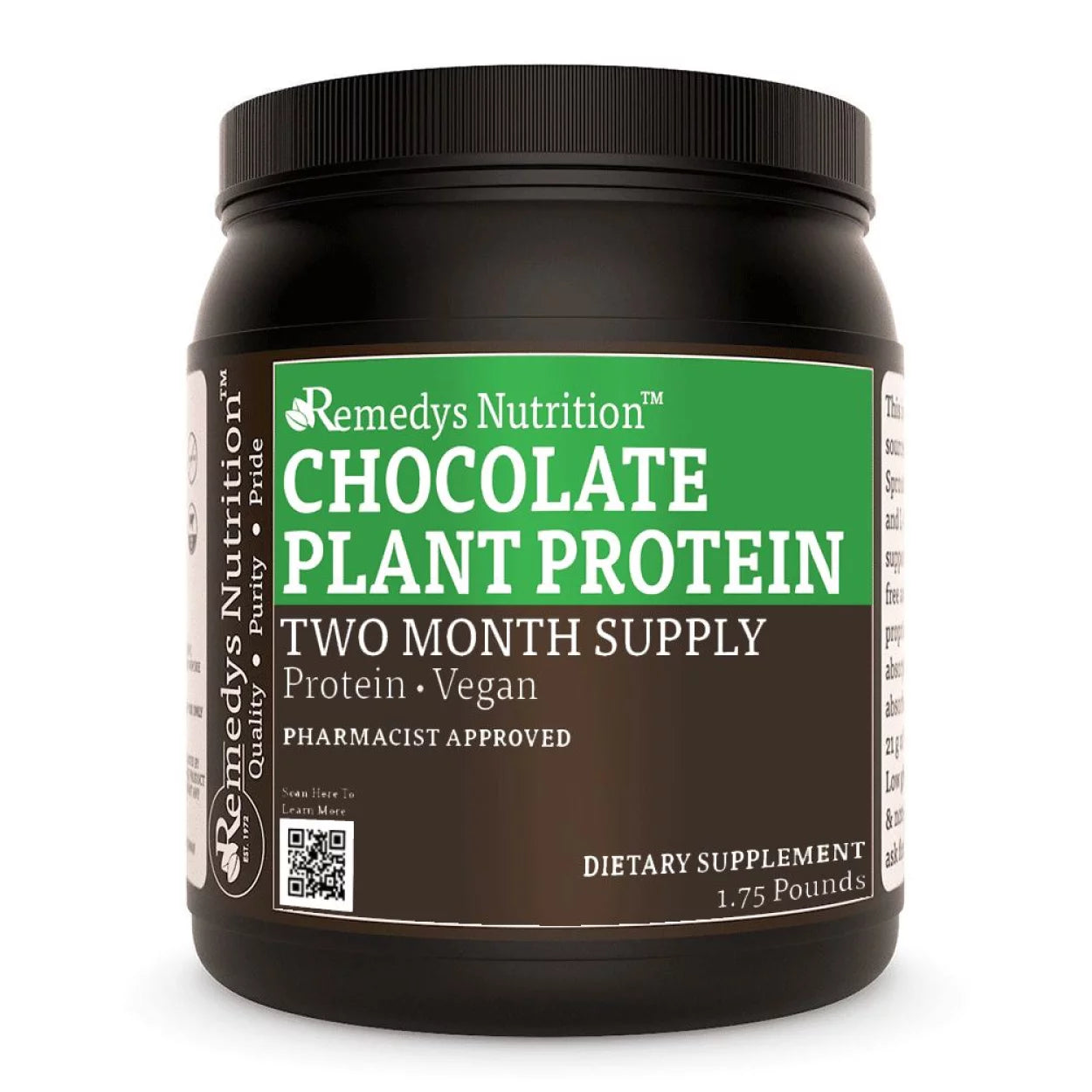
What Is Vegan Plant Protein Powder?
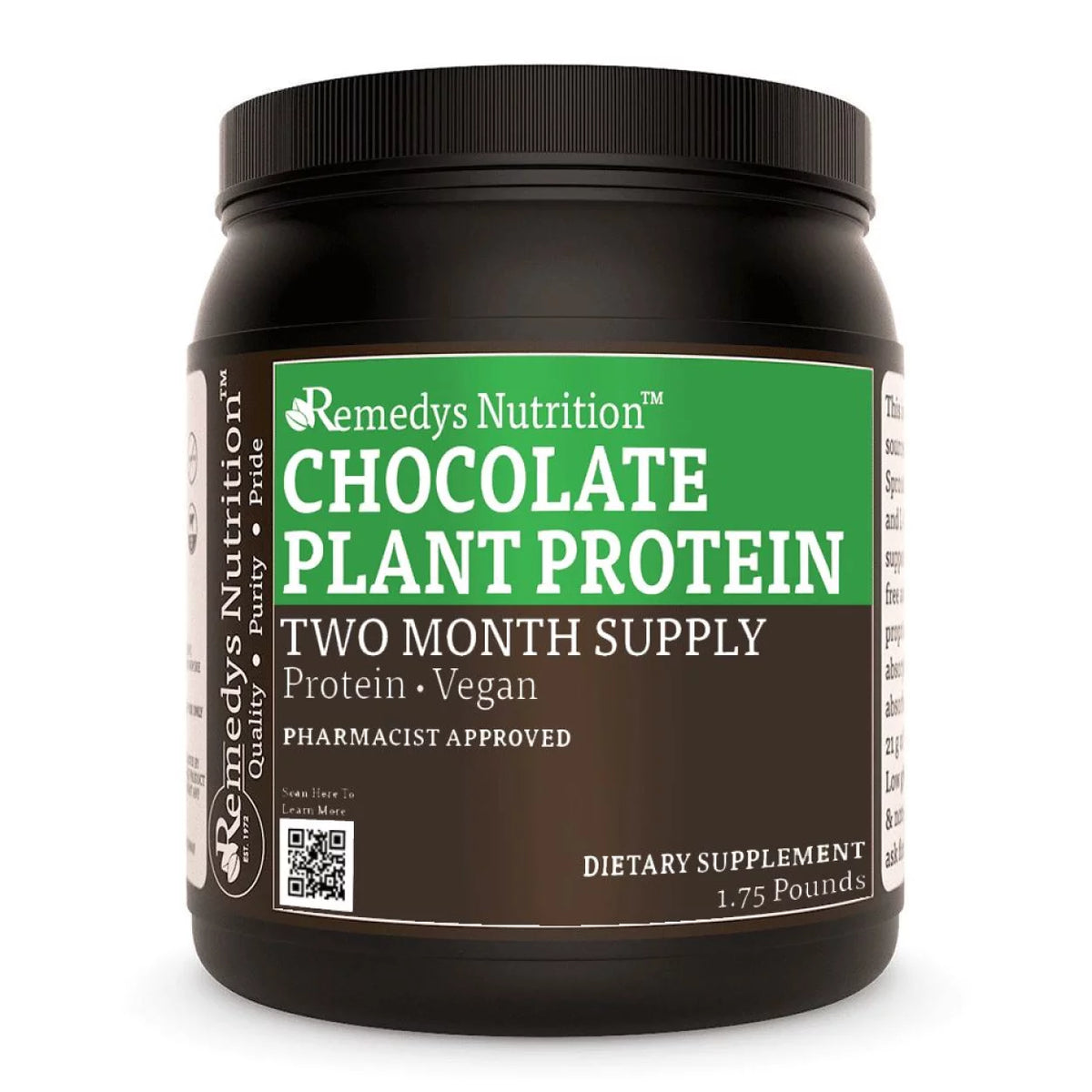
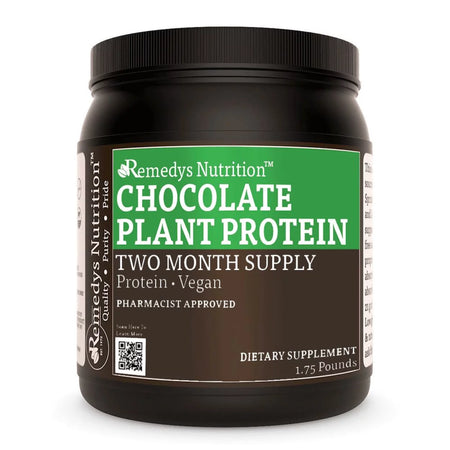
Plant protein powder delivers the same amino acids as whey without any dairy. Remedy's Nutrition® Chocolate Vegan Plant Protein is a multi-source blend built on pea protein isolate, with sprouted quinoa, sprouted amaranth and whole algae protein filling the gaps that pea alone leaves open.
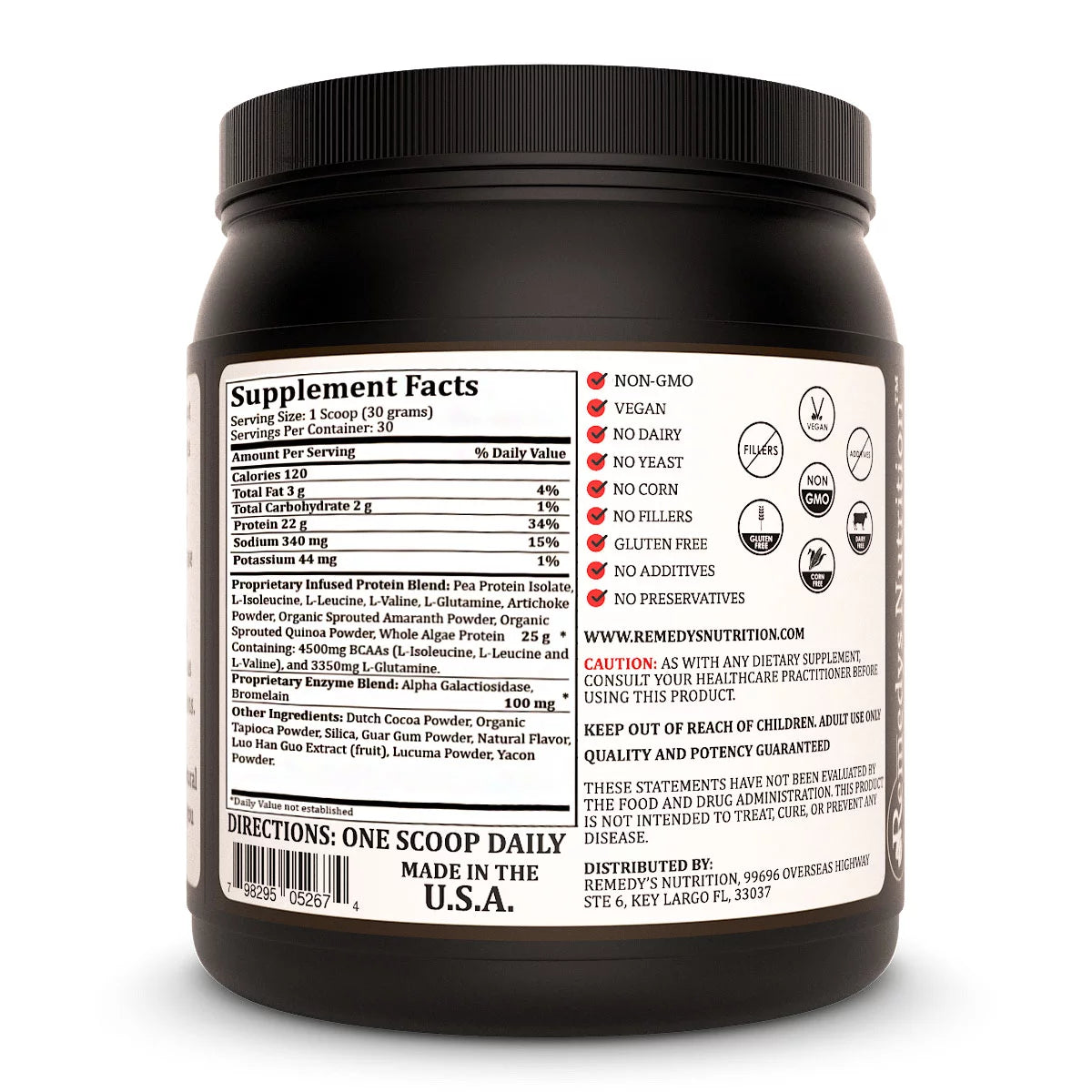
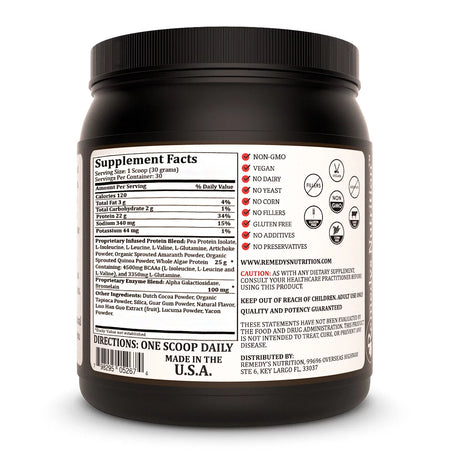
Supplement Facts
Serving size: 1 Scoop (30 grams). Servings per container: 30.
| Amount Per Serving |
Amount |
% Daily Value |
| Calories |
120 |
|
| Total Fat |
3 g |
4% |
| Total Carbohydrate |
2 g |
1% |
| Protein |
22 g |
34% |
| Sodium |
340 mg |
15% |
| Potassium |
44 mg |
1% |
|
Proprietary Infused Protein Blend — Pea Protein Isolate, L-Isoleucine, L-Leucine, L-Valine, L-Glutamine, Artichoke Powder, Organic Sprouted Amaranth Powder, Organic Sprouted Quinoa Powder, Whole Algae Protein |
25 g |
* |
| Containing 4500 mg BCAAs (L-Isoleucine, L-Leucine and L-Valine) and 3350 mg L-Glutamine |
|
|
|
Proprietary Enzyme Blend — Alpha Galactiosidase [sic], Bromelain |
100 mg |
* |
* Daily Value not established.
Other ingredients: Dutch Cocoa Powder, Organic Tapioca Powder, Silica, Guar Gum Powder, Natural Flavor, Luo Han Guo Extract (fruit), Lucuma Powder, Yacon Powder
Directions: One scoop daily.
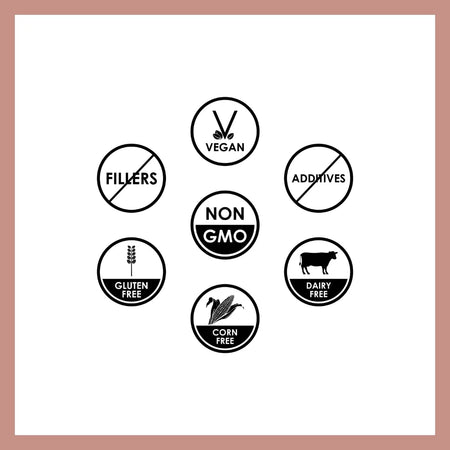
Non-GMO, vegan, no dairy, no yeast, no corn, no fillers, gluten free, no additives, no preservatives. Made in the USA.
Each scoop delivers 22 g of protein from a 25 g infused protein blend, with 4,500 mg of BCAAs and 3,350 mg of L-glutamine already inside it. The tub holds 1.75 lb, which is 30 full servings. For the wider question of where a powder fits alongside food, start with our complete guide to protein.
Supplement Facts Per Scoop
Single-ingredient transparency matters more with plant protein than with whey, because blends vary enormously. These are the published per-serving figures.
| Per 1 Scoop (30 g) |
Amount |
Why It Matters |
| Protein |
22 g |
34% of the Daily Value in a single serving |
| Calories |
120 |
Low enough to fit a calorie deficit comfortably |
| Total fat |
3 g |
From the whole-food plant sources, not added oil |
| Total carbohydrate |
2 g |
Suits low-carb and keto patterns |
| BCAAs |
4,500 mg |
Leucine, isoleucine and valine, added to the blend |
| L-glutamine |
3,350 mg |
The most abundant amino acid in muscle tissue |
| Servings per tub |
30 |
A full month at one serving a day |
Why the Blend Is Multi-Source
Single plant proteins are incomplete on their own. Pea protein is low in methionine, rice protein is low in lysine, and using either alone means the amino acid profile has a weak link that limits how much your body can actually build with.
Combining sources fixes it. Pea isolate supplies the bulk and the lysine, the sprouted grains contribute the methionine pea lacks, and algae protein adds density. The result behaves as a complete protein rather than a partial one. The mechanism is explained in our guide to complete versus incomplete protein.
Plant Protein Benefits: Clinical Evidence Summary
| Benefit Area |
Key Clinical Finding |
Intake Used in Research |
| Lean Mass & Strength[1]Animal Protein versus Plant Protein for Lean Mass and Strength — Nutrients View source |
Systematic review found broadly similar outcomes between animal and plant protein when total intake was adequate |
Adequate daily protein |
| Training Adaptations[2]Plant-Based versus Omnivorous Diet for Resistance Training — Sports Medicine View source |
A protein-matched plant-based diet produced comparable resistance training results against an omnivorous one |
Protein matched between groups |
| Body Composition[3]Soya Protein versus Whey Protein on Body Composition — British Journal of Nutrition View source |
Meta-analysis found differences between plant and whey protein that were detectable but small in practical terms |
Comparable daily servings |
| Total Intake Ceiling[4]Protein Supplementation and Resistance Training Meta-Analysis — British Journal of Sports Medicine View source |
Across 49 studies, benefit rose until roughly 1.6 g per kg daily and then flattened |
Up to 1.6 g per kg |
| Appetite Control[5]Dietary Protein in Satiety, Energetics and Weight Loss — British Journal of Nutrition View source |
Protein is the most satiating macronutrient and raises the thermic effect of feeding |
1.2–1.6 g per kg daily |
Plant Protein for Building Muscle
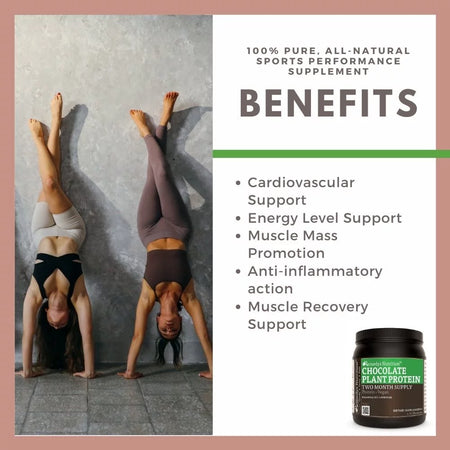
The old objection to plant protein was leucine density. Pea alone carries less leucine per gram than whey, and leucine is the trigger for muscle protein synthesis at roughly 2.5 to 3 g per serving.
This blend addresses that directly by adding 4,500 mg of BCAAs on top of the base protein, so a single scoop reaches the threshold rather than needing one and a half. Combined with resistance training at 1.6 to 2.2 g per kg daily, the outcome tracks closely with dairy protein. The full range is set out in how much protein builds muscle.
Plant Protein for Weight Loss
At 120 calories with 22 g of protein, this sits in a useful ratio for anyone eating in a deficit. Without adequate protein, up to 20 to 30% of the weight lost in a deficit can be lean tissue rather than fat.
The sprouted grain content also contributes a small amount of fibre, which adds to the fullness effect that makes a deficit sustainable. How protein protects muscle while cutting is covered in protein for weight loss and keeping muscle.
Plant Protein for Dairy-Free and Lactose-Intolerant Users
Roughly 65% of adults worldwide have some degree of lactose malabsorption, with wide variation by ancestry. For that group whey concentrate is uncomfortable rather than merely suboptimal, and no leucine advantage compensates for a supplement you avoid taking.
This formula contains no dairy, no yeast, no corn and no gluten. It is also suitable for anyone avoiding animal products entirely. The honest side-by-side, including where whey still wins, is in whey and plant protein compared.
Why Choose Remedy's Nutrition® Plant Protein
| What You Get |
Why It Matters |
| 22 g protein per 30 g scoop |
A 73% protein density, high for a plant blend |
| Multi-source blend |
Pea, quinoa, amaranth and algae cover each other's amino acid gaps |
| 4,500 mg BCAAs included |
Reaches the leucine threshold in one scoop, not one and a half |
| Digestive enzyme blend |
100 mg of bromelain and alpha-galactosidase to ease plant protein digestion |
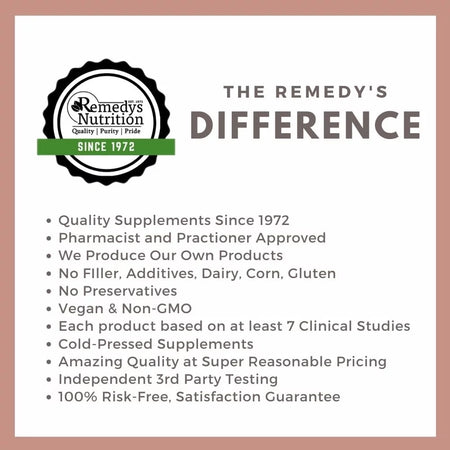
| No fillers or additives |
No dairy, yeast, corn, gluten, preservatives or artificial sweeteners |
| Luo han guo and lucuma |
Fruit-derived sweetness rather than sucralose or acesulfame |
Plant Protein Dosage and How to Take It
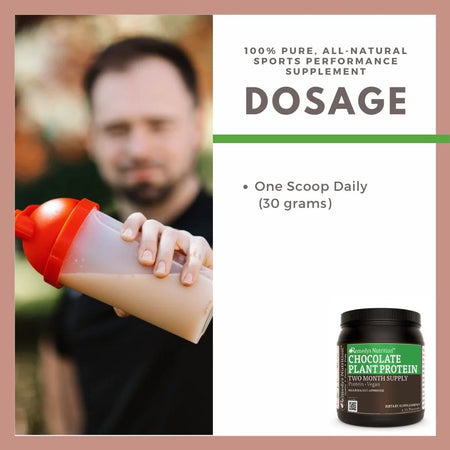
Directions are one scoop daily, taken morning or evening. How many servings you need depends on the gap between your daily target and what your meals already deliver, not on the product.
| Goal |
Daily Protein Target |
Scoops Per Day |
Best Timing |
| General health |
1.0–1.2 g per kg |
1 on days meals fall short |
Breakfast |
| Building muscle |
1.6–2.2 g per kg |
1–2 |
Breakfast and post-training |
| Losing fat |
1.2–1.6 g per kg |
1–2 |
Breakfast or as a snack |
| Adults 50 and over |
1.0–1.2 g per kg |
1 |
Whichever meal is lightest |
| Fully plant-based |
Add 10–20% to your band |
1–2 |
Spread across the day |
Breakfast is where most people fall shortest, often contributing under 10 g against a 25 to 40 g per-meal target. To work out your own figure rather than a general band, use our free protein intake calculator, or read how much protein you need per day for the full calculation.
Safety and Who Should Take Care
Plant protein is well tolerated, and for healthy adults long-term intakes near 2 g per kg have been studied without evidence of harm.[6]Dietary Protein Intake and Human Health — PubMed View source The considerations below are specific rather than general.
| Consideration |
Details |
| Kidney disease |
Protein is prescribed and often restricted. Your clinician sets the amount |
| Liver disease |
Requirements are individual and need medical guidance |
| Initial bloating |
Introduce over 1 to 2 weeks. The enzyme blend is there to reduce this |
| Pregnancy |
Protein needs rise, but the target should be set by your provider |
| Under 18 |
Growth-stage needs differ. Ask a pediatrician or dietitian |
Because plant protein digests more slowly than whey, spreading intake across the day suits it well. The per-meal reasoning is covered in how much protein per meal, and the age-specific adjustments in protein for women and adults over 50.
Remedy's Nutrition® Plant Protein Is Often Taken With:
You May Also Like
Frequently Asked Questions
How much protein is in one scoop? +
22 g of protein per 30 g scoop, which is 34% of the Daily Value. That comes from a 25 g infused protein blend, alongside 120 calories, 3 g of fat and 2 g of carbohydrate. Each tub holds 30 full servings.
Is plant protein as effective as whey for muscle? +
When total protein is matched, yes. A systematic review comparing animal and plant protein found broadly similar lean mass and strength outcomes, and a protein-matched trial found comparable training adaptations. The main gap is leucine density, which the 4,500 mg of added BCAAs in this blend closes.
Why is it a blend rather than just pea protein? +
Because single plant proteins are incomplete. Pea is low in methionine, so using it alone leaves a weak link that limits what your body can build with. Adding 3 further sources, sprouted quinoa, amaranth and algae protein, supplies what pea lacks and makes the blend behave as a complete protein.
Does plant protein cause bloating? +
It can at first, because plant powders contain fermentable carbohydrates. This formula includes a 100 mg enzyme blend of bromelain and alpha-galactosidase specifically to reduce that. Introducing it over 1 to 2 weeks rather than starting with a full scoop resolves it for most people.
How is it sweetened? +
With luo han guo, also called monk fruit, plus lucuma and yacon, all fruit-derived. There is no sucralose, acesulfame or aspartame, and 0 added cane sugar. The chocolate flavour comes from Dutch cocoa powder rather than an artificial flavouring.
How many scoops a day should I take? +
Usually 1, sometimes 2. Set a daily target first, 1.2 to 1.6 g per kg if active or 1.6 to 2.2 g per kg if building muscle, then use scoops only for what your meals miss. Plant-based eaters typically add 10 to 20% to that band.
Is this suitable for keto or low carb? +
Yes. Each scoop contains only 2 g of total carbohydrate alongside 22 g of protein and 120 calories, which fits comfortably inside most low-carb and ketogenic targets. The sweetness comes from fruit-derived sources rather than sugars.
Can I bake with it or add it to food? +
Yes. It stirs into porridge, yogurt and smoothies, and holds up in baking, though heat above 350F can affect texture. Adding 1 scoop to a bowl of oats takes that meal from roughly 5 g of protein to about 27 g without changing anything else.
Does it contain soy? +
No. The protein comes from pea isolate, sprouted quinoa, sprouted amaranth and whole algae protein, with 0 soy in the blend. It is also free from dairy, yeast, corn and gluten, which covers the most common sensitivities in one formula.
How long does one tub last? +
30 days at 1 scoop daily, or 15 days at 2. The 1.75 lb tub holds 30 full 30 g servings. Most people using it to close a breakfast gap need only 1 scoop a day, which makes it a straightforward monthly item.
Is plant protein good for women? +
Yes, and the calculation is identical since protein scales with body weight rather than sex. A 65 kg woman needs 78 to 104 g daily if active. Needs rise further after menopause, where a floor of 1.0 to 1.2 g per kg helps defend against accelerating muscle loss.
Do I still need protein powder if I eat plenty of beans and lentils? +
Possibly not. Lentils give 18 g per cooked cup and tofu about 20 g per 100 g, so a well-built plant diet can reach the target from food. Powder earns its place when the volume becomes impractical or when breakfast routinely delivers under 10 g.
What is the difference between the chocolate and vanilla versions? +
The formula is identical at 22 g of protein per 30 g scoop. Only the flavour differs. Chocolate uses Dutch cocoa and works well on its own with water or milk; vanilla is the more neutral base if you plan to blend it with fruit, coffee or use it in baking.