Quick Answer: Jamaican Dogwood Tincture
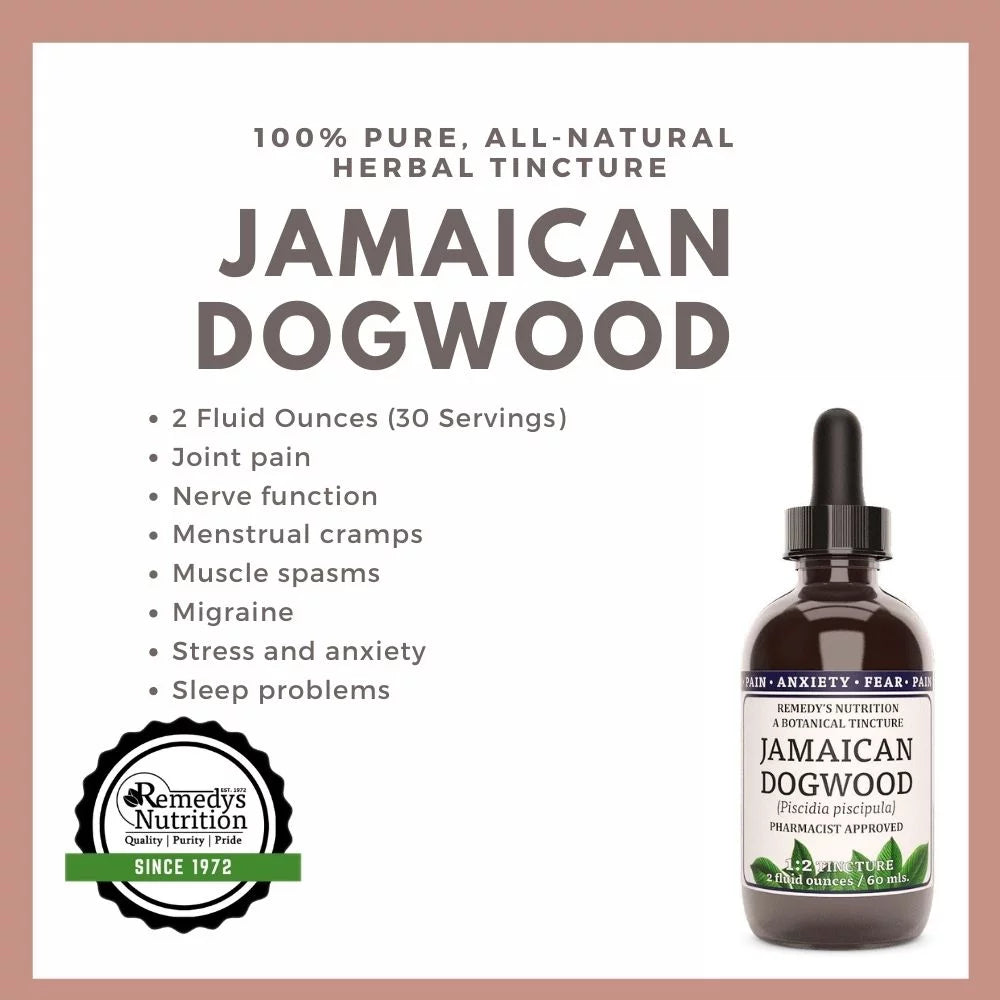
Jamaican dogwood tincture is a potent root-bark extract of Piscidia piscipula used for nerve pain, muscle spasm, and severe insomnia. Take 1 to 2 mL (20 to 40 drops) sublingually no more than 3 times daily. Effects begin in 30 to 60 minutes. Strong sedative {EM} use under practitioner guidance.
What Is Jamaican Dogwood Tincture?
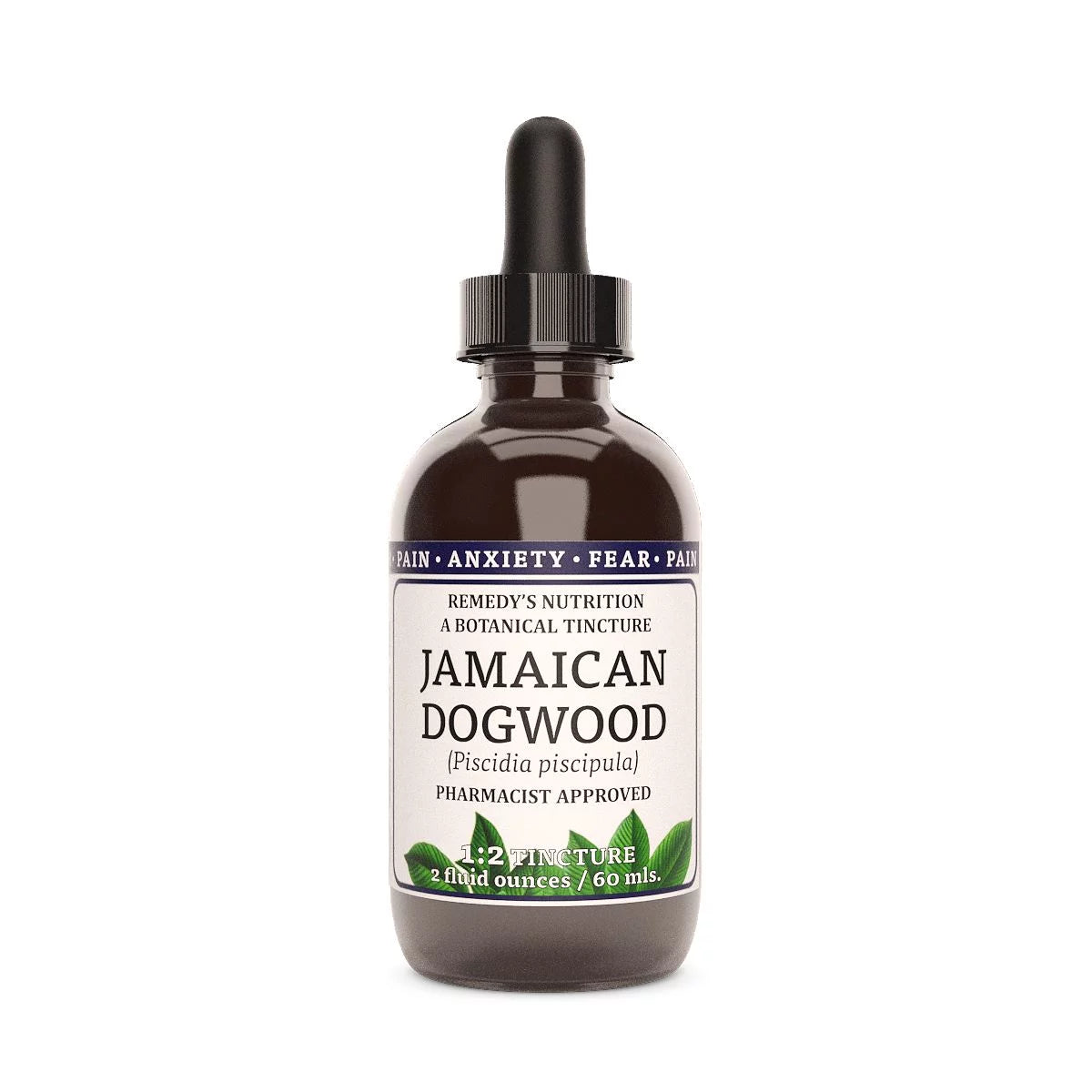
Jamaican dogwood tincture is a strong sedative and analgesic liquid extract made from the root bark of Piscidia piscipula, a tree native to the Caribbean and Central America. Indigenous Caribbean fishermen historically used it to stun fish — a vivid indication of its sedative potency. In Western herbal practice it has been used since the 1880s for severe insomnia, neuralgia, migraine, and menstrual cramps. Each 2 mL dose from a 2 fl oz bottle delivers a clinically active dose; standard adult dose is 1 to 2 mL up to 3 times daily.
- Piscidia piscipula
- The botanical name for Jamaican dogwood, a Caribbean tree species. The root bark is the medicinal part. Caribbean fishermen historically used it to stun fish — an indication of its sedative potency.
- Piscidic acid
- A signature isoflavonoid in the root bark with documented sedative and analgesic activity in animal studies.
- Rotenoids
- A class of compounds that includes rotenone. Present at low levels in the root bark. Contribute to the herb’s strong sedative effect at high doses.
- Antispasmodic
- Reduces involuntary muscle contractions. Jamaican dogwood is rated as a moderately strong herbal antispasmodic in classical Western herbal monographs.
- Root bark
- The thin layer just under the outer bark of the root. Contains 5 to 10x higher concentration of active compounds than the woody core.
Jamaican Dogwood Tincture Benefits: Traditional and Modern Evidence
Modern human-trial data for Jamaican dogwood is limited compared to better-studied herbs like valerian. The evidence base is primarily traditional Western herbal use, animal pharmacology, and case reports. The table summarizes documented uses and supporting evidence types.
| Use |
Evidence Type |
Practitioner Dose |
| Severe insomnia |
Traditional Western herbal monograph (1880s-present) |
1 to 2 mL pre-bed |
| Neuralgia and nerve pain |
Animal pharmacology + case reports1
|
1 mL up to 3x daily |
| Migraine prophylaxis |
Traditional use, weak human data |
1 mL twice daily |
| Menstrual cramps |
Antispasmodic monograph use |
1 mL every 4 hours during episode |
| Muscle spasm |
Animal antispasmodic studies |
1 to 2 mL up to 3x daily |
| Anxiety with sleep disturbance |
Practitioner case reports |
1 mL evening |
References: Della Loggia 1988 sedative pharmacology, NCCIH herbal database, Aguilar 2002 ethnopharmacology review.
What Is Jamaican Dogwood Good For?
Three primary uses dominate clinical practice: severe insomnia (especially pain-driven), neuralgia and migraine, and menstrual or muscle spasm. Unlike gentler herbs, Jamaican dogwood is reserved for moderate-to-severe symptoms and not typically a first-line choice for routine stress or mild sleep issues. For routine sleep see our Deep Sleep tincture blend.
Mechanism of Action
The mechanism is not fully characterized. Animal studies show GABA-A modulation, sodium-channel effects in peripheral nerves, and central sedation. Piscidic acid and related isoflavonoids are the leading candidates for analgesia; rotenoid content (low) contributes to sedation. The combined effect mimics a mild benzodiazepine pattern but with a different molecular target profile.
Jamaican Dogwood vs Other Sedative Herbs
Jamaican dogwood ranks among the most potent herbal sedatives. The table below compares relative strength, onset, and best-fit indications.
| Herb |
Potency |
Best For |
Onset |
| Jamaican dogwood |
Strong |
Severe insomnia, neuralgia, migraine |
30 to 60 min |
| Valerian |
Moderate |
Routine sleep onset |
30 to 60 min |
| Kava |
Moderate-strong (anxiolytic) |
Anxiety + insomnia |
15 to 30 min |
| Hops |
Mild-moderate |
Restless sleep |
30 to 90 min |
| Passionflower |
Mild |
Anxiety-driven insomnia |
30 to 90 min |
| Chamomile |
Mild |
Pre-bed wind-down |
30 to 60 min |
Read more in our deep sleep tincture roundup and the broader tinctures for pain comparison.
How to Use Jamaican Dogwood Tincture
Squeeze 1 mL (20 drops) under the tongue, hold 30 to 60 seconds, swallow. Wait 60 minutes to assess effect before redosing. Most adults find 1 mL produces strong sedation within 30 to 60 minutes. Do not exceed 3 mL across a 24-hour period — this herb has overdose toxicity at high doses.
-
Severe insomnia: 1 to 2 mL 30 to 60 minutes before bed.
-
Acute pain or migraine: 1 mL every 3 to 4 hours, max 3 doses per day.
-
Menstrual cramps: 1 mL every 4 hours during peak symptoms only.
-
First-time users: 0.5 mL at bedtime to test response. Scale up only if needed.
For broader dose-translation context see beginner tincture dosing.
Jamaican Dogwood Tincture Dosage
Adult therapeutic range is 1 to 2 mL up to 3 times daily, with 6 mL as the absolute 24-hour ceiling. Do not exceed this dose; Jamaican dogwood has documented overdose toxicity at high oral doses, including respiratory depression in case reports.
| Goal |
Dose |
Frequency |
Duration |
| Severe insomnia |
1 to 2 mL |
Once at bedtime |
Up to 14 nights, then break |
| Neuralgia or migraine |
1 mL |
Every 3 to 4 hr, max 3x/day |
Until episode resolves |
| Menstrual cramps |
1 mL |
Every 4 hr during peak |
2 to 4 days/cycle |
| First-time users |
0.5 mL |
Once |
Test single night |
| Maximum 24-hr dose |
6 mL absolute ceiling |
Split 3 doses |
Acute use only |
Why Choose Remedy’s Nutrition® Jamaican Dogwood Tincture
| What You Get |
Why It Matters |
| Wild-harvested Caribbean root bark |
Sustainably harvested from the species’ native range. The root bark contains 5 to 10x the active compounds of the woody core. |
| 1:2 herb-to-solvent ratio |
Concentrated extract; lower volume per dose than 1:5 retail tinctures. |
| 12-week steeping |
Extracts piscidic acid, rotenoids, and the full active profile. |
| Hand-formulated, small batch |
Made in Key Largo, Florida since 1972. Traditional Western herbal preparation. |
| Zero fillers, dyes, sweeteners |
Just root bark and food-grade alcohol. |
| Third-party tested |
Each batch tested for microbial safety, heavy metals, and identity confirmation. |
| 30-day satisfaction guarantee |
Full refund if not satisfied. |
Who Jamaican Dogwood Suits Best
Best for adults with severe pain-driven insomnia, neuralgia, migraine, or menstrual cramps that have not responded to gentler options. Not appropriate for routine mild stress, daytime use, or first-line sleep support — those needs are better served by the Deep Sleep tincture or our gentler adaptogen blends. Use under practitioner guidance for any consistent multi-week protocol.
For overall tincture quality criteria see quality tincture criteria and reading a tincture label.
Limitations of the Evidence
Modern human-trial data for Jamaican dogwood is sparse. Most evidence comes from 19th-century clinical observations, animal pharmacology, and ethnobotanical reports. No published RCTs have established a dose-response curve for sleep, pain, or migraine in modern populations. Use is best framed as practitioner-guided traditional medicine rather than evidence-based first-line therapy. The complete complete tincture buying guide notes Jamaican dogwood as a niche but valued option in the catalog.
Safety, Interactions & Contraindications
Important: pregnancy ABSOLUTELY contraindicated. Jamaican dogwood has documented uterine effects and is one of the strongest abortifacient herbs in classical Western herbal monographs. Do not use during pregnancy at any dose. Also do not use with prescription sedatives, opioids, alcohol, or before driving or operating machinery.
Overdose toxicity: Doses above 6 mL/24 hours have been associated with respiratory depression and severe sedation in case reports. Stay within recommended range.
| Consideration |
Action |
| Pregnancy |
Absolute contraindication. Strong abortifacient. |
| Breastfeeding |
Contraindicated. Active compounds pass into breast milk. |
| CNS depressants |
Synergistic with benzodiazepines, opioids, alcohol, Z-drugs. Do not combine. |
| Driving and machinery |
Do not operate within 8 hours of dosing. |
| Children |
Not for use under 18 years. |
| Elderly users |
Start at 0.5 mL. Increased fall risk; pair with bedside rails or bed alarm. |
| Liver or kidney disease |
Caution. Reduced clearance. Consult prescriber before use. |
| Cardiac disease |
Caution. Mild bradycardic effect at high doses. |
| Surgery |
Stop 14 days before scheduled surgery. Inform anesthesiologist. |
| Common side effects |
Sedation, dry mouth, dizziness, nausea at higher doses. See full sedative tincture cautions. |
You May Also Like
Frequently Asked Questions
What is Jamaican dogwood good for? +
Jamaican dogwood tincture is used for 4 main indications: severe insomnia (especially pain-driven), neuralgia and migraine, menstrual or muscle spasm, and anxiety with sleep disturbance. Standard adult dose is 1 mL up to 3 times daily, max 6 mL per 24 hours. It is reserved for moderate-to-severe symptoms, not first-line routine use.
What are the side effects of Jamaican dogwood tea? +
Tea form is less concentrated than tincture but produces similar effects: sedation, dry mouth, dizziness, mild nausea, and occasional bradycardia at high doses. About 5 to 10% of users experience drowsiness exceeding their goal. Doses above 6 mL tincture or 3 cups strong tea per 24 hours can cause respiratory depression in case reports. Stay within recommended range.
What is the mechanism of action of Jamaican dogwood? +
Animal studies show 3 mechanisms: GABA-A receptor modulation (sedation), sodium-channel modulation in peripheral nerves (analgesia), and mild central depression. Piscidic acid and related isoflavonoids are the leading active compounds. The combined effect resembles a mild benzodiazepine pattern but at different molecular targets.
What are the disadvantages of tinctures? +
Tinctures contain 40 to 50% alcohol, which is contraindicated in pregnancy, alcohol use disorder, liver disease, and with some medications. Taste is often strong. Glass bottles are less travel-friendly than capsules. Tinctures cost 2 to 3x more per dose than dried herb. The advantages — faster sublingual onset and dose flexibility — usually outweigh these drawbacks.
How fast does Jamaican dogwood tincture work? +
Sublingual onset begins within 5 to 15 minutes; peak sedative or analgesic effect at 30 to 60 minutes. Effects last 3 to 5 hours. For pain-driven insomnia, take 1 mL 30 to 60 minutes before bed. Wait 60 minutes before redosing.
How much Jamaican dogwood is safe? +
Adult therapeutic range is 1 to 2 mL up to 3 times daily, with 6 mL as the absolute 24-hour ceiling. Doses above 6 mL have been associated with severe sedation and respiratory depression in case reports. First-time users should start at 0.5 mL.
Can I take Jamaican dogwood every night? +
Cycle every 14 nights. The standard protocol is up to 14 nights consecutive use, then 7 nights off. Continuous nightly use beyond 14 nights lacks safety data and may produce subjective tolerance. Severe chronic insomnia should be evaluated by sleep medicine rather than treated with continuous high-potency herbs.
Is Jamaican dogwood safe in pregnancy? +
No. Absolutely contraindicated. It is one of the strongest abortifacient herbs in classical monographs and has documented uterine effects. Do not use at any dose during pregnancy or breastfeeding. For pregnancy-safe sleep options, ask your OB about magnesium glycinate or chamomile tea.
Can Jamaican dogwood help migraines? +
Traditional use supports it for migraine prophylaxis at 1 mL twice daily and acute episodes at 1 mL every 3 to 4 hours during the episode. Modern RCT data is absent. Most published evidence is 19th-century clinical observation and animal pharmacology. Use in collaboration with your migraine specialist.
Does it interact with prescription medications? +
Yes with several classes: benzodiazepines, opioids, Z-drugs, MAO inhibitors, sedative antihistamines, beta-blockers, and any drug requiring full alertness. Avoid combining with prescription sleep aids or anxiolytics. Stop 14 days before scheduled surgery to prevent anesthetic interaction.
Will it make me groggy the next day? +
About 1 in 4 users at 2 mL bedtime doses report mild morning grogginess for 1 to 3 hours. This usually resolves with a smaller 1 mL dose or by taking the dose 60 to 90 minutes before bed instead of right at lights-out. If grogginess persists, switch to a gentler valerian-based formula like Deep Sleep.
Can I drive after taking it? +
No within 8 hours of dosing. The sedative and mild psychomotor effects can impair reaction time and judgment for at least 8 hours. Plan ahead and arrange transport if you must travel after dosing. Do not operate machinery, fly aircraft, or perform safety-sensitive work.
What does Jamaican dogwood tincture taste like? +
Strong, woody, slightly bitter with a faint tannic edge. The 40 to 50% alcohol carrier adds warmth. Most users dilute the 1 mL dose in 2 to 4 oz of warm water with a teaspoon of honey to mask the taste. Sublingual onset is preserved if held under the tongue for 30 seconds before diluting.