What Is Neem Oil?
Neem oil is a cold-pressed oil extracted from the fruits and seeds of Azadirachta indica — the neem tree native to the Indian subcontinent.
It has been used in Ayurvedic medicine for over 4,000 years as an antimicrobial, antifungal, and insecticidal agent. The oil—s characteristic pungent, sulfurous odor comes from naturally occurring sulfur compounds including nimbin and nimbidin, the same compounds responsible for its potent biological activity.
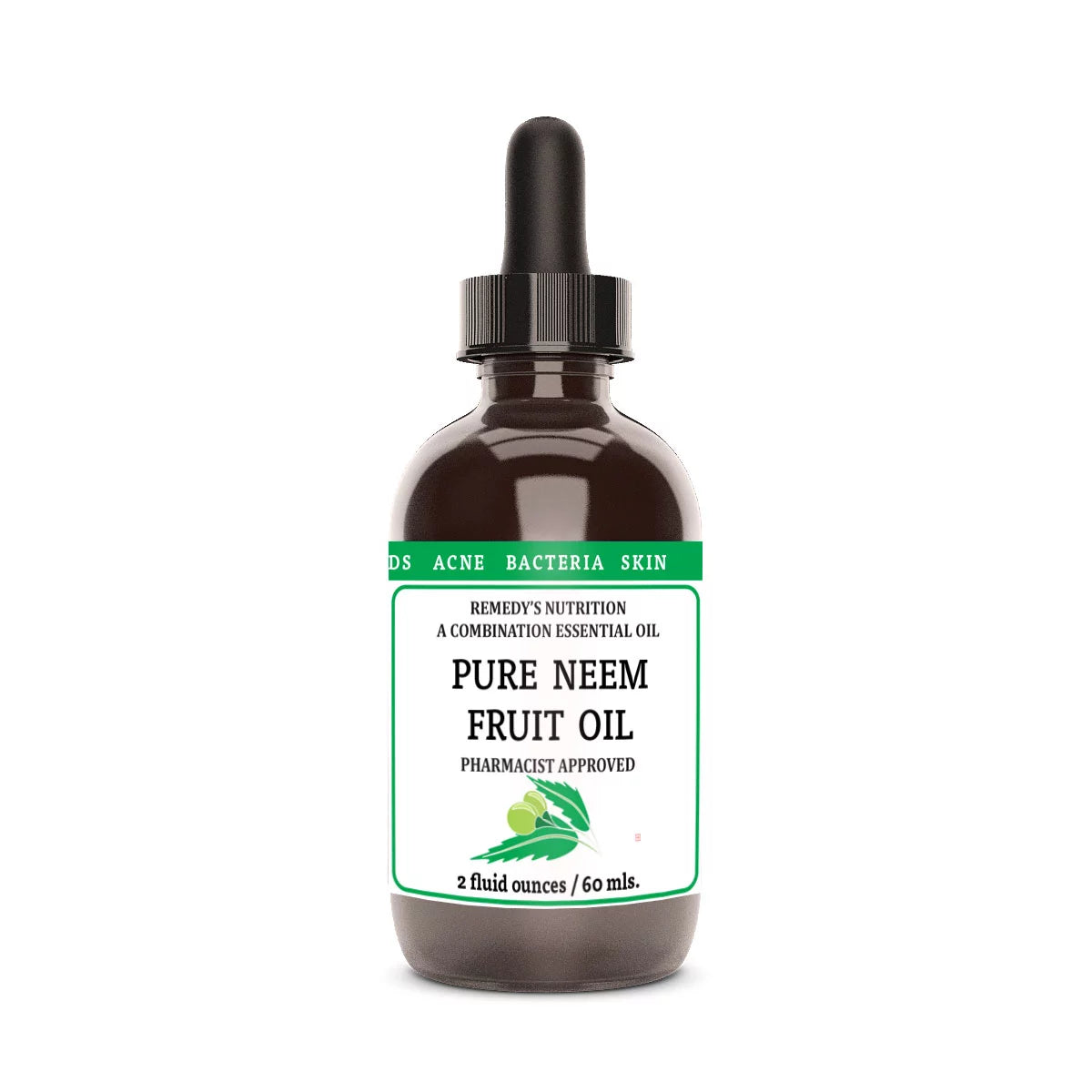
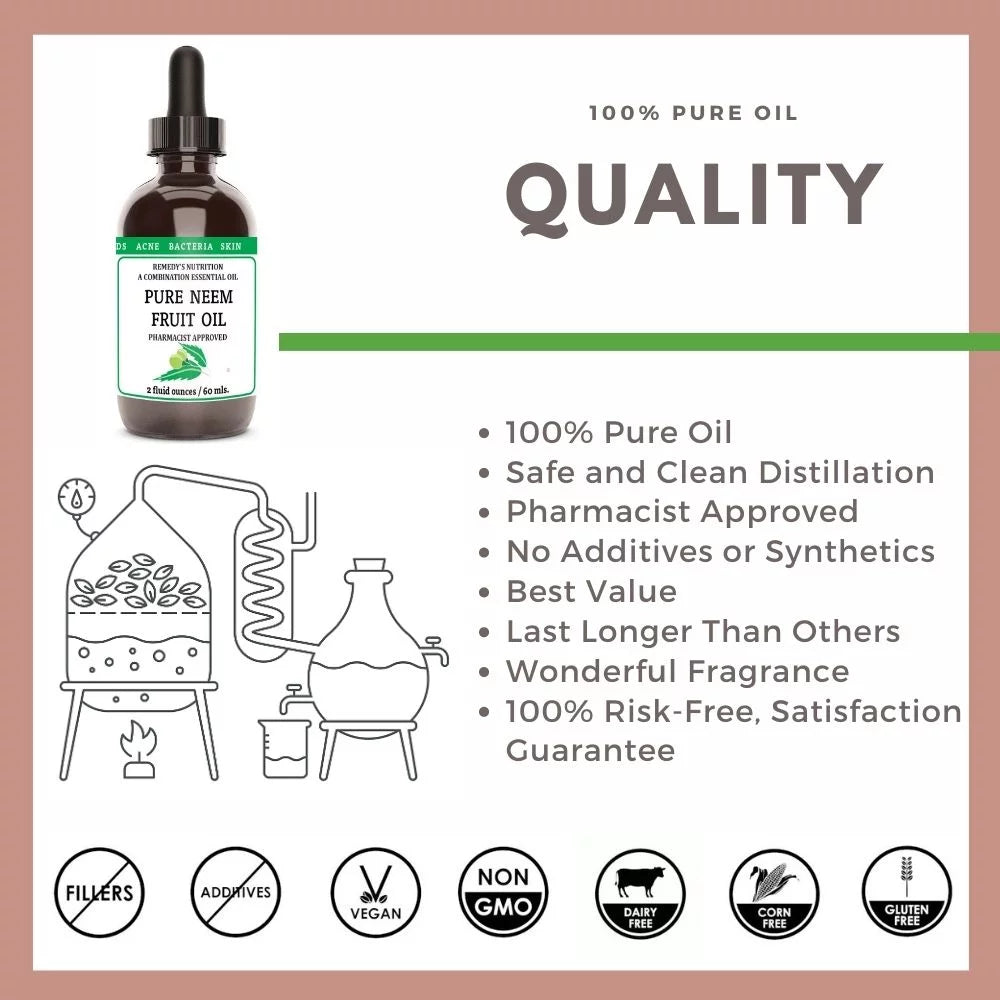
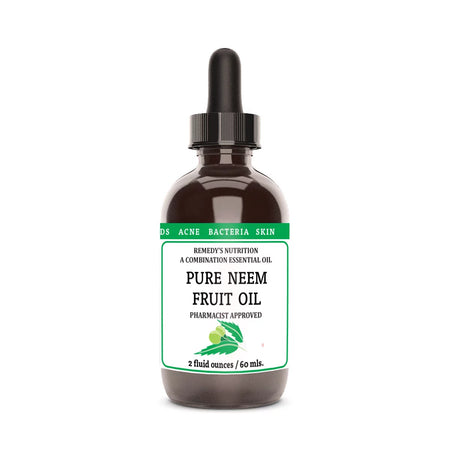
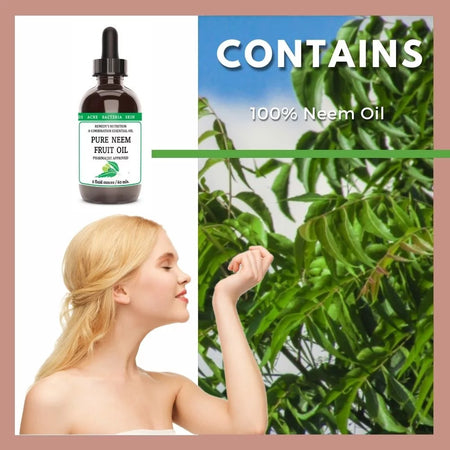
Cold-pressed neem oil is a yellow-brown to dark greenish color. Like rose hip oil, a paler, nearly odorless neem oil has been refined — a process that removes both the distinctive smell and the active therapeutic compounds. Remedy—s Pure Neem Fruit Oil is cold-pressed and unrefined, preserving the full azadirachtin, nimbin, and fatty acid profile.
Neem oil should never be applied undiluted to skin. The standard topical concentration is 1 to 5% in a carrier oil. At this dilution it retains full antimicrobial activity while eliminating irritation risk. A 2 oz bottle at typical dilutions will produce 20 to 40 separate 30 ml blending batches, making it exceptionally economical.
Neem Oil Benefits: Evidence Summary
Neem oil—s documented benefits come primarily from its 3 major active compound classes: terpenoids (azadirachtin, nimbin, nimbidin), fatty acids (oleic, stearic, palmitic), and sulfur-containing compounds that give it antimicrobial breadth against bacteria, fungi, and parasites.
| Benefit |
Key Finding |
Typical Use |
| Acne treatment |
Nimbidin inhibits Propionibacterium acnes at concentrations as low as 0.5%; reduces inflammatory lesion count in 4 to 6 weeks |
Spot treatment (1 to 2% dilution) or face wash additive |
| Dandruff and scalp fungus |
Azadirachtin active against Malassezia spp. — the primary cause of dandruff and seborrheic dermatitis; comparable to 1% ketoconazole in 1 study |
Scalp oil blend (2 to 3%) |
| Nail fungus (dermatophytes) |
Minimum inhibitory concentration against Trichophyton spp. established at 0.25% — effective as adjunct topical |
Daily nail application (5%) |
| Anti-inflammatory skin |
Nimbin reduces prostaglandin synthesis in vitro; topical 2% neem blend reduced eczema inflammation scores in 1 small trial |
Blended body application for eczema |
| Natural insect repellent |
Azadirachtin disrupts insect molting hormones; topical application shown to repel mosquitoes for up to 4 hours at 2% concentration |
Skin-safe insect repellent blend |
| Wound healing support |
Promotes collagen synthesis and granulation tissue in animal models; 3 to 5% neem oil blends used post-procedure in Ayurvedic protocols |
Minor wounds (diluted) |
| Plant health (gardening) |
EPA-registered active ingredient; disrupts life cycles of over 200 insect species without harming beneficial insects when used correctly |
Garden spray (diluted in water + soap) |
How Neem Oil Works
Neem oil operates through 3 distinct mechanisms that together explain its unusually broad spectrum of activity. First, azadirachtin — the oil—s primary active terpenoid — acts as an insect growth regulator by mimicking and blocking ecdysone, the molting hormone essential to arthropod development. This mechanism is specific to invertebrates and does not affect mammalian hormonal pathways at topical concentrations.
Second, nimbin and nimbidin disrupt bacterial and fungal cell membranes. Nimbidin in particular has been shown to inhibit phospholipase A2, the enzyme that mediates both bacterial membrane integrity and mammalian inflammatory signaling. This dual inhibition explains why neem simultaneously fights infection and reduces inflammation in skin conditions like acne and eczema.
Third, the fatty acid profile — high in oleic (~50%) and stearic (~15%) acids — provides an emollient base that improves skin barrier function while the active compounds work. This means neem oil does not just kill pathogens on the surface; it simultaneously begins repairing the compromised barrier that allowed the infection to take hold in the first place.
Neem Oil for Acne and Skin Conditions
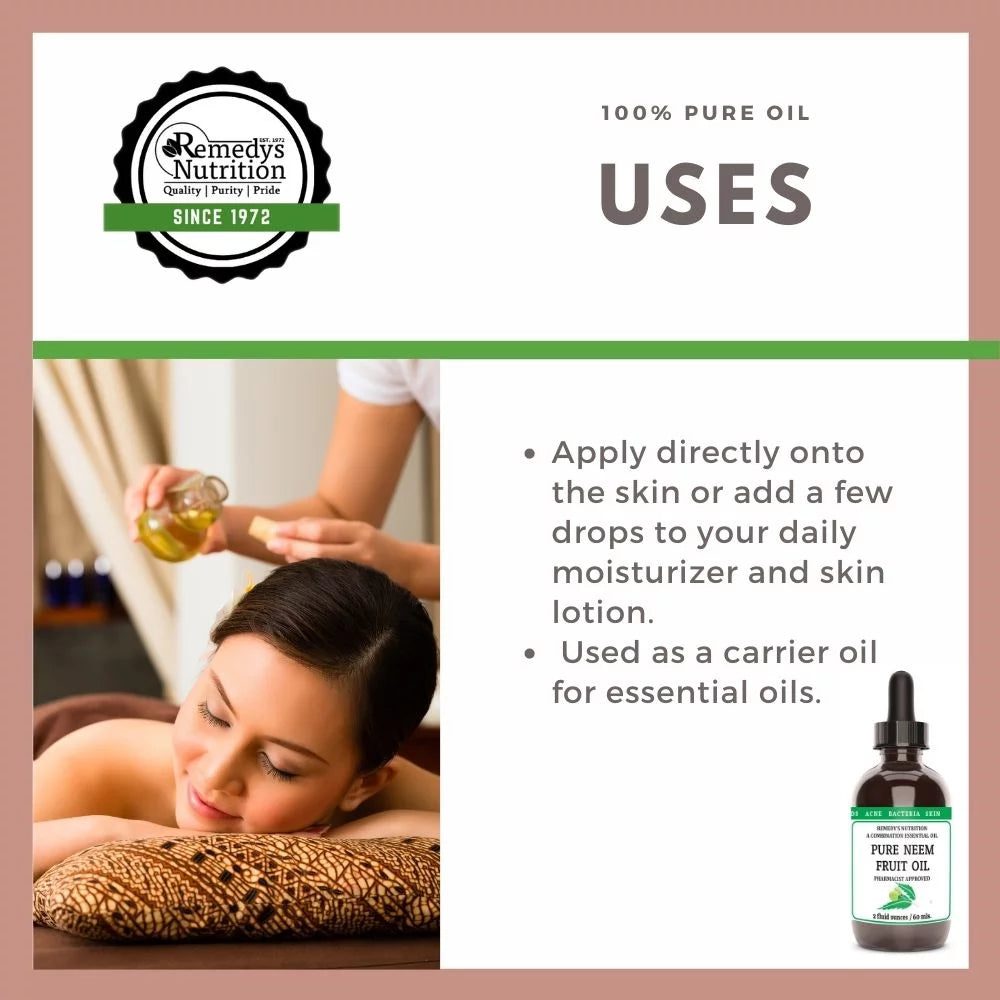
Neem oil—s most popular cosmetic application is acne. For spot treatment, dilute to 1 to 2% in a carrier — typically 6 to 12 drops neem per 30 ml of sweet almond oil — and apply directly to blemishes with a cotton swab. The antimicrobial activity against P. acnes begins within hours, while the anti-inflammatory nimbidin component reduces surrounding redness.
For whole-face acne treatment, lower concentrations of 0.5 to 1% work better, since the strong odor and potential for over-drying at higher concentrations can exacerbate sensitive skin. A nightly routine of 3 drops neem + 30 ml almond oil applied after cleansing typically shows visible reduction in new lesion formation within 4 weeks.
Adding 3 drops of tea tree essential oil per 30 ml of the base blend creates a 2-active antimicrobial formula that works through complementary pathways — tea tree—s terpinen-4-ol disrupts bacterial membranes while neem—s nimbidin inhibits the same enzymes through a different mechanism.
For eczema and psoriasis patches, a 2% neem blend in almond oil applied twice daily can reduce itching and flaking within 1 to 2 weeks, though medical supervision is recommended for chronic conditions.
Neem Oil for Scalp and Hair
Dandruff — caused by overgrowth of Malassezia fungi on the scalp — is one of neem oil—s most effective applications. A 2 to 3% neem blend in a carrier oil applied to the scalp 30 to 60 minutes before shampooing, 2 to 3 times per week, delivers antifungal compounds directly to the scalp. Most users notice a significant reduction in flaking within 2 to 4 weeks.
For seborrheic dermatitis — a more severe form involving inflamed, scaly patches — neem oil—s dual antifungal and anti-inflammatory properties make it particularly suitable. A blend of 5 ml neem + 25 ml carrier + 3 drops rosemary essential oil creates a 3-active scalp treatment that addresses fungus, inflammation, and circulation simultaneously.
For hair health more broadly, neem oil—s fatty acids coat and condition the hair shaft, reducing breakage. However, given the strong odor, it is best used as a pre-wash treatment rather than a leave-in product. Apply to the scalp and hair, wait 20 to 30 minutes, then shampoo out thoroughly with a sulfate-free formula. Adding 2 to 3 drops of cedarwood essential oil to the blend moderates the sulfurous odor with a grounding woody note while contributing its own scalp-circulation properties.
Why Choose Remedy—s Neem Oil
| What You Get |
Why It Matters |
| Cold-pressed, unrefined |
Retains full azadirachtin and nimbin content — heat-refined neem loses 60 to 80% of azadirachtin during processing |
| 100% pure neem fruit oil |
Not blended with cheaper mineral oil or refined vegetable oil; every ml delivers full-strength therapeutic compounds |
| 2 oz size |
At 1 to 5% dilutions, 60 ml produces 20 to 40 blending batches — months of supply from a single bottle |
| Strong characteristic odor |
Paradoxically a quality indicator — the sulfur compounds responsible for the odor are the same ones with antifungal and antibacterial activity |
| Yellow-brown color intact |
Unrefined color confirms active fatty acid and terpenoid profile; colorless neem has been refined to odorlessness at the cost of efficacy |
| No solvents or additives |
Solvent extraction (hexane) is sometimes used on low-quality neem; cold-pressing avoids solvent residue entirely |
How to Use Neem Oil
| Goal |
Dilution |
Method |
Notes |
| Acne spot treatment |
1 to 2% (6 to 12 drops per 30 ml carrier) |
Cotton swab directly on blemish |
Apply nightly; results visible in 4 to 6 weeks |
| Full-face acne prevention |
0.5 to 1% (3 to 6 drops per 30 ml carrier) |
Fingertips; apply after cleansing |
Start every other night; upgrade to nightly if well tolerated |
| Dandruff scalp treatment |
2 to 3% (12 to 18 drops per 30 ml carrier) |
Massage into scalp; wait 30 to 60 min; shampoo out |
2 to 3x per week; reduce to 1x weekly once flaking controlled |
| Nail fungus adjunct |
5% (30 drops per 30 ml carrier) |
Apply with brush to affected nails nightly |
Results take 3 to 6 months; continue past visual clearing |
| Insect repellent body blend |
2% neem + 1% lavender in carrier |
Apply to exposed skin before outdoor activity |
Reapply every 3 to 4 hours; avoid mucous membranes |
| Garden insect spray |
2 ml neem per 1 liter water + drop of dish soap |
Spray foliage; apply in early morning or evening |
Do not apply in direct midday sun; reapply after rain |
Never Use Undiluted: Pure neem oil is highly concentrated and can cause skin irritation, burns, or sensitization if applied directly. Always dilute to 1 to 5% in a carrier oil before skin contact. Perform a patch test on the inner forearm for 24 hours before broader use.
Odor Management: Neem oil—s sulfurous scent is strong and persistent. Adding 5 to 10 drops of lavender, rosemary, or peppermint essential oil per 30 ml of blend substantially masks the odor without reducing therapeutic efficacy.
Not for Pregnant Women: Neem oil has traditional use as an abortifacient in high internal doses. While topical use is considered safe at normal 1 to 5% concentrations, pregnant women should consult a healthcare provider before using neem oil topically.
Eye and Mucous Membrane Contact: Keep neem oil blends away from eyes, nose, and mouth. Even diluted neem oil causes significant irritation to mucous membranes. If eye contact occurs, flush immediately with 15 to 20 ml of clean water for at least 5 minutes.
Neem Oil FAQ
What is neem oil used for on skin?+
Neem oil is used for 4 primary skin applications: acne treatment (antimicrobial against P. acnes), fungal skin conditions (athlete—s foot, nail fungus, dandruff caused by Malassezia), mild eczema or psoriasis management, and as a natural insect repellent. It must always be diluted to 1 to 5% in a carrier oil before skin contact. At correct dilutions, most people tolerate it well, though the strong sulfurous odor requires masking with complementary essential oils.
Why does neem oil smell so strong?+
The pungent odor comes from naturally occurring sulfur compounds — primarily nimbin, nimbidin, and related terpenoids — that form during the enzymatic breakdown of neem seed proteins during cold pressing. These same sulfur compounds are responsible for neem—s antifungal and antibacterial activity. A neem oil with little to no odor has been refined, typically by steam deodorization above 200—C, which destroys 60 to 80% of the active azadirachtin content. Strong smell is a sign of full potency.
How do I dilute neem oil?+
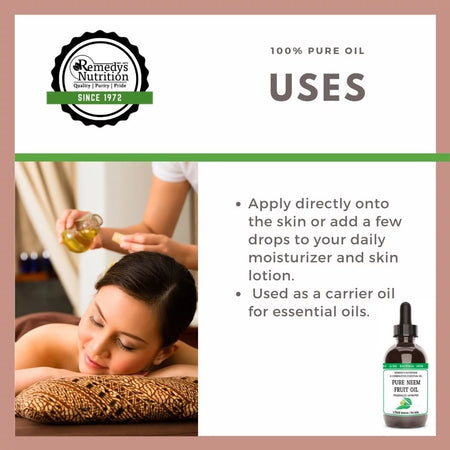
The standard dilution range is 1 to 5% in a carrier oil. For facial use, start at 1%: add 6 drops of neem oil to 30 ml of sweet almond or jojoba oil. For scalp and body treatments, 2 to 3% is more typical: 12 to 18 drops per 30 ml. For nail or spot treatments, 5% (30 drops per 30 ml) is acceptable for localized, non-facial skin. To control the odor, add 5 to 10 drops of lavender or rosemary essential oil to every 30 ml of blend — this significantly improves the scent without reducing efficacy.
Can neem oil help dandruff?+
Yes. Dandruff is caused by Malassezia globosa and Malassezia restricta fungi on the scalp. Neem oil—s azadirachtin and nimbidin compounds are both active against these species. At a 2 to 3% dilution in carrier oil applied to the scalp for 30 to 60 minutes before shampooing, most users see measurable flake reduction within 2 to 4 weeks. 1 comparative study found this protocol comparable in efficacy to 1% ketoconazole shampoo over a 4-week period. Use 2 to 3 times per week during active dandruff, then reduce to once weekly for maintenance.
Is neem oil safe for face?+
Yes, at proper dilutions. The safe concentration for facial skin is 0.5 to 2%. At these levels, neem oil delivers antimicrobial benefits without irritation in the majority of users. Always dilute to no more than 12 drops per 30 ml carrier for facial application, and do a patch test for 24 hours before first use on the face. Those with rosacea or highly reactive skin should start at 0.5% (3 drops per 30 ml) and increase only if well tolerated after 2 weeks. Avoid the eye area entirely.
Can neem oil be used for acne?+
Yes, and with good research support. Nimbidin inhibits Propionibacterium acnes at concentrations as low as 0.5%, making it effective even at highly diluted topical concentrations. A 1 to 2% neem blend applied nightly to active breakouts typically reduces inflammatory lesion count within 4 to 6 weeks. It works best on inflammatory acne (red papules and pustules) rather than comedonal acne (blackheads and whiteheads). Combining neem with tea tree essential oil at 1% creates a 2-pathway antimicrobial blend that addresses acne more broadly.
How long until results from neem oil?+
Timeline varies by condition. For acne spot treatment, some reduction in size and redness is typically visible within 48 to 72 hours. For acne prevention across the full face, allow 4 to 6 weeks of consistent nightly use. For dandruff, expect meaningful flake reduction in 2 to 4 weeks of 2 to 3x weekly use. For nail fungus — the most treatment-resistant condition — visible nail improvement takes 3 to 6 months, and continuation past visual clearing is important to prevent recurrence. Consistency matters more than the exact concentration within the 1 to 5% safe range.
What makes Remedy—s neem oil different?+
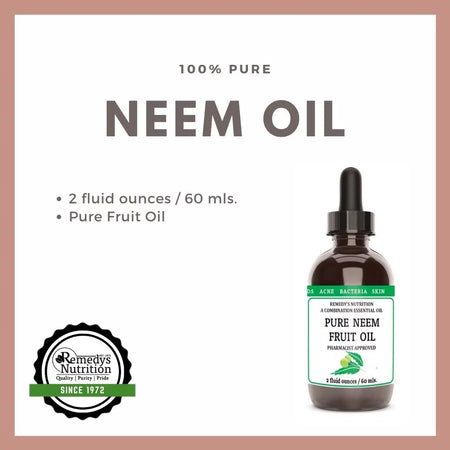
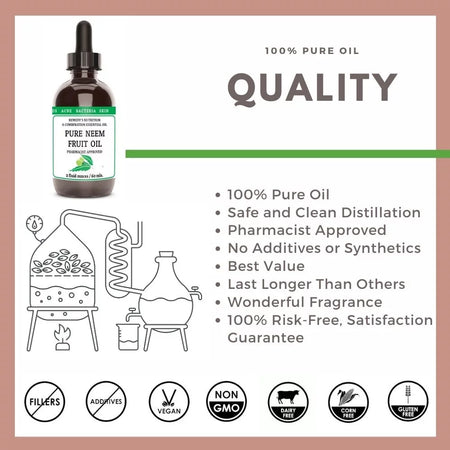
Remedy—s Pure Neem Fruit Oil is cold-pressed from whole neem fruit, preserving azadirachtin and nimbin levels that heat-refined products lack. It is 100% pure with no dilution or solvent extraction — hexane-extracted neem, common in lower-priced products, can leave trace solvent residues. The 2 oz bottle is practical for a carrier-dependent product: at 1 to 5% dilution, 60 ml produces 20 to 40 separate 30 ml blending batches, giving you months of use at a low cost per application. The strong odor is intentional and expected — it confirms the active compound profile is intact.
In-Depth Reading