
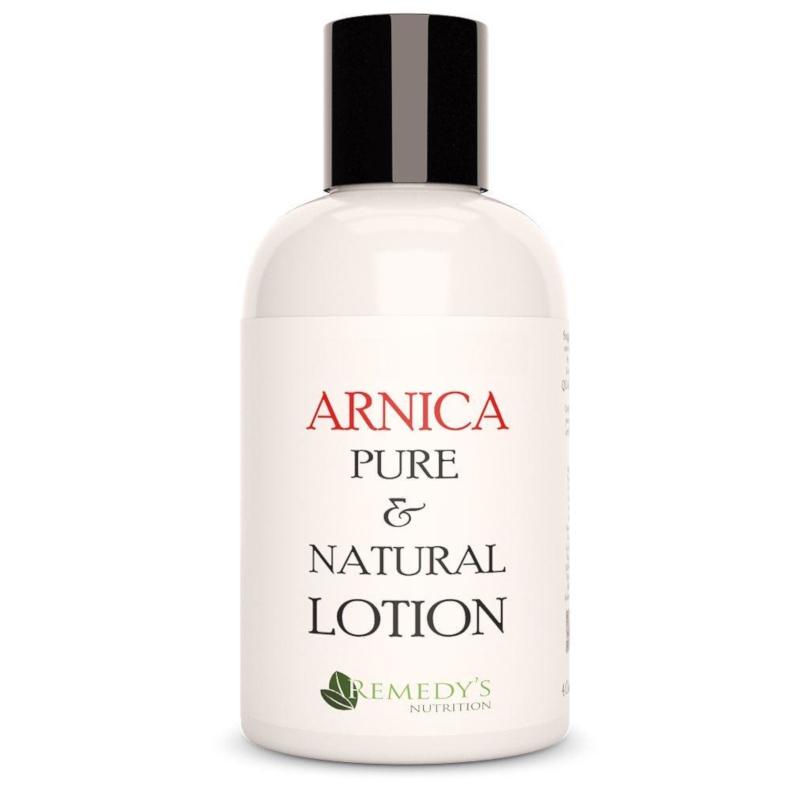
Arnica Cream 4 oz
- Supports Muscle Ache & Joint Pain Relief*
- Promotes Fast Bruise Healing & Recovery*
- Topical Arnica Cream for Pain & Inflammation*


Couldn't load pickup availability
*These statements have not been evaluated by the Food and Drug Administration. This product is not intended to diagnose, treat, cure, or prevent any disease.
Quick Answer: What Is Arnica Cream Good For?
Arnica cream is a topical herbal remedy used to reduce bruising, soothe muscle soreness, ease joint stiffness, and calm minor swelling from bumps, falls, or sprains. Apply a thin layer to clean, unbroken skin 3-4 times daily and massage until absorbed. Results typically appear within 24-72 hours for bruises and 30-60 minutes for muscle discomfort. For external use only - do not apply to open wounds or broken skin.
What Is Arnica Cream? A Natural Topical for Pain, Bruises & Swelling
Arnica cream is a topical herbal preparation made from the yellow mountain flower Arnica montana, traditionally used across Europe for centuries to soothe bruises, ease sore muscles, and calm minor swelling. Modern herbalists, athletes, and massage therapists reach for arnica cream as a plant-based alternative to pharmaceutical pain gels when the discomfort is soft-tissue in nature — a pulled muscle, a fresh bruise, an aching joint, or stiffness after a long workout.
Remedy's Nutrition® Arnica Cream delivers a high-potency, fast-absorbing formula that pairs Arnica montana with skin-nourishing Vitamin E and calming chamomile. The 4 oz jar lasts most households 6-10 weeks at a typical use rate and earns a permanent spot in gym bags, first-aid kits, and bedside drawers.
Top 8 Uses: What Is Arnica Cream Good For?
1. Bruises & Discoloration
The classic use. Arnica cream's sesquiterpene lactones (especially helenalin) help the body clear pooled blood from under the skin faster. Apply as soon as possible after the impact, then reapply every 4-6 hours for 2-3 days. Consistent early application can cut visible bruising time roughly in half compared to no treatment.
2. Sore Muscles After Exercise
Delayed-onset muscle soreness (DOMS) responds well to topical arnica. Studies on runners and soccer players show reduced perceived soreness 24-72 hours post-exercise when arnica cream is applied after training. Best application: after showering, while muscles are warm and circulation is open.
3. Joint Pain & Mild Arthritis
Several randomized trials have compared arnica gel or cream head-to-head with ibuprofen gel for hand or knee osteoarthritis and found comparable pain relief after 3 weeks of use. Arnica cream is a gentler option for people who want to reduce their oral NSAID load but still need consistent joint support.
4. Swelling from Sprains & Strains
For a rolled ankle, a jammed finger, or a pulled hamstring, arnica cream can be layered into a standard RICE protocol (Rest, Ice, Compression, Elevation). Ice for 10-15 minutes first, pat dry, then massage arnica cream into the surrounding tissue. Repeat 3-4 times daily for the first 48 hours.
5. Back & Neck Muscle Tension
For muscular (not structural) back pain — think stiff neck from bad sleep, lower back tightness from long drives, or shoulder knots from desk work — arnica cream applied 2-3 times daily offers meaningful relief. Combine with gentle stretching and heat. For deep/nerve pain, see your doctor.
6. Post-Surgical & Dental Recovery
Many cosmetic and dental surgeons recommend topical arnica (and oral homeopathic arnica pellets) to reduce post-operative bruising and swelling. Always get clearance from your surgeon first, and never apply to incisions or broken skin — only to the surrounding tissue once sutures are removed and the area has healed.
7. Varicose & Spider Vein Discomfort
Arnica cream won't make varicose veins disappear, but a gentle upward-stroking massage twice daily may reduce the heavy, achy feeling and minor swelling many people experience by the end of the day. Pair with leg elevation and supportive stockings for best results.
8. Insect Bites & Minor Knocks
For bug bites or small bumps that leave a mark, a dab of arnica cream can reduce the surrounding swelling and redness. Useful in the camping kit or for kids on a playground day. Always patch-test children first and avoid broken skin.
Arnica Cream vs. Arnica Gel: Which Should You Choose?
| Feature | Arnica Cream | Arnica Gel |
|---|---|---|
| Base | Oil-water emulsion | Water-based with alcohol |
| Texture | Smooth, moisturizing | Light, cooling, quick-drying |
| Best for | Dry skin, bruises, nighttime, full-body massage | Hot inflammation, pre-workout, daytime use |
| Absorption | Moderate (90-120 sec) | Fast (30-60 sec) |
| Feel | Nourishing, slightly rich | Cold, astringent |
| Remedy's choice | Cream (this product) | - |
Both deliver similar active compounds. Remedy's Nutrition chose a cream base because it's more versatile, gentler on sensitive skin, and works better for the two most common use cases: bruises (where moisturizing helps skin recovery) and sore muscles (where massage is part of the application).
How to Use Arnica Cream: Step-by-Step
- Clean the area first. Wash and pat dry — no lotions, sunscreens, or other creams under arnica.
- Pea-sized amount per palm-sized area. A little goes a long way.
- Massage 30-60 seconds. Circular motions for bruises and joints, linear upward strokes for varicose veins and leg soreness.
- Leave uncovered for 5-10 minutes before dressing or using a compression wrap.
- Repeat 3-4x daily for acute injuries (first 48-72 hours), then 1-2x daily as symptoms resolve.
- Wash hands after application — never touch eyes, mouth, or food handling immediately after.
Research & Clinical Evidence
Muscle soreness: A randomized controlled trial in European Journal of Sport Science (2013) found topical arnica reduced perceived muscle soreness in runners 72 hours after a downhill run compared to placebo cream.
Osteoarthritis: A double-blind randomized trial published in Rheumatology International (2007) compared arnica gel and 5% ibuprofen gel in 204 adults with hand osteoarthritis. After 3 weeks, both treatments produced equivalent reductions in pain and hand stiffness.
Post-surgical bruising: A 2010 trial in Annals of Plastic Surgery found patients who used topical arnica after rhinoplasty had significantly less bruising at 7 days than placebo.
Ingredients in Remedy's Nutrition® Arnica Cream
- Arnica montana flower extract — the primary active; source of sesquiterpene lactones including helenalin
- Vitamin E (d-alpha tocopherol) — antioxidant that supports skin repair
- Chamomile extract — calming botanical that soothes sensitive skin
- Purified water, glycerin, emulsifying wax — cream base ingredients
- No parabens, sulfates, synthetic fragrances, or artificial colors
Safety, Cautions & Who Should Not Use Arnica Cream
- External use only. Never ingest arnica cream — oral arnica at non-homeopathic doses is toxic.
- Do not apply to broken skin, open wounds, cuts, eczema flares, or mucous membranes (lips, inside nose, around eyes).
- Patch-test first if you have sensitive skin or allergies to the Asteraceae family (ragweed, daisies, marigolds, chrysanthemums, echinacea).
- Pregnancy & breastfeeding: Avoid unless specifically cleared by your OB/midwife.
- Stop use and consult a doctor if you develop rash, itching, or irritation.
- Keep out of reach of children and pets. Accidental ingestion should be reported to poison control.
Why Choose Remedy's Nutrition® Arnica Cream?
- High-potency Arnica montana paired with Vitamin E and chamomile
- Generous 4 oz jar — lasts most households 6-10 weeks
- Made in the USA in an FDA-registered, cGMP-compliant facility
- Free of parabens, sulfates, synthetic fragrances, and artificial colors
- Smooth, non-greasy texture that absorbs cleanly
- Pharmacist-reviewed formulation
- Backed by Remedy's Nutrition's quality and potency guarantee
Customers Also Take These With Arnica Cream:
- Arnica Oil 2 oz - pure oil format for deeper massage
- Inflamma-Stop Capsules - internal inflammation support
- Boswellia (Frankincense) 1000mg - oral joint comfort support
- Calcium & Magnesium 1:1 - muscle relaxation and recovery
Frequently Asked Questions About Arnica Cream
What is arnica cream good for? +
Arnica cream is a topical herbal remedy used to reduce bruising, ease muscle soreness, calm swelling from minor bumps or sprains, and support joint comfort in mild arthritis. Apply a thin layer to unbroken skin 3-4 times daily and massage until absorbed. For external use only.
Does arnica cream really work for bruises? +
Yes - a 2010 trial in Annals of Plastic Surgery found patients using topical arnica after rhinoplasty had significantly less bruising at 7 days than placebo. Apply within 1-2 hours of impact, then every 4-6 hours. Consistent early use can cut visible bruising time roughly in half.
How do you use arnica cream? +
Apply a thin layer to clean, unbroken skin 3-4 times daily. Massage gently for 30-60 seconds until fully absorbed, then leave uncovered 5-10 minutes before dressing. For bruises, start as soon as possible after impact; for muscle soreness, apply after showering while circulation is open.
How long does arnica cream take to work? +
Muscle soreness relief typically appears within 30-60 minutes of application. For bruises, visible reduction in discoloration begins within 24-72 hours when you start applying soon after injury. Full resolution of a moderate bruise with consistent arnica use is typically 4-7 days vs 7-14 days without.
Is arnica cream good for back pain? +
Topical arnica helps muscular back pain - stiffness, strain, or tension - applied 2-3 times daily for 5-7 days. It is less effective for deep structural back pain like disc issues or sciatica, since active compounds do not penetrate deep tissue. Combine with gentle stretching and heat for best results.
Can arnica cream be used for arthritis? +
Yes - a 2007 trial in Rheumatology International compared arnica gel to 5% ibuprofen gel in 204 adults with hand osteoarthritis and found equivalent pain relief after 3 weeks. Apply 2-3 times daily to affected joints. Benefits build over 2-4 weeks and offer a gentler alternative to oral NSAIDs.
What is the difference between arnica cream and arnica gel? +
Arnica cream has an oil-water base that moisturizes and suits dry skin, bruises, and nighttime use. Arnica gel has a water and alcohol base that absorbs in 30-60 seconds, cools on contact, and suits hot inflammation or daytime use. Both deliver similar active compounds - choose by skin feel and scenario.
What are the active ingredients in arnica cream? +
Remedy's Nutrition Arnica Cream contains Arnica montana flower extract (the primary active, source of sesquiterpene lactones like helenalin), Vitamin E as an antioxidant, and chamomile extract to calm sensitive skin. The base is a non-greasy emulsion free of parabens, sulfates, and artificial fragrances.
When should you NOT use arnica cream? +
Do not apply arnica cream to broken skin, open wounds, cuts, or mucous membranes. Avoid use during pregnancy or breastfeeding unless cleared by a healthcare provider. Patch-test first if allergic to ragweed, daisies, or marigolds (Asteraceae family). Never ingest arnica cream - oral arnica is toxic.
Can arnica cream cause side effects? +
Topical arnica on intact skin is well tolerated by most people. Rare side effects include mild irritation, itching, or contact dermatitis in sensitive individuals. If irritation develops, discontinue use and wash the area. Serious reactions are very uncommon but warrant stopping use and consulting a doctor.