
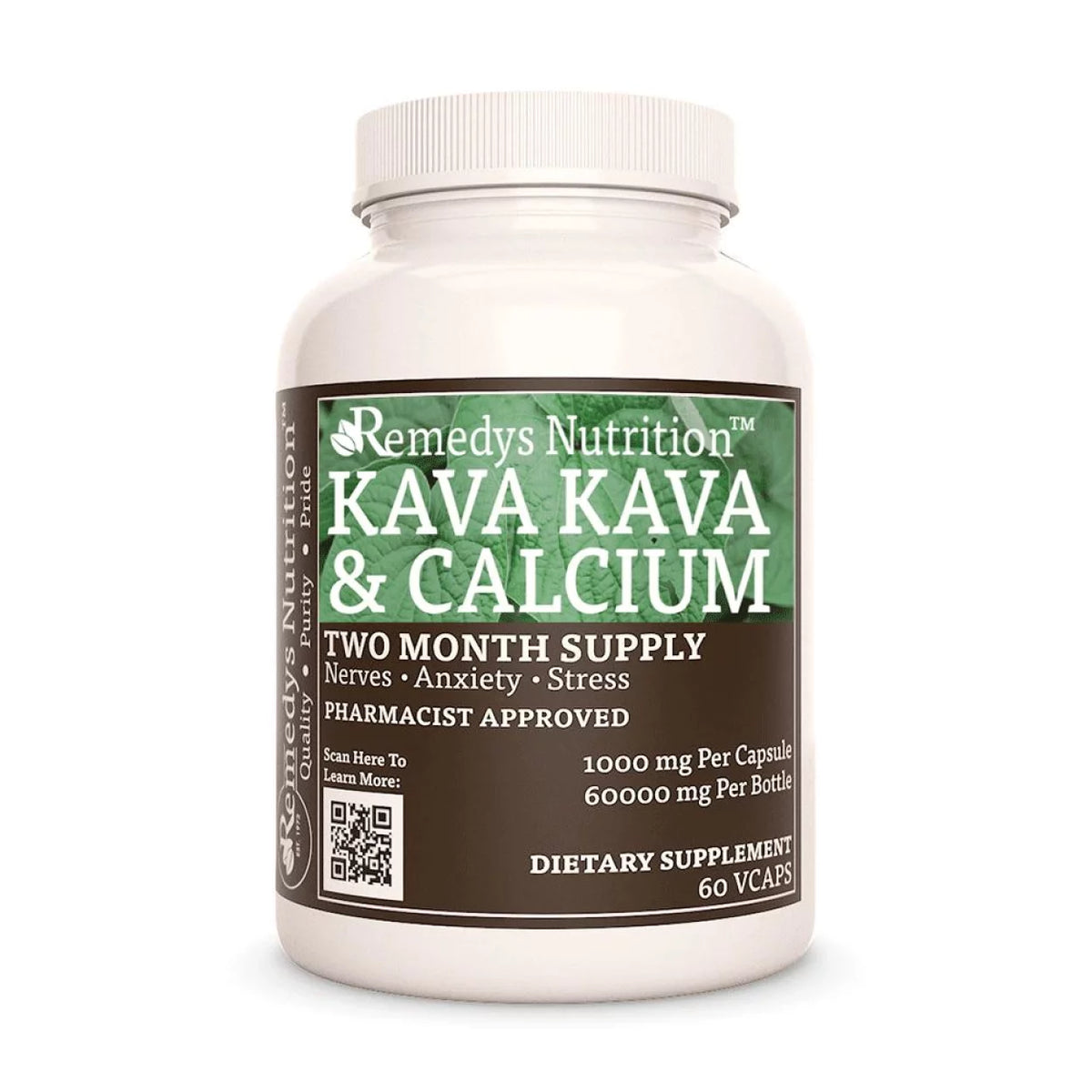





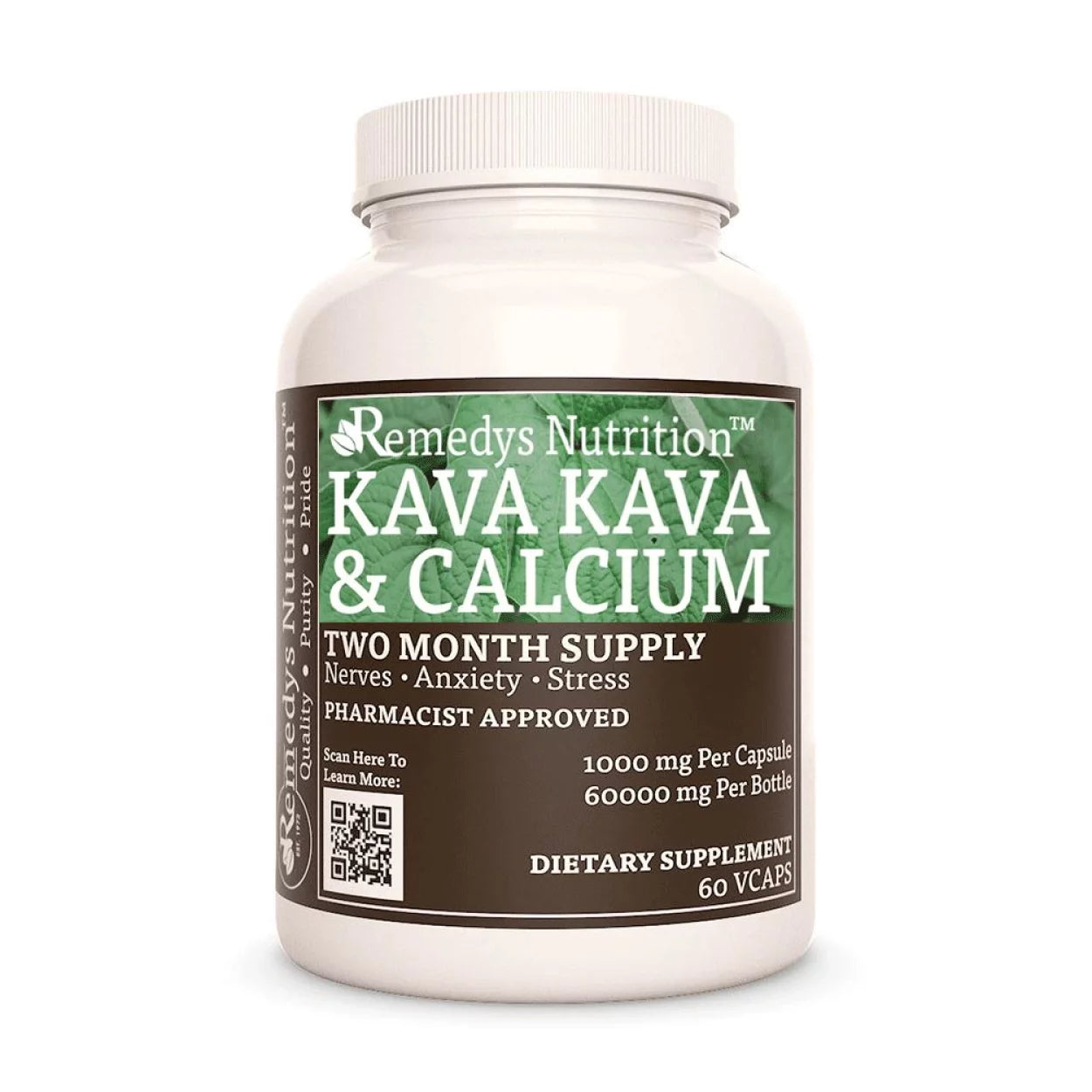


Kava Kava & Calcium 1000 mg, 60 Vegan Capsules
- Supports Relaxation & Anxiety Relief*
- Promotes Calm & Stress Reduction*
- Traditional Kava Root with Calcium Support*
Couldn't load pickup availability
*These statements have not been evaluated by the Food and Drug Administration. This product is not intended to diagnose, treat, cure, or prevent any disease.
Quick Answer: What Is Kava Kava Good For?
Kava Kava (Piper methysticum) is a Polynesian herb traditionally used to ease temporary anxiety and promote relaxation and sleep. Active compounds called kavalactones produce calm without impairing thinking. Take 1 capsule (1000mg) once or twice daily short-term only. IMPORTANT: Kava has documented liver-injury risks - do not use with alcohol, liver disease, or hepatotoxic medications. Discontinue after 4 weeks.
What Is Kava Kava and Why Has It Been Used for Centuries?
In Polynesian cultures across Fiji, Vanuatu, Samoa, and Tonga, kava has been the centerpiece of social and ceremonial gatherings for over 3000 years. Villagers brew the root into a milky beverage shared at day's end — producing a mild, social relaxation distinct from alcohol's disinhibition. Modern research identified the active compounds as kavalactones, which interact with GABA receptors (the brain's primary calm-promoting system) without impairing motor function or memory the way benzodiazepines do.
Today, kava kava supplements are used for short-term anxiety relief, sleep support, and occasional stress management. It remains genuinely effective for many people - but it also carries liver-injury risks that emerged in the early 2000s and prompted FDA warnings. Using kava responsibly means understanding both sides.
Important FDA Safety Advisory (Read Before Using)
The FDA Center for Food Safety and Applied Nutrition issued this warning in 2002, and it remains active today:
"The FDA notified healthcare professionals and consumers of the potential risk of severe liver injury associated with the use of kava-containing dietary supplements. Supplements containing the herbal ingredient kava are promoted for relaxation (e.g., to relieve stress, anxiety, and tension), sleeplessness, menopausal symptoms and other uses. Kava-containing products have been associated with liver-related injuries, including hepatitis, cirrhosis, and liver failure. Given these reports, persons who have liver disease or liver problems, or persons who are taking drug products that can affect the liver, should consult a physician before using kava-containing supplements."
The 2002 incidents that triggered this warning were primarily linked to ethanol or acetone extracts of kava stems/leaves rather than the traditionally-used water extracts of root only. Current research suggests root-only, water-extracted preparations have significantly lower liver risk. However, risk is not zero. Use kava short-term (≤4 weeks), never combine with alcohol or other liver-stressing substances, and stop immediately if any signs of liver issue develop.
How Kava Works in the Body
Kavalactones — particularly kavain, dihydrokavain, methysticin, and yangonin — modulate several neurotransmitter systems. Their best-documented effect is enhancing GABA activity, which produces the calm feeling without sedation at moderate doses. They also affect dopamine and serotonin pathways mildly, contributing to the mood-lifting effect users often describe. Unlike benzodiazepines, kavalactones don't dramatically impair motor coordination or memory at typical supplement doses.
Remedy's Kava Kava also includes Calcium, which supports nervous system function and muscle relaxation alongside kavalactones. The combination traditionally supports both the mental calm aspect (kavalactones) and the physical tension release (calcium's role in muscle regulation). Effects appear within 30-60 minutes of taking a dose and last 2-4 hours depending on individual metabolism.
Kava vs Other Anxiety Supplements
For occasional anxiety or stress, several natural options exist. Here's honest comparison:
| Option | Mechanism | Onset | Safety Note |
|---|---|---|---|
| Kava Kava | GABA enhancer via kavalactones | 30-60 min | Liver risk if misused; short-term only |
| Ashwagandha | Adaptogen; cortisol modulation | Weeks (cumulative) | Safe long-term; avoid in hyperthyroid |
| L-Theanine | Alpha brain wave enhancement | 30-60 min | Very safe; mild effect |
| Passionflower | Mild GABA activity | 45-60 min | Very safe; gentler than kava |
| CBD | Endocannabinoid system | 30-90 min | Generally safe; drug interactions possible |
| Benzodiazepines (Rx) | Direct GABA agonist | 20-30 min | Dependency risk; requires prescription |
Kava is strongest among over-the-counter options but carries the highest safety profile concerns. For long-term daily use, Ashwagandha or Passionflower are better. For occasional acute anxiety in specific situations (public speaking, flight anxiety), Kava provides faster, stronger relief than gentler alternatives.
Who Benefits Most (and Who Should Avoid Kava)?
Adults experiencing situational or occasional anxiety — pre-flight, pre-presentation, stressful event — often find kava the most effective non-prescription option. People who want a short-term sleep aid for travel or temporary disruption sometimes use it. Individuals in Pacific Islander cultural traditions have generational familiarity and lower apparent adverse event rates, likely due to traditional root-water preparation methods.
Do NOT use kava if you: have any liver condition (hepatitis, cirrhosis, fatty liver, elevated liver enzymes), take medications metabolized by the liver (statins, acetaminophen daily, some antibiotics, seizure meds), drink alcohol regularly, are pregnant or breastfeeding, have Parkinson's disease, or have a history of drug or alcohol dependency.
How to Use Kava Kava Safely
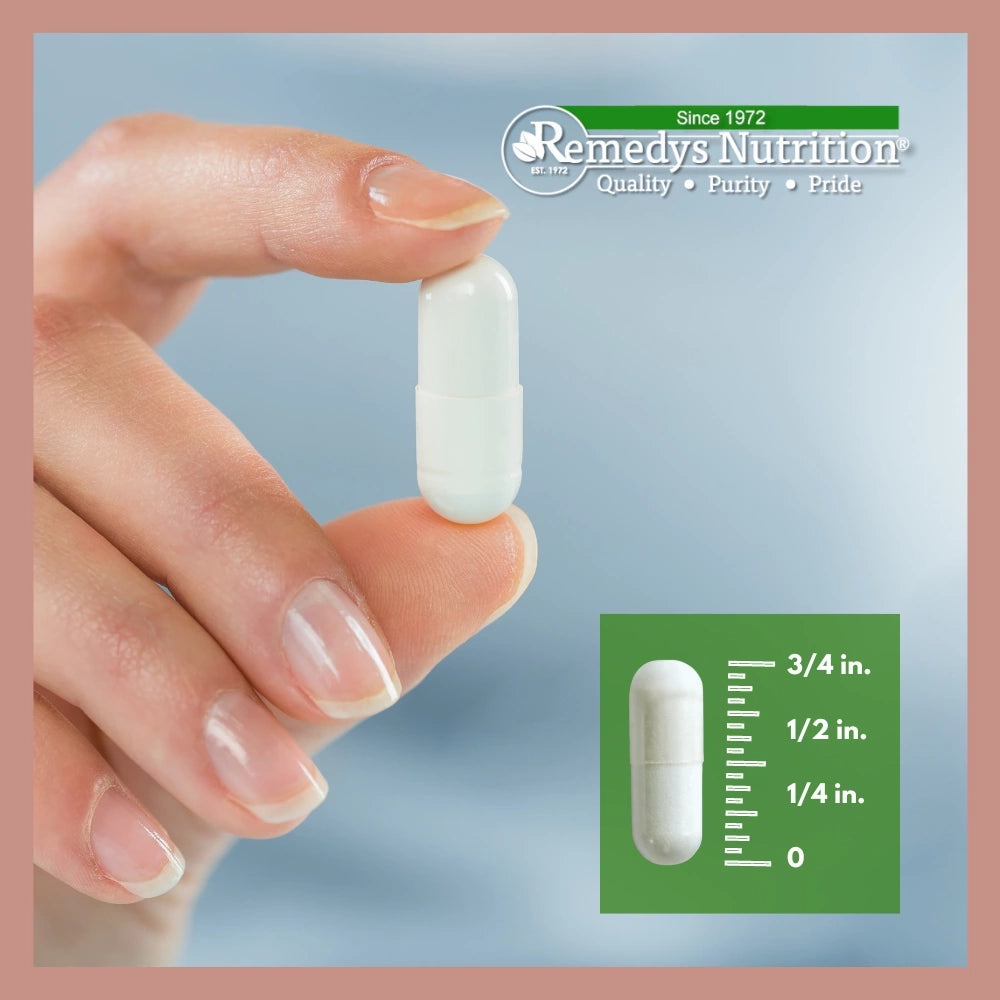
Take 1 capsule (1000mg) once or twice daily, preferably 30-60 minutes before the anxious situation or bedtime. Use for short courses only — maximum 4 weeks, then a minimum 2-week break. Do not combine with alcohol, sedative medications, or other GABA-active supplements (Valerian, Passionflower) due to additive effects.
Watch for liver warning signs during use: yellowing of skin or eyes (jaundice), dark urine, pale stools, persistent abdominal pain (especially right upper quadrant), unusual fatigue, or loss of appetite. Stop use immediately and see your doctor if any of these appear. Consider periodic liver enzyme blood tests (ALT, AST) if using kava multiple times per year.
Safety Summary
- MAX 4 weeks of continuous use - then minimum 2-week break
- Never combine with alcohol - multiplicative liver stress
- Do not use with liver conditions or hepatotoxic medications
- Avoid during pregnancy, breastfeeding, and in children
- Do not drive or operate machinery until you know how it affects you
- Stop immediately and see a doctor if jaundice, dark urine, or abdominal pain develop
- Not for use with Parkinson's disease (affects dopamine pathways)
- Do not combine with benzodiazepines, sleep medications, or other GABA-active supplements
These statements have not been evaluated by the FDA. This product is not intended to diagnose, treat, cure, or prevent any disease.
Why Choose Remedy's Kava Kava?
Many low-quality kava supplements use stem-and-leaf extracts, which carry higher liver risk than traditional root-only preparations. Our formulation follows the more traditional approach for safer daily dosing. Adding Calcium supports the physical aspect of relaxation that pure kavalactones don't address as well.
Made in the USA in an FDA-registered cGMP facility. Vegan capsules. 60 capsules per bottle - sufficient for two 4-week cycles of once-daily use. Pharmacist-reviewed. Use responsibly.
Frequently Asked Questions
What is kava and what does it do? +
Kava is a Polynesian herb (Piper methysticum) whose root contains kavalactones that ease anxiety and promote relaxation. Unlike alcohol, it produces calm without impairing thinking or coordination at moderate doses. Traditional use spans 3000+ years. Modern research supports short-term use for situational anxiety and occasional sleep support.
Is kava kava safe? +
Kava has FDA-documented liver-injury risks. The 2002 warning remains active. Root-only, water-extracted forms appear safer than stem/leaf or solvent extracts. Use short-term only (max 4 weeks), never combine with alcohol, avoid with liver conditions. Most users tolerate it well, but risk is not zero - use responsibly with a 2-week break between courses.
Is kava addictive? +
Kava does not appear addictive the way alcohol or benzodiazepines are - it does not produce classic withdrawal syndrome when stopped. However, regular users can develop behavioral dependency (reaching for it in stress). Short-term use (4 weeks max, then 2-week break) prevents both tolerance buildup and psychological dependency.
Is kava a drug? +
Kava is classified as a dietary supplement in the US - not a drug. It is legal over-the-counter for adults. It is banned or restricted in some countries (UK, Germany, Canada at different times) due to liver safety concerns. It has pharmacological activity (GABA system) similar to some drugs, but is not scheduled as a controlled substance.
Is kava bad for you? +
Kava can cause liver injury if misused - taking too high doses, for too long, combined with alcohol or hepatotoxic medications, or with existing liver conditions. Used responsibly (short courses, no alcohol, no liver disease), most people tolerate it well. The biggest safety errors are chronic daily use and combining with alcohol.
How long does kava take to work? +
Effects typically appear within 30-60 minutes of taking a dose. Peak effect at 60-90 minutes. Total duration 2-4 hours depending on individual metabolism. For best results, take 30-60 minutes before the anxiety-provoking situation (flight, presentation, event) or 60 minutes before bedtime for sleep support.
Can I drink alcohol with kava? +
NO - never combine kava with alcohol. Both stress the liver through overlapping metabolic pathways, multiplying hepatotoxic risk. This is the single most documented risk factor for kava-induced liver injury. If you drink alcohol regularly or heavily, kava is not for you. Consider other anxiety supplements like Ashwagandha or L-Theanine instead.
Who should NOT take kava kava? +
Absolute contraindications: liver disease, pregnancy, breastfeeding, Parkinson's disease, children under 18, history of alcohol or drug dependency, and anyone taking hepatotoxic medications (statins, daily acetaminophen, certain antibiotics). Consult your doctor if you take any prescription medication. Avoid during any period of regular alcohol use.