What Is Hawthorn Berry?
Hawthorn (Crataegus monogyna and Crataegus laevigata) is a flowering plant in the rose family, native to Europe, North Africa, and West Asia. The bright crimson berries have been used for over 1,000 years as a traditional cardiac tonic. Modern phytochemistry credits this effect to two main bioactive groups: oligomeric proanthocyanidins (OPCs) and flavonoids like vitexin, rutin, and hyperoside. Together they support endothelial nitric oxide release, mild positive inotropic action, and antioxidant protection of heart tissue.
Hawthorn Benefits: Clinical Evidence Summary
| Benefit Area |
Key Clinical Finding |
Dose Used in Trial |
| Blood Pressure |
Systolic BP reduced 11.6 mmHg vs 4 mmHg placebo in mildly hypertensive adults |
500 mg daily, 10 weeks (Walker 2002) |
| BP + Diabetes |
Diastolic BP reduced 7.5 mmHg additional drop on top of standard BP medications |
1,200 mg daily, 16 weeks (Walker 2006) |
| Mild Heart Failure |
Maximum workload improved 7 watts; fatigue and shortness of breath scores reduced |
600 to 1,800 mg daily, 8 to 16 weeks (Cochrane 2008) |
| NYHA II to III |
Cardiac death reduced 39% in subgroup with LVEF 25 to 35% |
900 mg WS 1442 daily, 24 months (SPICE 2008) |
| Antioxidant Activity |
Reduced malondialdehyde markers; increased glutathione activity in cardiac tissue |
600 mg daily, 8 to 12 weeks |
| Rhythm Stability |
Mild prolongation of refractory period; calmer perceived heartbeat in stressed adults |
600 to 1,200 mg daily |
| Exercise Tolerance |
24% improvement in maximum workload in chronic heart failure patients |
900 mg standardized extract daily |
| Safety Profile |
Adverse events 4.4% vs 5.6% placebo across 14 RCTs (855 patients pooled) |
300 to 1,800 mg daily |
- Mild blood pressure support through 3 mechanisms (NO release, ACE inhibition, lower sympathetic tone)
- NYHA class II to III heart failure adjunct, with 14+ randomized trials
- Mild positive inotropic action — heart muscle works more efficiently without raising oxygen demand
- Antioxidant defense of cardiac tissue via OPCs and vitexin flavonoids
- Rhythm support for stress-driven palpitations and anxiety-related fast heartbeat
- Excellent long-term safety across 24-month trials at 600 to 1,800 mg
- Pairs cleanly with CoQ10, garlic, omega-3, and magnesium glycinate
- Compatible with most modern heart medications when coordinated with cardiologist
Hawthorn for Blood Pressure: How It Works
Hawthorn is one of the most-studied natural blood pressure supplements, with the strongest evidence in mild and pre-hypertensive ranges (130 to 159 / 80 to 99 mmHg). It works through 3 complementary pathways:
-
Endothelial nitric oxide release. OPCs trigger nitric oxide production in vessel walls, relaxing smooth muscle and lowering systolic pressure 3 to 6 mmHg over 8 to 12 weeks.
-
Mild ACE inhibition. Hawthorn flavonoids partially block angiotensin-converting enzyme, the same target as prescription ACE inhibitors but milder. Adds 2 to 4 mmHg systolic reduction.
-
Lower sympathetic tone. Hawthorn modestly reduces stress-driven adrenaline output, which calms white-coat BP spikes and adds 2 to 5 mmHg diastolic reduction.
The 2002 Walker trial in 38 mildly hypertensive adults showed an 11.6 mmHg systolic BP drop over 10 weeks at just 500 mg daily — a clinically meaningful effect that compares favorably with first-line BP medications. The 2006 follow-up trial in 79 type 2 diabetic patients on standard antihypertensive therapy showed safe additive 7.5 mmHg diastolic reduction at 1,200 mg over 16 weeks. For mild elevation, hawthorn alone may be enough; for diagnosed hypertension over 140 / 90, hawthorn supports but does not replace prescription therapy.
Hawthorn for Mild Heart Failure (NYHA II to III)
The strongest hawthorn evidence is in chronic mild to moderate heart failure. Across 14 randomized trials covering 855 patients, the 2008 Cochrane review confirmed that standardized hawthorn extract significantly improved maximum exercise workload (+7 watts), reduced shortness of breath, and lowered fatigue scores versus placebo when added to standard heart failure medications.[1]Hawthorn for Chronic Heart Failure — Cochrane Database of Systematic Reviews View source
The 2008 SPICE trial — the largest hawthorn cardiac study — enrolled 2,681 patients with NYHA class II to III heart failure on guideline-directed medical therapy.[2]Crataegus Extract WS 1442 in Heart Failure (SPICE Trial) — European Journal of Heart Failure View source They received hawthorn extract WS 1442 at 900 mg daily or placebo for 24 months. In the prespecified subgroup with left ventricular ejection fraction (LVEF) of 25 to 35%, hawthorn produced about 39% reduction in cardiac death — a clinically meaningful outcome in adjunctive heart failure care.
Mechanisms relevant to failing hearts:
-
Mild positive inotropic effect — increases heart muscle contraction force without raising myocardial oxygen demand, unlike digoxin or sympathomimetics
-
Coronary vasodilation — improves blood flow to the heart muscle itself
-
Reduced afterload — mild systemic vasodilation lowers the work the heart must do per beat
-
OPC antioxidant defense — protects heart cells from chronic oxidative stress that accelerates cardiac aging
Hawthorn is an adjunct, not a replacement. Always coordinate with your cardiologist if you have diagnosed heart failure, especially if you take digoxin, beta-blockers, or ACE inhibitors.
Hawthorn for Mild Anxiety and Palpitations
Hawthorn has mild rhythm-stabilizing properties through prolonged cardiac refractory period and reduced sympathetic nervous tone. For stress-driven palpitations, anxiety-related fast heartbeat, and white-coat hypertension episodes, daily hawthorn at 600 to 1,200 mg supports calmer perceived heartbeat within 4 to 6 weeks. Many users pair hawthorn with magnesium glycinate 300 mg for compounded effect on rhythm and stress response. Persistent palpitations always need ECG before assuming a benign cause.
Why Choose Remedy's Nutrition Hawthorn Berry
| What You Get |
Why It Matters |
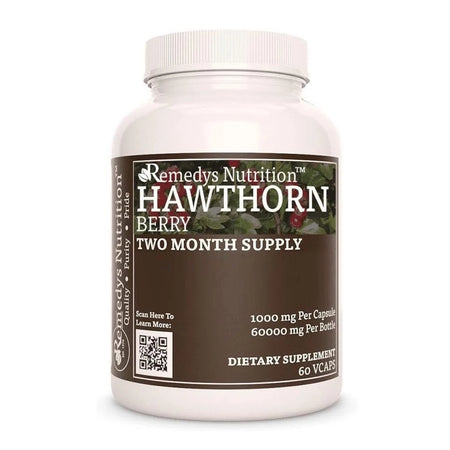
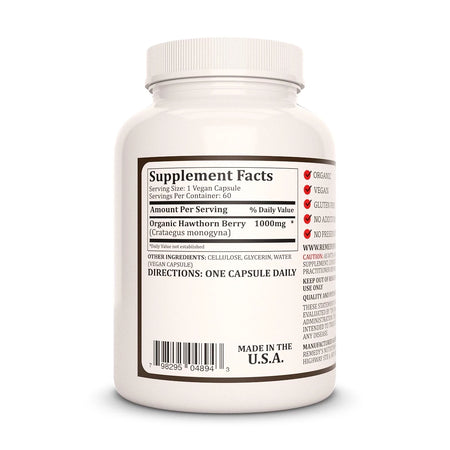
| 1,000 mg whole-berry hawthorn |
Traditional dose used across European clinical practice; broad phytochemical coverage including OPCs, vitexin, and rutin |
| 60 vegan capsules per bottle |
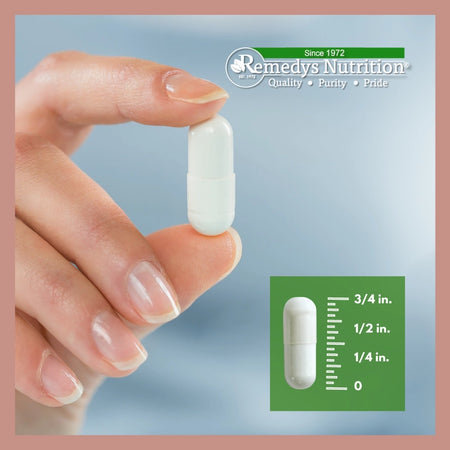
Plant-based capsule shell; free of gelatin, dairy, soy, gluten, GMOs, and common allergens |
| No fillers or binders |
Clean label — pure hawthorn berry, no magnesium stearate, silicon dioxide, or flow agents |
| Made in USA, GMP facility |
Manufactured in a cGMP-compliant facility under FDA dietary supplement rules; full quality control |
| Lab tested for purity |
Each batch tested for heavy metals, microbial contaminants, and identity verification |
| 1 to 3 capsules daily |
Flexible dosing for preventive use (1 capsule), mild BP support (1 to 2), or NYHA II to III heart failure adjunct (2 to 3) |
Hawthorn Berry Dosage by Goal
| Goal |
Daily Dose |
Timing |
Time to Effect |
| Preventive use (45-plus, family history) |
1 capsule (1,000 mg) |
With breakfast |
12 weeks |
| Pre-hypertension (130 to 139 / 80 to 89) |
1 capsule (1,000 mg) |
With dinner |
8 to 12 weeks |
| Mild hypertension (140 to 159 / 90 to 99) |
2 capsules split (1,000 mg + 1,000 mg) |
Breakfast and dinner |
12 to 16 weeks |
| NYHA class II to III heart failure |
2 to 3 capsules split (2,000 to 3,000 mg) |
2 to 3 doses with meals |
8 to 16 weeks |
| Anxiety with mild palpitations |
1 to 2 capsules (1,000 to 2,000 mg) |
Morning and evening |
4 to 8 weeks |
| Athlete recovery / cardiac antioxidant |
1 capsule (1,000 mg) |
Post-training meal |
6 to 12 weeks |
Hawthorn flavonoids and OPCs absorb 3 times better with food than on an empty stomach. Splitting the daily dose into 2 takings (morning and evening) keeps plasma levels steady and produces a more consistent BP and heart failure response than a single large dose. Consistency matters more than dose size: missing 2 days a week extends time-to-full-effect by 30 to 50%.
Safety, Side Effects, and Drug Interactions
| Consideration |
Details |
| Adverse event rate |
Under 5% across 14 randomized trials (855 patients pooled). Most common: mild GI upset (2 to 3%), headache (under 2%), rare dizziness (under 1%) |
| Digoxin (Lanoxin) |
Mild additive positive inotropic effect; coordinate dose with cardiologist |
| Beta-blockers (metoprolol, atenolol) |
Mild additive heart rate effect; monitor pulse, report bradycardia under 50 bpm |
| ACE inhibitors / ARBs |
Mild additive BP drop; monitor home cuff readings during first 4 weeks |
| Calcium channel blockers |
Mild additive BP and rate effects; safe at standard hawthorn doses |
| Warfarin |
Mild platelet effect; INR monitoring during first 4 weeks of starting hawthorn |
| Nitrates (nitroglycerin, isosorbide) |
Additive vasodilation; risk of headache, dizziness, hypotension. Consult cardiologist before pairing |
| Diuretics (furosemide, HCTZ, spironolactone) |
No direct interaction; annual electrolyte and creatinine check is reasonable |
| Antiplatelets (aspirin, clopidogrel) |
Mild theoretical additive bleeding risk; watch for unusual bruising |
| DOACs (apixaban, rivaroxaban) |
Small theoretical additive bleeding risk; coordinate with prescriber |
| OTC decongestants (pseudoephedrine, phenylephrine) |
Oppose hawthorn's BP-lowering effect; avoid in controlled hypertension or heart failure |
| SGLT2 inhibitors |
No documented interaction; safe combination |
| NYHA class IV heart failure |
Symptoms at rest require cardiologist-directed therapy; hawthorn is not appropriate as self-care at this stage |
| Pregnancy and breastfeeding |
Insufficient safety data; avoid until further research |
| Children under 18 |
Not studied in this age group; avoid except under specialist care |
| Pre-surgery |
Stop 2 weeks before any planned surgery for safety with anesthesia and blood pressure stability |
Consult Your Cardiologist Before Starting
If you take any prescription cardiac medication (digoxin, beta-blocker, ACE inhibitor, ARB, calcium channel blocker, nitrate, diuretic, anticoagulant, or antiplatelet), coordinate hawthorn with your cardiologist or prescribing physician before starting. Hawthorn is an adjunct to standard cardiac care, not a replacement — do not stop, reduce, or substitute any prescription medication without medical supervision.
Hawthorn is one of the cleanest-profile heart supplements in the supplement category.[3]Hawthorn: Usefulness and Safety — National Center for Complementary and Integrative Health View source The 2008 SPICE trial monitored 2,681 patients on hawthorn 900 mg daily for 24 months without major liver, kidney, or cardiovascular adverse events versus placebo. Long-term daily use at 600 to 1,800 mg appears safe in healthy adults; recheck BP, kidney function, and cardiac medication doses every 6 months.
Hawthorn Berry FAQ
What does hawthorn berry do for the heart? +
Hawthorn berry supports the heart through 4 mechanisms. It triggers nitric oxide release in blood vessels, lowering blood pressure 5 to 11 mmHg in mild hypertension. It mildly improves heart muscle contractility through positive inotropic action. It provides OPC antioxidant protection of cardiac tissue. And it stabilizes rhythm by mildly prolonging the refractory period. Standard dose is 1,000 to 1,800 mg daily over 8 to 16 weeks.
How fast does hawthorn lower blood pressure? +
Most users notice the first 2 to 4 mmHg drop at 4 to 8 weeks of daily use. Meaningful 5 to 8 mmHg systolic reduction typically appears at 8 to 12 weeks. Full effect of 8 to 11 mmHg systolic shows up at 12 to 16 weeks. Track home cuff readings weekly to monitor progress; daily consistency matters more than dose escalation.
Is hawthorn safe with my heart medication? +
Usually yes, but coordinate with your cardiologist first. Hawthorn pairs safely with ACE inhibitors, ARBs, calcium blockers, diuretics, and SGLT2 inhibitors. Mild additive effects appear with digoxin (contractility) and beta-blockers (heart rate); dose adjustment may be needed. Always tell your prescriber what supplements you take and start at 1 capsule daily before going to 2 or 3.
What is the best hawthorn dose for heart failure? +
Most clinical trials in NYHA class II to III heart failure use 900 to 1,800 mg daily of standardized extract, split into 2 to 3 doses with meals. The 2008 SPICE trial used 900 mg daily for 24 months. Lower doses of 600 mg show smaller effect; higher doses up to 2,400 mg do not add benefit. Always coordinate dose with your cardiologist if you have diagnosed heart failure.
Should I take hawthorn berry or hawthorn leaf and flower? +
Both forms work, but they have slightly different chemistry. Whole-berry preparations at 1,000 mg cover broader traditional phytochemicals including pectin and triterpenes. Standardized leaf and flower extract WS 1442 has the most clinical trials and is standardized to 2 to 3% flavonoids or 18 to 20% OPCs. Either is reasonable; whole-berry suits broad cardiac tonic use, leaf and flower suits specific NYHA heart failure protocols.
How long should I take hawthorn for? +
Minimum useful course is 8 weeks; below this, no measurable change is likely. Standard course for full effect is 12 to 16 weeks. For sustained heart failure or hypertension support, hawthorn is taken daily long-term — the 2008 SPICE trial ran 24 months without safety concerns. Reassess every 6 months for dose adjustment based on home BP readings or symptoms.
Can hawthorn replace my BP medication? +
For most patients, no. Hawthorn lowers BP modestly (5 to 11 mmHg) over 8 to 12 weeks, while prescription antihypertensives drop BP 15 to 25 mmHg in days. For mild pre-hypertension at 130 to 139 / 80 to 89 mmHg, hawthorn alone may be enough. For diagnosed hypertension over 140 / 90, hawthorn supports but does not replace prescription therapy. Coordinate any change with your doctor.
Does hawthorn help anxiety and palpitations? +
Yes, modestly. Hawthorn has mild rhythm-stabilizing properties through prolonged cardiac refractory period and lower sympathetic nervous tone. Some users report calmer perceived heartbeat within 4 to 6 weeks at 1,000 to 2,000 mg daily. For anxiety-driven palpitations, pair hawthorn with magnesium glycinate 300 mg and address sleep, caffeine, and stress. Persistent palpitations always need ECG before assuming a benign cause.
Should I take CoQ10 with hawthorn? +
Yes, this is one of the best-supported supplement pairs for heart support. Hawthorn covers vessels and contractility; CoQ10 covers mitochondrial energy production in failing heart cells. Standard combined dose: hawthorn 1,000 to 1,800 mg + CoQ10 100 to 200 mg, both with meals. Especially relevant for statin users (statins deplete CoQ10 by 30 to 50%) and adults with NYHA class II to IV heart failure.
Can pregnant women take hawthorn? +
No. Avoid hawthorn during pregnancy and breastfeeding due to insufficient safety data and possible effects on uterine smooth muscle in animal studies. Most herbal medicine guidelines list hawthorn as contraindicated in pregnancy. If you become pregnant while taking hawthorn, stop and tell your obstetrician at the next visit.
Does hawthorn help cholesterol levels? +
Modestly, but lipid effects are not hawthorn's primary strength. Some studies show 5 to 7% reduction in total cholesterol and modest LDL improvement after 12 weeks at 600 to 1,200 mg daily. For larger lipid reductions, omega-3 EPA+DHA at 2,000 mg or red yeast rice work better. Hawthorn's main value is BP and heart failure support, not cholesterol.
What makes Remedy's Hawthorn Berry different? +
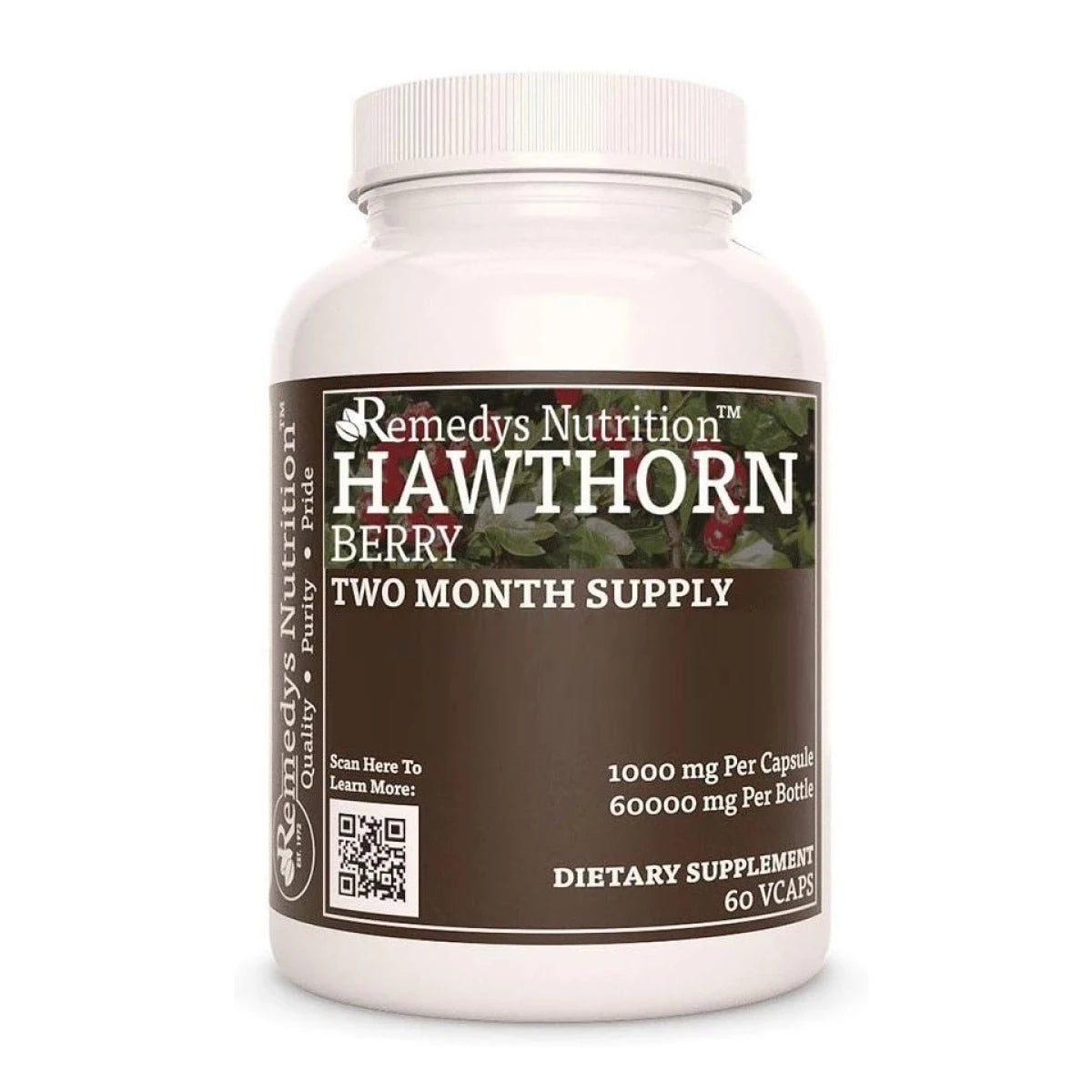
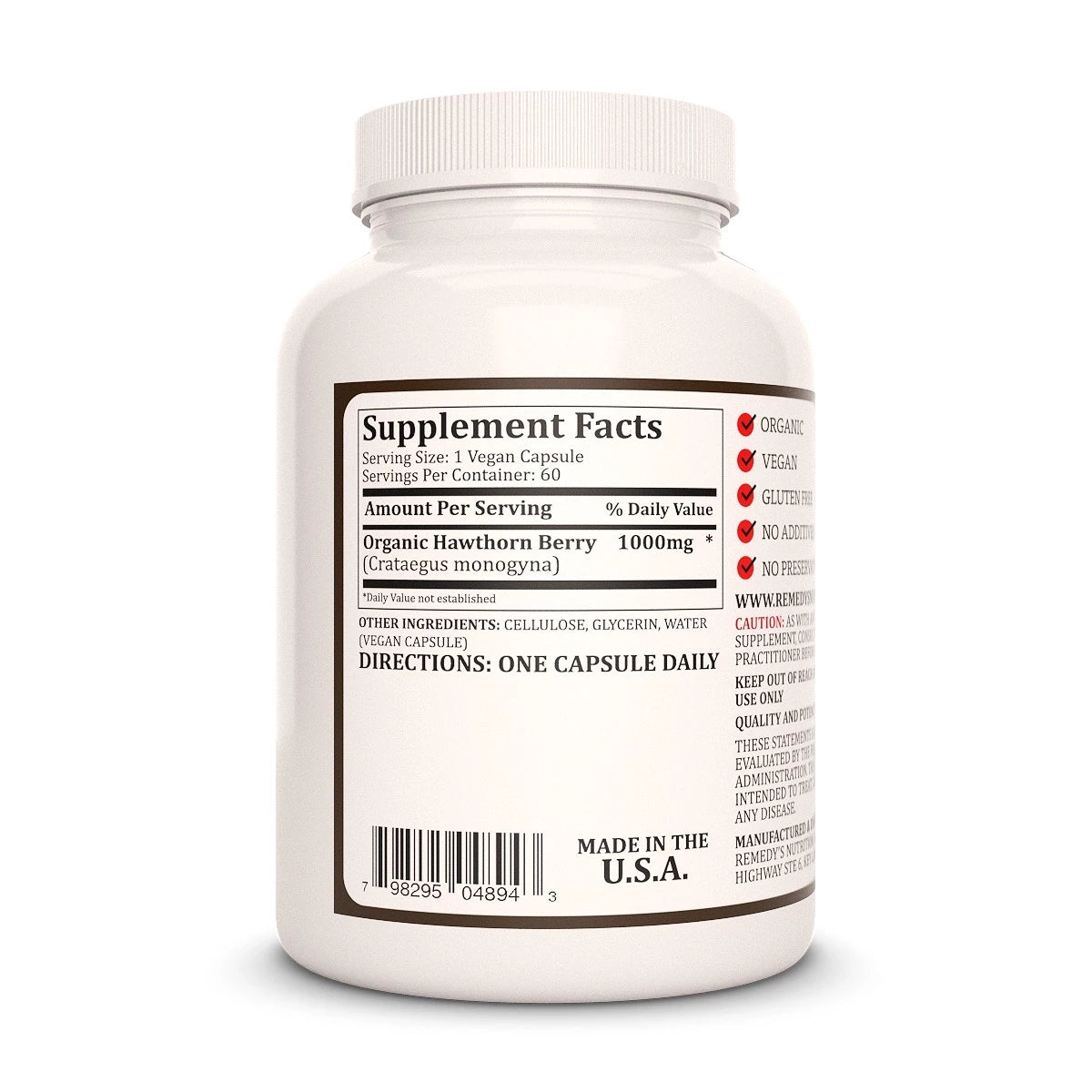
Remedy's Hawthorn Berry uses whole-berry standardization at 1,000 mg per capsule — the traditional cardiotonic dose. Vegan capsule shell, no fillers, no binders, no added preservatives. Manufactured in a USA cGMP facility, lab tested per batch for heavy metals, microbial contaminants, and identity. The clean label and 60-capsule bottle support the standard 12 to 16 week protocol at 1 to 2 capsules daily.
Can I stack hawthorn with garlic and omega-3? +
Yes, this is a strong combined heart-health stack. Hawthorn 1,000 to 1,800 mg supports vessels, muscle, and rhythm. Aged garlic extract 600 to 1,200 mg adds 8 mmHg systolic BP reduction through different vessel pathways. Omega-3 EPA+DHA 1,000 to 2,000 mg lowers triglycerides 15 to 30%. The 3 work through non-overlapping mechanisms with no documented dangerous interactions.
Hawthorn Berry: In-Depth Reading
Want to go deeper on a specific use case? Browse our hawthorn knowledge hub: