What Is Glucosamine + Chondroitin + MSM?
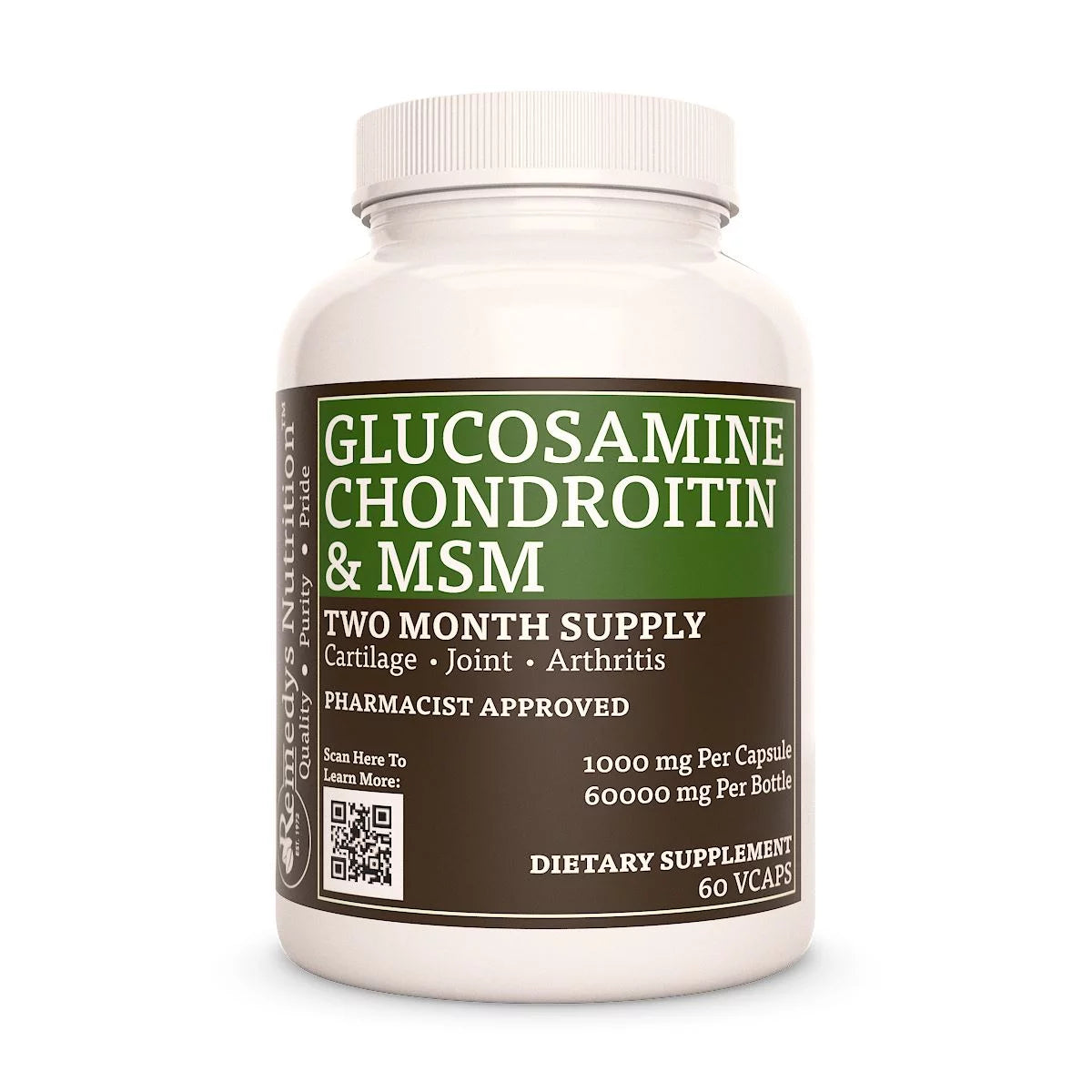
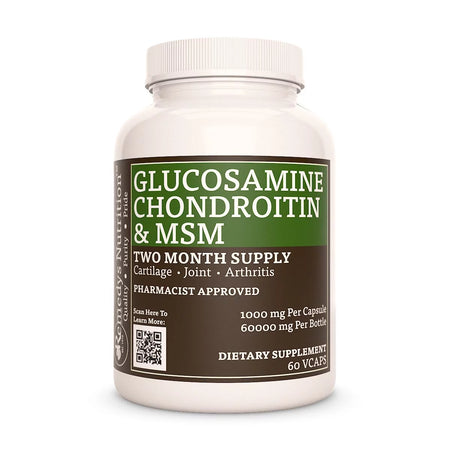
This 3-in-1 daily supplement combines the 3 best-studied joint ingredients in 1 capsule: glucosamine to supply cartilage building blocks, chondroitin to help cartilage hold water, and MSM (methylsulfonylmethane) to support a normal inflammatory response. Together these 3 cover more ground than any single ingredient on its own.
Osteoarthritis affects roughly 33 million US adults, and joint supplements work best at the early-to-moderate stage[1]Osteoarthritis Overview — National Institute of Arthritis and Musculoskeletal and Skin Diseases View source. Effects are gradual: most people need 8 to 12 weeks of consistent daily use before noticing a meaningful change.
- Glucosamine — supplies cartilage building blocks
- Chondroitin — helps cartilage hold water
- MSM — supports a normal inflammatory response
Quick Facts
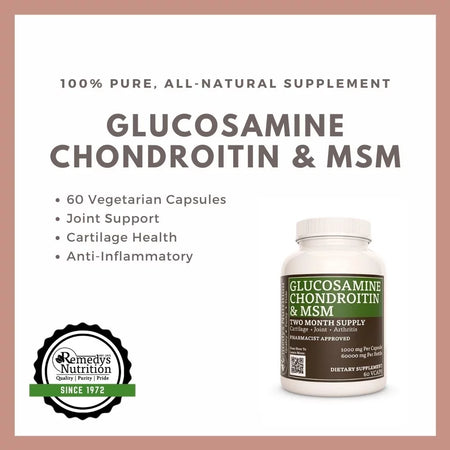
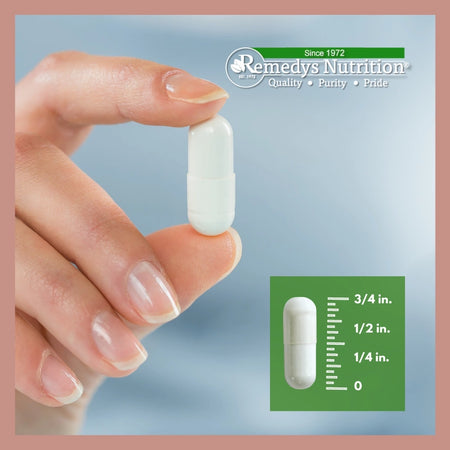
1,000 mg total per capsule combining glucosamine, chondroitin, and MSM. Vegan capsule shell, no fillers, made in the USA, 60 capsules per bottle. For the broader picture see our complete joint health supplements guide.
Why a 3-in-1 Formula Instead of One Ingredient
Each ingredient targets a different part of the joint. Glucosamine sulfate supplies the raw material for cartilage glycosaminoglycans. Chondroitin helps cartilage retain water and resist compression. MSM contributes sulfur and supports a normal inflammatory response that the other two do not directly address.
The honest picture: the evidence for glucosamine and chondroitin is genuinely mixed[2]Glucosamine and Chondroitin for Osteoarthritis — National Center for Complementary and Integrative Health View source. Some large trials found little average benefit, while subgroup data and the glucosamine-sulfate trials are more favorable.
- One capsule, 3 mechanisms — easier to stay consistent than 3 bottles
- Consistency beats dose — 12 weeks of daily use matters most
How the 3 Ingredients Work Together
Each component plays a distinct structural or anti-inflammatory role. The table below summarizes what each does and the strongest evidence signal behind it.
| Ingredient |
What It Does |
Evidence Signal |
| Glucosamine sulfate |
Supplies building blocks for cartilage glycosaminoglycans; modulates aggrecan and cartilage-degrading enzymes in lab studies |
Slowed joint-space narrowing over 3 years in 2 long-term trials[3]Glucosamine Sulfate Slows Knee OA Progression — The Lancet (Reginster 2001) View source
|
| Chondroitin sulfate |
Helps cartilage hold water and stay spongy; may support shock absorption |
Symptom benefit is small and debated in large meta-analyses[4]Chondroitin for Knee or Hip Osteoarthritis Meta-Analysis — Ann Intern Med (Reichenbach 2007) View source
|
| MSM (sulfur) |
Supplies organic sulfur; supports a normal inflammatory and oxidative response |
Improved WOMAC pain and function vs placebo over 12 weeks[5]MSM Improves Knee Osteoarthritis Symptoms — BMC Complement Altern Med (Debbi 2011) View source
|
| Combined (3-in-1) |
Targets cartilage building, water-holding, and inflammation in 1 capsule |
Combination non-inferior to celecoxib at 6 months in moderate-severe knee OA[6]Glucosamine-Chondroitin Non-Inferior to Celecoxib (MOVES) — Ann Rheum Dis (Hochberg 2016) View source
|
For the mechanism in depth, see our explainer on how glucosamine and chondroitin work in cartilage.
Glucosamine Chondroitin MSM for Knee Osteoarthritis
Knee OA is the most-studied use of this combination. The 6-month MOVES trial in 606 adults with moderate-to-severe knee pain found glucosamine plus chondroitin matched celecoxib (a prescription NSAID) for reducing pain and stiffness, with fewer side effects[7]Glucosamine-Chondroitin Non-Inferior to Celecoxib (MOVES) — Ann Rheum Dis (Hochberg 2016) View source. Not every trial agrees, but the moderate-to-severe subgroup tends to respond best.
| Outcome |
Typical Result in Responders |
| Knee pain (WOMAC pain score) |
Comparable to celecoxib at 24 weeks in moderate-severe OA |
| Stiffness |
Better morning movement reported around 8 weeks |
| Function (walking, stairs) |
Higher self-reported scores by 12 weeks |
| Joint space (X-ray) |
Slower narrowing over 2 to 3 years with glucosamine sulfate |
For symptom-specific dosing, see our guide to the best supplements for knee pain and our overview of joint supplements for arthritis and osteoarthritis.
Glucosamine Chondroitin MSM for Active Adults and Athletes
Beyond osteoarthritis, the 3-in-1 formula appeals to active adults managing joint aches from repetitive training. MSM in particular has been studied for post-exercise muscle and joint soreness, with doses up to 4 g/day used safely in trials[8]MSM Applications and Safety Review — Nutrients (Butawan 2017) View source. The benefit is supportive rather than dramatic, so set realistic expectations.
Five common active-adult use cases:
- Runners with knee aches from repetitive impact
- Lifters with joint discomfort in shoulders, knees, or hips
- Hikers over 50 with mild knee or ankle stiffness
- Recovery from joint strain once a clinician clears training
- Family history of arthritis — preventive support starting around 45
How This Compares to Our Other Glucosamine Formulas
Remedy's offers 3 glucosamine formulas so you can match the formula to your goal. This 3-in-1 is the most complete; the others are simpler, value-focused options.
| Formula |
Best For |
Key Difference |
| Glucosamine + Chondroitin + MSM (this page) |
The most complete daily joint stack |
All 3 mechanisms: cartilage, water-holding, inflammation |
| Glucosamine + Chondroitin |
Value 2-in-1 without MSM |
Cartilage building plus water-holding, lower price |
| Glucosamine HCL |
Single-ingredient, higher glucosamine concentration |
HCL form; note sulfate has the stronger trial record |
Not sure which fits you? Our guide to choosing a glucosamine formula walks through it step by step.
Why Choose Remedy's Glucosamine + Chondroitin + MSM
| What You Get |
Why It Matters |
| 3 studied ingredients in 1 capsule |
Glucosamine, chondroitin, and MSM at sensible daily amounts |
| 1,000 mg total per capsule |
A simple daily stack without a 5-pill regimen |
| Vegan capsule shell |
No animal-derived gelatin in the capsule shell |
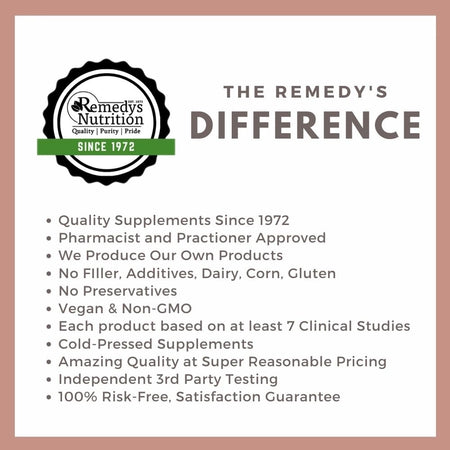
| No fillers or additives |
Clean label with 0 artificial binders |
| 60 capsules per bottle |
Up to a 2-month supply at 1 capsule daily |
| Non-GMO, no gluten, no dairy |
Suitable for many restricted diets |
| Made in the USA |
Made under US quality-control standards |
| Pharmacist reviewed |
Formula and dosing checked by a pharmacist |
Glucosamine Chondroitin MSM Dosage: How Much and When
The standard daily dose is 1 capsule taken with food. People with moderate-to-severe osteoarthritis sometimes split into 2 daily capsules. Most glucosamine-sulfate trials used 1,500 mg/day, so consistency matters more than exact timing[9]Safety and Efficacy of Glucosamine and Chondroitin in Humans — Nutrients (Baden 2025) View source.
| Goal |
Daily Dose |
Best Timing |
| Mild OA / preventive |
1 capsule |
With breakfast |
| Moderate OA |
1 to 2 capsules |
Split morning and evening |
| Active adults / athletes |
1 capsule |
With breakfast or post-workout |
| Severe OA / chronic pain |
2 capsules |
Split with meals |
| Combined with prescription |
Discuss with doctor |
Variable |
For ingredient-by-ingredient dosing detail, see our glucosamine dosage guide.
Safety, Side Effects, and Drug Interactions
Glucosamine, chondroitin, and MSM are well tolerated for most adults, with side effects usually mild and dose-related. None of the 3 ingredients directly causes weight gain, despite a common online concern. The most important interaction is with warfarin, where glucosamine has been linked to raised INR[10]Glucosamine-Warfarin Interaction Raises INR — Pharmacotherapy (Knudsen 2008) View source.
| Side Effect |
How Common |
What to Do |
| Mild GI upset |
Under 4% of users |
Take with food; lower the dose |
| Headache |
Under 2% of users |
Hydrate; reduce dose if persistent |
| Mild drowsiness |
Under 2% of users |
Move to an evening dose |
| Blood sugar shift (diabetes) |
Uncommon; monitor early |
Check levels for the first 2 weeks |
Reassuringly, a 90-day trial found glucosamine-chondroitin did not raise HbA1c in people with well-controlled type 2 diabetes[11]Glucosamine-Chondroitin and HbA1c in Type 2 Diabetes — Arch Intern Med (Scroggie 2003) View source. Still, talk to a doctor first if you:
- Have a shellfish allergy (most glucosamine is shellfish-derived)
- Take warfarin or other strong blood thinners
- Have diabetes or pre-diabetes
- Are pregnant or breastfeeding
- Have surgery planned within 2 weeks
For the full safety picture, read our article on glucosamine side effects to know before you take it.
What to Stack This Formula With
Glucosamine, chondroitin, and MSM cover cartilage and inflammation, but many people round out their joint routine with complementary nutrients. The pairings below address inflammation, connective tissue, and bone structure that this formula does not directly target.
- Turmeric / curcumin 500 to 1,000 mg — for additional inflammation support
- Type II collagen (UC-II) 40 mg — targets cartilage immunity over 6 months
- Omega-3 fish oil 1 to 2 g — anti-inflammatory support for joints and heart
- Boswellia 300 mg, 3 times daily — for flares with morning stiffness
- Vitamin D3 1,000 to 2,000 IU — supports bone and joint structure
Avoid stacking with aspirin or other blood thinners without medical input, and stop all of these at least 2 weeks before any planned surgery to reduce bleeding risk.
Who This Formula Is Best For
This 3-in-1 is most useful for adults with early-to-moderate joint wear who want a single daily capsule rather than a multi-bottle routine. It is a maintenance supplement, not an acute painkiller, so the right candidate is someone willing to commit to 12 weeks of consistent use.
| Profile |
Why It Fits |
| Adults 45+ with mild-moderate OA |
Best-studied group; responds within 8 to 12 weeks |
| Active adults with joint aches |
MSM adds support for post-exercise soreness |
| People who dislike multi-pill routines |
3 ingredients in 1 capsule improves consistency |
| Family history of arthritis |
Low-risk preventive option starting around 45 |
What the Evidence Does and Does Not Show
Being honest about the research builds more trust than overselling. Large trials genuinely disagree: the GAIT and BMJ network meta-analyses found little average benefit, while glucosamine-sulfate trials and the moderate-severe subgroups were more positive[12]GAIT Trial: Glucosamine and Chondroitin for Knee OA — N Engl J Med (Clegg 2006) View source.
The practical takeaway comes down to a few honest points:
- Low-risk and inexpensive — worth a 12-week trial for most adults
- Not a guaranteed fix — roughly 40% of users notice little change
- Have a stop rule — if no benefit after 3 months, it is reasonable to stop
Frequently Asked Questions
How long does this supplement take to work? +
Most users notice the first changes at 4 to 8 weeks of daily use, with meaningful pain relief typically appearing at 8 to 12 weeks. The full effect builds over 12 to 24 weeks. Glucosamine, chondroitin, and MSM are not fast-acting painkillers; they work gradually.
How is this different from glucosamine alone? +
This 3-in-1 adds chondroitin (water-holding) and MSM (inflammation support) to glucosamine. Glucosamine alone covers only cartilage building blocks. In moderate-to-severe knee OA, the combination matched a prescription NSAID over 6 months, which single-ingredient glucosamine does not consistently do.
Is this safe to take long-term? +
Yes for most healthy adults. The 3 ingredients have been studied for up to 36 months without major safety concerns, and adverse events appear in under 5% of users. Daily long-term use is the trial-tested protocol. People with shellfish allergy, diabetes, or on warfarin should consult a doctor first.
Does glucosamine chondroitin MSM cause weight gain? +
No. None of the 3 ingredients — glucosamine, chondroitin, or MSM — has been shown to cause weight gain in trials up to 36 months. The concern stems from old blood-sugar worries, but a 90-day study found no HbA1c rise. Diet and activity drive weight far more than 1 daily capsule.
Will it really help my knees? +
It helps some people more than others. In the 606-patient MOVES trial, the combination matched celecoxib for moderate-to-severe knee OA at 6 months. Roughly 50 to 60% of users see meaningful benefit; the other 40% see little change. Twelve weeks of consistent use gives the best chance.
Can I take it with NSAIDs like ibuprofen? +
Yes for short-term use. Glucosamine and NSAIDs work on different pathways, so many people use this supplement for a daily baseline plus occasional ibuprofen for flares. Over 6 months, the supplement is gentler than continuous NSAIDs on the gut and heart. Ask your doctor about chronic pain plans.
Is glucosamine safe with a shellfish allergy? +
About 80% of commercial glucosamine comes from shellfish shells, a concern if you have a shellfish allergy. The glucosamine molecule itself lacks the allergen protein, but cross-contamination is possible. If you are allergic, look for clearly labeled vegetarian or corn-fermented glucosamine and check the allergen disclosure first.
Will it affect my blood sugar? +
Usually not. A 90-day trial in well-controlled type 2 diabetes found no rise in HbA1c. A small minority may see minor shifts. If you have diabetes, monitor blood sugar for the first 2 weeks of daily use and talk to your prescriber about whether any adjustment is needed.
Should I stop before surgery? +
Yes. Stop at least 2 weeks before any planned surgery, including dental procedures with bleeding risk, because glucosamine and MSM have mild blood-thinning potential. Tell your surgeon and anesthesiologist about every supplement you take, and resume only once your surgeon clears you, usually 1 to 2 weeks after.
How much of each ingredient is in a capsule? +
The 1,000 mg per capsule is split across glucosamine, chondroitin, and MSM. Taking 2 capsules daily moves you toward the 1,500 mg glucosamine range used in most trials. For the strongest evidence base, glucosamine sulfate at 1,500 mg/day is the reference dose.
How does this compare to your 2-in-1 and HCL formulas? +
This 3-in-1 is the most complete. The 2-in-1 drops MSM for a lower price, and the HCL is a single-ingredient, higher-concentration option. Note that glucosamine sulfate has stronger trial evidence than HCL, so pick by goal and budget rather than concentration alone.
Can I take it with prescription joint drugs? +
Usually yes, with doctor input. There is no documented dangerous interaction with most prescription arthritis or pain drugs. The 1 key exception is warfarin, where INR monitoring is advised for the first 2 to 4 weeks because of mild blood-thinning effects. Always tell your prescriber every supplement you take.
Should I take it with food? +
Yes, with a meal. Taking it with food can cut the chance of mild GI upset by roughly half. The supplement does not need dietary fat for absorption, but a small meal buffers the stomach. Many people take it with breakfast as the 1 dose they will not forget.
Is this better than collagen for joints? +
They serve 2 different goals. This formula targets cartilage building and inflammation. Collagen peptides at 10 g/day supply amino acids for connective tissue more broadly, and type II UC-II at 40 mg/day targets cartilage immunity. Many people stack this 3-in-1 with collagen rather than choosing between them.
Is this glucosamine, chondroitin and MSM blend vegan? +
No. All 3 actives sit inside a vegan capsule shell, but glucosamine is shellfish-derived and chondroitin is usually sourced from bovine or shark cartilage. The plant-cellulose shell is the only vegan part. Avoid this if you have a shellfish allergy.
You May Also Like