
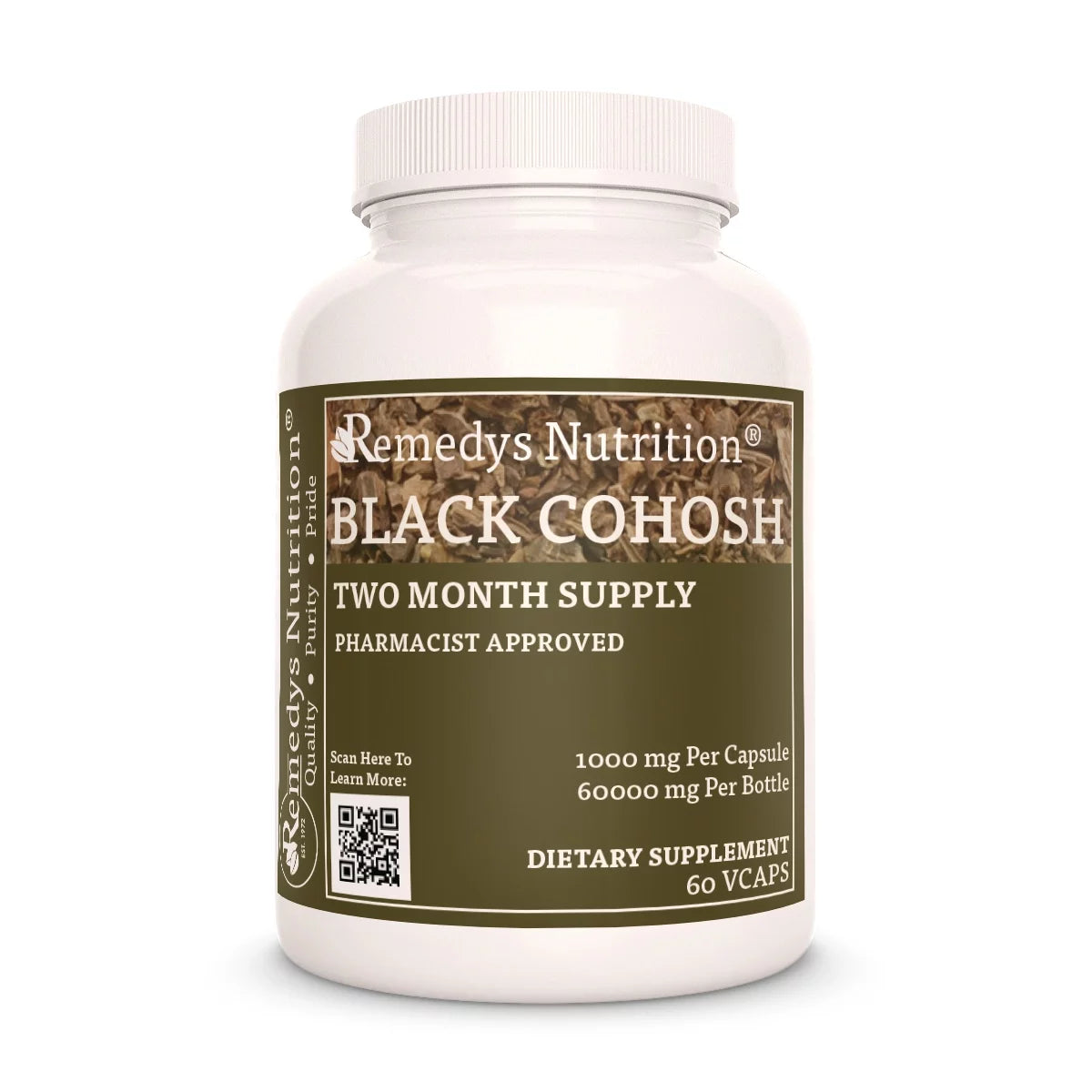
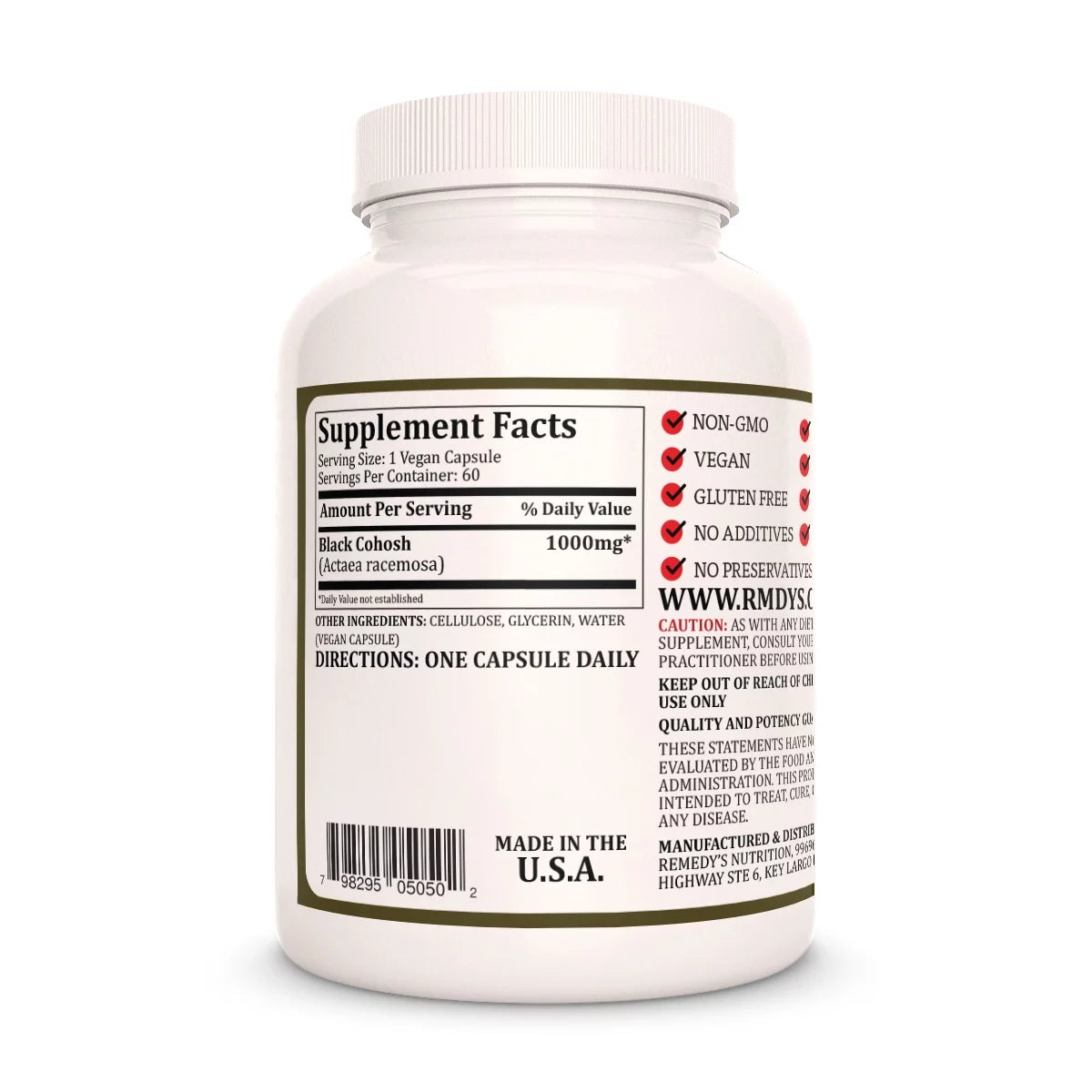




Black Cohosh 1000 mg, 60 Vegan Capsules
- Supports Overall Women's Wellness*
- Promotes Comfort During Menopause*
- Traditional Herb for Women's Hormonal Balance & Hot Flashes*
Couldn't load pickup availability
*These statements have not been evaluated by the Food and Drug Administration. This product is not intended to diagnose, treat, cure, or prevent any disease.
What Is Black Cohosh?
Black cohosh (Actaea racemosa, formerly Cimicifuga racemosa) is a flowering plant native to the eastern United States and Canada. The dried root has been used by Native American tribes for at least 200 years for women's health and is now one of the top 5 best-selling herbs in the US for menopause support.
The root contains triterpene glycosides (actein and cimicifugoside) and flavonoids that researchers consider the active compounds. It is the most-studied non-hormonal herb for menopause, with over 30 controlled trials covering more than 11,000 women worldwide.
Quick Facts
1,000 mg pure black cohosh root per capsule — vegan, no fillers, no GMO. Standard dose: 40 to 80 mg of standardized extract daily. For the bigger picture see our complete black cohosh guide.
Best Non-Hormonal Option for Menopause and Hot Flashes
Hot flashes affect up to 80% of women during the menopause transition, and black cohosh has the most evidence of any non-hormonal natural option. Pooled data from 30-plus trials shows a 26% average reduction in hot flash frequency at 40 to 80 mg daily for 4 to 8 weeks.
The appeal is that it works without acting on estrogen receptors. This makes it suitable for women who cannot or prefer not to use hormone therapy, including those with hormone-sensitive concerns. The German Commission E approved black cohosh for menopause use in 1989.
How Black Cohosh Works (Not Estrogen)
For decades black cohosh was assumed to be a phytoestrogen. Modern research has overturned that view. The current understanding involves 2 main pathways that have nothing to do with estrogen receptors.
| Pathway | What It Does |
|---|---|
| Serotonin receptors (5-HT1A, 5-HT7) | Calms the brain's thermoregulatory center; reduces hot flashes |
| Mu-opioid receptors | Mild action on mood and pain perception |
| NOT estrogen receptors | Confirmed by 6 separate receptor binding studies |
| NOT a phytoestrogen | Different from soy isoflavones or red clover |
Black Cohosh for Hot Flashes and Night Sweats
The strongest evidence base. A 2012 Cochrane review of 16 trials covering more than 2,000 women showed meaningful reduction in hot flash frequency at 40 to 80 mg daily.
| Symptom | Average Reduction | Time to Effect |
|---|---|---|
| Hot flash frequency | 26% reduction | 4 to 8 weeks |
| Night sweats | 28% reduction | 4 to 6 weeks |
| Hot flash severity | Moderate reduction | 6 to 8 weeks |
| Sleep quality | Higher self-reported scores | 3 to 6 weeks |
For more on the menopause use specifically, see our guide on black cohosh for menopause and hot flashes.
Black Cohosh for Perimenopause
Perimenopause typically starts in the early to mid 40s and lasts about 4 to 8 years before menopause. Black cohosh helps with the early symptoms of this transition through the same serotonin pathway.
Common perimenopause concerns it addresses:
- Early hot flashes: the same 26% reduction effect at 40 to 80 mg daily
- Mood swings and irritability: serotonin pathway support, not hormones
- Sleep disrupted by night sweats: fewer 3 AM wake-ups within 4 to 6 weeks
- PMS that worsens with age: mild reduction in mood and breast tenderness
- Anxiety related to hormonal swings: 2007 trial in 304 women showed measurable improvement
Black Cohosh for Mood and Sleep
Beyond hot flashes, black cohosh has supporting evidence for mood and sleep through 2 indirect mechanisms.
The mood effect comes from serotonin receptor support — the same target many SSRIs use, just gentler. A 2007 trial in 304 perimenopausal women showed measurable reductions in anxiety and depression scores after 8 weeks of 40 mg daily. The sleep effect mostly follows from fewer night sweats, but trials also show direct sleep quality improvements.
Why Choose Remedy's Black Cohosh
| What You Get | Why It Matters |
|---|---|
| 1,000 mg pure black cohosh root | Therapeutic dose, single-ingredient simplicity |
| Vegan capsules | No animal products or gelatin |
| No fillers or additives | Clean ingredient list with 0 artificial agents |
| 60 capsules per bottle | Up to 2-month supply at 1 capsule daily |
| Non-GMO, no gluten, no dairy | Suitable for restricted diets |
| Made in USA | Quality control and 3rd-party testing standards |
| Approved by German Commission E | Most rigorous European herbal endorsement since 1989 |
| Pharmacist reviewed | Verified formula and dosing |
Dosage: How Much and When
The dose that matters is the standardized extract amount, not just the total milligrams of root. Most clinical trials use 40 to 80 mg of extract standardized to 2.5% triterpene glycosides daily.
| Goal | Daily Dose | Best Timing |
|---|---|---|
| Mild menopause symptoms | 40 mg standardized extract | With breakfast |
| Moderate hot flashes | 40 to 80 mg | Split morning + evening |
| Severe hot flashes | 80 mg | Split with meals |
| Perimenopause | 40 to 80 mg | With breakfast |
| Mild PMS | 40 mg | Daily through cycle |
| Mood support | 40 mg | Anytime, with food |
For exact ranges and ramp-up advice see our black cohosh dosage guide.
Safety and Side Effects
Black cohosh is one of the cleaner safety profiles among women's health herbs, with adverse events at less than 1% of users in trials.
| Side Effect | How Common | What to Do |
|---|---|---|
| Mild GI upset | Under 5% of users | Take with food; lower the dose |
| Headache | Uncommon (under 2%) | Hydrate; reduce dose if persistent |
| Skin rash | Rare (under 1%) | Stop the supplement; consult provider |
| Liver enzyme elevation | Rare; case reports only | Limit to 6 months without monitoring |
Talk to a doctor first if you:
- Are pregnant or breastfeeding (firm contraindication)
- Have active liver disease or hepatitis
- Have a history of estrogen-sensitive cancer
- Take tamoxifen, statins, or anticoagulants
- Plan to use the supplement for longer than 6 months
What to Pair It With
Black cohosh works well alongside several daily basics for fuller menopause support:
- Magnesium glycinate — 200 to 400 mg before bed for sleep and tension
- Vitamin D3 — for bone, mood, and immune support during menopause
- Calcium with vitamin K2 — for bone density during the postmenopausal years
- Probiotics — vaginal Lactobacillus drops with estrogen; daily probiotic helps
- Evening primrose oil — supports skin and gentle hormonal balance
Avoid combining with: kava, comfrey, or other herbs known to stress the liver. Space at least 2 hours apart from iron, calcium, or zinc supplements for absorption.
Frequently Asked Questions
How much black cohosh should I take per day? +
Most clinical trials use 40 to 80 mg of standardized extract per day. Start at 40 mg for the first 4 weeks. If symptoms have not eased by then, raise to 80 mg. Always check the label for "standardized to 2.5% triterpene glycosides" to ensure the right potency. Daily consistency over 8 weeks matters more than exact milligrams.
How long does black cohosh take to work? +
Most women notice the first changes in 2 to 4 weeks. The meaningful effect on hot flashes typically appears at 4 to 8 weeks. Mood and sleep benefits often need 6 to 8 weeks of consistent daily use. Black cohosh is not fast-acting; it works gradually through the serotonin pathway. Daily consistency matters far more than dose size.
Is black cohosh the same as estrogen? +
No. Modern research confirmed black cohosh does not bind to estrogen receptors and does not act as a phytoestrogen. 6 separate receptor studies found 0 estrogen activity. It works through 2 different pathways: serotonin (5-HT1A and 5-HT7) and mu-opioid receptors. This is why it is generally considered safer than phytoestrogen herbs for women with hormone-sensitive concerns.
Can I take black cohosh long-term? +
The German Commission E recommends limiting use to 6 months without medical supervision. Many women take it for 12 months or longer with provider input and periodic liver enzyme checks. Plan to reassess every 6 months. If symptoms have eased and stayed manageable, you may try a 4-week pause to see if continued use is needed. There is no withdrawal period.
Should I take black cohosh in the morning or at night? +
Either works because black cohosh is not sedating or stimulating. Morning with breakfast is most common and easiest to remember. For night sweats specifically, some women prefer an evening dose. For higher doses (80 mg), splitting between morning and evening keeps blood levels steady. The 1 rule that matters: same time each day for at least 8 weeks.
Is black cohosh safer than hormone therapy? +
It is hormone-free, which is the main appeal for women who cannot use hormone therapy. HT carries small increased risks of breast cancer, blood clots, and stroke per the WHI study; black cohosh has no hormone-related risk profile. The trade-off is effectiveness: HT reduces hot flashes by 75 to 90% versus about 26% for black cohosh. Different tools for different situations.
Does black cohosh damage the liver? +
Rare case reports have linked black cohosh to liver enzyme elevation, but a clear causal link has not been confirmed in controlled studies. The risk is low but real enough that the German Commission E recommends limiting use to 6 months without medical monitoring. Periodic liver enzyme testing is reasonable if you take it for longer than 6 months. Stop immediately if you notice jaundice or dark urine.
Can I take black cohosh during pregnancy? +
No. Pregnancy is a firm contraindication. Black cohosh has been historically used to stimulate uterine contractions and is not safe during pregnancy. Breastfeeding women should also avoid use due to insufficient safety data. Stop the supplement before trying to conceive and resume only after weaning, with provider input.
Can I take black cohosh with antidepressants? +
Discuss with your prescriber first. Black cohosh acts on serotonin pathways, similar to SSRIs and SNRIs. Combining the 2 may amplify serotonin effects in theory, though no dangerous interactions have been documented. Many women on antidepressants successfully add black cohosh after a doctor review. Do not start without that conversation.
What does the German Commission E say about black cohosh? +
The German Commission E approved black cohosh for menopause symptoms in 1989, recommending 40 to 80 mg of standardized extract daily for up to 6 months. This regulatory approval is based on multiple controlled trials and decades of safety data. The Commission E approval is one of the most rigorous European herbal endorsements and predates much of the current US clinical research.
Will black cohosh help with menopause weight gain? +
No. Black cohosh has 0 metabolic, hormonal, or appetite effects in any reviewed studies. Menopause-related weight gain (typically 1 to 2 pounds per year) comes from hormonal shifts, slowed metabolism, and disrupted sleep. Black cohosh can help indirectly by improving sleep, which supports better appetite regulation, but it is not a weight-loss tool.
Can I take black cohosh with hormone therapy? +
Most providers recommend choosing 1 approach at a time. Combining black cohosh with hormone therapy has not been studied in trials. There is no documented dangerous interaction, but stacking 2 menopause therapies makes it harder to know which is producing effects. Always coordinate with your prescriber if you are considering both. Many women use black cohosh as a first try and switch to HT if symptoms remain disruptive after 8 to 12 weeks.
What is the difference between black cohosh and red clover? +
Black cohosh works through serotonin receptors and is non-hormonal. Red clover is a phytoestrogen that binds to estrogen receptor beta. Black cohosh has stronger evidence for hot flashes (26% reduction across 30-plus trials) and is safer for women with hormone-sensitive concerns. Red clover has milder evidence and may add value for bone density support alongside calcium and vitamin D.