
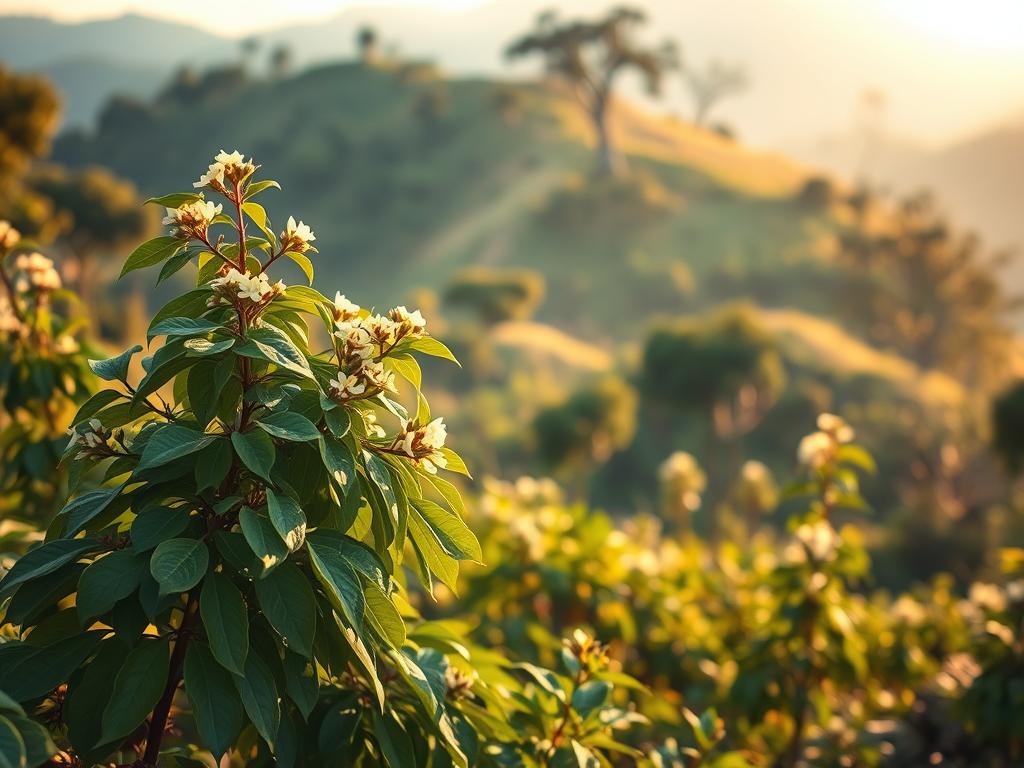
The yerba mate origin story begins deep in the lush subtropical forests of South America, where a plant that’s fueled cultures for centuries grows wild. The Ilex paraguariensis tree, with its glossy green leaves and clusters of small white flowers, thrives naturally across parts of Brazil, Paraguay, Uruguay, and Argentina. This caffeine-rich species can reach heights of nearly 50 feet, blending seamlessly into its forest home.
Quick Answer: Where does yerba mate come from and what is its origin?
Yerba mate (Ilex paraguariensis) comes from South America — primarily Argentina, Paraguay, Uruguay, and southern Brazil. It grows as a tree in the subtropical rainforest understory of the Paraná region. Indigenous Guaraní people used mate as a beverage and medicine for centuries before Spanish colonisation. Today Argentina produces the most yerba mate globally, with deep cultural traditions surrounding its consumption.
Key Takeaways
- Yerba mate is native to the subtropical Atlantic forests of South America — the Paraná basin region.
- Indigenous Guaraní people cultivated and consumed mate long before European arrival — they believed it was a gift from the gods.
- Today it is a national drink of Argentina, Paraguay, Uruguay, and southern Brazil — consumed more than coffee in these countries.
- The plant (Ilex paraguariensis) is a species of holly — related to the familiar holiday plant, not true tea (Camellia sinensis).
- Modern cultivation uses shade-grown methods in Argentina (Misiones province) and southern Brazil to produce premium mate.
French botanist Auguste de Saint-Hilaire first documented the plant during his early 19th-century expeditions. He recognized its unique qualities—natural stimulants, antioxidants, and cultural significance. Indigenous communities had already perfected methods to dry and roast the leaves, creating a beverage central to social rituals.
Traditional preparation remains simple yet deliberate. Leaves are dried over fire, crushed, and steeped in hot water. The result is a grassy, earthy infusion enjoyed warm or cold. Unlike many modern drinks, this preparation process has stayed remarkably consistent through generations.
Today, what began as a regional tradition has become a global phenomenon. From bustling Buenos Aires cafés to health-conscious communities worldwide, people embrace this energizing drink. Its journey from forest floors to international markets reveals how deeply connected a plant can be to its homeland.
Introduction: Tracing the Historical Journey of Yerba Mate
Imagine a drink that unites people across continents while preserving centuries-old traditions. For those wondering what is yerba mate, it's a South American brew that has evolved from indigenous ceremonies to a modern social phenomenon, creating connections that defy borders.
Understanding Its Role as a Cultural Anchor
Shared through a gourd and metal straw called a bombilla, this drink forms the heartbeat of daily life. Families and friends gather to pass the vessel clockwise, fostering trust and equality. During the 2022 World Cup, Argentina’s team carried over 1,100 pounds of leaves – proving its irreplaceable role in contemporary culture.
| Feature | Traditional Use | Modern Adaptation |
|---|---|---|
| Preparation | Hand-dried leaves in gourds | Pre-packaged yerba mate tea bags |
| Social Role | Community bonding ritual | Global wellness trend |
| Key Compounds: Theobromine + Theophylline (shared with chocolate/tea) | ||
From Local Custom to Worldwide Trend
What began in Paraguay’s forests now fuels Silicon Valley programmers and Tokyo cafés. Its stimulant blend offers smoother energy than coffee, driving global popularity. Yet most drinkers still honor the original communal style – 75% of Uruguayan households own at least one traditional gourd.
As international demand grows, the ritual remains unchanged. Soccer stars sip it during matches, while students share it during study sessions. This balance between heritage and innovation makes it unlike any other drink in history.
Indigenous Roots and Colonial Encounters
Centuries before European contact, South America's Guaraní communities wove a sacred plant into their spiritual fabric. This botanical treasure served as both physical sustenance and cosmic bridge, shaping worldviews long before becoming a global commodity.
Sacred Leaves and Creation Stories
For the Guaraní, preparing the infusion was never just about drinking. Elders taught that the first woman transformed her daughter into a towering tree, its branches birthing all regional flora. Every harvest became prayer - leaves gathered with gratitude, water heated to sacred temperatures.
Communal sharing rituals reinforced social bonds. The plant's theobromine-rich leaves provided energy for hunting while symbolizing life's cyclical nature. Knowledge of proper drying methods passed through generations, preserving ecological balance.
Colonial Disruption and Economic Shifts
Spanish explorer Juan Francisco de Aguirre's 1536 writings first documented this practice. Colonizers soon realized its commercial potential. By 1600, the plant became the region's first cash crop, traded like silver.
| Aspect | Pre-Colonial | Colonial Era |
|---|---|---|
| Purpose | Sacred ritual | Currency & trade |
| Labor Source | Voluntary harvest | Forced indigenous work |
| Consumption Rights | Community access | Restricted by season |
Workers faced brutal conditions - hauling 150-pound leaf bundles to markets. Traditional practices suffered as Spanish rulers banned personal use during harvest months. This clash between reverence and exploitation reshaped the region's social fabric forever.
Yerba Mate Origin: From Early Traditions to Modern Consumption
Colonial ambitions reshaped South America's landscapes and labor systems, turning sacred plants into profitable commodities. Two powerful forces drove this transformation: exploitative Spanish policies and innovative religious missions.
The Role of Jesuit Reductions and Encomiendas
Spain's encomienda system, launched in 1538, enslaved Indigenous communities to harvest wild plants. Workers faced deadly conditions—jungle heat, venomous snakes, and 16-hour days processing leaves. Historians estimate thousands perished extracting nature's "green gold."
Everything changed when Jesuit priests arrived in 1609. They cracked nature's code by observing barnyard birds:
- Seeds eaten by chickens softened in digestive systems
- Germination rates skyrocketed from 30% to 90%
- Domesticated Ilex paraguariensis became viable
| Aspect | Encomienda | Jesuit Missions |
|---|---|---|
| Labor Source | Forced indigenous | Trained communities |
| Output (1789) | 2,200 tons exported | 250 tons local use |
| Legacy | Economic exploitation | Agricultural innovation |
Transformation Through Political and Economic Changes
King Charles III's 1767 Jesuit expulsion triggered chaos. Thriving plantations became ghost towns within months. By century's end, Paraguay's population consumed 5 pounds annually per person—a testament to enduring cultural importance.
This turbulent history explains why modern production blends ancient knowledge with new techniques. The plant's journey from colonial cash crop to daily ritual reveals humanity's complex relationship with nature.
Rituals, Symbolism, and Societal Impact
A steaming gourd passes between hands in Buenos Aires cafés and Damascus living rooms, creating invisible threads connecting continents. This simple act of sharing carries centuries of meaning, transforming leaves and water into a social superglue.

Social Bonding and Cultural Rituals
The communal bombilla does more than filter leaves—it dissolves barriers. Research reveals ancient Guaraní groups likely shared the infusion during rain ceremonies for Tupâ. Today’s drinkers unknowingly echo these rituals when passing the vessel clockwise, creating equal participation regardless of status.
Syrian families adopted this practice through immigrants who returned from South America. One Damascus local explains:
"Our gatherings last hours. The slow sipping matches our way of living—coffee rushes, this drink breathes."
Shaping National Identity and Class Narratives
By the 1820s, the infusion had become South America’s great unifier. Wealthy landowners and street vendors alike clutched gourds, their shared sips blurring social divisions. This cross-class appeal helped emerging nations forge distinct identities post-independence.
| Region | Ritual Purpose | Modern Adaptation |
|---|---|---|
| Argentina/Uruguay | Daily social glue | Thermos carriers for on-the-go use |
| Syria | Family bonding | Elaborate brass bombillas as wedding gifts |
Surprisingly, Syria now imports over 15,000 tons annually. The tradition took root because it aligned perfectly with cultural values—patient conversation and multi-generational gatherings. While coffee dominates quick breaks, this drink’s extended consumption style nurtures relationships differently.
Conclusion
What began as sacred leaves shared among Guaraní communities now fuels global markets and modern lifestyles. This Yerba Mate Tea carries a layered history—colonial exploitation, economic survival, and cultural revival all steeped in one vessel.
Argentina's 1980s hyperinflation crisis unexpectedly revived its national drink as families sought affordable alternatives to coffee. By the 1990s, sharing the bitter brew became a defiant celebration of local identity against homogenizing globalization.
Today, new chapters unfold as the stimulant gains worldwide fans. U.S. stores now stock energy drinks and tea bags adapting traditional consumption methods. Yet many still honor the communal ritual—68% of Argentine youth report sharing it daily.
From jungle ceremonies to Silicon Valley offices, this plant’s journey mirrors humanity’s story. It survives not despite change, but through it—a living reminder that culture thrives when roots remain strong while branches grow anew.
Frequently Asked Questions
Is yerba mate a type of tea? +
No — yerba mate comes from Ilex paraguariensis, a species of holly, not from the tea plant (Camellia sinensis). It is sometimes called "mate tea" for convenience, but it is technically an herbal infusion. Like true tea, it contains caffeine (called mateine in mate), theobromine, and polyphenol antioxidants.
Why do South Americans drink mate from a gourd? +
The traditional gourd (calabaza) and metal straw with a filter (bombilla) are the classic serving vessels for mate. The gourd is passed communally — sharing mate is a gesture of friendship and hospitality. The bombilla filters the loose leaf mate herb as you drink. This tradition has been maintained for centuries across South American cultures.
Does yerba mate grow anywhere outside South America? +
Commercially, yerba mate is almost exclusively grown in South America. Small experimental plantings have been attempted in Australia, Portugal, and the southern US, but subtropical climate, specific soil conditions, and altitude requirements make large-scale production outside the Paraná region challenging. Most commercial mate is still Argentinian or Brazilian origin.
What is the difference between Argentine and Brazilian yerba mate? +
Argentine mate is typically aged (cured) for 6–12+ months after harvesting, producing a more robust, earthy flavour. Brazilian mate (chimarrão) is often younger and greener, with a fresher, grassy taste. Uruguayan mate tends to be the strongest. Paraguayan mate may include additives like dried herbs (terere for cold-brewed versions).
Is fair trade certification important for yerba mate? +
Fair trade certification ensures farmers receive equitable pay and that workers on mate plantations have safe working conditions. The mate industry has faced criticism for labour practices on some large farms. Choosing fair trade or organic-certified mate supports sustainable, ethical production in South American growing regions.
Related Reading
Related Products
Shop Yerba Mate Tea Bags
Traditional South American yerba mate — smooth, sustained energy from mateine plus antioxidants, without the jitters or crash of coffee.
Go to ShopShop Anti-Oxidant Capsules
A concentrated antioxidant formula that pairs perfectly with yerba mate for amplified free radical protection and energy support.
Go to Shop


