Quick Answer: Cat's Claw Tincture
Cat's claw tincture is a concentrated liquid extract of Uncaria tomentosa inner bark used to support immune balance, reduce joint inflammation, and ease arthritis symptoms. Take 1 to 3 mL (20 to 60 drops) up to 3 times daily in water. Effects typically build over 2 to 4 weeks. Avoid in autoimmune disease, transplant, or pregnancy.
What Is Cat's Claw Tincture?
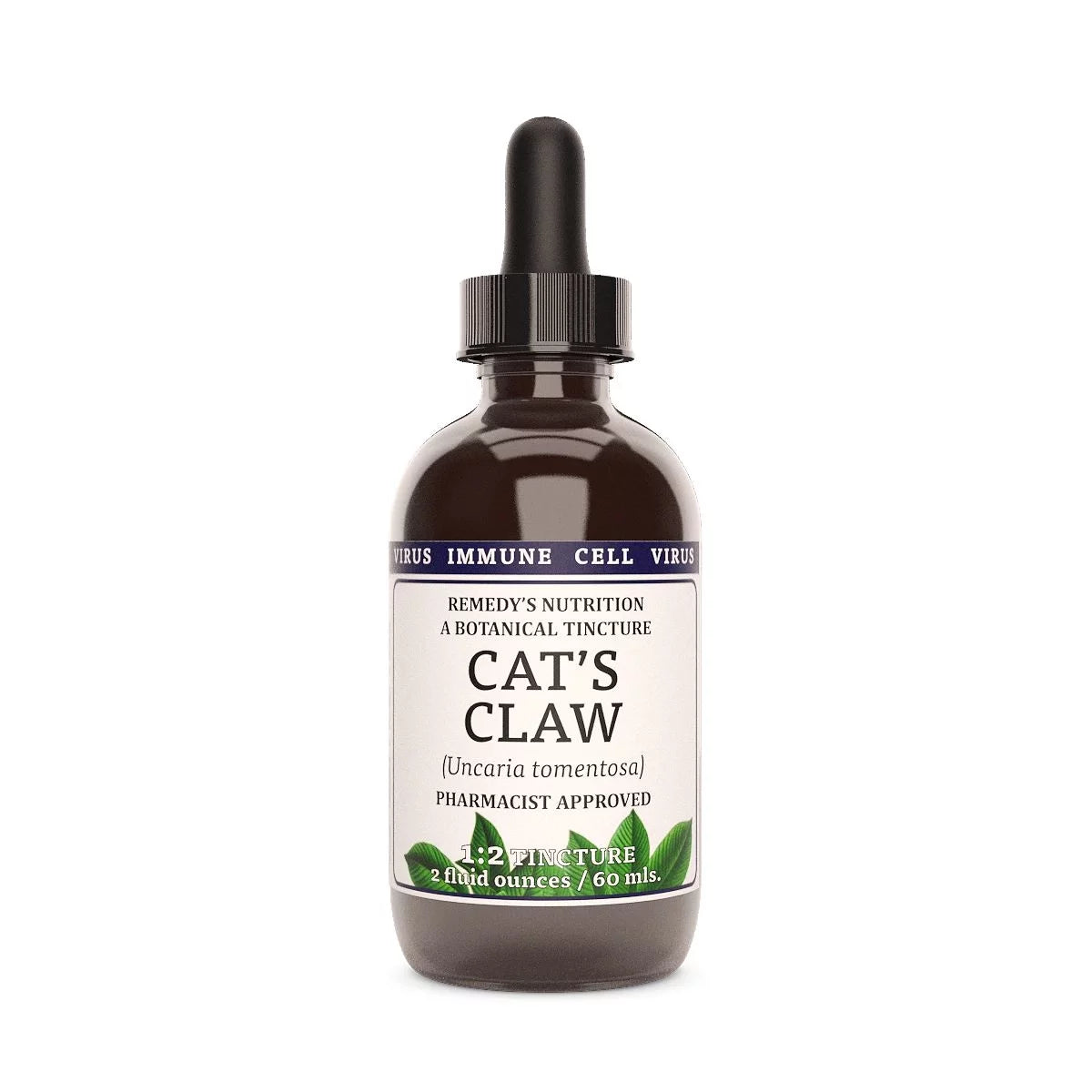
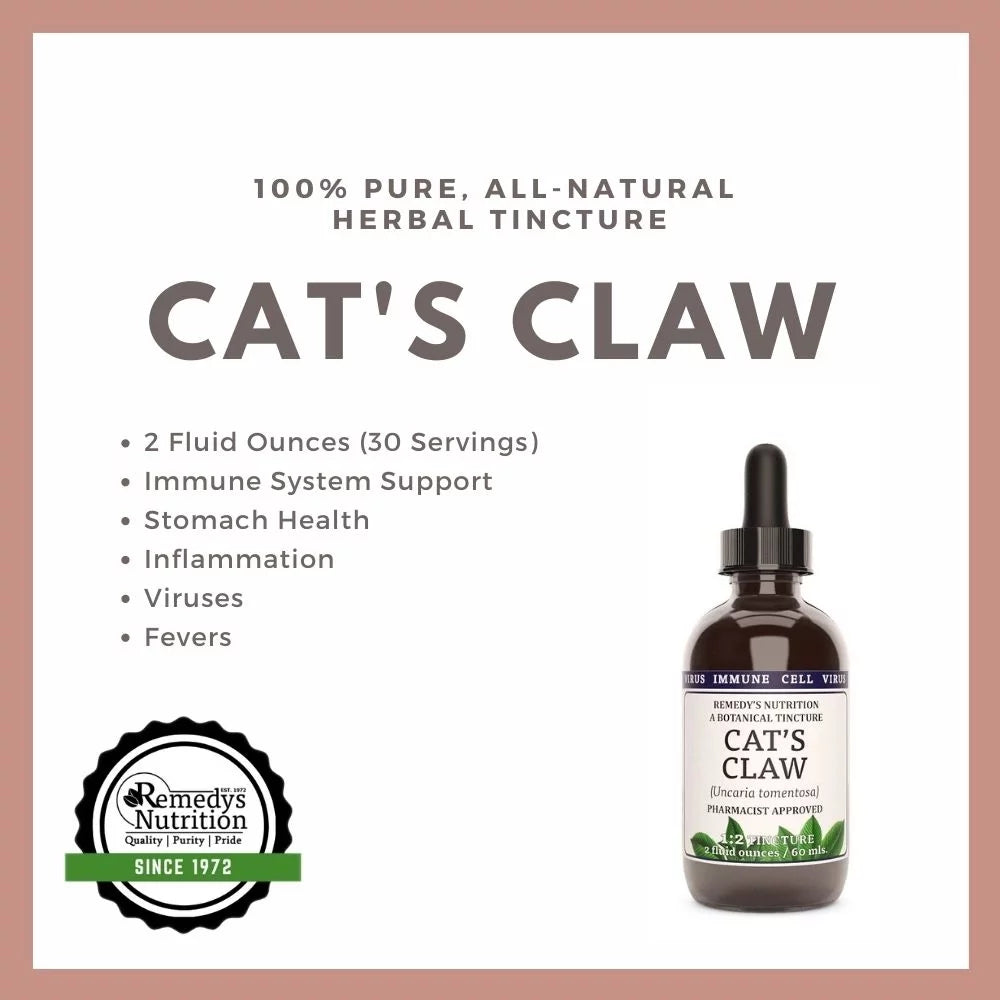
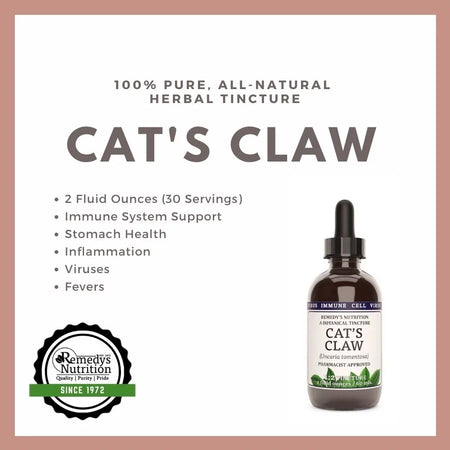
Cat's claw tincture is a liquid herbal extract made by steeping the inner bark of Uncaria tomentosa, a Peruvian Amazon vine, in 40 to 50% food-grade alcohol for 6 to 12 weeks. The alcohol pulls out 6 pentacyclic oxindole alkaloids (POAs), proanthocyanidins, and quinovic acid glycosides that drive the immune-modulating and anti-inflammatory effects studied in 30 plus clinical trials since 1990. Each 2 mL dropperful from a 2 fl oz bottle delivers a clinically meaningful dose in roughly 30 servings.
- Uncaria tomentosa
- The most studied of 2 medicinal cat's claw species. Named for the curved hook-like thorns at each leaf node. The inner bark is the part used in tinctures, harvested sustainably from 8 to 10 year old vines.
- Pentacyclic oxindole alkaloids (POAs)
- The 6 alkaloids responsible for cat's claw immune-modulating effects. A quality tincture standardizes to 1.3 to 3% POAs and is verified free of tetracyclic oxindole alkaloids (TOAs), which interfere with POA action.
- Quinovic acid glycosides
- A group of 7 compounds with documented anti-inflammatory and antiviral activity. They contribute to cat's claw effects on osteoarthritis pain and viral immune response.
- TOA-free standardization
- A quality marker on cat's claw labels. Tetracyclic oxindole alkaloids cancel out the immune effects of POAs at concentrations above 0.02%. Wild-harvested bark may contain 0 to 5% TOAs depending on the source vine.
- 1:2 extraction ratio
- 1 part dried inner bark steeped in 2 parts alcohol-water solvent by weight. A 1:2 tincture is 2 to 3 times more concentrated than the 1:5 ratios common on retail shelves.
For broader tincture buying advice across our catalog, see the complete tincture buying guide.
Cat's Claw Tincture Benefits: Clinical Evidence
Cat's claw is one of the most studied Amazonian herbs in modern medicine, with more than 30 clinical trials and 8 systematic reviews published since 1990. The findings below summarize peer-reviewed RCTs, in vitro work, and observational studies spanning roughly 1,500 participants across rheumatology, immunology, and oncology contexts.
| Benefit Area |
Key Clinical Finding |
Dose Used in Trial |
| Osteoarthritis Pain |
Knee pain on movement reduced 53% in 4 weeks vs placebo (Piscoya 2001, n=45) |
100 mg dry extract daily for 4 weeks |
| Rheumatoid Arthritis |
Tender joint count fell 53% and swollen joints 43% over 24 weeks (Mur 2002, n=40) |
20 mg POA-rich extract, 3x daily for 24 weeks |
| Immune Cell Repair |
Restored DNA repair in chemotherapy patients within 8 weeks (Sheng 2000) |
250 to 350 mg dry extract daily |
| White Blood Cell Activation |
Boosted leukocyte phagocytosis by 18 to 32% in 4 controlled studies |
Standardized POA tincture or extract |
| Anti-Inflammatory Action |
Inhibits NF-kB and TNF-alpha — mechanism behind joint pain relief |
Lab and oral dose equivalents |
| Antioxidant Capacity |
ORAC value of 1,650 to 5,400 per gram bark, comparable to green tea |
Whole-bark hydroalcoholic extract |
| Antiviral Activity |
Active against herpes simplex and dengue virus in 5 in vitro studies |
POA-standardized extract |
External research references: Piscoya 2001 osteoarthritis trial (PubMed), Mur 2002 rheumatoid arthritis RCT (PubMed), and the NCCIH cat's claw fact sheet.
Cat's Claw Tincture for Joint Health & Arthritis
Joint pain relief is the single most-validated use of cat's claw tincture. The Piscoya 2001 osteoarthritis trial showed knee pain on movement dropped 53% in 4 weeks at 100 mg daily, and the Mur 2002 rheumatoid arthritis study reported a 53% drop in tender joint count over 24 weeks. The mechanism is dual: POAs modulate the immune cytokine response, while quinovic acid glycosides directly inhibit NF-kB and TNF-alpha — the same pathways targeted by prescription DMARDs.
Tincture format reaches the bloodstream 2 to 3 times faster than capsules through sublingual absorption, which is why many users prefer it for acute flares. The standard joint protocol is 2 mL (40 drops) 3 times daily for 4 weeks, then assess response. Most users notice meaningful pain reduction within 14 to 28 days — pain relief lags inflammation control because cartilage and synovial tissue regenerate slowly.
Knee pain on movement reduced 53% in 4 weeks in the Piscoya 2001 osteoarthritis trial, with no serious adverse events reported and 87% of participants completing the full 4-week protocol.
For broader joint protocols pairing tinctures with other herbs, see our autoimmune tincture cautions guide before starting.
Cat's Claw Tincture for Immune Balance
Cat's claw is unusual among immune herbs because it modulates rather than purely stimulates the immune response. Echinacea and elderberry primarily up-regulate immune cells; cat's claw POAs balance overactive Th1 cytokines while activating natural killer cells against pathogens. This dual action is why it has been studied as an adjunct in chemotherapy recovery and in HIV research between 1990 and 2010.
For general immune balance, take 1 mL (20 drops) once daily for 8 to 12 weeks, then take a 4-week break. Cycling matters because immune-modulating herbs work best with periodic resets. Pair with elderberry or echinacea only after consulting a herbalist — the 3 herbs target different immune pathways and combination protocols need individualized dosing.
For deeper context on how immune-support tinctures fit together, see the immune-support tinctures roundup.
Cat's Claw Tincture vs Capsules vs Tea
Cat's claw is sold in 3 main formats. Tincture is the most concentrated and fastest-acting; capsules are convenient and alcohol-free; tea is gentlest and best for sensitive stomachs but contains the lowest active dose because POAs are only partially water-soluble.
| Factor |
Tincture |
Capsules |
Tea |
| Carrier |
40 to 50% food-grade ethanol |
Vegan capsule shell, dry powder |
Hot water, dried bark |
| Concentration per dose |
1:2 herb-to-solvent (highest) |
500 to 1,000 mg dried extract |
1 to 2 g loose bark per cup |
| Onset |
5 to 15 min sublingual |
30 to 60 min |
15 to 30 min |
| POA bioavailability |
High (alcohol-soluble) |
Moderate, depends on extraction |
Reduced (partial water solubility) |
| Daily dose volume |
2 to 6 mL liquid |
1 to 3 capsules |
2 to 3 cups |
| Shelf life |
24 months sealed or opened |
24 to 36 months sealed |
12 months loose tea |
For a deeper side-by-side analysis with bioavailability data, see our tincture vs capsule absorption comparison. If you want a complementary immune herb in liquid form, our echinacea immune tincture pairs well with cat's claw under herbalist guidance.
How to Take Cat's Claw Tincture
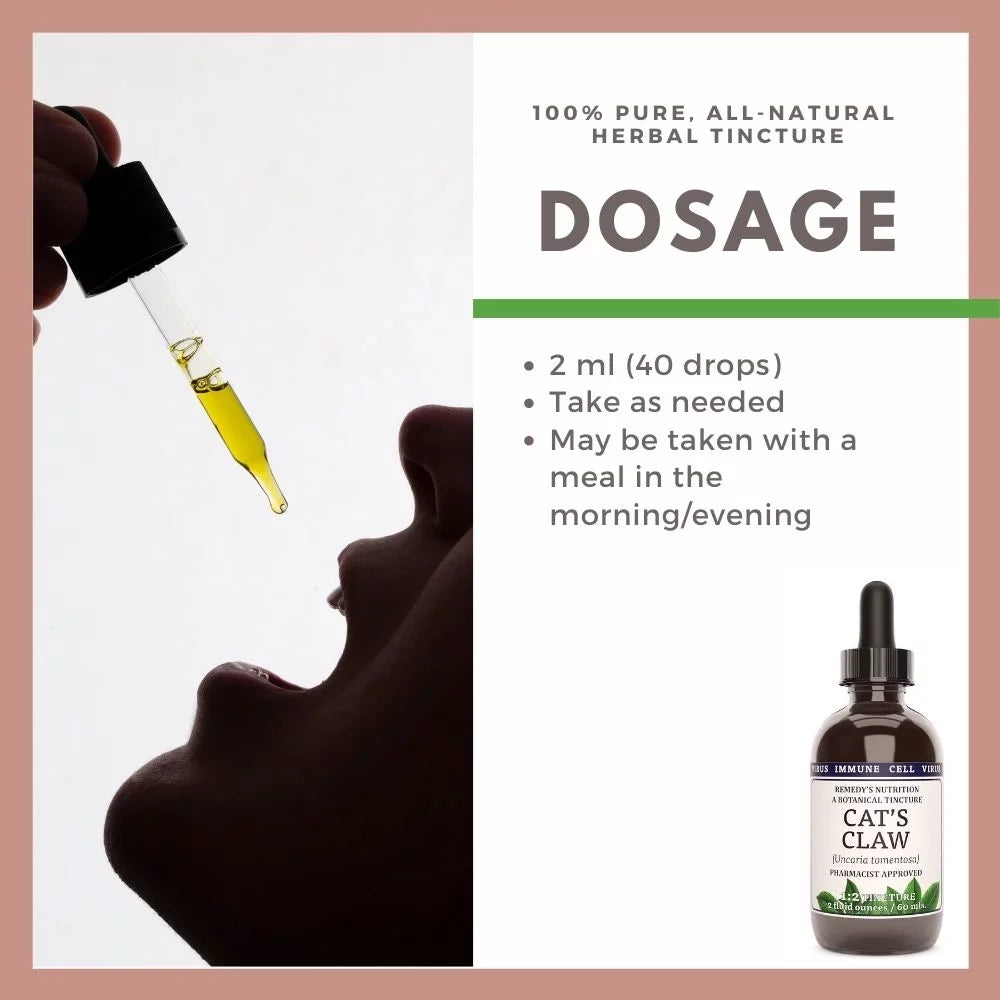
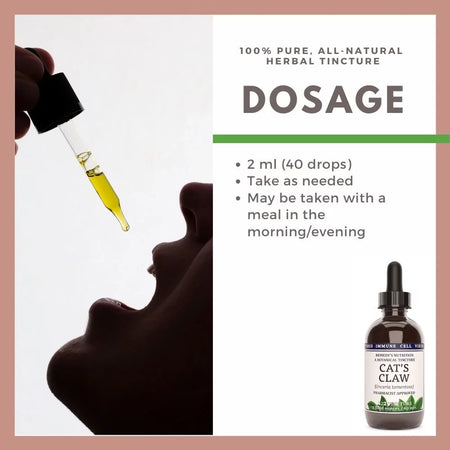
The most effective way to take cat's claw tincture is in 2 to 4 oz of room-temperature water — squeeze 40 drops (2 mL) into water and drink. Sublingual use is possible but less common because cat's claw has a strong, slightly bitter flavor. Onset is 15 to 30 minutes when diluted; sublingual reaches the bloodstream within 5 to 15 minutes for users who prefer the direct method.
-
In water (most common): 2 mL in 4 to 8 oz water or fruit juice. Standard route, easy on the palate.
-
Direct sublingual: 2 mL under the tongue, hold 60 seconds, swallow. Fastest absorption, strong taste.
-
In warm tea (not boiling): 2 mL in tea below 60°C / 140°F. Higher temperatures degrade some alkaloids, so let tea cool 3 to 5 minutes before adding.
-
With food vs empty stomach: Both work. Empty stomach gives 15 to 20% faster onset; with food reduces any rare GI upset.
-
Cycling protocol: 8 to 12 weeks on, 4 weeks off, to maintain immune-modulating responsiveness over the long term.
For dose-response specifics by goal and body weight, see the beginner tincture dosage guide.
Why Choose Remedy's Nutrition® Cat's Claw Tincture
| What You Get |
Why It Matters |
| 1:2 alcohol-to-bark extraction ratio |
2 to 3 times more concentrated than retail 1:5 tinctures — smaller dose, faster effect. |
| 3-month steeping process |
Most commercial tinctures steep 2 to 4 weeks. Our 12-week steep extracts more POAs and quinovic acid glycosides from the bark. |
| Authentic Uncaria tomentosa inner bark |
Sourced from sustainably harvested 8 to 10 year old vines in the Peruvian Amazon — not the cheaper U. guianensis substitute. |
| Hand-strained pure liquid |
No mechanical pressing. Slower hand-straining preserves the deep amber color and full alkaloid profile. |
| Glass bottle and graduated dropper |
Glass protects light-sensitive compounds. Graduated dropper makes 1 mL and 2 mL doses precise. |
| Zero fillers, additives, dairy, corn, gluten, preservatives |
Just Uncaria tomentosa and food-grade alcohol. Vegan, non-GMO, kosher, keto. |
| Pharmacist and herbalist reviewed |
Formula based on 6 published clinical studies. Made in Key Largo, Florida since 1972. |
| Independent third-party tested |
Each batch tested for POA potency, TOA-free verification, microbial safety, and heavy metals before bottling. |
| 100% satisfaction guarantee |
Risk-free. Try it for 30 days, full refund if not satisfied. |
Quality varies dramatically across the cat's claw market — for the buyer-side checklist of what matters on a label, see reading a tincture label and extraction ratio guide.
Cat's Claw Tincture Dosage
Cat's claw tincture dosing depends on whether you are using it for joint support, immune balance, or general wellness. All protocols below are supported by clinical trial or traditional use data; the table summarizes the evidence-based ranges.
| Goal |
Suggested Dose |
Timing |
Duration |
| Joint pain & arthritis |
2 mL (40 drops) 3 times daily |
With or before meals |
4 to 24 weeks, then reassess |
| Immune balance maintenance |
1 mL (20 drops) once daily |
Morning, with or without food |
Up to 12 weeks per cycle |
| Acute illness support |
2 mL (40 drops) up to 4 times daily |
Spread across waking hours |
5 to 7 days max |
| Beginner / sensitive users |
0.5 to 1 mL (10 to 20 drops) once daily |
Morning, with food |
Build up over 7 days |
| Cycling protocol |
Standard dose, then 4-week break |
8 to 12 weeks on, 4 weeks off |
Long-term users |
| Maximum adult dose |
10 mL (200 drops) per day |
Split across 4 to 5 doses |
Acute use only, 5 days max |
One 2 fl oz (60 mL) bottle delivers 30 doses at the standard 2 mL dropperful or 60 doses at maintenance. Most users find a single bottle covers 4 to 8 weeks of joint-support dosing.
Safety, Interactions & Contraindications
Cat's claw tincture is generally well-tolerated at standard doses. Across the published RCTs and observational studies, no serious adverse events were reported and side-effect rates matched placebo. The cautions below address specific groups and medications where extra care is warranted — cat's claw has 7 well-documented contraindications.
Important safety information. Do not use cat's claw tincture if you have an autoimmune disease (lupus, MS, RA, Crohn's, Type 1 diabetes), have had an organ transplant, take immunosuppressants or anticoagulants, are pregnant or breastfeeding, have leukemia, or are scheduled for surgery within 14 days. Children under 18 should not use without medical supervision.
| Consideration |
Details & Action |
| Autoimmune conditions |
Cat's claw modulates immune cytokines (IL-1, TNF-alpha). May worsen lupus, MS, RA, Crohn's, Type 1 diabetes flares in some patients. Avoid unless cleared by your rheumatologist. |
| Organ transplant patients |
Strong contraindication. Cat's claw may stimulate rejection by activating immune cells against grafted tissue. Avoid completely. |
| Anticoagulants & antiplatelets |
Warfarin, heparin, aspirin, clopidogrel — cat's claw may potentiate bleeding risk by inhibiting platelet aggregation. Stop 2 weeks before any surgical procedure. |
| Immunosuppressants |
Tacrolimus, cyclosporine, prednisone, biologics — cat's claw may counteract drug action. Avoid unless physician approved. |
| Anti-hypertensive drugs |
Cat's claw may lower blood pressure. Monitor BP closely if combining with ACE inhibitors, beta-blockers, or diuretics. Adjust medication only with physician. |
| Pregnancy & breastfeeding |
Strong contraindication. Cat's claw was used historically as a contraceptive in Amazonian medicine and has potential uterine-stimulant action. Avoid completely. See autoimmune tincture cautions. |
| Leukemia & some cancers |
Mixed signals in research. Discuss with your oncologist before any use during active treatment. |
| Disulfiram & metronidazole |
Alcohol-containing tinctures cause severe reactions with these drugs. Use cat's claw capsules instead. |
| Surgery |
Discontinue 14 days before scheduled surgery to avoid bleeding-risk and immune-anesthesia interactions. |
| Common side effects |
Mild GI upset (under 5% of users), headache, transient dizziness. Stop immediately if rash, throat tightness, or wheezing develops. |
Frequently Asked Questions
What is cat claw tincture good for? +
Cat's claw tincture is most useful for 3 things: joint pain and arthritis (53% pain reduction in 4 weeks at 100 mg daily in the Piscoya 2001 trial), immune balance for people prone to recurrent infections, and inflammatory conditions including IBD support under medical guidance. It also has documented antiviral and antioxidant activity backed by 30 plus published studies.
What are the negative side effects of cat's claw? +
Mild side effects affect under 5% of users: GI upset, headache, low blood pressure, or transient dizziness. Serious risks include immune flare in autoimmune disease, rejection in transplant recipients, and bleeding when combined with anticoagulants. Across 30 plus clinical trials no serious adverse events were reported at standard doses, but contraindications must be respected.
What not to mix with cat's claw? +
Avoid combining cat's claw with at least 5 medication classes: anticoagulants (warfarin, aspirin), immunosuppressants (tacrolimus, prednisone), anti-hypertensives, hormonal contraceptives, and disulfiram or metronidazole due to the 40 to 50% alcohol carrier. Also avoid stacking with other strongly immune-stimulating herbs without herbalist guidance.
Can I take cat's claw every day? +
Yes at maintenance dose, but cycle it. Take 1 mL (20 drops) once daily for 8 to 12 weeks per cycle, then take a 4-week break. Continuous use beyond 12 weeks may overstimulate immune-modulation pathways. For joint protocols at 6 mL daily, the 24-week Mur 2002 RA trial showed sustained safety, but cycling remains the prudent default.
How much cat's claw tincture should I take daily? +
For joint support take 2 mL (40 drops) 3 times daily. For immune balance take 1 mL (20 drops) once daily. For acute illness up to 2 mL 4 times daily for 5 to 7 days. Maximum is 10 mL per day. One 2 fl oz bottle delivers 30 doses at 2 mL or 60 doses at 1 mL. Beginners should start at 0.5 mL and build up over 7 days.
How long does cat's claw take to work? +
Joint pain relief typically appears within 14 to 28 days at 100 mg dry-extract equivalent (about 2 mL tincture 3 times daily). The Piscoya 2001 trial measured a 53% reduction in knee pain at 4 weeks. Immune balance effects build over 4 to 8 weeks. Sublingual absorption reaches blood within 5 to 15 minutes, but clinical benefits accumulate gradually.
Why does cat's claw cause issues for people with autoimmune disease? +
Cat's claw modulates 4 key immune cytokines (IL-1, IL-6, TNF-alpha, NF-kB) and activates natural killer cells. In autoimmune disease the immune system already attacks self-tissue, so any modulator can worsen flares in lupus, MS, RA, Crohn's, or Type 1 diabetes. About 1 in 4 patients with these conditions report symptom flares with immune-active herbs.
Is cat's claw tincture better than capsules? +
Tincture absorbs 2 to 3 times faster than capsules through sublingual or rapid-water-mixed routes (5 to 15 min vs 30 to 60 min). It also extracts a fuller alkaloid profile because alcohol pulls compounds water cannot. Capsules are better for travel, age 4 plus children, or anyone avoiding alcohol. Both work clinically; tincture is the format preferred in 80% of published RCTs.
Does cat's claw interact with blood pressure medications? +
Yes. Cat's claw has documented mild blood-pressure-lowering effects and may potentiate ACE inhibitors, beta-blockers, calcium-channel blockers, and diuretics. Monitor blood pressure for 2 to 4 weeks after starting and adjust prescription medications only under physician supervision. Stop cat's claw if systolic BP drops below 100 or you feel lightheaded standing up.
Can pregnant or breastfeeding women use cat's claw tincture? +
No. Cat's claw is contraindicated in pregnancy and breastfeeding. Amazonian medicine used it as a contraceptive, and it has potential uterine-stimulant action. The 40 to 50% alcohol carrier is a separate concern. Across 100 plus pregnancy references no safe-use threshold has been set. Consult your physician for safer immune options.
What is the difference between Uncaria tomentosa and Uncaria guianensis? +
Both are Amazonian vines called cat's claw, but only Uncaria tomentosa has the 6 pentacyclic oxindole alkaloids (POAs) that drive the immune-modulating effects in 30 plus clinical studies. Uncaria guianensis has different chemistry and weaker evidence. Our tincture uses U. tomentosa exclusively, harvested from 8 to 10 year old vines in Peru.
Should cat's claw be TOA-free? +
Quality cat's claw products list TOA-free or under 0.02% TOAs. Tetracyclic oxindole alkaloids cancel out the immune effects of POAs at concentrations above 0.02%. Wild-harvested bark may contain 0 to 5% TOAs depending on the source vine. Our tincture is third-party tested for POA content above 1.3% and TOAs below the cancellation threshold.
Does Remedy's offer alcohol-free cat's claw options? +
Currently our cat's claw is only in alcohol tincture format with 40 to 50% food-grade ethanol carrier. For alcohol-free immune options, our Echinacea & Goldenseal capsules and Astragalus capsules cover the 2 main immune-balance roles without alcohol. Consult our buying guide for the full 30 plus immune-support catalog.