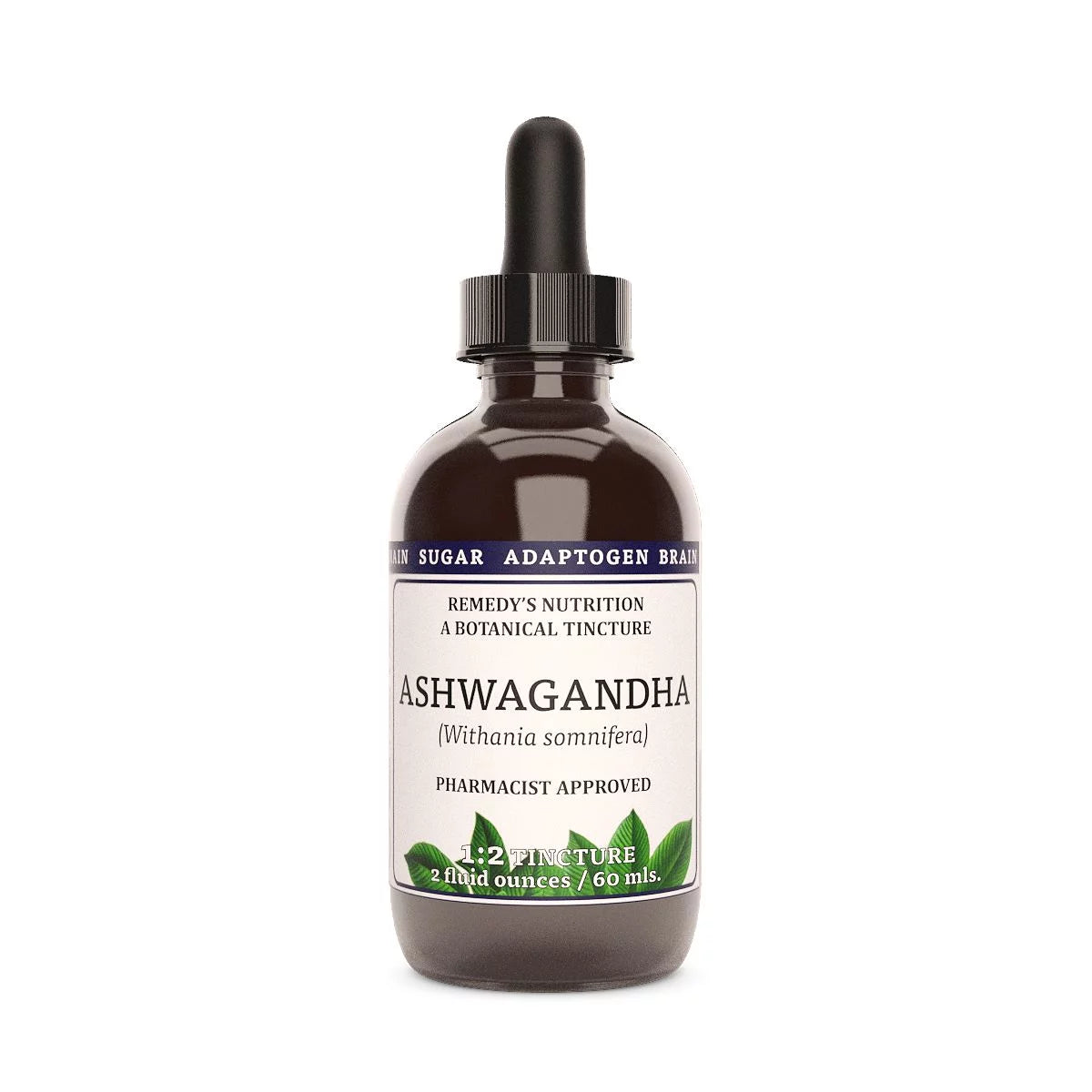
Quick Answer: Ashwagandha Tincture
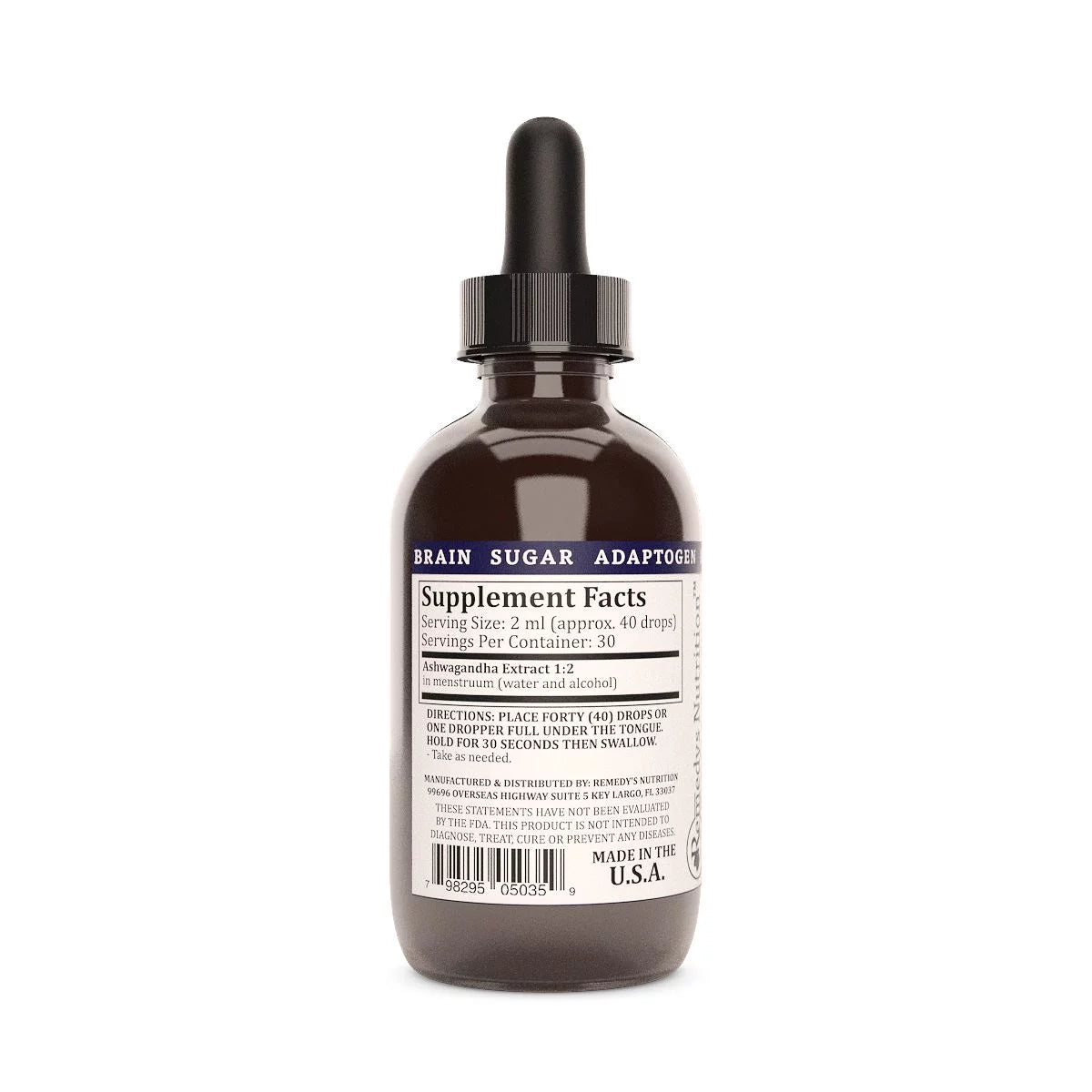
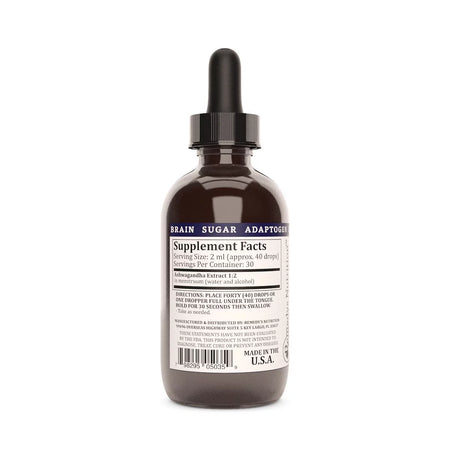
Supplement Facts
Serving size: 2 ml (approx. 40 drops). Servings per container: 30.
| Amount Per Serving |
Amount |
% Daily Value |
|
Ashwagandha Extract 1:2 in menstruum (water and alcohol) |
|
* |
* Daily Value not established. The label gives no milligram figure, only the 1:2 extract ratio.
Other ingredients: Menstruum: water and alcohol
Directions: Place forty (40) drops or one dropper full under the tongue, hold for 30 seconds then swallow. Take as needed.
Made in the USA.
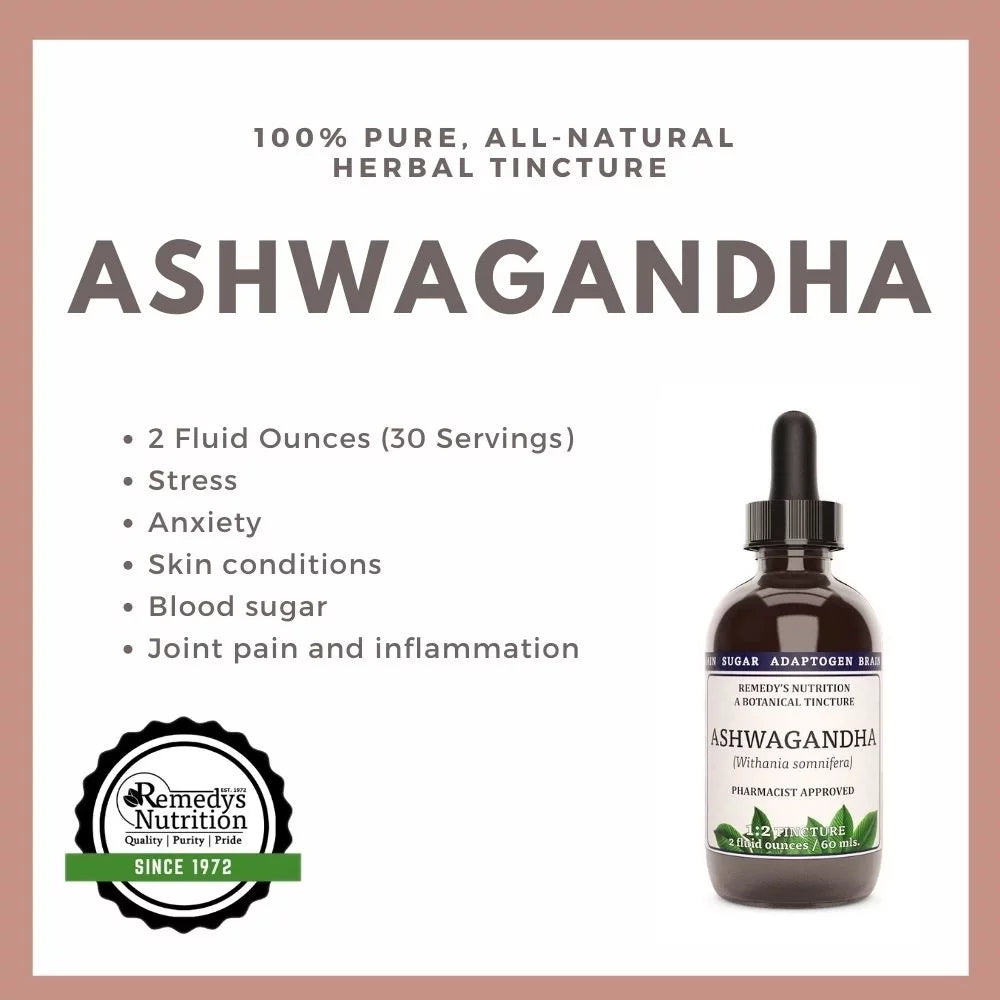
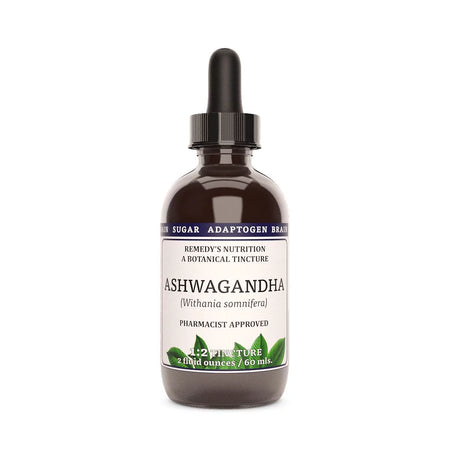
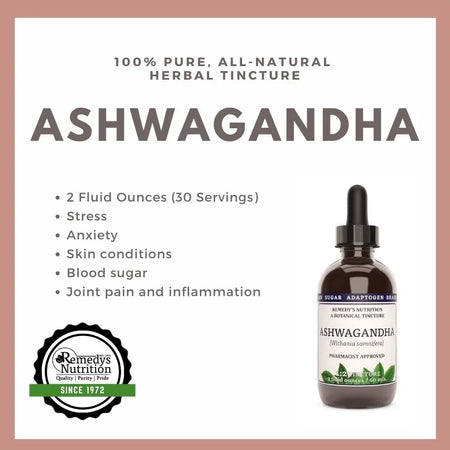
Ashwagandha tincture is a concentrated liquid extract of Withania somnifera root used as an adaptogen to lower cortisol, reduce stress, and improve sleep quality. Take 2 mL (40 drops) sublingually once or twice daily. Effects build over 4 to 8 weeks. Each 2 fl oz bottle holds 30 servings. Avoid in pregnancy.
What Is Ashwagandha Tincture?
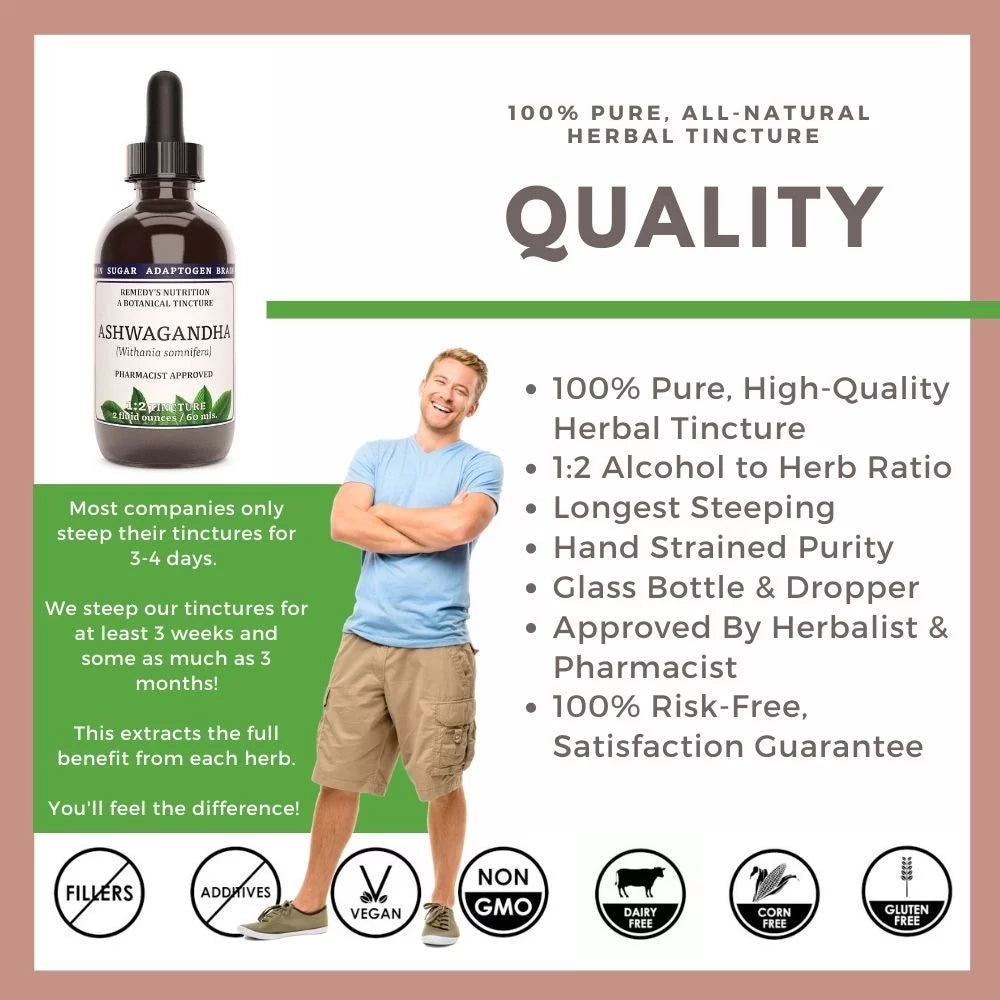
Ashwagandha tincture is a liquid root extract of Withania somnifera, prepared by steeping organic root in 40 to 50% food-grade alcohol for 6 to 12 weeks. The alcohol pulls out withanolides, alkaloids, and saponins. Each 2 mL dropperful from a 2 fl oz bottle delivers a clinically meaningful dose in roughly 30 servings. Tincture format reaches the bloodstream in 5 to 15 minutes via sublingual absorption — 2 to 3 times faster than capsules.
- Withania somnifera
- The botanical name for ashwagandha. Also called Indian ginseng or winter cherry. Used in Ayurveda for over 3,000 years. Modern monographs identify the root as the active part — not leaves or stems.
- Withanolides
- The 35+ steroidal lactones unique to ashwagandha root. Standardized extracts deliver 2.5 to 5% withanolides per dose. Higher percentages do not always mean stronger — the 5% level matches the dose used in 41 published human trials.
- Adaptogen
- A class of herbs that help the body normalize stress hormone output. Russian researcher Lazarev coined the term in 1947. The 4 best-studied true adaptogens are ashwagandha, rhodiola, eleuthero, and Asian ginseng.
- HPA axis
- The hypothalamic-pituitary-adrenal axis controls cortisol release. Chronic stress dysregulates the axis; ashwagandha helps re-tune the morning cortisol peak in 60 days of daily 600 mg use.
- 1:2 extraction ratio
- Means 1 part dried root steeped in 2 parts solvent by weight. A 1:2 ratio yields a stronger tincture than the 1:5 ratios common on retail shelves.
For day-by-day usage protocols see how to use ashwagandha for stress.
Ashwagandha Tincture Benefits: Clinical Evidence
Ashwagandha is the most-studied adaptogen with 41 human trials published as of 2024. The table below summarizes 5 representative findings from peer-reviewed trials of 60 to 130 participants each.
| Benefit |
Clinical Finding |
Dose / Duration |
| Cortisol reduction |
Morning cortisol dropped 27.9% vs placebo over 60 days in 64 chronically stressed adults1
|
300 mg twice daily x 60 days |
| Stress score |
PSS-10 perceived-stress scale improved 44% vs 5.5% placebo |
300 mg twice daily x 60 days |
| Sleep quality |
PSQI sleep index improved 1.7 points vs 0.4 placebo across 5 RCTs (n=400) |
300 to 600 mg/day for 6 to 12 weeks |
| Anxiety (GAD) |
HAM-A scores improved 41% over 6 weeks vs 12% placebo (n=39)2
|
300 mg twice daily |
| Testosterone (men) |
Serum testosterone rose 14.7% vs placebo in 57 stressed men |
600 mg/day x 8 weeks |
References: Chandrasekhar 2012 cortisol RCT, Andrade 2009 anxiety RCT, NCCIH ashwagandha overview.
What Does Ashwagandha Tincture Do?
The headline effect is cortisol normalization. Ashwagandha lowers chronically elevated morning cortisol by about 28% over 60 days, which downstream improves sleep latency, reduces perceived stress by 44%, and lifts energy. Secondary effects include modest testosterone support in stressed men (+14.7%), thyroid T4 elevation, and small improvements in VO2 max for trained athletes.
Ashwagandha and Thyroid (TSH and T4 Effects)
Ashwagandha can lower TSH and raise T4 in subclinical hypothyroid patients. In an 8-week trial of 50 hypothyroid adults, T4 rose 19.6% and TSH fell 17.4% on 600 mg/day. This is therapeutic for hypothyroid users but a contraindication for hyperthyroid (Graves’) users. Hashimoto’s patients should monitor TSH every 4 to 6 weeks during the first 12 weeks.
For broader herb-comparison context, see organic vs non-organic herbs.
Ashwagandha Tincture vs Capsules vs Powder
| Format |
Onset |
Daily Dose |
Best For |
| Tincture |
5 to 15 min sublingual |
2 to 4 mL |
Fast onset, dose flexibility |
| Capsule |
45 to 60 min |
300 to 600 mg standardized |
Travel, exact dosing |
| Powder (churna) |
30 to 60 min |
1 to 3 g |
Ayurvedic protocols, ghee carrier |
See tincture vs capsule delivery for the full breakdown.
How to Use Ashwagandha Tincture
Squeeze 2 mL (40 drops) under the tongue, hold 30 to 60 seconds, swallow. Take with or without food. Effects on cortisol build over 4 to 8 weeks of daily use. For acute stress, 1 mL provides mild calm within 15 to 30 minutes (this is mild compared to kava-containing blends like our Calm Surfer kava-ashwagandha blend).
-
Morning protocol: 1 to 2 mL with breakfast for daytime stress resilience.
-
Evening protocol: 1 to 2 mL 30 to 60 minutes before bed for sleep support.
-
Twice-daily protocol: 1 mL morning + 1 mL evening for full cortisol effect after 8 weeks.
Ashwagandha Tincture Dosage
The 600 mg/day dose used in 27 of 41 clinical trials equals approximately 4 mL of a 1:2 tincture daily. Lower doses of 300 mg (about 2 mL) showed cortisol benefits but smaller effect sizes.
| Goal |
Daily Dose |
Timing |
Duration |
| Stress maintenance |
2 mL once daily |
Morning, with food |
8 to 12 weeks |
| Sleep support |
2 mL once daily |
30 to 60 min pre-bed |
4 to 8 weeks |
| Cortisol reset |
2 mL twice daily (4 mL total) |
Morning + evening |
8 to 12 weeks |
| Athlete performance |
2 mL twice daily |
Pre and post training |
8 to 12 weeks |
| Maximum daily dose |
6 mL |
Split 3 times daily |
Cycle 12 wks on, 2 wks off |
For format-comparison and dose translation see beginner tincture dosage.
Why Choose Remedy’s Nutrition® Ashwagandha Tincture
| What You Get |
Why It Matters |
| Organic ashwagandha root only |
Root contains the active withanolides; leaves and stems have lower potency and higher alkaloid content. |
| 1:2 extraction ratio |
2 to 3x more concentrated than 1:5 retail tinctures. Smaller dose, stronger effect. |
| 12-week steeping |
Most commercial tinctures steep 2 to 4 weeks. Our 12-week process extracts more withanolides. |
| Hand-formulated, small batch |
Made in Key Largo, Florida since 1972. No co-packers. |
| Zero fillers, dyes, sweeteners |
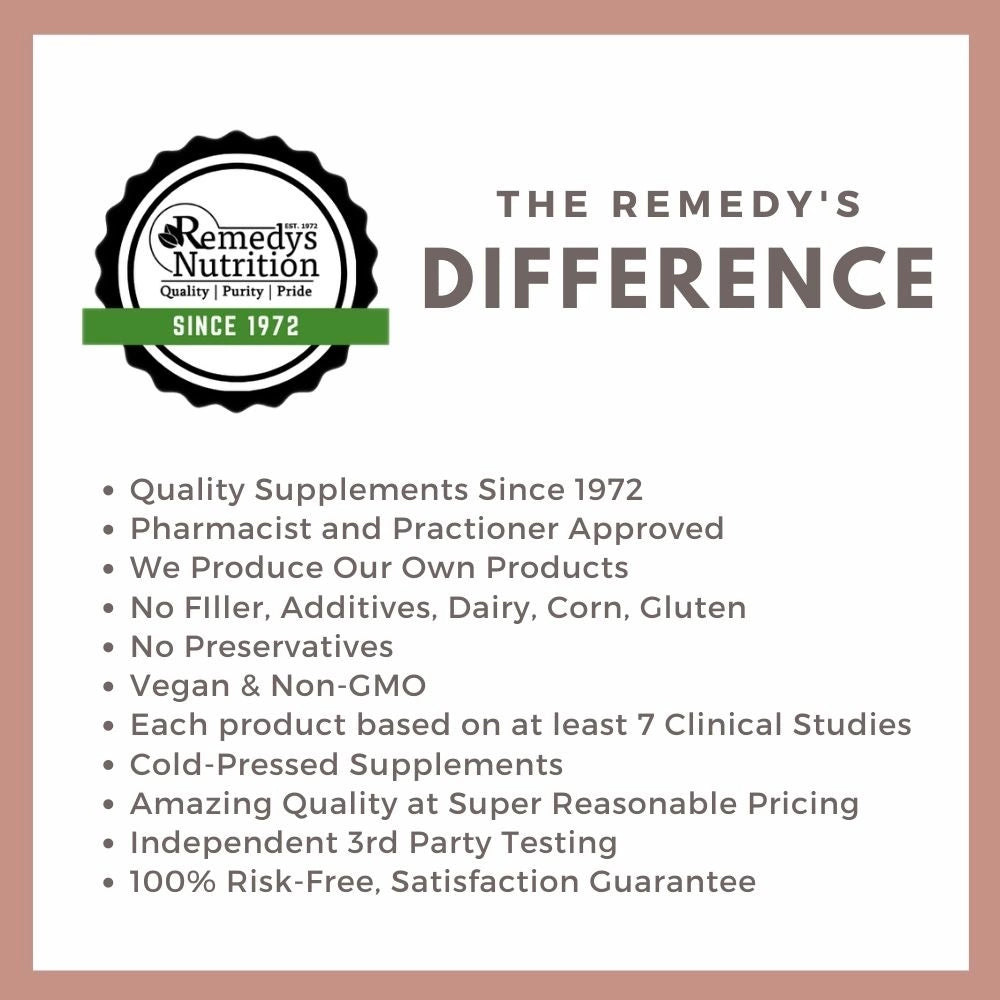
Just root and food-grade alcohol. Vegan, non-GMO, gluten-free. |
| Third-party tested |
Each batch tested for withanolide content, microbial safety, and heavy metals. |
| 30-day satisfaction guarantee |
Risk-free trial. Full refund if not satisfied. |
Ashwagandha Tincture for Men and Women
Effects differ slightly by sex. Men taking 600 mg/day for 8 weeks see a 14.7% rise in serum testosterone, modest improvements in 1RM strength, and DHEA-S elevation. Women see broader effects: lower anxiety, improved sleep, reduced PMS symptoms, and modest libido improvements. Both sexes benefit equally from the cortisol-lowering effect.
For comparison with other adaptogenic options, see the complete tincture buying guide.
Limitations of the Evidence
While ashwagandha has more trials than any other adaptogen, most are small (n=40 to 130), short (under 12 weeks), and conducted in India. Long-term safety data beyond 12 weeks is limited. Cortisol effect sizes vary across populations: chronically stressed adults show large drops (28%), but baseline-normal users see smaller changes. Withanolide content varies between products by 3-fold, so trial results don’t always translate to retail products without standardized extracts.
Storage and Shelf Life
Properly stored, ashwagandha tincture stays potent for 24 months from the manufacture date even after opening. The 40 to 50% alcohol acts as a natural preservative against bacteria and yeasts. Two storage rules cover 95% of cases: keep cool and dark (50 to 75°F, away from sunlight and the stove), and tighten the cap fully after each use to prevent alcohol evaporation. A small amount of dark sediment is normal — shake the bottle gently before each 2 mL dose.
Safety, Interactions & Contraindications
Important contraindications. Do not use during pregnancy (uterine effects), with hyperthyroid disease (raises T4), with autoimmune flares, or with immunosuppressants. Stop 14 days before scheduled surgery.
| Consideration |
Action |
| Pregnancy / breastfeeding |
Contraindicated. Animal studies show abortifacient effects at high doses. |
| Thyroid (hyperthyroid) |
Avoid — can elevate T4 by 19.6% in 8 weeks. Hypothyroid users may benefit but monitor TSH. |
| Autoimmune (lupus, RA, MS) |
Caution. Ashwagandha mildly stimulates Th1 immune response and may worsen flares. |
| Schizophrenia / bipolar |
Limited safety data. 1 case report of mania exists. Discuss with prescriber. |
| Immunosuppressants |
Avoid. Ashwagandha may counteract tacrolimus, cyclosporine, prednisone. |
| Sedatives / alcohol |
Mild additive sedation. Avoid heavy combinations. |
| Nightshade allergy |
Withania is a nightshade. About 5% of nightshade-sensitive users react. |
| Common side effects |
Mild GI upset (under 5%), drowsiness, occasional headache. Stops on dose reduction. |
| Other interactions |
See full quality tincture criteria and best anxiety tinctures comparison. |
You May Also Like
Frequently Asked Questions
What does ashwagandha tincture do? +
Ashwagandha tincture lowers cortisol by about 28% over 60 days of daily use, reduces perceived-stress scores by 44%, improves sleep quality on the PSQI by 1.7 points, and modestly raises testosterone in stressed men (+14.7%). The effects build over 4 to 8 weeks of daily 2 mL dosing.
What should you not mix ashwagandha with? +
Avoid combining with thyroid medication (raises T4), immunosuppressants (counteracts effect), high-dose sedatives or alcohol, and pregnancy hormones. Use caution with SSRIs, MAO inhibitors, and benzodiazepines. Stop 14 days before scheduled surgery to avoid anesthetic interactions and bleeding-time effects.
Can ashwagandha lower TSH levels? +
Yes. In a 2018 RCT of 50 hypothyroid adults, 600 mg/day for 8 weeks lowered TSH by 17.4% and raised T4 by 19.6%. This is therapeutic for subclinical hypothyroid but contraindicated for hyperthyroid users. Hashimoto’s patients should retest TSH every 4 to 6 weeks during the first 12 weeks.
Can people with schizophrenia take ashwagandha? +
Limited data. 1 published case report describes mania after starting ashwagandha. Some pilot studies in schizophrenia show improved CGI scores, but the safety profile in active psychotic illness is not established. Patients should consult their psychiatrist before adding any adaptogen, and start at 0.5 mL once daily if approved.
How long until ashwagandha tincture works? +
Acute calm effects appear within 30 to 60 minutes of a 2 mL dose. Sleep onset improves within 5 to 14 days. Cortisol-driven stress benefits typically appear at week 3 to 4, with full effect by week 8. Plan for at least 8 weeks of daily use to judge effectiveness.
Can I take ashwagandha tincture every day? +
Yes, with cycling. The standard protocol is 8 to 12 weeks daily, then 1 to 2 weeks off. Continuous use beyond 12 weeks lacks long-term safety data. Cycling also prevents subjective tolerance some users report after 90 days.
How much ashwagandha tincture should I take? +
For most adults, 2 mL once or twice daily. The 600 mg/day dose used in 27 published trials equals about 4 mL of a 1:2 tincture. Start at 1 mL for 3 days to test tolerance, then scale up. Maximum daily dose is 6 mL split across 3 servings.
Is it OK to take ashwagandha while pregnant? +
No. Ashwagandha is contraindicated in pregnancy. Animal studies show abortifacient effects at doses equivalent to 5 to 10 g of dried root daily. Human safety data is insufficient. Avoid during all 40 weeks of pregnancy and during breastfeeding. Speak with your OB about alternatives.
Does ashwagandha tincture help with anxiety? +
Yes for generalized anxiety. A 2009 RCT of 39 adults with GAD showed HAM-A anxiety scores improved 41% over 6 weeks on 300 mg twice daily, vs 12% on placebo. The effect is mild compared to prescription anxiolytics but with no sedation or addiction liability.
What does ashwagandha tincture taste like? +
Earthy, slightly bitter, mildly horse-sweat aromatic (— which is what the Sanskrit name ashwagandha describes, "smell of horse"). Most users dilute the 2 mL dose in 4 to 8 oz of fruit juice or warm water. Sublingual onset is preserved if held under the tongue for 30 seconds before diluting.
Can men take ashwagandha for testosterone? +
Yes. In a 2019 RCT of 57 stressed men, 600 mg/day for 8 weeks raised serum testosterone by 14.7% vs placebo. Effects are modest and concentrated in men with stress-suppressed testosterone (under 400 ng/dL baseline). Healthy men with normal levels see smaller changes.
Can I drink alcohol while taking it? +
Light drinking (1 to 2 servings) is generally safe but additive in sedation. Heavy drinking (5+ drinks) reduces ashwagandha’s cortisol benefits and increases liver burden from the alcohol carrier. Avoid alcohol within 2 hours of dosing for the first 7 days while assessing your response.
How long does an opened bottle last? +
Up to 24 months kept tightly capped in a cool, dark place between 50 and 75°F. The 40 to 50% alcohol acts as a natural preservative. Sediment is normal — shake the bottle gently before each 2 mL dose. Refrigeration is fine but not required.