What Is Whey Protein Concentrate?
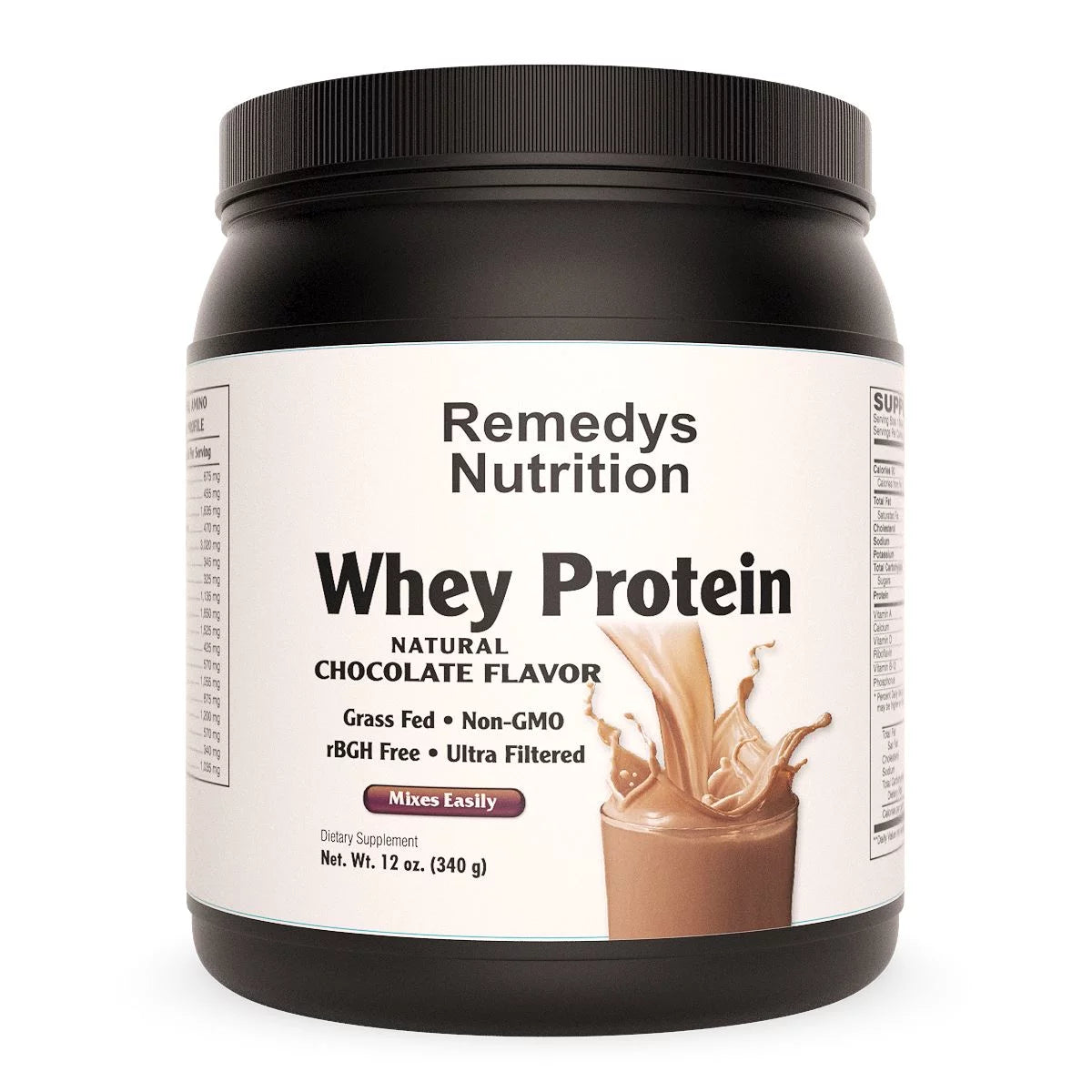
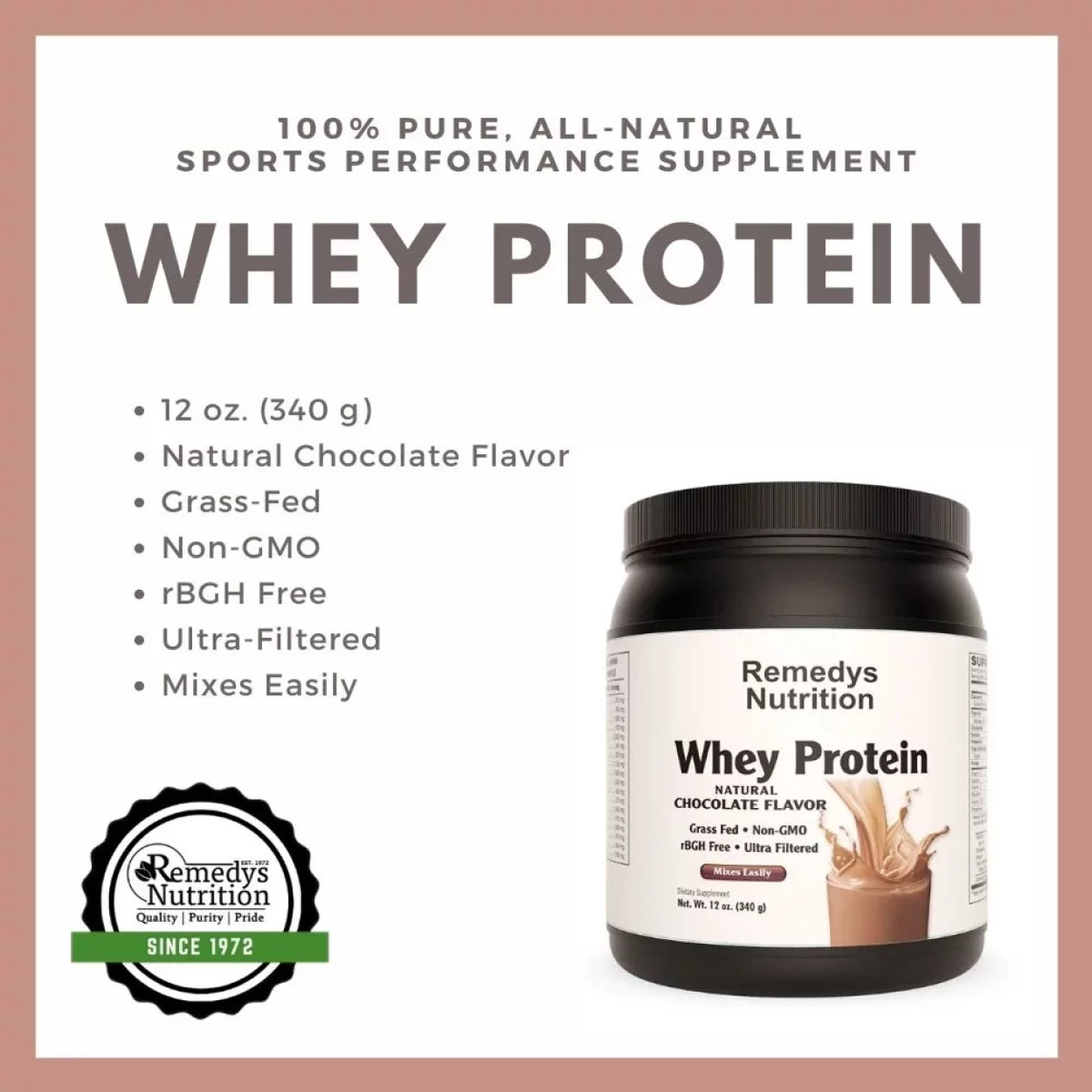
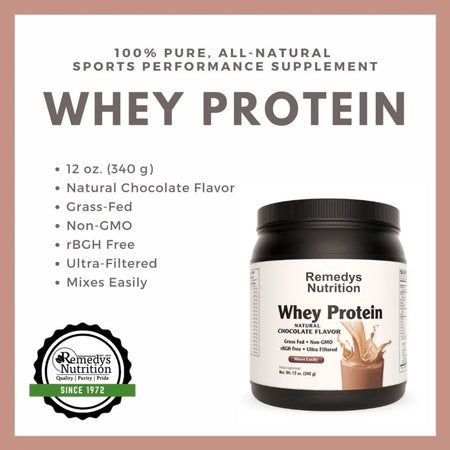
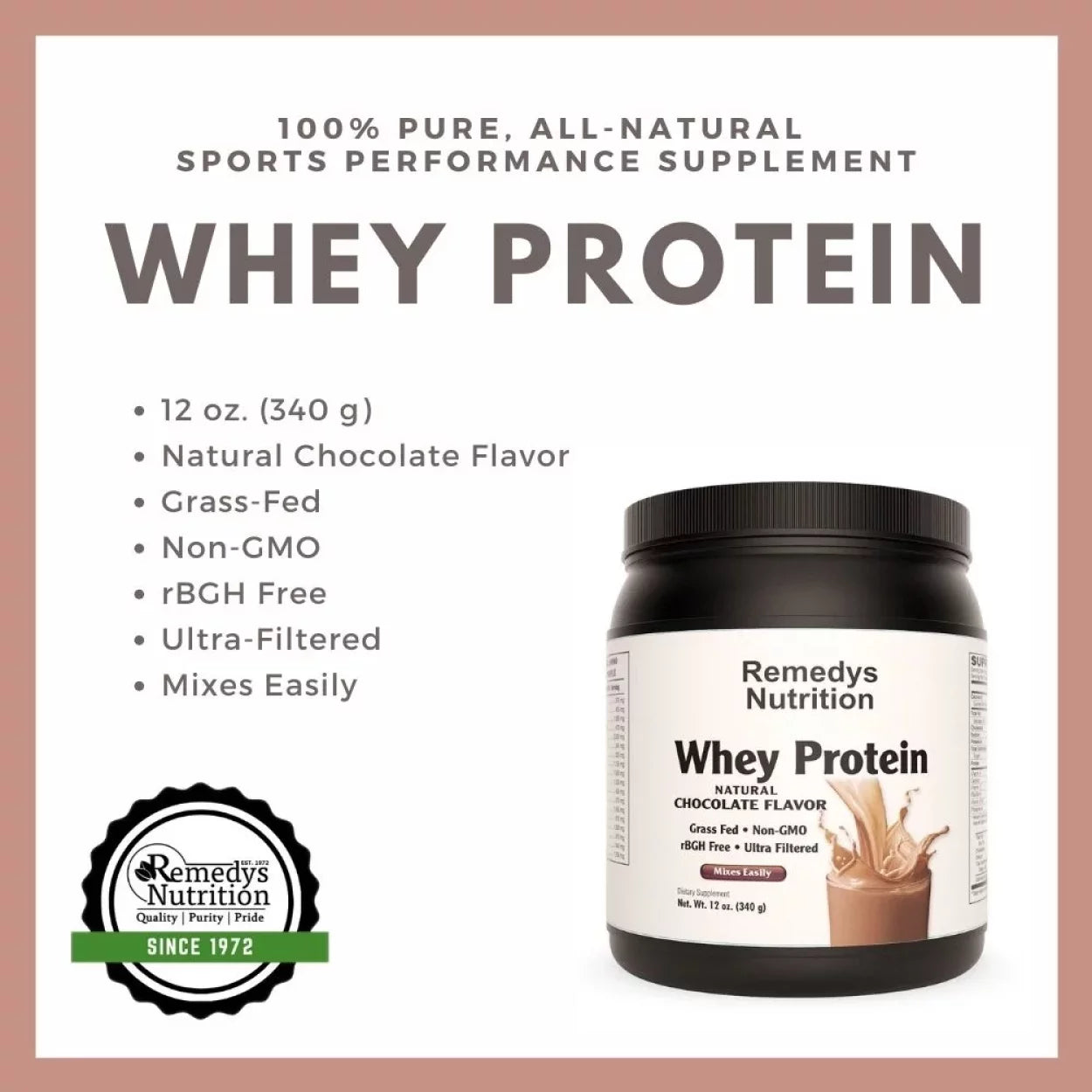
Whey protein is the fast-digesting fraction of milk protein, separated during cheesemaking and dried into a powder. Remedy's Nutrition® Chocolate Whey Protein is a grass-fed, ultra-filtered concentrate in a 12 oz (340 g) tub, unsweetened, non-GMO and rBGH free.
Concentrate is the least processed of the three whey forms. It keeps more of the naturally occurring milk fractions than isolate does, and for anyone who tolerates dairy it delivers the same amino acids at a lower cost per gram. For the wider picture of where a powder fits alongside food, start with our complete guide to protein. If you are still deciding which format suits you, our whey and plant protein comparison lays out the differences that actually matter.
Whey Protein Benefits: Clinical Evidence Summary
Whey is among the most heavily studied supplements in sports nutrition. The table below summarises what the controlled research supports, with the intake levels used in those trials.
| Benefit Area |
Key Clinical Finding |
Intake Used in Research |
| Muscle & Strength[1]Protein Supplementation and Resistance Training Meta-Analysis — British Journal of Sports Medicine View source |
Meta-analysis of 49 studies found added protein improved lean mass and strength alongside resistance training |
Up to 1.6 g per kg daily |
| Correcting a Shortfall[2]Effects of Protein Supplements on Muscle Mass, Strength and Power — Sports Medicine View source |
Review of 34 trials found supplements helped most where baseline intake was low and training was present |
Varied by trial |
| Per-Meal Response[3]How Much Protein Can the Body Use in a Single Meal — Journal of the International Society of Sports Nutrition View source |
Practical per-meal target identified at roughly 0.4 g per kg across 4 or more meals |
0.4 g per kg per meal |
| Appetite & Weight[4]Dietary Protein in Satiety, Energetics and Weight Loss — British Journal of Nutrition View source |
Protein is the most satiating macronutrient and raises the thermic effect of feeding |
1.2–1.6 g per kg daily |
| Older Adults[5]Optimal Dietary Protein Intake in Older People — Journal of the American Medical Directors Association View source |
PROT-AGE group recommends intake above the RDA to defend muscle mass and function |
1.0–1.2 g per kg daily |
How Whey Protein Works in the Body
Whey digests quickly, reaching the bloodstream as free amino acids within roughly 1 to 2 hours. That speed matters less than most marketing implies, but the amino acid profile behind it matters a great deal.
The trigger for muscle protein synthesis is leucine, and a serving needs roughly 2.5 to 3 g of it to switch that process on fully. Whey carries the highest leucine density of any common protein, around 2.7 g per 25 g of protein, which is why it clears that threshold in a single serving where plant sources often need 30 to 35 g. The mechanism is explained in full in our guide to protein quality and why leucine matters.
Whey Protein for Building Muscle
Protein supplies the raw material; resistance training supplies the instruction. Neither works well without the other, which is the single most useful thing to understand before buying any protein powder.
The working range for muscle gain is 1.6 to 2.2 g per kg of body weight daily, with the measurable benefit flattening near 1.6 g per kg. For most people that means one or two servings of whey filling the gap between what meals deliver and what the target requires, rather than replacing food. The full range and how to split it is covered in how much protein builds muscle.
Whey Protein for Weight Loss
In a calorie deficit the body draws on both fat and muscle, and without enough protein up to 20 to 30% of the weight lost can be lean tissue. Raising intake to 1.2 to 1.6 g per kg substantially shifts that ratio.
This tub is unsweetened, which matters when every calorie is being counted. It also means you control what goes in, whether that is milk, fruit or nothing at all. The mechanics of protecting muscle while cutting are set out in protein for weight loss and keeping muscle.
Whey Protein for Adults Over 50
Protein needs rise with age rather than falling. Muscle becomes less responsive to the same dose, a change called anabolic resistance, and appetite typically drops by 20 to 30% at exactly the point requirements go up.
Whey suits this group well because it is dense and easy to consume when appetite is low. It stirs into porridge, soup or milk without adding volume to a meal. Why the numbers change after 50, and what to do about it, is covered in protein for women and adults over 50.
Why Choose Remedy's Nutrition® Chocolate Whey Protein
| What You Get |
Why It Matters |
| Grass-fed whey concentrate |
Sourced from pasture-raised dairy rather than commodity feedlot milk |
| Unsweetened |
No sucralose, stevia or added sugars, so you control the calories and the taste |
| Ultra-filtered |
Gentler filtration that preserves the native protein fractions |
| rBGH free and non-GMO |
No recombinant bovine growth hormone in the milk supply |
| Natural chocolate flavour |
Mixes cleanly into water, milk or a smoothie with no chalky aftertaste |
| 12 oz (340 g) tub |
A practical size to trial before committing to a bulk purchase |
Chocolate Whey Protein Dosage
Directions are one level scoop in 8 oz of water, milk or juice, stirred vigorously. How many servings you need depends entirely on the gap between your daily target and what your meals already provide.
| Goal |
Daily Protein Target |
Typical Use |
Best Timing |
| General health |
1.0–1.2 g per kg |
1 serving on days meals fall short |
Breakfast |
| Building muscle |
1.6–2.2 g per kg |
1–2 servings daily |
Breakfast and post-training |
| Losing fat |
1.2–1.6 g per kg |
1–2 servings daily |
Breakfast, or as a snack replacement |
| Adults 50+ |
1.0–1.2 g per kg |
1 serving daily |
Whichever meal is lightest |
| Low appetite |
1.2–1.5 g per kg |
Split across 2 smaller drinks |
Between meals |
Breakfast is where most people fall shortest, often contributing under 10 g when the per-meal target is 25 to 40 g. To work out your own number rather than a general band, use our free protein intake calculator, or read how much protein you need per day for the full calculation.
Safety and Who Should Avoid It
Whey is among the best tolerated supplements available, and for healthy adults long-term intakes near 2 g per kg have been studied without evidence of harm.[6]Dietary Protein Intake and Human Health — PubMed View source The exceptions are specific rather than general.
| Consideration |
Details |
| Lactose intolerance |
Concentrate retains lactose. Bloating or cramps within an hour suggest switching to a plant blend |
| Milk protein allergy |
A true immune reaction, distinct from intolerance. Avoid whey entirely and use a plant protein |
| Kidney disease |
Protein intake is prescribed and often restricted. Your clinician sets the amount, not a label |
| Liver disease |
Requirements are individual and need medical guidance |
| Pregnancy |
Protein needs rise, but the target should be set by your OB or midwife |
This is a dairy product and is not suitable for vegans or anyone avoiding milk. If that applies to you, the plant-based route reaches the same daily target and is compared in detail in how much protein per meal.
Remedy's Nutrition® Chocolate Whey Protein Is Often Taken With:
You May Also Like
Frequently Asked Questions
How much whey protein should I take a day? +
It depends on the gap, not the product. Set a daily target of 1.2 to 1.6 g per kg if active, or 1.6 to 2.2 g per kg if building muscle, then use whey only for what your meals miss. For most people that is 1 to 2 servings a day.
Is whey protein concentrate as good as isolate? +
For muscle building, yes. Isolate is filtered further to roughly 90% protein against 70 to 80% for concentrate, with less lactose. That only matters if dairy troubles you. Otherwise concentrate delivers the same amino acids at a lower cost per gram.
When is the best time to take whey protein? +
Breakfast, for most people. It is the meal that typically supplies under 10 g against a 25 to 40 g target. The old 30 minute post-workout window has been largely overturned, and the daily total matters far more than the hour you drink it.
Can I use whey protein to lose weight? +
It helps indirectly. Protein is the most satiating macronutrient, so raising it to 1.2 to 1.6 g per kg reduces total intake without conscious restriction and protects muscle in a deficit. Adding shakes on top of your existing diet without removing anything adds 200 to 300 calories instead.
Does this whey protein contain sugar? +
No. This is an unsweetened formula with natural chocolate flavour and 0 added sugars or artificial sweeteners, meaning no sucralose or stevia. That is deliberate, since it lets you control the calories and mix it with milk, fruit or water depending on the goal.
Is whey protein safe for your kidneys? +
In people with healthy kidneys, yes. Long-term intakes near 2 g per kg have been studied without evidence of harm. The confusion arises because those who already have kidney disease are told to restrict protein, which is a treatment for existing disease rather than proof protein caused it.
Can I take whey protein if I am lactose intolerant? +
Often not comfortably. Concentrate retains lactose, and roughly 65% of adults worldwide have some degree of malabsorption. If a serving leaves you bloated within an hour, a pea-based plant blend removes the question entirely and reaches the same daily target.
How long does a 12 oz tub last? +
That depends on how many servings you use. At 1 serving a day a 340 g tub covers a typical trial period of several weeks; at 2 servings it halves. Because the right number of servings depends on your dietary gap, start with 1 and adjust.
Is whey protein good for women? +
Yes, and the calculation is identical since protein scales with body weight rather than sex. A 65 kg woman needs 78 to 104 g daily if active. Whey does not cause bulk; muscle gain requires resistance training and a calorie surplus, neither of which a powder provides.
Can older adults use whey protein? +
Yes, and this group often benefits most. Adults over 65 are advised to take at least 1.0 to 1.2 g per kg, above the 0.8 g per kg RDA, while appetite typically falls 20 to 30%. Whey is dense and easy to consume when large meals are unappealing.
Do I need protein powder if I eat enough food? +
No. If 3 or 4 meals built around real protein sources already reach your target, powder adds convenience rather than nutrition. Whole foods bring fibre, vitamins and minerals alongside the protein. Use a powder for a gap you genuinely cannot close by eating.
How do I mix it so it does not go lumpy? +
Add the 8 oz of liquid first, then the scoop, and stir vigorously or use a shaker with a ball. Adding powder to a dry container is what causes clumping. Cold liquid mixes more cleanly than warm, and a blender resolves it entirely in a smoothie.
Is whey protein vegan or dairy free? +
No. Whey is a milk protein, so it is neither vegan nor dairy free. Anyone avoiding dairy for ethical, allergy or intolerance reasons should choose the pea-based plant protein instead, which delivers 22 g per 30 g scoop and reaches the same daily target.