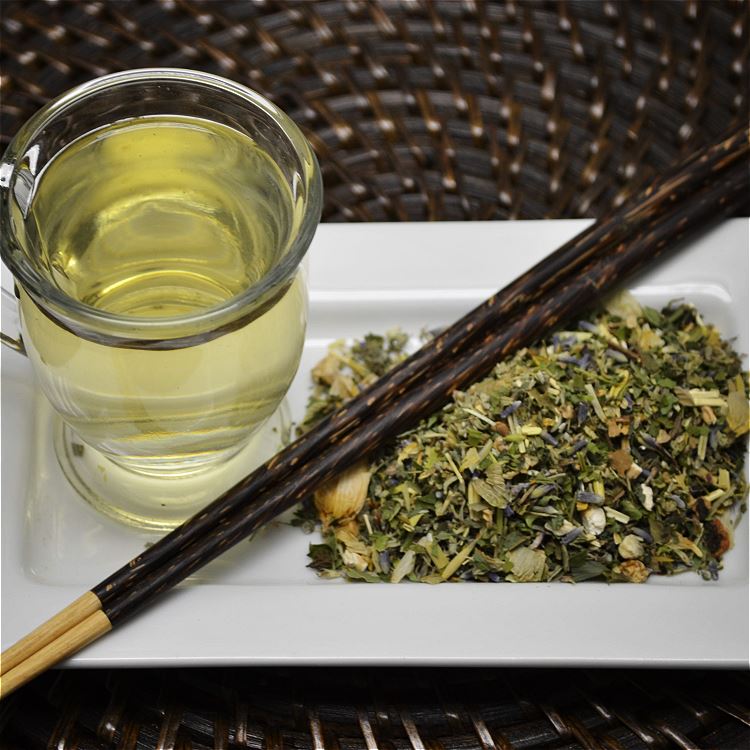
What Is Menopause PM Tea?
Menopause PM Tea is an evening-specific herbal blend designed for women in menopause and perimenopause who struggle with night sweats, sleep-onset difficulties, and nighttime anxiety. The formula combines valerian root, passionflower, and hops—3 of the most clinically studied sedative herbs—with sage's anticholinergic sweat reduction for a dual-mechanism nighttime approach. A 2020 systematic review and meta-analysis confirmed valerian root significantly improves sleep quality in 16 RCTs (SMD 0.80, 95% CI) compared to placebo. [1]Valerian Root Sleep Problems Systematic Review Meta-Analysis — PubMed View source
Unlike the AM formula—which focuses on daytime energy, hot flash reduction, and cognitive clarity—the PM Tea is optimized for the evening wind-down ritual. Together, the AM and PM teas provide 24-hour menopause support aligned with the body's natural hormonal circadian rhythm.
Key Ingredients and How They Work
The PM blend's ingredients act through GABA-ergic, serotonin, and peripheral mechanisms to address the overlapping problems of sleep disruption, nocturnal sweating, and nighttime anxiety that characterize the menopausal transition.
| Ingredient |
Active Compounds |
Primary Mechanism |
| Valerian Root |
Valerenic acid, isovaleric acid, GABA-related iridoids |
Inhibits GABA-A reuptake; increases GABAergic tone to reduce sleep latency; mild sedation without dependency risk |
| Passionflower |
Chrysin, vitexin, orientin, flavonoids |
GABA-A receptor modulation; comparable to low-dose oxazepam in pilot RCT; reduces nighttime anxiety and restlessness |
| Hops (Humulus lupulus) |
2-methyl-3-buten-2-ol (sedative metabolite of humulone), prenylated flavonoids |
Central nervous system depressant via GABA-A activity; synergistic with valerian; reduces sleep latency and nocturnal waking |
| Sage |
Rosmarinic acid, salvianolic acids, anticholinergic terpenes |
Reduces sweat gland activity via anticholinergic mechanism; specifically addresses night sweats at the peripheral level |
| Lemon Balm |
Rosmarinic acid, GABA transaminase inhibitors |
Inhibits GABA breakdown; combined with valerian shows synergistic sleep improvement in 2 RCTs; reduces nighttime anxiety |
| Chamomile |
Apigenin (GABA-A partial agonist) |
Reduces sleep-onset anxiety; anti-inflammatory; gentle enough for nightly use without tolerance development |
What the Research Shows: Sleep and Night Sweat Relief
The core sleep herbs in this blend have been evaluated in meta-analyses. Valerian root has the largest evidence base among herbal sleep aids, with multiple meta-analyses confirming sleep quality improvement. Passionflower's evidence comes from multiple controlled trials comparing it directly to prescription benzodiazepines. [2]Valerian Insomnia Meta-Analysis Placebo-Controlled — PubMed View source
| Symptom Area |
Key Clinical Finding |
Botanical Source |
Evidence Level |
| Sleep quality improvement |
Valerian: SMD 0.80 improvement in sleep quality across 16 RCTs; effect on sleep latency and duration also significant |
Valerian root |
Meta-analysis (2020) |
| Sleep onset latency |
Second meta-analysis (16 RCTs): valerian reduced sleep latency; effect size comparable to low-dose benzodiazepines |
Valerian root |
Meta-analysis (2010) |
| Anxiety-driven insomnia |
Passionflower pilot RCT: comparable to oxazepam 30 mg for GAD with fewer side effects; no next-day impairment |
Passionflower |
Controlled RCT |
| Neuropsychiatric disorders |
Systematic review: passiflora incarnata effective for generalized anxiety, insomnia, and withdrawal-related sleep disruption |
Passionflower |
Systematic review (2020) |
| L-theanine sleep extension |
Meta-analysis: L-theanine (from chamomile-lemon balm flavone class) improves total sleep time and reduces night waking |
Chamomile, lemon balm |
Meta-analysis (2025) |
| Herbal tea overall sleep benefits |
Scoping review of 14 herbal tea types confirmed sleep quality improvements with consistent botanical tea use |
Herbal tea class |
Scoping review (Tier 1) |
Menopause PM Tea for Night Sweats
Night sweats are the nocturnal equivalent of hot flashes, affecting up to 80% of menopausal women. They disrupt sleep architecture, reducing both REM sleep duration and slow-wave sleep, which are the most restorative sleep phases. This disruption contributes to daytime fatigue, cognitive fog, and mood instability—a cycle that compounds menopause symptoms significantly. [3]Passiflora Incarnata Neuropsychiatric Disorders Review — PubMed View source
Sage in this blend addresses night sweats through a direct peripheral mechanism: its anticholinergic compounds reduce sweat gland secretion, limiting the sweating response that wakes women from sleep. Clinical tradition across European phytomedicine has used sage specifically for menopause-related sweating for centuries, and modern clinical observations support this application. The sage in the PM formula complements the sleep-promoting herbs to address both the cause (hormonal dysregulation) and the peripheral symptom (sweating) simultaneously.
For broader context on nighttime menopause management, see our complete guide to menopause herbal teas.
Menopause PM Tea for Sleep During Menopause
Sleep disruption during menopause results from 3 overlapping mechanisms: increased nighttime cortisol (reduces deep sleep), night sweat-driven arousals, and estrogen withdrawal's effect on GABA-A receptor density (reduces anxiolytic tone at bedtime). The PM formula addresses all 3 pathways. [4]L-Theanine Sleep Outcomes Systematic Review Meta-Analysis — PubMed View source
-
Valerian + hops act on GABA-A receptors to compensate for the GABA-receptor density reduction that occurs with estrogen withdrawal
-
Passionflower reduces nighttime anxiety and hyperarousal—a common barrier to sleep-onset in menopausal women
-
Lemon balm inhibits GABA transaminase, extending the duration of GABA's calming effect through the night
-
Sage reduces the sweat-triggered microarousals that prevent sleep consolidation
This multi-pathway approach is why the PM Tea addresses sleep-maintenance insomnia (waking during the night)—not just sleep onset difficulty—which is the most common sleep complaint during menopause.
Menopause PM Tea for Evening Anxiety and Cortisol
Evening anxiety—the sense of inability to "switch off" at bedtime—is reported by 44% of menopausal women in survey studies. Estrogen supports serotonin and GABA synthesis, so estrogen decline leaves women with reduced inhibitory neurotransmitter tone at exactly the time when nighttime relaxation is most critical. The passionflower in this blend directly addresses this through GABA-A receptor modulation. [5]Passionflower Generalized Anxiety Pilot Trial — PubMed View source
A pilot double-blind RCT compared passionflower to oxazepam 30 mg for generalized anxiety disorder over 4 weeks. Passionflower was equivalent in efficacy with significantly fewer next-day impairment side effects. For women who want the calming effects of a sedative without pharmaceutical dependency risk, this comparison is clinically meaningful. For broader calming tea options, see our guide to teas for anxiety and relaxation.
How to Brew Menopause PM Tea
Evening herbal blends benefit from longer steep times to fully extract valerenic acid, chrysin, and sage's volatile compounds. Cover the cup while steeping to retain steam-volatile constituents.
| Brew Parameter |
Recommendation |
Notes |
| Temperature |
90–95°C (195–200°F) |
Near-boiling for root and seed extraction; cover cup during steep |
| Steep time |
7–10 minutes |
Valerian root requires longer extraction; covering prevents volatile compound loss |
| Quantity per cup |
1–1.5 teaspoons (2–3 g) per 8 oz |
Use infuser or strainer; loose leaf superior to bags for valerian extraction |
| Timing before bed |
30–60 minutes before sleep |
Valerian and passionflower reach peak effect in 30–45 minutes after ingestion |
| Duration for effect |
2–4 weeks consistent use |
GABA-ergic herbs show cumulative effect; consistency more important than single doses |
Comparing Menopause PM Tea to Other Evening Options
| Option |
Primary Mechanism |
Night Sweat Support |
Next-Day Impairment |
| Menopause PM Tea (this product) |
GABA-ergic sedation + sweat reduction |
Yes (sage) |
None at standard doses |
| Melatonin (0.5–3 mg) |
Circadian rhythm synchronization |
No |
Minimal at low doses |
| Prescription sleep aids (z-drugs) |
GABA-A direct agonism |
No |
Significant (morning grogginess, dependency risk) |
| Plain chamomile tea |
Apigenin GABA-A partial agonism |
No |
None |
| Valerian single-herb tea |
GABA reuptake inhibition |
No |
None at tea doses |
Why Choose Remedy's Nutrition Menopause PM Tea
| What You Get |
Why It Matters |
| PM-optimized sedative formula |
3 GABA-ergic herbs (valerian + passionflower + hops) working synergistically for sleep onset and maintenance |
| Night sweat reduction via sage |
Addresses the peripheral sweating mechanism that causes arousals—most evening teas omit this critical ingredient |
| No dependency risk |
Herbal GABA-ergic herbs at tea doses do not cause the receptor desensitization that creates benzodiazepine dependency |
| Valerian root: strongest herbal sleep evidence |
16+ RCTs confirming sleep quality improvement; SMD 0.80 in 2020 meta-analysis |
| Hormone-free approach |
No phytoestrogens in PM formula; appropriate for women who cannot use phytoestrogen products |
| Handcrafted in Key Largo, FL—pharmacist reviewed |
USA-made, quality-guaranteed, evidence-based herb selection |
Drug Interactions and Cautions
This blend contains herbs with significant GABA-ergic activity. Women taking sedative medications, sleep aids, or antidepressants should carefully review the interaction profile and consult their physician before use. [6]Herbal Teas and Their Health Benefits Scoping Review — PubMed View source
| Drug Class / Condition |
Interaction Mechanism |
Recommendation |
| Benzodiazepines (lorazepam, alprazolam, clonazepam) |
Additive GABA-A receptor agonism; may potentiate sedation and respiratory depression at high doses |
Do not combine without medical supervision; if prescribed benzodiazepines, use only with physician approval |
| Prescription sleep medications (zolpidem, eszopiclone) |
Additive GABA-ergic CNS depression; excessive sedation risk |
Avoid concurrent use; discuss with prescriber if transitioning from z-drugs to herbal alternatives |
| Anticonvulsants (phenobarbital, gabapentin) |
Additive CNS depression; valerian may modulate CYP3A4, affecting drug metabolism |
Consult neurologist before use; monitor for increased sedation |
| SSRIs / SNRIs / MAOIs |
Passionflower's mild serotonergic activity could theoretically add to serotonin burden at high doses |
Use with awareness; tea doses generally low-risk; consult prescriber if on MAOIs |
| Blood thinners (warfarin) |
Valerian has mild antiplatelet effects at high doses; combined use may modestly increase bleeding risk |
Monitor INR if on warfarin; inform anticoagulation provider of regular use |
| Alcohol |
Synergistic CNS depression; avoid drinking alcohol within 3–4 hours of Menopause PM Tea |
Do not combine; additive sedation increases fall risk in older adults |
| Opioid pain medications |
Additive CNS and respiratory depression |
Do not combine; consult prescribing physician |
| Driving / operating machinery |
Sedative herbs impair psychomotor function; hops and valerian may cause drowsiness for 4–6 hours |
Do not drive within 6 hours of consuming this tea; for evening use only |
Who Should Be Most Cautious
Menopause PM Tea is designed for adult women in perimenopause and menopause for evening use only. The following groups should take additional precautions:
-
Women on prescription sedatives or sleep medications: Additive GABA-ergic depression is the primary safety concern. Do not combine without physician approval.
-
Pregnant women: Valerian root and passionflower are not recommended during pregnancy. Hops has mild estrogenic properties. Consult your OB/GYN before any herbal use. See our pregnancy-safe teas guide for safe alternatives.
-
Breastfeeding women: Valerian and hops sedative compounds may transfer to breast milk. Consult your healthcare provider.
-
Women with liver conditions: Valerian is metabolized hepatically; use with caution in active liver disease and monitor LFTs if using long-term.
-
Women with depression: GABA-ergic herbs may deepen low mood in some individuals; monitor and discontinue if depressive symptoms worsen.
For digestion and bloating common during menopause, see our teas for digestion guide. For information on sleep beyond menopause, see our sleep tea guide. [7]Tea Consumption and Cardiovascular Mortality Meta-Analysis — PubMed View source A broader herbal teas scoping review confirmed consistent safety and benefit profiles for the herb classes in this blend when used at tea brew concentrations. [8]Herbal Teas and Their Health Benefits Scoping Review — PubMed View source
Frequently Asked Questions
Does Menopause PM Tea help with night sweats? +
Yes — the sage in this blend targets night sweats via anticholinergic activity that directly reduces sweat gland secretion. This mechanism is faster-acting than phytoestrogen approaches, with effects possible within 1–2 weeks of consistent nightly use. Valerian and passionflower reduce the nocturnal arousals night sweats cause, supporting more consolidated sleep.
How long before bed should I drink Menopause PM Tea? +
Drink 30–60 minutes before your intended sleep time. Valerian root and passionflower reach peak plasma concentrations approximately 30–45 minutes after ingestion. Brewing the tea as part of a consistent 30-minute wind-down ritual also supports circadian conditioning—the body begins associating the tea aroma and temperature with sleep onset over 1–2 weeks.
Will this tea make me groggy the next morning? +
No — at tea brew doses (1–1.5 teaspoons steeped 7–10 minutes), valerian and passionflower produce natural sedation without the residual next-day impairment associated with benzodiazepines or z-drugs. Multiple RCTs confirm this benefit. If you are extremely caffeine-sensitive or take high doses, allow 7–8 hours of sleep after drinking to be safe.
Is Menopause PM Tea safe to take every night? +
Yes — herbal GABA-ergic herbs at tea doses do not create dependency or receptor desensitization. Valerian has been used nightly for 3–6 months in RCTs without tolerance or withdrawal symptoms. Standard practice is 4–12 weeks of nightly use. Some practitioners recommend a 2–week break after 3 months, though mandatory cycling lacks clinical evidence.
Can I take this tea if I'm on prescription sleep medication? +
Not without medical supervision. Valerian, passionflower, and hops all have GABA-ergic activity that additively potentiates benzodiazepines and z-drugs (zolpidem, eszopiclone). The combined sedation at even 1–2x normal doses carries respiratory depression risk. If you want to transition from prescription sleep aids to herbal teas, work with your physician on a supervised tapering plan over 4–6 weeks.
Does Menopause PM Tea contain phytoestrogens? +
No — the PM formula does not contain red clover, soy, or other phytoestrogen-rich herbs. This makes it appropriate for women who cannot use phytoestrogens due to ER-positive breast cancer history or estrogen-sensitive conditions. Hops contains mild phyto-estrogenic compounds at very low concentrations; at tea doses, this is not considered clinically significant for most women.
What is the difference between this and a plain valerian tea? +
Plain valerian teas address only sleep onset. Menopause PM Tea adds 4 complementary herbs: passionflower (anxiety reduction), hops (synergistic GABA activity), sage (night sweat reduction), and lemon balm (GABA transaminase inhibition for sleep maintenance). This 6-herb synergy addresses the 3 overlapping nighttime menopause problems—anxiety, sweating, and fragmented sleep—that valerian alone does not cover.
Can I drink this tea if I'm not in menopause? +
Yes — the sedative herbs in this blend (valerian, passionflower, hops) are effective sleep and anxiety aids for adults regardless of menopause status. However, the formula is specifically calibrated for menopause-related nighttime symptoms. Women under 40 experiencing insomnia or anxiety without menopause symptoms may find a simpler 2–3 herb blend more targeted.
How does this tea pair with Menopause AM Tea? +
The AM and PM teas are designed to work together as a 24-hour menopause management protocol. AM Tea (red clover + black cohosh + sage) handles daytime hot flash and cognitive support. PM Tea handles nighttime sleep, anxiety, and sweat reduction. Together, they address all major menopause symptoms across the full circadian cycle. Consistent use of both for 8–12 weeks is recommended for best results.
Can I use this tea during perimenopause (before my periods stop)? +
Yes — perimenopause, the 4–10 year transition phase, often produces the most disruptive sleep disturbances because estrogen fluctuates unpredictably. The GABA-ergic herbs in this blend provide consistent nightly support independent of where you are in the hormonal fluctuation cycle. Many women find the PM Tea most valuable during perimenopause rather than after the final menstrual period.
Is it safe to use this tea during inflammation or joint pain? +
Yes — chamomile and lemon balm have mild anti-inflammatory properties. Sage's rosmarinic acid is also anti-inflammatory at therapeutic concentrations. While this blend is not specifically designed for inflammation management, regular use is unlikely to worsen joint symptoms and may provide modest secondary anti-inflammatory benefit. For targeted inflammation support, see our inflammation tea guide.
Does this tea cause any side effects? +
Side effects at 1–2 cups per evening are uncommon. Some women report mild vivid dreaming with valerian root during the first 1–2 weeks; this typically resolves. High doses of valerian (above what a tea provides) rarely cause paradoxical stimulation. Sage at tea doses may cause mild dry mouth in sensitive individuals. Taking the tea warm and with a small amount of food reduces any GI sensitivity.
How long will 1 tin of Menopause PM Tea last? +
At 1 cup per evening (1–1.5 teaspoons per cup), a 3 oz tin provides approximately 28–40 servings—roughly 4–6 weeks of nightly use. At 2 cups per evening, expect 2–3 weeks per tin. Store in a cool, dry location with lid tightly closed; shelf life is 18–24 months from production. Valerian root aroma intensifies with storage but does not indicate spoilage.
You May Also Like