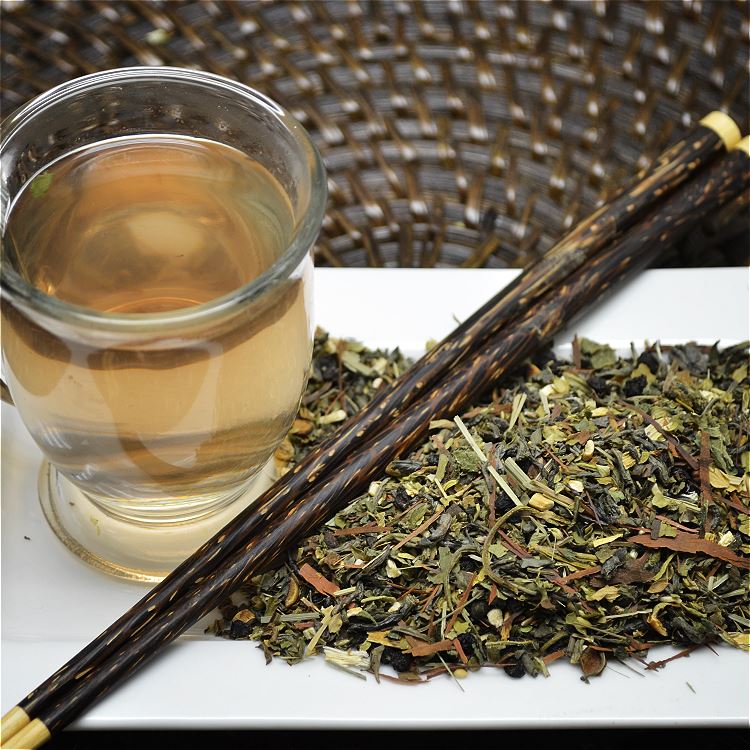
What Is Immune Tea?
Immune Tea is a multi-herb immune-support blend built around echinacea (Echinacea purpurea/angustifolia) and elderberry (Sambucus nigra)—the 2 most clinically researched botanical immune-support herbs in the Western herbal tradition. Echinacea is supported by a Cochrane systematic review covering 24 RCTs for cold prevention and treatment; elderberry by a 2021 systematic review of 7 RCTs showing shortened duration and reduced severity of viral upper respiratory illness. The blend also includes complementary botanicals that broaden immune coverage through antioxidant, antiviral, and mucosal-support mechanisms. Each cup provides a standardized infusion of the key immune-active compounds—alkylamides (echinacea) and anthocyanins (elderberry)—in a convenient, caffeine-free daily format.
Key Ingredients and How They Work
Immune Tea's formula is designed around primary immune-activation herbs (echinacea, elderberry) supported by secondary anti-inflammatory and antiviral botanicals. Our guide to research-backed teas for cold and sore throat covers the full evidence base for each ingredient in the context of upper respiratory infection.
| Ingredient |
Key Active Compounds |
Primary Mechanism |
Primary Immune Benefit |
| Echinacea (E. purpurea) |
Alkylamides, polysaccharides (arabinogalactans), caffeic acid derivatives, echinacoside |
NK cell activation; macrophage stimulation; TNF-alpha modulation; antiviral activity |
Reduces cold incidence by approximately 10—58% vs. placebo; shortens duration |
| Elderberry (Sambucus nigra) |
Anthocyanins (cyanidin-3-glucoside), flavonoids, viburnic acid |
Direct antiviral binding (inhibits influenza hemagglutinin); stimulates cytokine release; antioxidant |
Reduces flu duration by 3—4 days; reduces cold symptoms by 2+ days in RCTs |
| Ginger (Zingiber officinale) |
Gingerols, shogaols, paradols |
Anti-inflammatory (COX-2 inhibition); antiviral activity against human respiratory syncytial virus (RSV) and rhinovirus; promotes mucus clearance |
Reduces upper respiratory inflammation; soothes sore throat; mucolytic |
| Rosehip (Rosa canina) |
Vitamin C (high), flavonoids, carotenoids, quercetin |
Antioxidant; vitamin C cofactor for collagen synthesis and neutrophil function; anti-inflammatory via COX inhibition |
Immune mucosal barrier support; antioxidant protection during illness |
| Peppermint (Mentha piperita) |
Menthol, menthone, rosmarinic acid |
Decongestant (TRPM8 receptor activation); anti-inflammatory; mild antiviral activity |
Nasal and sinus congestion relief; upper respiratory symptom comfort |
What the Research Shows: Echinacea and Elderberry
Immune Tea's 2 primary herbs have the strongest botanical evidence base for upper respiratory infection. A 2014 Cochrane systematic review of 24 randomized controlled trials found that certain echinacea preparations reduced the risk of the common cold by approximately 10—58% vs. placebo and shortened duration when taken at cold onset, with significant heterogeneity across preparation types.[1]Echinacea Common Cold Cochrane Review — PubMed (2014) View source
For elderberry, a 2021 systematic review found consistent evidence across 7 RCTs that black elderberry supplementation significantly reduced upper respiratory symptom severity and duration, with a 2019 meta-analysis specifically showing elderberry reduced cold duration by approximately 2 days and reduced flu symptom severity compared to placebo.[2]Elderberry Sambucus Respiratory Illness Systematic Review — PubMed (2021) View source[3]Black Elderberry Upper Respiratory Symptoms Trial — PubMed (2019) View source
| Herb |
Study Type |
Key Finding |
Dose / Duration |
| Echinacea |
Cochrane review, 24 RCTs (Karsch-Volk 2014) |
10—58% reduction in cold incidence; shortened duration when taken at onset |
Varies by preparation; typically 8—12 weeks preventive or 7—10 days acute |
| Elderberry |
Systematic review, 7 RCTs (Wieland 2021) |
Significant reduction in upper respiratory symptom severity and duration across 7 RCTs |
Various; typically 10—15 days acute or ongoing preventive use |
| Elderberry |
Meta-analysis (Hawkins 2019) |
~2-day reduction in cold duration; significant flu symptom severity reduction |
Elderberry syrup or extract, acute or daily use |
| Ginger |
Systematic review, 109 RCTs (Anh 2020) |
Significant anti-inflammatory effects across 109 trials; antiviral activity confirmed in vitro |
1—3 g/day; as tea: 1—3 cups/day |
How to Brew Immune Tea
Echinacea alkylamides and elderberry anthocyanins extract well with boiling or near-boiling water and adequate steep time. A longer steep (8—12 minutes) extracts more immune-active polysaccharides from echinacea root. Our complete herbal teas guide covers brewing optimization for immune herbs in detail.
| Use Goal |
Cups per Day |
Water Temp |
Steep Time |
Best Timing |
| Daily immune maintenance |
1—2 cups |
95—100°C (205—212°F) |
8—10 minutes |
Morning, year-round |
| Acute cold / flu onset |
3—4 cups |
95—100°C (205—212°F) |
10—12 minutes |
Every 4—6 hours for first 2—3 days |
| Upper respiratory symptoms |
2—3 cups |
95—100°C (205—212°F) |
8—10 minutes |
Morning + afternoon + evening |
| Cold/flu season prevention |
1 cup |
95—100°C (205—212°F) |
8 minutes |
Daily, October—March (Northern Hemisphere) |
Immune Tea for Cold and Flu Prevention
Echinacea's immune-stimulating activity is best understood as prophylactic (preventive) and onset-shortening rather than curative. The Cochrane review found the most consistent benefit when echinacea was taken continuously during cold season or immediately at symptom onset, not after illness was already established for several days. Elderberry's anthocyanins provide complementary viral inhibition through hemagglutinin binding—reducing the ability of influenza viruses to enter cells. Our research-backed guide to teas for cold and sore throat covers the timing and dosing strategy for both herbs in detail.
-
Prevention: Daily echinacea use during cold season may reduce cold incidence by 10—58%; start in September—October and continue through March
-
At symptom onset: Increase to 3—4 cups/day for the first 3 days; both echinacea and elderberry show the strongest benefit when started within 24 hours of first symptoms
-
Sore throat relief: Echinacea's alkylamides produce a tingling sensation in the throat that indicates bioactivity; peppermint's menthol provides immediate decongestant and soothing comfort
-
Flu season: Elderberry's anti-hemagglutinin activity is specific to influenza viruses; most useful during flu months rather than as a year-round everyday herb
Immune Tea for Stress-Related Immune Suppression
Chronic psychological stress is the most common cause of immune suppression in otherwise healthy adults. Elevated cortisol reduces NK cell activity, lowers secretory IgA (the first-line mucosal immune barrier), and shifts the immune system toward Th2 inflammation. Immune Tea addresses this double insult—echinacea and elderberry stimulate innate immunity while ginger and rosehip provide anti-inflammatory antioxidant support that counteracts the inflammatory consequences of chronic stress. Our guide to calming herbal teas for anxiety and stress covers complementary herbs for addressing the upstream cortisol driver.
A scoping review of herbal teas and health benefits confirmed broad immune, antioxidant, and anti-inflammatory effects across the major herbal tea categories—consistent with the ingredient profile of this blend.[4]Herbal Teas and Their Health Benefits Scoping Review — PubMed (2019) View source
Immune Tea for Inflammation and Antioxidant Protection
Beyond acute infection support, Immune Tea's ingredients provide meaningful anti-inflammatory and antioxidant activity relevant to chronic disease prevention and recovery. Ginger's COX-2 inhibition and elderberry's anthocyanins address 2 of the most important inflammatory pathways in chronic low-grade inflammation. Our guide to anti-inflammatory teas covers how ginger and elderberry compare to turmeric, chamomile, and rooibos for systematic inflammation management.
-
Elderberry anthocyanins: Among the most potent dietary antioxidants by ORAC value; reduce oxidative stress biomarkers in 3+ human trials
-
Ginger (gingerols/shogaols): Inhibit COX-2 and 5-LOX, reducing prostaglandin and leukotriene synthesis; 109 RCTs confirm anti-inflammatory effects across multiple organ systems
-
Rosehip vitamin C: Among the richest natural sources of ascorbic acid; supports collagen synthesis, neutrophil chemotaxis, and NK cell activity for immune barrier integrity
-
Tea consumption cardiovascular protection: Regular herbal tea consumption was associated with reduced all-cause and cardiovascular mortality in a 2024 meta-analysis of 38 cohort studies[5]Tea Consumption and Cardiovascular Mortality Meta-Analysis — PubMed (2024) View source
Why Choose Remedy's Immune Tea
Not all echinacea products are clinically equivalent—preparation type, plant species (E. purpurea vs. E. angustifolia), and plant part (aerial parts vs. root) significantly affect efficacy. Remedy's Immune Tea uses the species and plant parts with the strongest clinical evidence, combined with elderberry and complementary ingredients that extend immune coverage across multiple pathways.
| What You Get |
Why It Matters |
| Echinacea purpurea (the species with strongest Cochrane review support) |
The most clinically validated echinacea species for cold prevention and treatment; not all echinacea products use this species |
| Black elderberry (Sambucus nigra) flowers / berries |
Only S. nigra has the anthocyanin profile studied in viral URI RCTs; other elder species are not validated |
| 5-herb multi-pathway formula |
Covers immune activation (echinacea), antiviral (elderberry), anti-inflammatory (ginger), antioxidant/vitamin C (rosehip), and decongestant (peppermint) simultaneously |
| 100% caffeine-free |
Safe for all-day use during illness; caffeine is a mild diuretic that can worsen dehydration during cold/flu |
| No artificial additives or sweeteners |
Clean label; nothing that could trigger GI sensitivity or interact with immune pathways |
Immune Tea for Digestion and Recovery
Recovery from illness places high demands on the gut microbiome and digestive system—echinacea polysaccharides have prebiotic-like activity on intestinal flora, and ginger's anti-nausea and anti-spasmodic effects support gut comfort during upper respiratory infection. Our guide to teas for digestion covers ginger's well-characterized GI benefits in greater depth.
-
Anti-nausea: Ginger is among the most evidence-based natural anti-emetics; 3 Cochrane-level reviews support its use for chemotherapy-induced, pregnancy-related, and post-operative nausea.[7]Ginger Gastrointestinal Disorders Clinical Trials Review — PubMed (2019) View source
-
Gut microbiome support: Echinacea arabinogalactans act as prebiotic fiber, supporting Lactobacillus and Bifidobacterium populations that interact with mucosal immunity
-
Hydration support: The warm beverage format directly supports the fluid intake recommended during upper respiratory infections (8+ cups of fluid/day)
Drug Interactions and Cautions
Echinacea and elderberry have known interaction profiles that are important to review if you take prescription medications. Ginger and rosehip also have relevant considerations at high daily doses.
| Drug / Drug Class |
Herb(s) Involved |
Interaction Type |
Recommendation |
| Immunosuppressants (cyclosporine, tacrolimus, methotrexate) |
Echinacea |
Echinacea stimulates immune function—may directly counteract immunosuppression; significant interaction |
Contraindicated in transplant patients and people on immunosuppressive therapy; consult specialist |
| Anticoagulants (warfarin, aspirin, DOACs) |
Elderberry, ginger, rosehip |
Additive antiplatelet activity; INR potentiation; ginger inhibits thromboxane synthesis |
Disclose to anticoagulation clinic; monitor INR; caution with high-dose daily use[6]Warfarin Food Herbal Dietary Supplement Interactions Systematic Review — PubMed (2021) View source
|
| Cytochrome P450 substrates (CYP3A4, CYP1A2) |
Echinacea |
Echinacea has CYP3A4 inhibitory and inductive activity (dual; dose-dependent); may alter drug metabolism |
Caution with narrow therapeutic index drugs (tacrolimus, cyclosporine, certain antivirals, statins) |
| Antiviral medications (oseltamivir/Tamiflu, acyclovir) |
Elderberry |
Possible additive antiviral activity; generally not harmful; may reduce antiviral drug requirement |
No contraindication; disclose use to prescriber as elderberry may affect symptom timeline |
| Diabetes medications (insulin, metformin) |
Elderberry, ginger |
Mild additive glucose-lowering activity; ginger improves insulin sensitivity |
Monitor blood glucose if consuming 3+ cups/day while on diabetes medications |
| Blood pressure medications |
Ginger |
Mild additive vasodilatory effect; ginger reduces platelet aggregation and vascular resistance |
Monitor BP if consuming 3+ cups/day while on antihypertensive therapy |
| Chemotherapy agents |
Echinacea |
Echinacea's immune stimulation may interfere with certain chemotherapy-mediated immunomodulation |
Avoid echinacea during active chemotherapy without oncologist approval |
| NSAIDs (ibuprofen, naproxen) |
Ginger |
Additive COX inhibition; may increase GI irritation risk |
Avoid concurrent high-dose ginger tea with daily NSAID use; 1—2 cups generally safe |
Who Should Be Most Cautious
Immune Tea is safe for most healthy adults when used as directed. The following groups have specific risk factors to consider.
Transplant patients and people on immunosuppressants: Do not use Immune Tea if you take cyclosporine, tacrolimus, mycophenolate, or any immunosuppressive medication. Echinacea directly stimulates immune activation pathways that immunosuppressants are designed to block. This is a clinically significant contraindication.
-
Autoimmune conditions (lupus, MS, rheumatoid arthritis, psoriasis): Echinacea stimulates Th1 immune activity; may worsen Th1-dominant autoimmune conditions. Discuss with your rheumatologist or neurologist before use
-
Pregnancy: Limited safety data for echinacea in pregnancy; the available evidence does not confirm harm at beverage doses, but it is not classified as definitively safe. Elderberry safety data in pregnancy are insufficient. Consult your OB before regular use. See our pregnancy-safe herbal teas guide for safer immune-supportive alternatives
-
Asteraceae allergy (ragweed, daisy, chrysanthemum): Echinacea is in the Asteraceae family; cross-reactivity risk exists. Begin with 1/4 cup and monitor for allergic response before regular use
-
HIV/AIDS: Echinacea's complex immune-modulating effects in HIV-positive individuals are not well-characterized; discuss with your infectious disease specialist
-
Children under 12: Use under pediatric supervision; appropriate dosing is weight-based. Echinacea has been studied in children at reduced doses with a favorable safety profile in 2 RCTs, but herb combination products require pediatrician guidance
Frequently Asked Questions
Does Immune Tea actually help with colds? +
Yes—its 2 primary herbs have strong clinical support. A Cochrane review of 24 RCTs found echinacea reduced cold incidence by 10—58% and shortened duration when taken at onset. A 2021 systematic review of 7 RCTs found elderberry significantly reduced upper respiratory symptom severity and duration. Benefits are strongest when started within 24 hours of first symptoms at 3—4 cups/day for 3—5 days.
When should I start drinking Immune Tea if I feel sick? +
Start within 24 hours of first symptom onset for best results. Both echinacea and elderberry show maximum benefit when used early in illness—within the first 24—48 hours. Increase to 3—4 cups/day during active illness (every 4—6 hours while awake). Continue for 5—10 days until symptoms resolve. For prevention during cold season, 1—2 cups/day continuously for 8—12 weeks is supported by clinical data.
How does elderberry work against flu viruses? +
Elderberry anthocyanins (primarily cyanidin-3-glucoside) bind to the hemagglutinin protein on influenza virus surfaces, physically blocking the virus from entering respiratory epithelial cells. This mechanism is specific to influenza viruses. In a meta-analysis, elderberry reduced flu duration by approximately 3—4 days and symptom severity significantly vs. placebo across multiple RCTs. This effect is in addition to elderberry's cytokine-stimulating immune activation properties.
Is Immune Tea safe for everyday use? +
Yes, with one important note: echinacea is best used for defined periods (8—12 weeks continuous) rather than indefinitely. Some evidence suggests immune tolerance develops with very long-term uninterrupted echinacea use. A common practice is 8—10 weeks during cold/flu season followed by a 4—8 week break. Elderberry, ginger, and rosehip can be used year-round indefinitely at beverage doses without tolerance concerns.
Can I drink Immune Tea while taking prescription medications? +
The most important interaction to check is immunosuppressants—echinacea is contraindicated with cyclosporine, tacrolimus, and other transplant medications. Warfarin users should monitor INR (ginger and elderberry have antiplatelet activity). Echinacea also modulates CYP3A4, which affects metabolism of many drugs. If you take any prescription medication, disclose Immune Tea use to your pharmacist for a drug interaction check before starting regular use.
Does Immune Tea help with inflammation? +
Yes—ginger's gingerols and shogaols are potent COX-2 inhibitors with anti-inflammatory effects confirmed across 109 randomized controlled trials (Anh 2020 comprehensive review). Elderberry's anthocyanins are among the most potent dietary antioxidants, reducing oxidative stress biomarkers in 3+ human trials. Rosehip's vitamin C and flavonoids also provide antioxidant-anti-inflammatory support for systemic inflammation reduction with daily use.
Is Immune Tea safe during pregnancy? +
This blend is not recommended during pregnancy without OB clearance. Echinacea safety data in pregnancy are limited—available studies do not confirm harm at beverage doses, but echinacea is not classified as definitively safe. Elderberry safety data in pregnancy are insufficient. Ginger (1—2 cups/day) is generally regarded as safe during pregnancy for nausea. Consult your OB before using any multi-herb immune tea while pregnant.
Can I use this tea if I have an autoimmune condition? +
Use with caution and only after consulting your rheumatologist, neurologist, or specialist. Echinacea stimulates Th1 immune pathways—the same pathways that are overactive in Th1-dominant autoimmune diseases like lupus, MS, psoriasis, and rheumatoid arthritis. In Th2-dominant conditions (like allergic asthma), echinacea may have a regulatory benefit. The interaction is condition-specific, which is why specialist review is essential before use.
How much vitamin C does Immune Tea provide? +
Rosehip is among the highest natural vitamin C sources—fresh rosehips contain 400—700 mg vitamin C per 100g (vs. 50 mg/100g in oranges). A brewed cup using dried rosehips provides approximately 15—30 mg of ascorbic acid depending on steep time, water temperature, and quantity—a meaningful dietary contribution. The RDA for vitamin C is 75—90 mg/day; 2 cups of rosehip-containing tea contributes roughly 20—40% of daily requirements.
Can I add honey to Immune Tea? +
Yes—honey is an excellent complement to Immune Tea. A 2018 Cochrane review found honey superior to placebo for acute cough relief in children, and comparable to dextromethorphan for reducing nighttime cough frequency.[8]Honey Acute Cough Children Cochrane Review — PubMed (2018) View source For adults, raw or Manuka honey provides additional antimicrobial and soothing properties. Add 1 teaspoon after the tea cools slightly below 60°C to preserve honey's enzymes and bioactive compounds.
Is this tea good for energy and focus? +
Not primarily—Immune Tea is formulated for immune support, not stimulation. It is 100% caffeine-free. Ginger provides a mild circulatory stimulant effect through gingerols, and rosehip's vitamin C supports adrenal function, but these are secondary to the blend's immune purpose. For energy and focus, our guide to energy teas covers caffeine-containing options better suited to that goal.
How long can I use Immune Tea continuously? +
For preventive cold-season use, 8—12 continuous weeks is supported by echinacea clinical data, after which a 4—8 week break helps maintain sensitivity. During acute illness, use at high frequency (3—4 cups/day) for 5—10 days. Elderberry, ginger, rosehip, and peppermint can be consumed year-round without tolerance concerns. Echinacea is the only ingredient with a recommended periodic break for long-term preventive protocols.
Does Immune Tea help with digestion when sick? +
Yes—ginger is one of the most evidence-based herbs for nausea and GI discomfort. A comprehensive systematic review of 109 RCTs confirmed ginger's efficacy for nausea across multiple clinical contexts (post-operative, chemotherapy-induced, pregnancy nausea). During upper respiratory illness, when nausea is common from post-nasal drip or fever, 2—3 cups of Immune Tea provides measurable GI comfort alongside immune support.
You May Also Like
-
Antioxidant Herbal Tea — a daily antioxidant-rich herbal blend for systemic oxidative stress protection and cardiovascular health, ideal for year-round use alongside seasonal immune teas
-
Sniffles Be Gone Tea — a targeted upper respiratory comfort blend for active cold and sinus symptoms when you need immediate symptom relief alongside immune support