Quick Answer: Elderberry Tincture
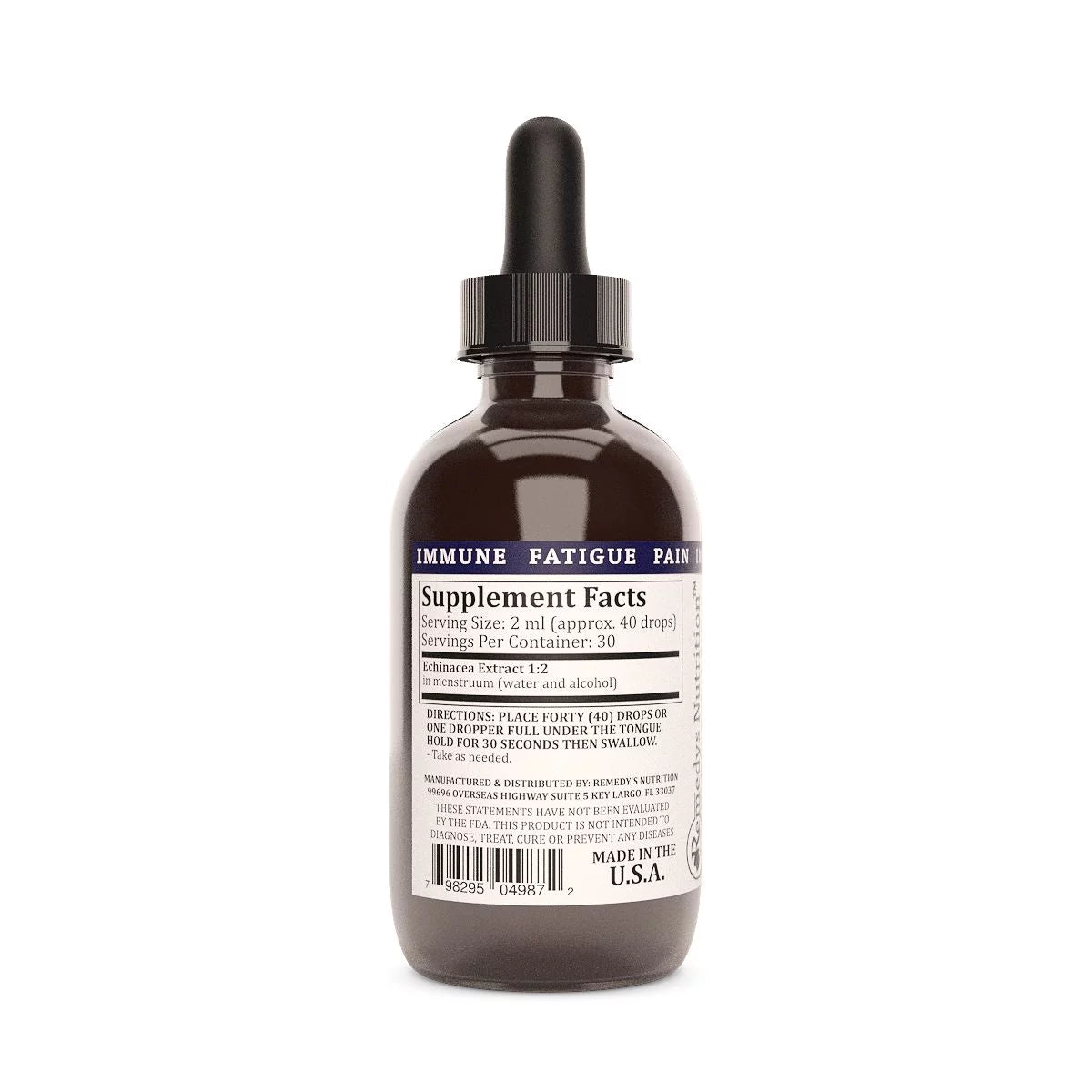
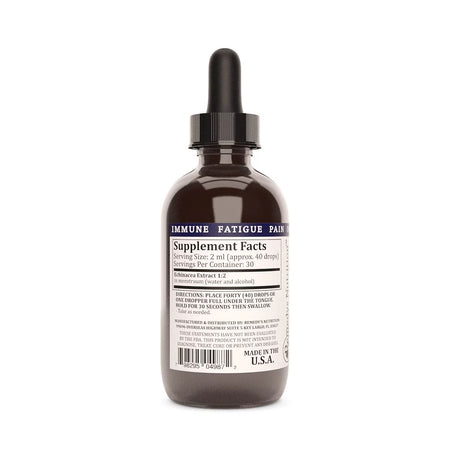
Supplement Facts
Serving size: 2 ml (approx. 40 drops). Servings per container: 30.
| Amount Per Serving |
Amount |
% Daily Value |
|
Echinacea Extract 1:2 in menstruum (water and alcohol) — as printed on the label |
|
* |
* Daily Value not established. The panel is reproduced exactly as printed. It does not match the product name; see the note.
Other ingredients: Menstruum: water and alcohol
Directions: Place forty (40) drops or one dropper full under the tongue, hold for 30 seconds then swallow. Take as needed.
Made in the USA.
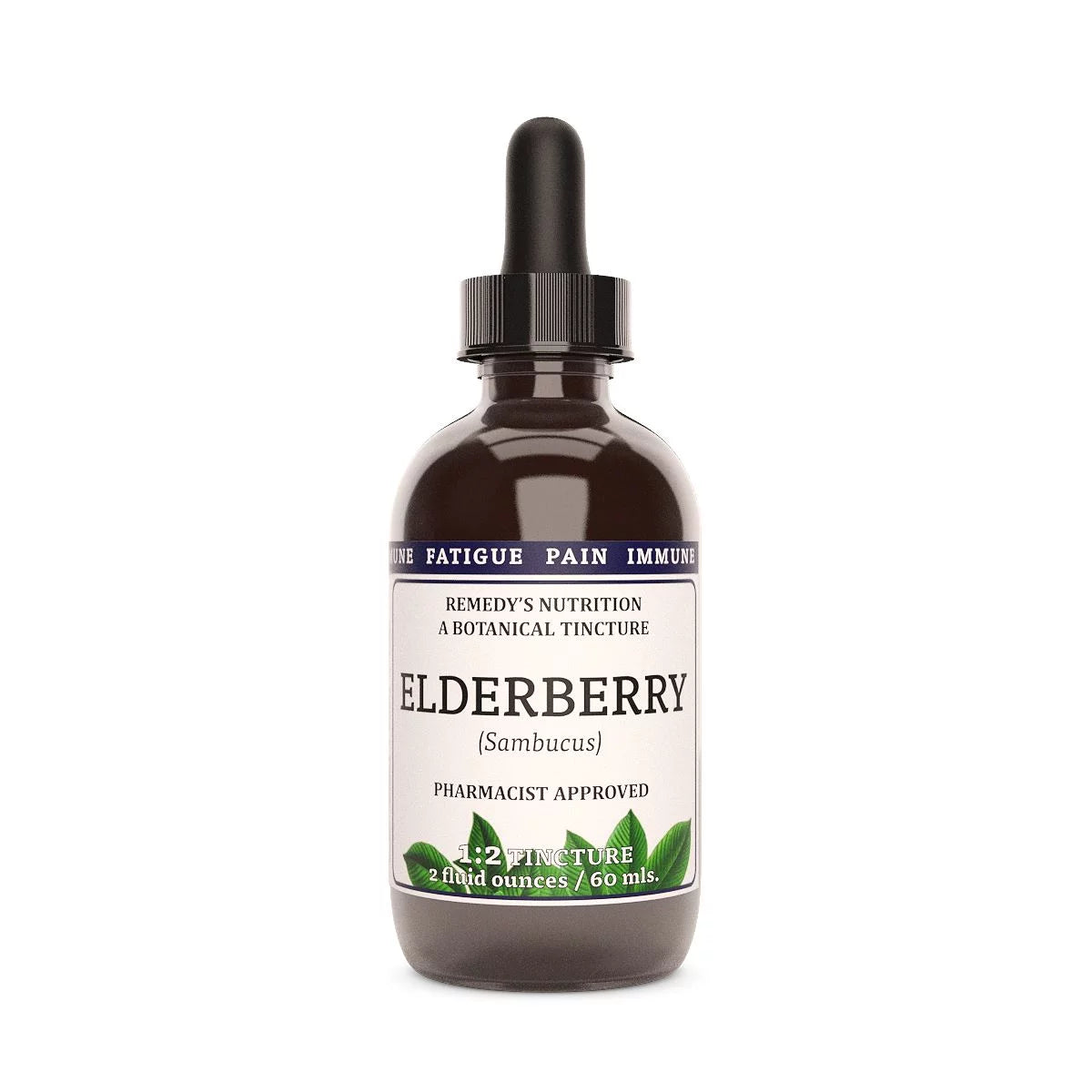
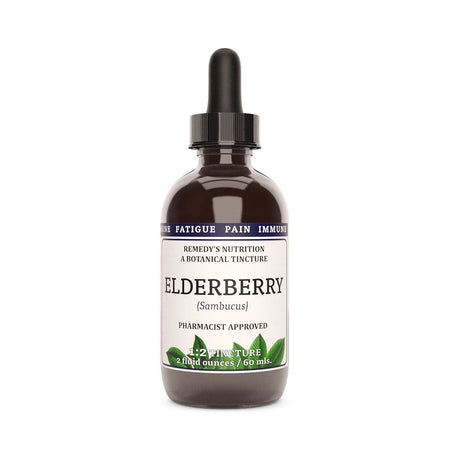
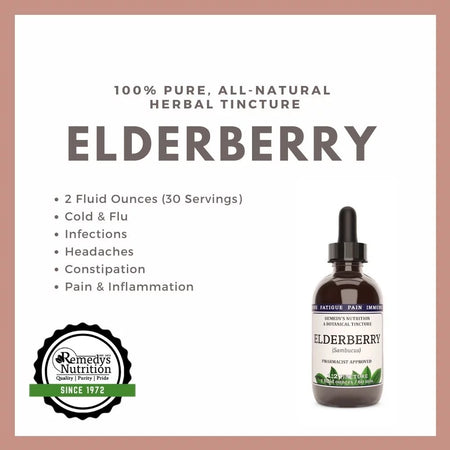
Elderberry tincture is a concentrated liquid extract of Sambucus nigra berries used to shorten cold and flu duration, support immune defense, and ease respiratory symptoms. Take 2 mL (40 drops) once or twice daily under the tongue or in water. Effects build over 1 to 3 days. Not for children under 12 months.
What Is Elderberry Tincture?
Elderberry tincture is a liquid herbal extract made by steeping black elderberries (Sambucus nigra) in 40 to 50% food-grade alcohol for 6 to 12 weeks. The alcohol pulls out anthocyanins, flavonols, and organic acids that drive the immune and antiviral effects documented in 7 randomized clinical trials. Each 2 mL dropperful from a 2 fl oz bottle delivers a clinically meaningful concentration in roughly 30 servings.
- Sambucus nigra
- The black elderberry shrub native to Europe and parts of North America. Only the cooked or fully extracted ripe berries are safe; raw berries, leaves, bark, and seeds contain cyanogenic glycosides and must be avoided.
- Anthocyanins
- The deep-purple polyphenols that give elderberries their color. Black elderberry contains roughly 200 to 1,800 mg of anthocyanins per 100 g of fresh berry — the highest of any common edible fruit.
- 1:2 extraction ratio
- Means 1 part dried herb is steeped in 2 parts alcohol-water solvent by weight. A 1:2 ratio produces a more concentrated tincture than the 1:5 ratios common on retail shelves.
- Dropperful
- A standard glass dropper holds about 1 mL when squeezed once and released. 2 mL = 40 drops — the dose used in most elderberry clinical trials.
For a deeper breakdown of how elderberry compares to other immune herbs, see our the complete guide to elderberry tincture.
Elderberry Tincture Benefits: Clinical Evidence
Elderberry has more human clinical-trial data than any other immune-support herb in the Sambucus family. The findings below are drawn from 4 randomized controlled trials and 2 meta-analyses spanning 180 to 312 participants total, all published in peer-reviewed medical journals between 2004 and 2019.
| Benefit Area |
Key Clinical Finding |
Dose Used in Trial |
| Cold & Flu Duration |
Symptom duration shortened by 4 days vs placebo across a 2019 meta-analysis of 4 RCTs (n=180) |
15 mL of syrup or 2 mL tincture, 4x daily for 5 days |
| Influenza A & B |
Symptoms resolved 4 days earlier vs placebo in 60 patients within 48 hours of onset |
15 mL syrup 4x daily for 5 days (Zakay-Rones 2004) |
| Air-Travel Cold Risk |
Cold incidence reduced and severity 30% lower in 312 long-haul flyers |
600 to 900 mg extract daily, 10 days before to 5 days after |
| Antiviral Activity |
Inhibits hemagglutinin on H1N1 and 9 other influenza strains in vitro |
Lab concentrations equivalent to standard human dose |
| Antioxidant Capacity |
ORAC value of black elderberry: 14,697 μmol TE per 100 g — among the highest of any fruit |
USDA database measurement |
| Cytokine Modulation |
Increases IL-6, IL-8, and TNF in healthy immune cells in vitro — signals immune activation |
Standardized berry extract |
| Vitamin C Content |
52.2 mg per 100 g of fresh berries — about 58% of the adult RDA per cup |
USDA FoodData Central |
External research references: Zakay-Rones 2004 RCT (PubMed), Hawkins 2019 meta-analysis (PubMed), and Tiralongo 2016 air-travel cold trial (PubMed).
Elderberry Tincture for Cold & Flu
Cold and flu shortening is the most clinically validated use of elderberry tincture. In the landmark Zakay-Rones 2004 trial, 60 adults with influenza A or B received 15 mL of elderberry extract or placebo 4 times daily for 5 days. The elderberry group recovered 4 days earlier and used significantly less rescue medication. Effects appeared within 24 to 48 hours of starting treatment.
The mechanism centers on hemagglutinin inhibition. Anthocyanins bind to the spike proteins influenza viruses use to enter human cells, blocking infection at the entry step. Black elderberry has demonstrated this effect against 10 different flu strains in laboratory studies, including H1N1.
For practical immune protocols pairing tinctures with other herbs, see our guide to tinctures for immune support.
Elderberry Tincture for Immune Support
Beyond acute cold and flu use, daily low-dose elderberry tincture supports baseline immune resilience. The mechanism is a controlled increase in inflammatory cytokines (IL-6, IL-8, TNF) at low concentrations, which primes immune cells without overdriving them. This is sometimes called immunomodulation rather than immune stimulation.
Black elderberry shortened cold and flu duration by 4 days across a 2019 meta-analysis of 4 RCTs (n=180), with effects appearing within 24 to 48 hours and zero serious adverse events reported across all studies.
For prevention dosing during cold season, take 1 mL (20 drops) once daily for up to 12 weeks. For acute use at first symptoms, increase to 2 mL (40 drops) 3 to 4 times daily for 5 days. Most users notice the difference between maintenance and acute dosing within the first 48 hours of escalation.
Elderberry Tincture for Kids
Elderberry has well-documented pediatric use, but our alcohol-based tincture has age limits because of the ethanol content. A 1 mL pediatric dose contains roughly 20 mg of food-grade alcohol — safe for most kids over 4 years but not appropriate for infants or toddlers. For children under 12 months, elderberry should not be given in any form.
| Age |
Tincture Suitable? |
Suggested Approach |
| Under 12 months |
No |
Avoid all elderberry products. Immune system not mature enough. |
| 12 months to 4 years |
No (alcohol) |
Use elderberry syrup instead — alcohol-free option for toddlers. |
| 4 to 12 years |
Yes, reduced dose |
0.5 to 1 mL (10 to 20 drops) up to 3 times daily during cold/flu, in water or juice to mask taste. |
| 12 years and older |
Yes, adult dose |
2 mL (40 drops) up to 4 times daily during acute illness, 1 mL daily for prevention. |
Always consult your pediatrician before giving elderberry tincture to children, especially if they take prescription medications.
Elderberry Tincture vs Syrup
Tincture and syrup deliver elderberry differently. The tincture is alcohol-extracted and concentrated — a 2 fl oz bottle delivers roughly 30 doses with a 24-month shelf life. Syrup is sugar-preserved and water-based — sweeter, kid-friendly, but less concentrated and shorter-lived (refrigerate after opening, 2 to 4 months).
| Factor |
Tincture |
Syrup |
| Carrier |
40 to 50% food-grade ethanol |
Sugar, glycerin, or honey base |
| Concentration |
1:2 herb-to-solvent (high) |
1:5 to 1:10 (lower) |
| Shelf Life |
24 months sealed, 24 months opened |
4 to 12 months sealed, 2 months refrigerated after opening |
| Age Suitability |
4 years and up |
1 year and up (no honey under 12 months) |
| Sugar Content |
0 g per dose |
3 to 8 g per 15 mL serving |
| Onset |
5 to 15 min sublingual |
20 to 40 min |
For a deeper side-by-side, see our tincture versus syrup comparison. If alcohol is the concern, our blog also covers alcohol-free elderberry tincture recipes using glycerin or vinegar.
How to Take Elderberry Tincture
The most effective way to take elderberry tincture is sublingually — squeeze 40 drops (2 mL) under your tongue, hold for 30 to 60 seconds, then swallow. Sublingual absorption bypasses first-pass liver metabolism and delivers active anthocyanins to the bloodstream within 5 to 15 minutes. This is 2 to 3 times faster than swallowed capsules.
-
Direct sublingual: 2 mL under the tongue, hold 60 seconds, swallow. Fastest absorption, mild herbal taste.
-
In water or juice: 2 mL in 4 to 8 oz of water or fruit juice. Slower onset (20 minutes) but easier on sensitive palates.
-
In hot tea (not boiling): 2 mL in warm tea below 60°C / 140°F. Higher temperatures degrade anthocyanins, so let tea cool 3 to 5 minutes before adding.
-
With food vs empty stomach: Both work. Empty stomach gives 15 to 20% faster onset; with food reduces any rare GI upset.
Shake the bottle gently before each use to redistribute settled compounds. Keep the dropper clean and never touch it to your mouth or skin to avoid contamination.
Why Choose Remedy's Nutrition® Elderberry Tincture
| What You Get |
Why It Matters |
| 1:2 alcohol-to-herb extraction ratio |
2 to 3 times more concentrated than retail 1:5 tinctures — smaller dose, faster effect. |
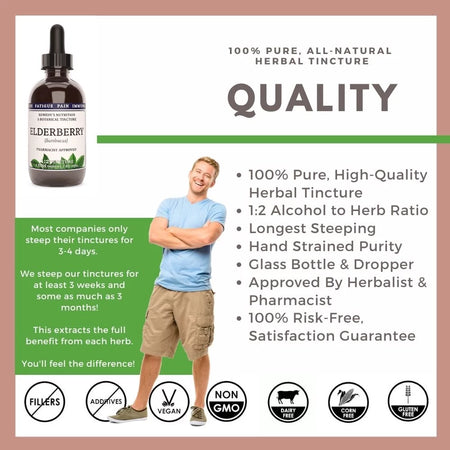
| 3-month steeping process |
Most commercial tinctures steep 2 to 4 weeks. Our 12-week steep extracts more anthocyanins and flavonols from the berry. |
| Hand-strained pure liquid |
No mechanical pressing. Slower hand-straining preserves the deep purple color and full flavonol profile. |
| Glass bottle and graduated dropper |
Glass protects light-sensitive anthocyanins. Graduated dropper makes 1 mL and 2 mL doses precise. |
| Zero fillers, additives, dairy, corn, gluten, preservatives |
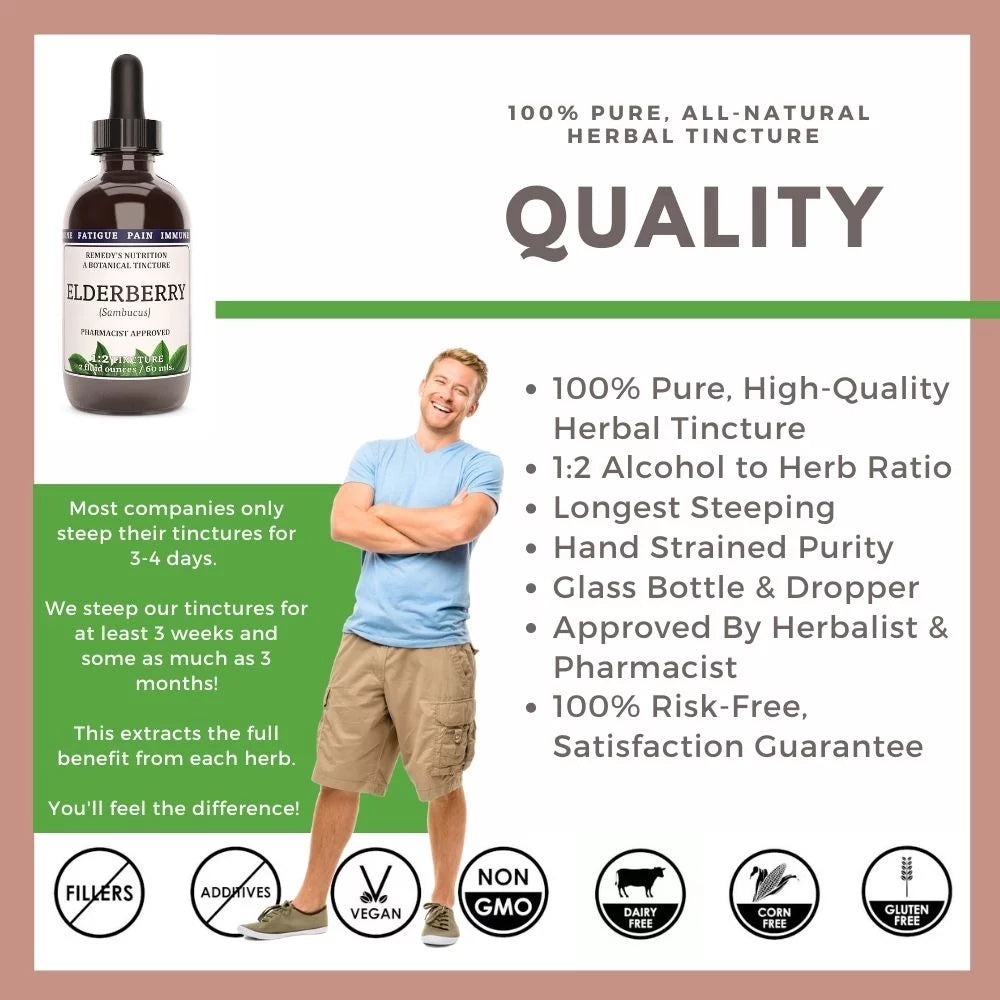
Just black elderberry and food-grade alcohol. Vegan, non-GMO, kosher, keto. |
| Pharmacist and herbalist reviewed |
Formula based on 7 published clinical studies. Made in Key Largo, Florida since 1972. |
| Independent third-party tested |
Each batch tested for potency, purity, and microbial safety before bottling. |
| 100% satisfaction guarantee |
Risk-free. Try it for 30 days, full refund if not satisfied. |
Elderberry Tincture Dosage
Elderberry tincture dosing depends on whether you are using it for prevention or acute illness. Both protocols are supported by clinical trial data; the table below summarizes the evidence-based ranges.
| Goal |
Suggested Dose |
Timing |
Duration |
| Daily immune maintenance |
1 mL (20 drops) once daily |
Morning, with or without food |
Up to 12 weeks per cycle |
| Acute cold or flu (first 48 hours) |
2 mL (40 drops) 3 to 4 times daily |
Spaced 4 to 6 hours apart |
5 days |
| Travel prevention (flights, crowds) |
1 to 2 mL daily |
10 days before to 5 days after travel |
Up to 3 weeks per trip |
| Children 4 to 12 years |
0.5 to 1 mL up to 3x daily during illness |
In water or juice |
5 days max |
| Maximum adult dose |
10 mL (200 drops) per day |
Split across 4 doses |
Acute illness only, 5 days max |
One 2 fl oz (60 mL) bottle delivers 30 doses at the standard 2 mL dropperful or 60 doses at maintenance. Most adults find a single bottle covers a full cold/flu season at maintenance dosing.
Safety, Interactions & Contraindications
Elderberry tincture is well-tolerated at standard doses. Across the 7 published clinical trials, no serious adverse events were reported and side-effect rates matched placebo. The cautions below address specific groups and medications where extra care is warranted.
Important safety information. Elderberry tincture contains 40 to 50% food-grade alcohol. Do not use if you are pregnant, breastfeeding without medical clearance, recovering from alcohol use disorder, taking disulfiram or metronidazole, or have liver disease. Do not give to children under 4 years.
| Consideration |
Details & Action |
| Pregnancy & breastfeeding |
Insufficient safety data; alcohol carrier is contraindicated. See safety during pregnancy for full discussion. |
| Autoimmune conditions |
Elderberry stimulates immune cytokines (IL-6, TNF). May worsen lupus, MS, RA, or Crohn's. See autoimmune disease considerations. |
| Disulfiram & metronidazole |
Alcohol-containing tinctures cause severe reactions with these drugs. Use elderberry syrup or capsules instead. |
| Immunosuppressants |
Tacrolimus, cyclosporine, prednisone — elderberry may counteract drug action. Avoid unless physician approved. |
| Diabetes medications |
Elderberry has mild blood-sugar-lowering effects; combined with metformin or insulin, monitor glucose for 1 to 2 weeks after starting. |
| Diuretics |
Elderberry has mild diuretic activity. Combined with furosemide or HCTZ, monitor for dehydration and electrolyte loss. |
| Theophylline |
May increase clearance of theophylline asthma medication. Monitor levels if combined. |
| Surgery |
Discontinue 7 to 14 days before scheduled surgery to avoid bleeding-time effects. |
| Allergy & sensitivity |
Rare but real. Symptoms include rash, itching, throat tightness. See elderberry allergy guide. Stop immediately if any reaction. |
| Common side effects |
Mild GI upset (under 5% of users), loose stools at high doses. See side effects and safety information. |
Storage & Shelf Life
Properly stored, elderberry tincture stays potent for 24 months from the manufacture date even after opening. The 40 to 50% alcohol acts as a natural preservative, killing bacteria and yeasts that would degrade water-based extracts within weeks. Two storage rules cover 95% of cases.
-
Keep cool and dark. Store between 50 and 75°F (10 to 24°C). A pantry shelf away from the stove is ideal. Refrigeration is fine but not required.
-
Tighten the cap fully after each use. Loose caps allow alcohol evaporation, which concentrates the herb but also reduces volume by up to 10% per year.
-
Glass dropper hygiene. Never let the dropper tip touch the mouth, lip, or skin. Wipe with a clean tissue if it does.
-
Sediment is normal. A small amount of dark sediment at the bottom is precipitated plant compounds. Shake gently before each dose.
For full storage protocols and signs of degradation, see our proper usage and storage guide. For broader tincture buying advice across our catalog, see the complete tincture buying guide.
Frequently Asked Questions
What is elderberry tincture and how does it work? +
Elderberry tincture is a concentrated liquid extract of Sambucus nigra berries steeped in 40 to 50% alcohol for 6 to 12 weeks. The alcohol pulls out anthocyanins that bind influenza spike proteins, blocking viral entry to human cells. A 2 mL dose delivers roughly 200 to 400 mg of total polyphenols and works within 24 to 48 hours.
Does elderberry tincture really shorten colds and flu? +
Yes. A 2019 meta-analysis of 4 RCTs (n=180) found elderberry shortened cold and flu duration by 4 days vs placebo. The Zakay-Rones 2004 trial of 60 influenza patients showed symptoms resolved 4 days earlier with 15 mL of elderberry 4 times daily for 5 days. Effects appear within 24 to 48 hours of starting.
How much elderberry tincture should I take daily? +
For daily immune maintenance, take 1 mL (20 drops) once per day. For acute cold or flu, increase to 2 mL (40 drops) 3 to 4 times daily for up to 5 days. Maximum daily dose is 10 mL across 4 doses. One 2 fl oz bottle delivers about 30 acute doses or 60 maintenance doses.
Is elderberry tincture safe for kids? +
For children 4 years and older, yes — use 0.5 to 1 mL (10 to 20 drops) up to 3 times daily during illness, mixed in water or juice. Not for infants under 12 months and not recommended under 4 years due to the 40 to 50% alcohol content. Use elderberry syrup as the alcohol-free pediatric alternative.
Can I take elderberry tincture every day? +
Yes, at maintenance dose. Take 1 mL (20 drops) once daily for up to 12 weeks per cycle, with a 2 to 4 week break between cycles. Long-term daily use beyond 12 weeks has not been formally studied, so cycling is the standard practice. Acute high-dose use should not exceed 5 consecutive days.
What's the difference between elderberry tincture and syrup? +
Tincture is alcohol-based, 1:2 concentration, sugar-free, with a 24-month shelf life and 5 to 15 minute sublingual onset. Syrup is sugar-based, 1:5 to 1:10 concentration, kid-safe at 1 year and up, with a 2 to 4 month shelf life after opening and 20 to 40 minute onset. Tincture is stronger; syrup is gentler.
Are there side effects from elderberry tincture? +
Mild side effects occur in under 5% of users: GI upset, loose stools at doses above 6 mL daily, or rare allergic reactions (rash, throat tightness). Across 7 clinical trials totaling 312 plus participants, no serious adverse events were reported. Stop immediately if you develop any allergy symptoms and consult a physician.
Can elderberry tincture be taken during pregnancy? +
No. The 40 to 50% alcohol carrier alone is contraindicated in pregnancy, and elderberry safety data in pregnant women is insufficient. Avoid all elderberry tinctures during pregnancy and breastfeeding without medical clearance. Consult your physician for safe immune-support alternatives during pregnancy and lactation.
Does elderberry tincture interact with medications? +
Yes — with at least 5 medication classes. Disulfiram and metronidazole react with the alcohol carrier. Immunosuppressants like tacrolimus and prednisone may be counteracted. Diabetes drugs, diuretics, and theophylline have mild interactions worth monitoring. Discontinue 14 days before any surgery. Consult your pharmacist before combining.
Can people with autoimmune conditions take elderberry? +
Caution required. Elderberry stimulates immune cytokines (IL-6, IL-8, TNF) which may worsen autoimmune flares in conditions like lupus, MS, RA, and Crohn's. About 1 in 4 people with these conditions report symptom flares with elderberry. Always check with your rheumatologist or specialist before starting any immune-stimulating herb.
How long does an opened bottle last? +
Up to 24 months, kept tightly capped in a cool dark place between 50 and 75°F. The 40 to 50% alcohol acts as a natural preservative, far more stable than syrups (2 to 4 months refrigerated). A small amount of sediment is normal — shake the bottle gently before each 2 mL dose.
How fast does elderberry tincture work? +
Sublingual absorption (2 mL under the tongue for 60 seconds) reaches the bloodstream in 5 to 15 minutes — about 2 to 3 times faster than capsules. Symptom relief from a cold or flu typically appears within 24 to 48 hours of starting at 2 mL 4 times daily. Full duration-shortening effect builds across 5 days.
Does Remedy's offer alcohol-free elderberry options? +
Yes — 2 alternatives. Remedy's Nutrition® Elderberry Syrup is alcohol-free and kid-friendly from 12 months and up. Remedy's Nutrition® Elderberry Capsules deliver the dry extract in a 60-count vegan capsule. For DIY recipes using glycerin or vinegar bases, our blog covers a 4-step alcohol-free tincture method.