What Is Ear Oil?
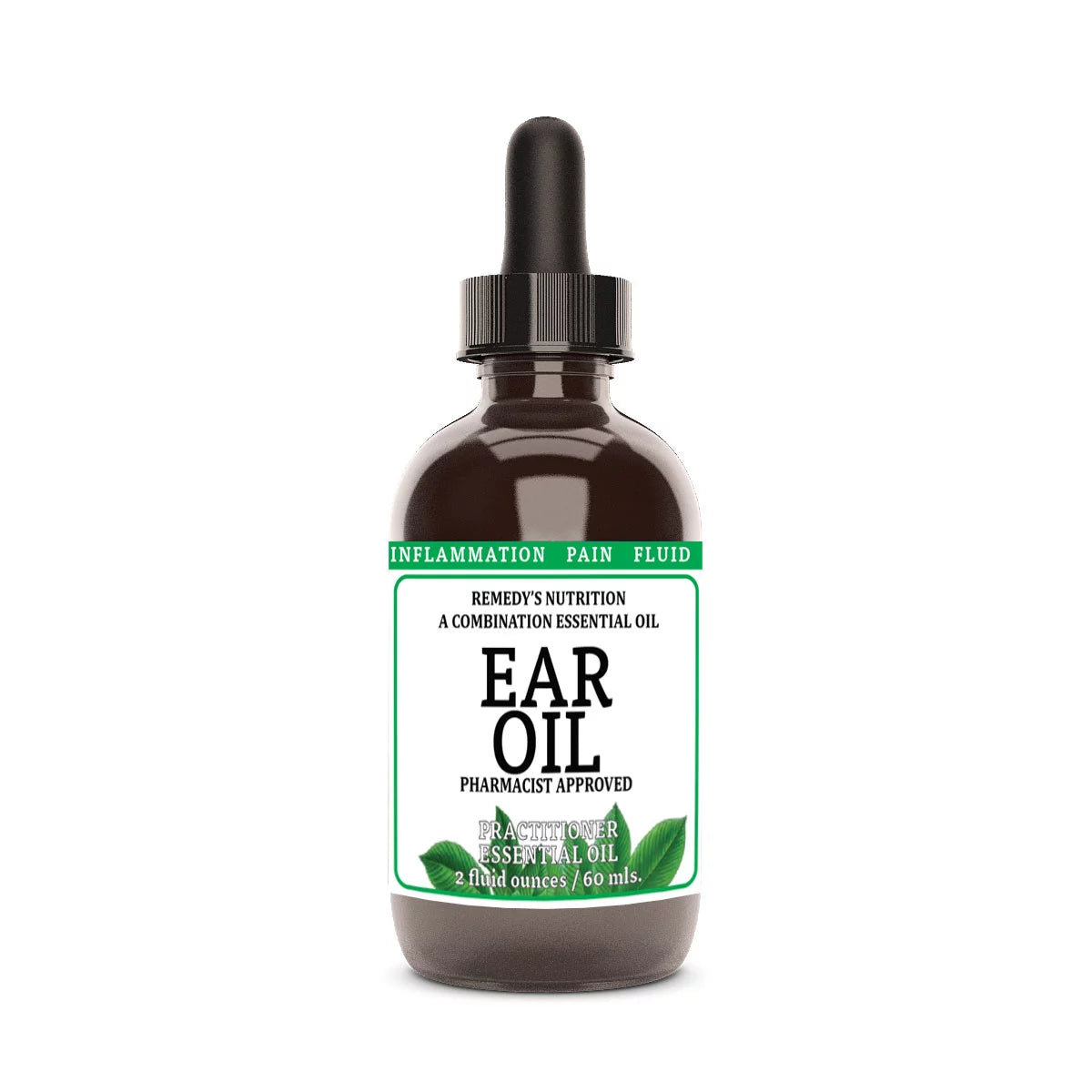
Ear oil is a pre-formulated herbal blend for external ear canal use. It combines 4 botanicals — tea tree, lavender, garlic, and mullein — in an olive oil carrier used in traditional ear care for over 2,000 years, addressing minor earache, swimmer's ear, wax buildup, and canal maintenance without the sting of alcohol-based drops.
Remedy's Ear Essential Oil blend combines 4 botanicals with complementary actions: tea tree essential oil for antimicrobial coverage, lavender essential oil for calming and anti-inflammatory support, garlic extract for its allicin-based antibacterial activity, and mullein flower, a traditional botanical long used in European and Native American herbalism specifically for ear conditions. These are delivered in an olive oil carrier that softens ear wax and provides mild lubrication to the canal tissue.
The result is a product suited for 4 common, non-emergency ear concerns: minor earache discomfort, swimmer's ear irritation, excess wax softening before irrigation, and general canal maintenance. It is not intended to replace antibiotic treatment for confirmed bacterial ear infections and should not be used in ears with a perforated eardrum or drainage tubes.
Ear Oil Benefits: Evidence Summary
The botanical ingredients in Remedy's ear oil blend each have individual research support. The table below summarizes the 5 primary benefits and their evidence basis.
| Benefit |
Key Finding |
Typical Use |
| Wax softening |
A 2013 Cochrane Review found olive oil equally effective as sodium bicarbonate drops for cerumen softening and canal irrigation preparation when used for 5 consecutive days |
Wax buildup prior to irrigation; general ear hygiene |
| Antimicrobial (tea tree) |
Tea tree oil demonstrates broad-spectrum activity against 3 common ear pathogens — Pseudomonas aeruginosa, Staphylococcus aureus, and Candida albicans — in multiple in vitro studies at 1 to 2% concentration |
Swimmer's ear irritation, minor external canal infection |
| Antibacterial (garlic/allicin) |
A 2001 randomized trial (103 children) comparing naturopathic herbal ear drops including garlic and mullein to anesthetic drops found comparable pain score reductions at days 1 and 3 |
Minor earache discomfort; adjunct comfort measure |
| Anti-inflammatory (lavender) |
Linalool and linalyl acetate in lavender inhibit NF-kB inflammatory signaling and reduce prostaglandin E2 in inflamed tissue at low concentrations |
Irritation from water exposure, minor external canal swelling |
| Mullein soothing action |
Mullein flower extract has been used in ear drops for centuries; contains saponins and mucilage that soothe irritated mucous membranes and canal lining |
Mild earache, ear canal dryness and irritation |
How Ear Oil Works
Ear oil works through 3 parallel mechanisms that address the most common sources of minor ear discomfort. The first is physical softening of cerumen (ear wax). Olive oil penetrates and emulsifies the lipid components of hardened wax, making it softer and more mobile within the canal. Studies confirm this effect begins within 15 to 30 minutes of application and reaches full benefit after 3 to 5 consecutive nightly treatments.
The second mechanism is surface antimicrobial action from tea tree and garlic components. The external ear canal is lined with moist, warm tissue — an environment favorable to bacterial and fungal overgrowth, particularly after water exposure. Tea tree's terpinen-4-ol and garlic's allicin create an inhospitable surface environment for the 3 pathogens most commonly associated with swimmer's ear and external otitis: Pseudomonas, Staphylococcus, and Candida.
The third mechanism is anti-inflammatory soothing via lavender's linalool fraction and mullein's mucilaginous saponins. Linalool inhibits NF-kB signaling, reducing prostaglandin production in irritated canal tissue. Mullein's mucilage coats the canal lining with a protective film, reducing friction and irritation. Together, these 2 components address the pain and discomfort associated with inflamed or irritated ear canal tissue without the stinging associated with alcohol-based drops.
Ear Oil for Swimmer's Ear and Water Exposure
Swimmer's ear — external otitis — affects approximately 1 in 123 people annually in the United States and is responsible for over 2.4 million doctor visits per year. It develops when water trapped in the ear canal disrupts the natural acidic environment (pH 6 to 6.5) that suppresses bacterial and fungal growth, allowing rapid colonization of the warm, moist tissue.
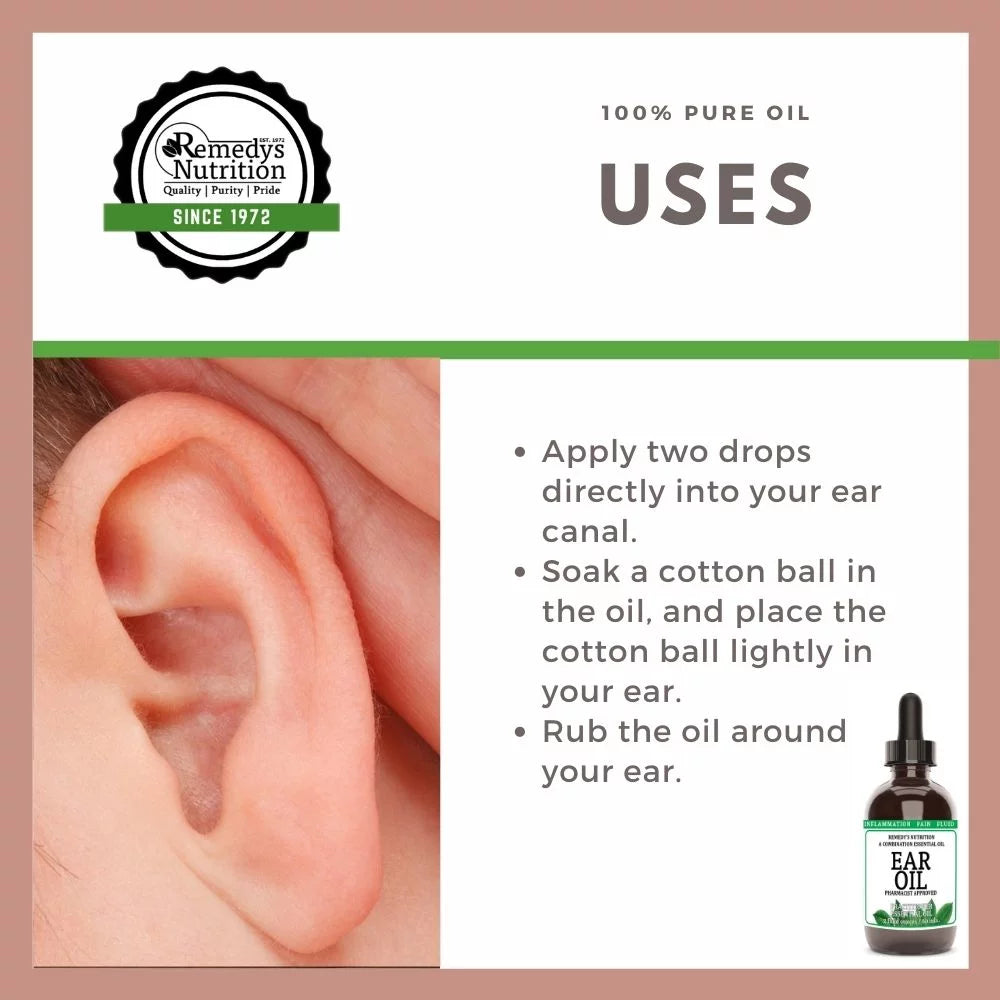
Ear oil is most effective when used preventively within 30 minutes of water exposure — swimming, surfing, showering, or bathing — before irritation has progressed to active infection. Apply 2 to 3 drops to each ear, remain lying on your side for 3 to 5 minutes, then allow the oil to drain out naturally. This sequence redistributes any trapped water, coats the canal with the antimicrobial botanical blend, and restores a slightly acidic oil environment that discourages pathogen growth.
For existing swimmer's ear symptoms — itching, minor swelling, mild discharge — ear oil can provide comfort during the early hours. However, symptoms that worsen over 24 hours, produce significant pain, cause hearing loss, or involve fever require prompt medical evaluation. A confirmed bacterial swimmer's ear infection is treated with prescription antibiotic ear drops, and herbal ear oil is not a substitute for that treatment.
Combining ear oil with the sinus essential oil blend applied externally to the mastoid area (behind the ear) addresses the sinus congestion that often accompanies swimmer's ear and post-swimming pressure in the Eustachian tubes.
Ear Oil for Earache Discomfort and Wax Relief
Minor earache from cold-related congestion, pressure changes during air travel, or irritation from earbuds is 1 of the most common reasons people seek ear remedies. The pain in these cases is often referred from Eustachian tube dysfunction or mild inflammation in the outer ear canal — neither of which requires antibiotics — and responds well to the warmth and botanical actives in ear oil.
Ear wax impaction is the second most common use case. Over 6 million ear wax removal procedures are performed in US primary care offices annually, most of which could have been prevented with routine softening maintenance. Using 2 to 3 drops of ear oil nightly for 3 to 5 consecutive nights before an irrigation appointment significantly improves success rate and reduces discomfort during the procedure. Several UK National Health Service guidelines specifically list olive oil as the first-line agent for pre-irrigation softening.
The garlic component in the blend is particularly relevant for earache relief. The 2001 pediatric randomized trial mentioned in the benefits table found naturopathic ear drops containing garlic and mullein — comparable to this formulation — achieved equivalent pain score reductions to pharmaceutical anesthetic drops at 24 and 72 hours. This makes ear oil a reasonable comfort measure for mild earache while waiting to see a doctor or while managing a non-infectious cause.
Do not use if you have a perforated eardrum or ear tubes (tympanostomy tubes). Any liquid — including herbal ear oil — can pass through a perforation or tube opening into the middle ear and cause serious complications. If you are unsure whether your eardrum is intact, consult a doctor before using any ear drops. This product is for external ear canal use only.
Seek medical care immediately for: fever above 38.5°C (101.3°F), sudden or significant hearing loss, severe ear pain, pus or bloody discharge, dizziness or balance problems, or any symptoms in a child under 2 years old. These signs indicate conditions requiring urgent medical evaluation.
Why Choose Remedy's Ear Oil
| What You Get |
Why It Matters |
| 4-botanical blend (tea tree, lavender, garlic, mullein) in olive oil carrier |
Each botanical addresses a different mechanism — antimicrobial, anti-inflammatory, antibacterial, and soothing — providing broader coverage than a single-ingredient product |
| 2 fl oz bottle with dropper tip |
Provides approximately 60 ml, enough for 200 to 300 individual doses at 2 to 3 drops per application — a full season of preventive use for swimmers |
| Alcohol-free formula |
Alcohol-based drops sting on contact with irritated or inflamed canal tissue; olive oil carrier is non-stinging and appropriate for sensitive canals |
| Pre-formulated ready-to-use concentration |
Individual essential oils require precise dilution calculations to be safe for ear canal use; the pre-formulated blend removes dilution error risk |
| Suitable for use alongside garlic essential oil for topical external application |
For external mastoid or behind-ear massage, garlic EO at 1% in a carrier complements the ear canal drops for sinus and congestion-related ear pressure |
How to Use Ear Oil
| Goal |
Dose |
Method |
Notes |
| Earache discomfort relief |
2 to 3 drops per ear |
Warm bottle in hands for 1 to 2 minutes; tilt head to one side, instill drops, remain lying 3 to 5 minutes; allow to drain; repeat 2 to 3 times daily |
Discontinue and see a doctor if pain worsens or fever develops within 24 hours |
| Swimmer's ear prevention |
2 to 3 drops per ear |
Apply within 30 minutes after water exposure; lie on side 3 to 5 minutes per ear; allow excess to drain |
Use after every swim session during active swim season for best protective effect |
| Ear wax softening (pre-irrigation) |
2 to 3 drops per affected ear |
Apply at bedtime for 3 to 5 consecutive nights before an irrigation appointment; plug loosely with cotton ball overnight |
Do not irrigate yourself; allow a healthcare provider to perform the flush after softening |
| Minor ear irritation (earbuds, cold weather) |
1 to 2 drops per ear |
Apply once daily as needed; no need to remain lying — a gentle massage of the ear lobe after application helps distribute oil |
If irritation persists more than 3 to 5 days without improvement, seek medical evaluation |
| General ear hygiene maintenance |
2 drops per ear |
1 to 2 times per week at bedtime for adults prone to wax buildup; do not insert cotton swabs into the canal |
Cotton swabs compact wax deeper into the canal — oil softening plus natural migration is the safer approach |
Ear Oil FAQ
What is ear oil used for?+
Ear oil is used for 4 purposes: minor earache discomfort, swimmer's ear prevention, wax softening before irrigation, and general canal maintenance. The blend — tea tree, lavender, garlic, and mullein in olive oil — provides antimicrobial, anti-inflammatory, and soothing coverage for external ear canal use only.
How do I use ear oil properly?+
Warm the bottle in cupped hands for 1 to 2 minutes to reach approximately 37°C. Tilt the affected ear toward the ceiling, instill 2 to 3 drops, and remain still for 3 to 5 minutes. Tilt the other way and let excess drain. Repeat 2 to 3 times daily for active discomfort, or once nightly for preventive and wax-softening use.
Can ear oil help swimmer's ear?+
Ear oil works best preventively within 30 minutes of water exposure. Swimmer's ear drives over 2.4 million US doctor visits annually; most early-stage cases respond well to botanical antimicrobial coverage. For active symptoms — pain, swelling, discharge — see a doctor, as confirmed infection requires prescription antibiotic drops.
Is ear oil safe if I have ear tubes?+
No. Do not use any ear drops if you have tympanostomy tubes or a perforated eardrum. The tubes create a direct opening to the middle ear; liquid passing through can introduce bacteria and cause otitis media. Approximately 500,000 tube surgeries are performed in US children annually — confirm eardrum integrity with your ENT before using any ear drops.
How does tea tree oil help ear conditions?+
Tea tree's active compound terpinen-4-ol disrupts microbial membranes, showing inhibitory activity at 1 to 2% concentration against 3 common ear pathogens: Pseudomonas aeruginosa, Staphylococcus aureus, and Candida albicans. In the blend, tea tree is diluted within the olive oil carrier, providing antimicrobial coverage without the irritation risk of undiluted essential oil.
How warm should ear oil be before use?+
Aim for approximately 37°C (98.6°F). Cold liquid triggers the caloric reflex, causing dizziness lasting 30 to 60 seconds. Cupped hands for 1 to 2 minutes is sufficient. Avoid microwaving — uneven heating creates hot spots above 40°C that can burn the canal lining. A 30-second warm water bath for the bottle is also acceptable.
How long does a 2 oz bottle last?+
A 2 fl oz (60 ml) bottle gives approximately 200 to 300 doses at 2 to 3 drops each. At twice-daily use in 1 ear that is roughly 100 days of supply. For post-swim prevention in both ears, expect 40 to 50 swim sessions. For weekly maintenance use, 1 bottle can last 12 months or more.
When should I see a doctor instead of using ear oil?+
See a doctor immediately for: fever above 38.5°C (101.3°F), sudden hearing loss, severe pain not improving within 24 hours, pus or bloody discharge, dizziness, or any ear symptoms in a child under 2. These signs indicate conditions such as acute otitis media or mastoiditis requiring medical treatment. Ear oil is for mild external ear concerns only.
In-Depth Reading