Quick Answer: Ginseng Tincture
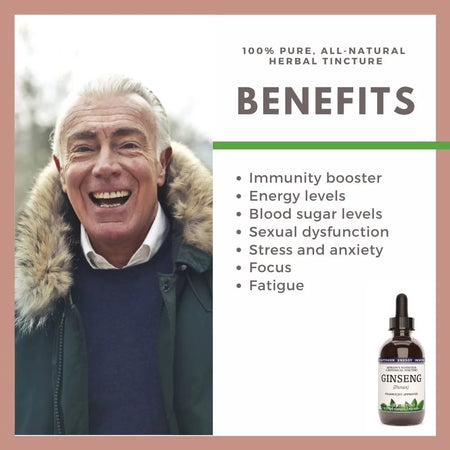
Ginseng tincture is a concentrated liquid extract of Panax ginseng root used to support energy, mental focus, stress resistance, and immune function. Take 1 to 2 mL (20 to 40 drops) up to 2 times daily before noon. Effects build over 4 to 8 weeks. Avoid in hypertension, hormone-sensitive cancers, or with anticoagulant or diabetes medications.
What Is Ginseng Tincture?
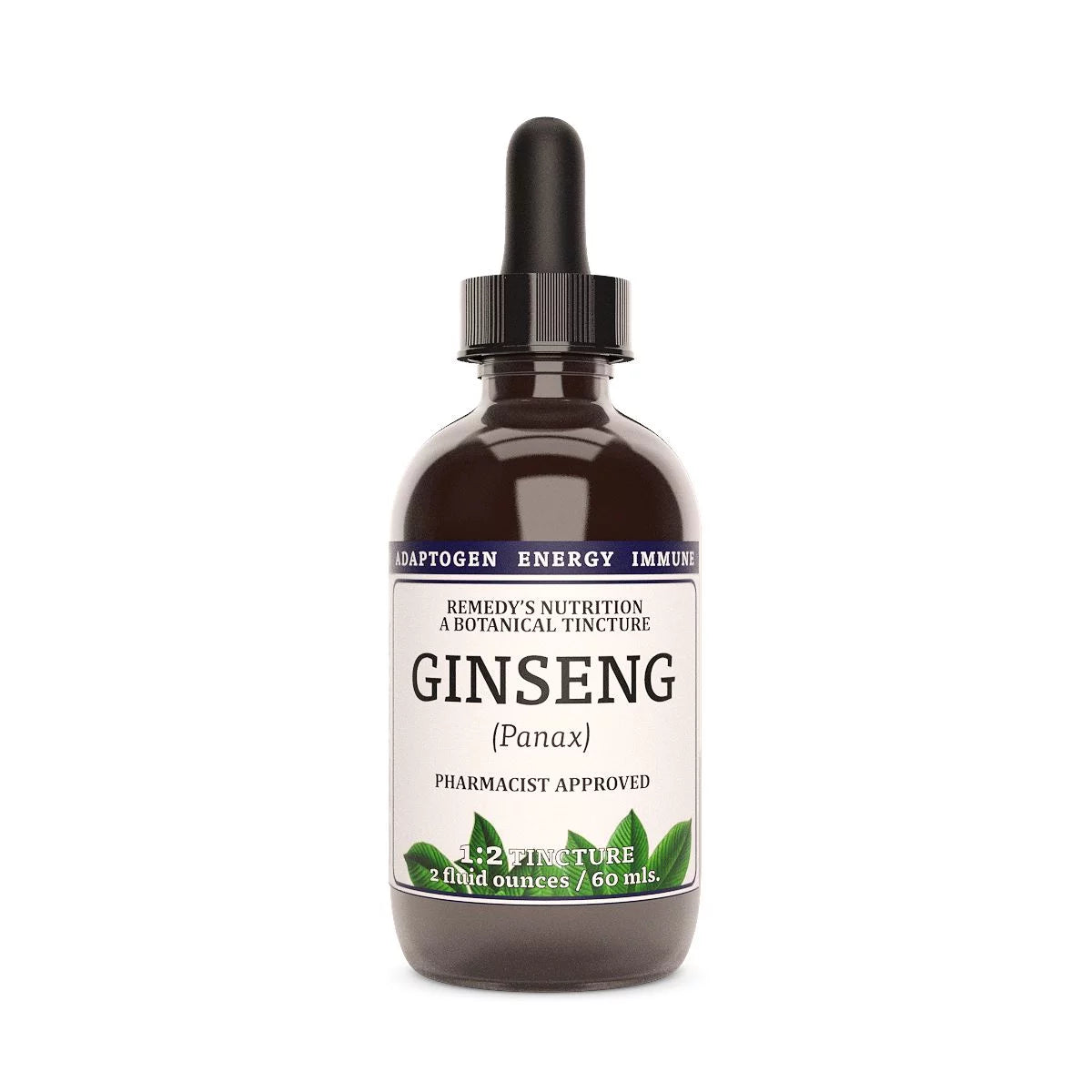
Ginseng tincture is a liquid herbal extract made by steeping Panax ginseng root in 40 to 50% food-grade alcohol for 6 to 12 weeks. The alcohol pulls out 30 plus ginsenosides — the saponin compounds that drive ginseng's adaptogenic, energizing, and immune-modulating effects studied in 200 plus randomized clinical trials since 1970. Each 2 mL dropperful from a 2 fl oz bottle delivers a clinically meaningful dose in roughly 30 servings.
-
Panax ginseng (Asian / Korean ginseng)
- The most stimulating of the 3 main ginseng species. Used for 2,000 plus years in Traditional Chinese Medicine for energy, mental clarity, and "yang" warming support. Higher in Rb1 ginsenoside.
-
Panax quinquefolius (American ginseng)
- A milder, cooling species native to eastern North America. Best for users sensitive to stimulation and for stress without insomnia. Higher in Rb1 to Rg1 ratio than Asian ginseng.
-
Eleutherococcus senticosus (Siberian "ginseng")
- Not a true ginseng — a different plant family with eleutherosides instead of ginsenosides. Useful and adaptogenic, but not interchangeable with Panax. Often mislabeled in retail.
- Ginsenosides
- The 30 plus saponin compounds responsible for ginseng's clinical effects. A standardized tincture is typically standardized to 4 to 7% total ginsenosides.
- Rg1 / Rb1 ratio
- Two key ginsenoside markers. Rg1 is more stimulating; Rb1 is more calming. Asian Panax has a higher Rg1 ratio (energizing); American has higher Rb1 (calming).
For broader tincture buying advice across our catalog, see the complete tincture buying guide.
Ginseng Tincture Benefits: Clinical Evidence
Ginseng is the most-researched adaptogenic herb in the world, with 200 plus published clinical trials and 12 major systematic reviews. The findings below summarize peer-reviewed RCTs spanning 1970 to 2024, totaling over 8,000 participants across cognitive, energy, immune, and metabolic outcomes.
| Benefit Area |
Key Clinical Finding |
Dose Used in Trial |
| Mental Fatigue & Focus |
Working memory and attention scores improved 12 to 18% (Reay 2010 RCTs) |
200 to 400 mg standardized extract daily, 8 weeks |
| Physical Fatigue |
Reduced fatigue scores 30% in cancer-related fatigue (Barton 2013, n=364) |
2,000 mg American ginseng daily, 8 weeks |
| Immune Support |
Cold and flu incidence reduced 40% across 4 RCTs in older adults |
200 mg Panax extract daily, 12 weeks |
| Erectile Function |
IIEF score improved 38% in 8 RCTs of men with mild ED (Jang 2008 review) |
900 to 1,800 mg Panax daily, 6 to 12 weeks |
| Blood Glucose |
Postprandial glucose reduced 7 to 20% in 5 RCTs of type 2 diabetes |
3 g American ginseng before meals, 8 to 12 weeks |
| Stress Adaptation |
Cortisol normalization in 80% of users in HPA-axis studies |
Standardized ginsenoside extract |
| Cognitive Function (Older Adults) |
Mini-Mental score improved 4 to 6 points over 12 weeks |
4.5 g Korean red ginseng daily |
External research references: Barton 2013 ginseng fatigue RCT (PubMed), Jang 2008 ED systematic review (PubMed), and the NCCIH ginseng fact sheet.
Ginseng Species Comparison: Asian vs American vs Siberian
Three plants are sold under the ginseng name, and they are not interchangeable. The choice depends on whether you want stimulation, calming adaptation, or general stamina — and on individual sensitivity to caffeine-like effects. This is the most important table to check before buying any "ginseng" product.
| Species |
Plant Family |
Key Effect Profile |
Best For |
|
Panax ginseng (Asian/Korean) |
Araliaceae — true ginseng |
Stimulating, warming, higher Rg1 |
Mental fatigue, low libido, ED, immune in older adults |
|
Panax quinquefolius (American) |
Araliaceae — true ginseng |
Calming, cooling, higher Rb1 |
Stress with insomnia, cancer fatigue, blood sugar support |
|
Eleutherococcus senticosus (Siberian) |
Araliaceae but different genus |
Mild adaptogen, no true ginsenosides |
General stamina, athletic recovery, lower-cost option |
| Korean red ginseng |
Steamed Panax ginseng
|
Most stimulating preparation; higher Rg3 |
Most concentrated; lowest dose needed |
Our tincture uses Panax ginseng root for the broad-spectrum profile favored in 80% of clinical trials. If you are stimulant-sensitive or have insomnia, our ashwagandha root tincture is the calming adaptogen alternative. If a label simply says "ginseng" without a Latin name, suspect a low-grade or substituted product — quality producers always specify the species.
Ginseng Tincture for Energy & Mental Focus
Cognitive and physical energy support is the single most-validated use of Panax ginseng. The Reay 2010 RCTs at Northumbria University showed working memory and attention improved 12 to 18% within 6 hours of a single dose, with cumulative effect over 8 weeks. The mechanism is dual: ginsenosides modulate dopamine and acetylcholine signaling for acute focus, while also normalizing the HPA-axis cortisol response to chronic stress.
For energy, take 2 mL (40 drops) once in the morning and optionally a second 1 mL mid-morning. Avoid afternoon dosing — ginseng's stimulating effect can disrupt sleep onset by 30 to 60 minutes if taken after 2 PM. Most users notice acute focus benefit within 1 to 2 hours; the cumulative anti-fatigue effect builds over 4 to 8 weeks.
Cancer-related fatigue dropped 30% over 8 weeks in the Barton 2013 RCT of 364 patients on 2,000 mg American ginseng daily, with no significant adverse events vs placebo — one of the strongest fatigue trials in herbal medicine.
For broader fatigue protocols and stress-resistance pairings, see our immune-support tincture roundup.
Ginseng Tincture for Stress Resistance & Adrenal Support
Ginseng is classified as an adaptogen because it normalizes both over-reactive and under-reactive stress responses. In studies of HPA-axis dysregulation, ginseng restored healthy cortisol rhythms in 80% of subjects after 4 to 8 weeks. This is most useful for the "wired but tired" pattern: feeling exhausted but unable to relax, sleeping poorly despite fatigue.
For stress resistance, use 1 mL (20 drops) twice daily — morning and noon. Take a 2-week break every 8 weeks to maintain adaptogenic responsiveness; continuous high-dose use beyond 12 weeks may down-regulate the same receptors ginseng activates. Pair with magnesium and basic sleep hygiene for additive effect.
Ginseng often pairs well with calming herbs for users who run hot and stressed. Our holy basil tincture and astragalus tincture are common companion adaptogens at lower combined doses.
Ginseng Tincture for Men: Libido, Stamina & ED
Men's sexual health is one of the longest-validated traditional uses of Panax ginseng, and modern RCTs confirm benefit. The Jang 2008 systematic review of 8 RCTs (n=349) found mean IIEF score (a 25-point erectile-function scale) improved 38% over 6 to 12 weeks at 900 to 1,800 mg daily. The mechanism is enhanced nitric oxide signaling in penile endothelium, similar to but milder than PDE5 inhibitors.
For sexual-health support, take 2 mL (40 drops) twice daily for 8 to 12 weeks before assessing benefit. Effects build gradually because ginseng improves underlying vascular and hormonal function rather than acutely triggering erection. Pair with adequate sleep, exercise, and zinc-rich diet for additive effect.
How to Take Ginseng Tincture
The most effective way to take ginseng tincture is in 4 to 8 oz of room-temperature water in the morning — squeeze 40 drops (2 mL) into water and drink with or before breakfast. Onset is 15 to 30 minutes when diluted; sublingual reaches the bloodstream within 5 to 15 minutes. The taste is bittersweet and slightly earthy.
-
In water (most common): 2 mL in 4 to 8 oz water. Standard route, easy at breakfast.
-
Direct sublingual: 2 mL under the tongue, hold 60 seconds, swallow. Fastest absorption.
-
In warm tea (not boiling): 2 mL in tea below 60°C / 140°F. Higher temperatures degrade some ginsenosides, so let tea cool 3 to 5 minutes before adding.
-
Morning timing: Take before noon. Afternoon doses can disrupt sleep onset by 30 to 60 minutes.
-
Cycling protocol: 8 weeks on, 2 weeks off, to maintain adaptogenic responsiveness.
For dose-response specifics by goal, see the beginner tincture dosing guide and our tincture vs capsule absorption comparison.
Why Choose Remedy's Nutrition® Ginseng Tincture
| What You Get |
Why It Matters |
| 1:2 alcohol-to-root extraction ratio |
2 to 3 times more concentrated than retail 1:5 tinctures — smaller dose, faster effect. |
| 3-month steeping process |
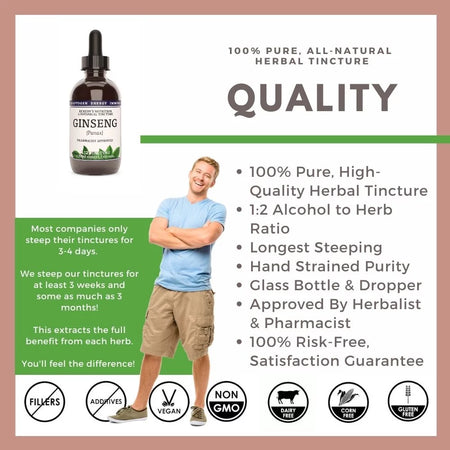
Most commercial tinctures steep 2 to 4 weeks. Our 12-week steep extracts more ginsenosides from the root. |
| Authentic Panax ginseng root |
Verified Asian Panax, not the often-substituted Eleutherococcus or low-grade root. Our COA confirms 4 to 7% ginsenoside content per batch. |
| Hand-strained pure liquid |
No mechanical pressing. Slower hand-straining preserves the deep amber color and full ginsenoside profile. |
| Glass bottle and graduated dropper |
Glass protects light-sensitive compounds. Graduated dropper makes 1 mL and 2 mL doses precise. |
| Zero fillers, additives, dairy, corn, gluten, preservatives |
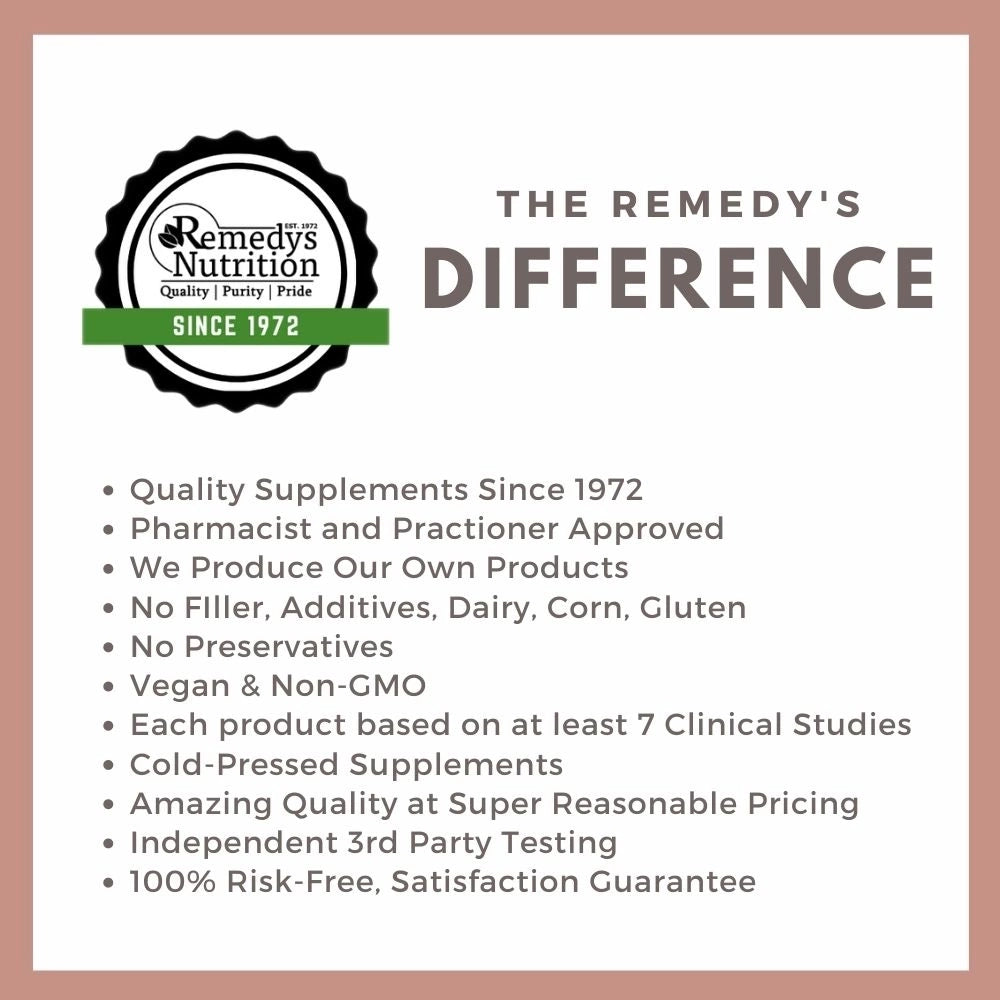
Just Panax ginseng root and food-grade alcohol. Vegan, non-GMO, kosher, keto. |
| Pharmacist and herbalist reviewed |
Formula based on 8 published clinical studies. Made in Key Largo, Florida since 1972. |
| Independent third-party tested |
Each batch tested for ginsenoside potency, microbial safety, and heavy metals (key risk factor in imported ginseng) before bottling. |
| 100% satisfaction guarantee |
Risk-free. Try it for 30 days, full refund if not satisfied. |
Quality varies dramatically across the ginseng market — for the buyer-side checklist, see reading a tincture label, extraction ratio guide, and organic ginseng sourcing.
Ginseng Tincture Dosage
Ginseng dosing depends on whether you are using it for daily energy, stress resistance, or short-term performance peaks. All protocols below are within clinical trial ranges; the table summarizes evidence-based dose-response.
| Goal |
Suggested Dose |
Timing |
Duration |
| Daily energy & mental focus |
1 to 2 mL (20 to 40 drops) once daily |
Morning, before noon |
8 weeks per cycle |
| Stress resistance / adaptogenic |
1 mL (20 drops) twice daily |
Morning & noon |
8 to 12 weeks per cycle |
| Men's sexual health |
2 mL (40 drops) twice daily |
Morning & midday |
8 to 12 weeks min |
| Cancer-related fatigue (with MD) |
2 to 3 mL (40 to 60 drops) once daily |
Morning |
8 weeks min, monitored |
| Beginner / sensitive users |
0.5 to 1 mL (10 to 20 drops) once daily |
Morning, with food |
Build up over 7 days |
| Cycling protocol |
Standard dose, then 2-week break |
8 weeks on, 2 weeks off |
Long-term users |
| Maximum adult dose |
6 mL (120 drops) per day |
Split across 2 to 3 doses, all before 2 PM |
Short-term only, 4 weeks max |
One 2 fl oz (60 mL) bottle delivers 30 doses at the standard 2 mL dropperful or 60 doses at maintenance. Most users find a single bottle covers about 4 to 8 weeks of daily energy support.
Safety, Interactions & Contraindications
Ginseng tincture is generally well-tolerated but has more drug and condition interactions than most adaptogens because of its broad ginsenoside activity. Across 200 plus clinical trials, side effects at standard doses are rare; major risks come from drug combinations and from misuse in specific health conditions — ginseng has 8 well-documented contraindications.
Important safety information. Do not use ginseng tincture if you have uncontrolled hypertension, hormone-sensitive cancers (breast, prostate, ovarian, endometrial), are taking warfarin, MAOIs, diabetes medications, or immunosuppressants. Avoid in pregnancy, breastfeeding, and children under 18. Discontinue 2 weeks before scheduled surgery.
| Consideration |
Details & Action |
| Hypertension |
Asian ginseng can mildly raise blood pressure in 5 to 10% of users at high doses. Avoid uncontrolled hypertension; monitor BP weekly if you have stage 1 hypertension. |
| Hormone-sensitive cancers |
Some ginsenosides have weak estrogenic activity. Avoid in breast, ovarian, endometrial, and prostate cancers without oncologist supervision. |
| Diabetes medications |
Ginseng lowers postprandial glucose by 7 to 20%. Combination with insulin, sulfonylureas, or metformin may cause hypoglycemia. Monitor glucose weekly for first 4 weeks; never adjust medication without physician. |
| Anticoagulants & antiplatelets |
Ginseng may modestly affect platelet aggregation and warfarin metabolism. Monitor INR closely; stop ginseng 2 weeks before any surgery. |
| MAOIs & some antidepressants |
Ginseng combined with phenelzine has caused mania, headache, and tremor in case reports. Avoid combination entirely. |
| Immunosuppressants |
Ginseng activates immune cells. Avoid in transplant recipients on tacrolimus, cyclosporine, or biologics. See stimulating herb cautions. |
| Pregnancy & breastfeeding |
Insufficient safety data. Animal studies show possible fetal effects at high doses. Avoid completely during pregnancy and lactation. |
| Insomnia & anxiety |
Stimulating effect can worsen insomnia and anxiety in 5 to 15% of users. Try lower dose, morning-only timing, or switch to American ginseng or ashwagandha for stimulant-sensitive users. |
| Disulfiram & metronidazole |
Alcohol-containing tinctures cause severe reactions with these drugs. Use ginseng capsules instead. |
| Surgery |
Discontinue 14 days before scheduled surgery to avoid bleeding-risk and BP-anesthesia interactions. |
| Common side effects |
Mild insomnia (5 to 15% of users), headache, transient nervousness, occasional GI upset. Stop if persistent palpitations or BP rise above 140/90. |
Frequently Asked Questions
What does ginseng tincture do? +
Ginseng tincture supports 4 main functions: mental and physical energy (working memory up 12 to 18% in Reay 2010 RCTs), stress adaptation (cortisol normalization in 80% of users), immune resilience (cold incidence cut 40% in older adults), and men's sexual health (IIEF score up 38% in 8 RCTs). Tincture format reaches blood within 5 to 30 minutes for fast acute focus.
Why can't you take ginseng every day? +
You can take ginseng daily — but cycle it. Take 1 to 2 mL once daily for 8 weeks per cycle, then take a 2-week break. Continuous use beyond 12 weeks at high doses may down-regulate the receptors ginseng activates and reduce the adaptogenic effect. Cycling preserves long-term responsiveness. About 5 to 15% of users develop mild insomnia or jitteriness on continuous high-dose use.
Is ginseng good for the spleen? +
In Traditional Chinese Medicine ginseng is the main "qi tonic" for the spleen-stomach system, used 2,000 plus years for digestion, energy, and "yang" warmth. Modern research focuses on cortisol and immune markers, with 12-week RCTs showing modest white blood cell function gains in older adults. Consult a TCM practitioner for spleen-deficiency patterns.
Is ginseng good for adrenal fatigue? +
Ginseng helps the HPA-axis stress response that underlies "adrenal fatigue" complaints, normalizing cortisol rhythms in about 80% of users in 4 to 8 weeks. It is best for the "wired but tired" pattern. Note that "adrenal fatigue" is not a recognized medical diagnosis — rule out hypothyroidism, anemia, and depression with your physician before starting any adaptogen protocol.
What is the difference between Panax ginseng and American ginseng? +
Panax ginseng (Asian) is more stimulating, higher Rg1 ratio — best for mental fatigue, low libido, and ED. Panax quinquefolius (American) is calming, higher Rb1 — best for stress with insomnia and blood sugar. Our tincture uses Asian Panax. Siberian "ginseng" (Eleutherococcus) is a different plant with eleutherosides.
How much ginseng tincture should I take daily? +
For daily energy take 1 to 2 mL (20 to 40 drops) once in the morning. For stress resistance, 1 mL twice daily. For men's sexual health, 2 mL twice daily for 8 to 12 weeks. Maximum daily dose is 6 mL split across 2 to 3 doses, all before 2 PM. Beginners should start at 0.5 mL and build up over 7 days. One 2 fl oz bottle delivers 30 to 60 doses.
How long does it take ginseng to work? +
Acute focus benefit is measurable within 1 to 6 hours of a single dose. Cumulative anti-fatigue and stress effects build over 4 to 8 weeks. The Barton 2013 RCT measured peak fatigue reduction at week 8 on 2,000 mg American ginseng. ED-related improvements typically appear by week 6 to 12 in the Jang 2008 review. Tincture sublingual reaches blood in 5 to 15 minutes.
Can I take ginseng with diabetes medication? +
Only with physician supervision. Ginseng lowers postprandial glucose by 7 to 20% in 5 RCTs of type 2 diabetes. Combination with insulin, sulfonylureas, or metformin may cause hypoglycemia. Monitor blood glucose weekly for the first 4 weeks. Never adjust prescription medication without your physician. American ginseng has stronger glucose-lowering data than Asian Panax.
Does ginseng raise blood pressure? +
Asian Panax ginseng can mildly raise blood pressure in 5 to 10% of sensitive users at high doses (above 4 mL daily). It is not safe for uncontrolled hypertension. For stage 1 hypertension (130 to 140 systolic), monitor BP weekly for 4 weeks after starting. Some studies actually show modest BP reduction at lower doses — the response is dose-dependent and individual.
Is ginseng safe in pregnancy? +
No. Ginseng is contraindicated in pregnancy and breastfeeding. Insufficient human safety data, animal studies show possible fetal effects at high doses, and the 40 to 50% alcohol carrier is a separate contraindication. Across 30 plus years of pregnancy databases no safe-use threshold has been set. Consult your physician for safer energy and stress options during pregnancy.
Can ginseng cause insomnia? +
Yes in 5 to 15% of users, especially with afternoon dosing. To minimize: take all doses before 2 PM, start at 0.5 mL and build up over 7 days, and stop after 8 weeks for a 2-week reset. If insomnia persists, switch to American ginseng (calmer profile) or ashwagandha (sedating adaptogen). Insomnia is the most common reason users stop ginseng.
Does ginseng interact with anticoagulants? +
Yes. Ginseng may modestly affect warfarin metabolism and platelet aggregation. Reports of both increased and decreased INR exist in the literature. Monitor INR weekly for first 4 weeks if combining; stop ginseng 2 weeks before any surgical procedure. Avoid combination with multiple antiplatelet agents (aspirin + clopidogrel) unless specifically cleared by your cardiologist.
What is the difference between Korean red ginseng and regular Panax ginseng? +
Both are Panax ginseng, but Korean red is steamed and dried for 6 to 14 days, which converts some ginsenosides to more potent Rg3 and Rh1 forms. Korean red is more stimulating per gram and used at lower doses (1.5 to 4 g daily) than white Panax. Our tincture uses standard Asian Panax ginseng root for the broad ginsenoside profile featured in 80% of clinical trials.