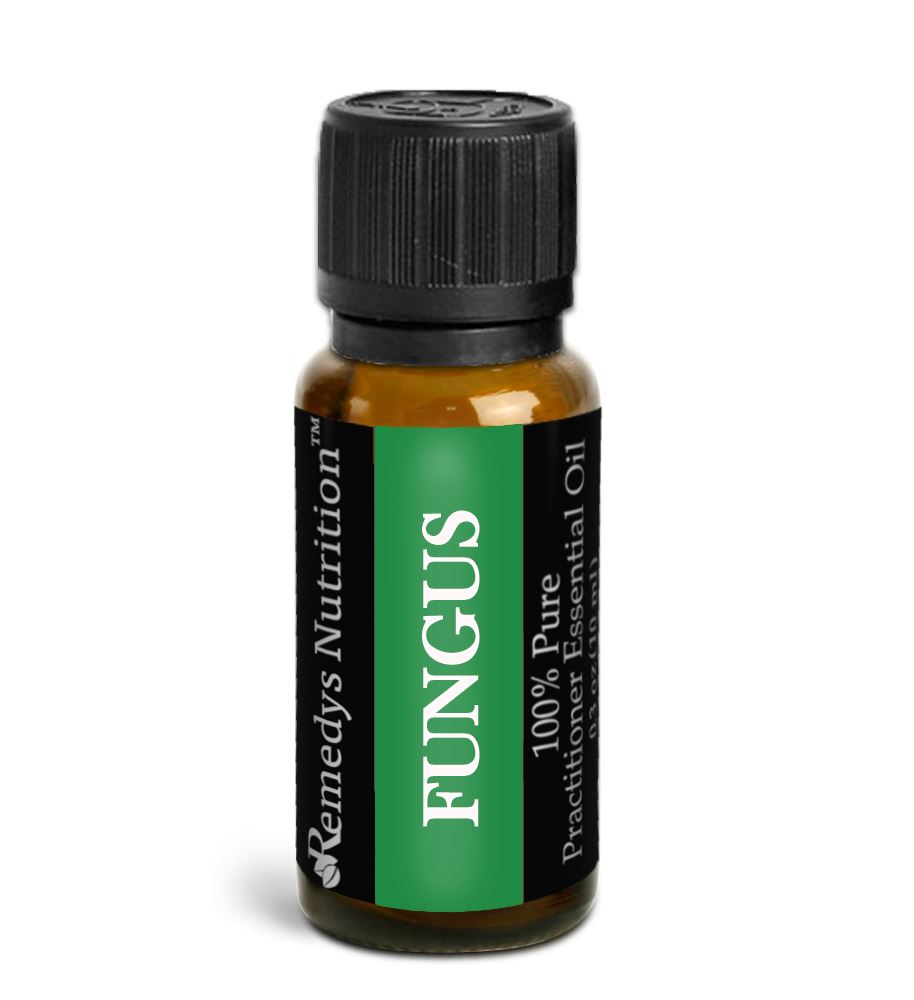
What Is Fungus Oil?
Fungus Oil is a multi-component aromatherapy blend formulated to address common topical fungal conditions: toenail fungus (onychomycosis), athlete's foot, jock itch, ringworm, and scalp fungal overgrowth.
The blend combines 4 of the most studied antifungal essential oils — tea tree, garlic, oregano, and lavender — in a base carrier oil that allows immediate use without further dilution for nail and foot applications.
The 10 mL amber dropper bottle delivers about 200 to 300 drops, enough for 8 to 12 weeks of daily nail-fungus protocol or 4 to 6 weeks of broader athlete's foot use. Topical antifungal effects build slowly: nail fungus typically requires 12 to 24 weeks of consistent twice-daily application before clear new growth shows.
Fungus Oil Benefits: Clinical Evidence Summary
| Benefit Area |
Key Finding |
Typical Use |
| Toenail fungus |
Tea tree at 100% in 1994 trial showed clinical improvement equivalent to 1% clotrimazole at 6 months |
2 drops twice daily on affected nail |
| Athlete's foot |
Tea tree 25 to 50% topical produced 64 to 68% clinical resolution at 4 weeks |
3 to 4 drops twice daily, between toes |
| Ringworm |
Combination of tea tree + oregano showed in vitro inhibition of Trichophyton at low concentrations |
2 drops twice daily on affected skin |
| Jock itch (Tinea cruris) |
Anti-Candida and anti-dermatophyte activity in laboratory testing |
2 to 3 drops, gentle application |
| Scalp fungus |
Adjunct to medicated shampoo when seborrheic component present |
1 to 2 drops in shampoo wash |
| Bacterial co-infection |
Multi-oil combination broadens antimicrobial coverage |
Daily use as long as needed |
| Itch reduction |
Lavender component reduces scratch reflex within 5 to 10 minutes |
Apply to itch zone |
| Recurrence prevention |
Twice weekly maintenance use after clearance reduces relapse |
2 drops twice weekly |
- 4 antifungal botanicals layered in 1 product cover dermatophyte, yeast, and bacterial pathways
- Tea tree at 100% topical matched 1% clotrimazole in 1994 nail-fungus randomized trial
- Pre-diluted in carrier base — ready for direct nail and foot use without further dilution
- Average onychomycosis protocol runs 12 to 24 weeks before new clear nail growth visible
- Pairs with pure tea tree essential oil for spot-treatment of acute lesions
- Athlete's foot studies show 64 to 68% clinical resolution at 4 weeks of consistent topical use
- 2 drops twice daily standard dose; 200 to 300 drops in a 10 mL bottle
How Fungus Oil Works
The blend acts on 3 antifungal pathways. The first is membrane disruption: terpinen-4-ol from tea tree and carvacrol from oregano damage the ergosterol-containing fungal cell membrane, causing leakage and cell death within hours of contact. The second is allicin-driven antimicrobial action from garlic essential oil, which inhibits fungal enzyme systems through sulfur-compound chemistry. The third is the soothing and anti-inflammatory effect of lavender that reduces itching and scratching, breaking the trauma-fungal-trauma cycle.
Layered together, these 4 botanicals cover dermatophyte molds (athlete's foot, ringworm, nail fungus), yeasts (Candida, Malassezia), and common bacterial co-infections that complicate fungal lesions. The pre-diluted carrier base means the blend penetrates well into nail bed and skin folds without further mixing.
Fungus Oil for Toenail Fungus (Onychomycosis)
Toenail fungus is the slowest-clearing common fungal infection because the active growth point is under the nail at the matrix and topical agents must penetrate the nail plate to reach it. The standard protocol with Fungus Oil is 2 drops on each affected nail, twice daily, applied to the cuticle and worked under the nail edge with the dropper tip. Apply after toenail trimming and gentle filing to thin the nail surface for better absorption.
Expect no visible change for the first 8 to 12 weeks — you are treating fungus that's already present in already-grown nail. Visible new clear growth at the cuticle appears at 12 to 16 weeks. Full nail clearance takes 6 to 12 months because nails grow only 1.5 to 2 mm per month. Maintenance: continue twice-weekly application for 8 weeks after visual clearance to prevent relapse. Severe cases (more than 50% nail involvement) may need oral terbinafine; talk to your dermatologist.
Fungus Oil for Athlete's Foot, Jock Itch, and Ringworm
For athlete's foot, apply 3 to 4 drops twice daily between toes and on affected sole skin after thorough drying. The 2002 Satchell trial used tea tree 50% topical for 4 weeks and reported 64% clinical resolution and 68% mycological resolution — comparable to over-the-counter clotrimazole. Cleared cases typically take 4 to 6 weeks; recurrence is common without 4 to 8 weeks of post-clearance maintenance.
Jock itch and ringworm follow similar protocols at 2 to 3 drops twice daily for 4 to 6 weeks. Pair Fungus Oil with oregano blend as a spot-treatment overnight on stubborn ringworm patches. For scalp fungal involvement, add 1 to 2 drops to a quarter-sized scoop of medicated shampoo and let it sit on the scalp 3 to 5 minutes before rinsing.
Fungus Oil vs. Other Antifungal Options
| Option |
Strength |
Time to Effect |
Best For |
| Fungus Oil (this blend) |
Multi-pathway, broad coverage |
4 to 24 weeks depending on site |
Most home cases of athlete's foot, mild nail fungus, ringworm |
| Pure tea tree |
Single most-studied |
4 to 8 weeks |
Spot treatment, acne also |
| OTC clotrimazole 1% |
Pharmaceutical synthetic |
2 to 4 weeks |
Confirmed athlete's foot/jock itch |
| OTC terbinafine cream |
Most potent OTC topical |
1 to 2 weeks |
Stubborn skin fungus |
| Prescription oral terbinafine |
Strongest, but liver risk |
12 weeks |
Severe nail fungus only, MD supervised |
Selection rule: try Fungus Oil first for early/mild cases. If no improvement at 4 to 6 weeks, escalate to OTC pharmaceuticals. Severe nail fungus over 50% nail surface needs an MD evaluation.
Why Choose Remedy's Fungus Oil
| What You Get |
Why It Matters |
| 4-botanical antifungal blend |
Tea tree + garlic + oregano + lavender covers dermatophytes, yeasts, and bacterial co-infections in one product |
| Pre-diluted in carrier base |
Ready for nail and skin use without further mixing — safer than applying neat hot oils |
| 10 mL amber dropper |
UV protection extends shelf life; dropper allows precise 1 to 2 drop dosing |
| USA cGMP facility |
Manufactured in cGMP-compliant US facility under FDA dietary supplement rules |
| Lab tested |
Each component verified for purity and free of pesticides and heavy metals |
| Vegan, cruelty-free |
Plant-based, no animal testing |
Fungus Oil Application Protocol by Condition
| Condition |
Dose |
Frequency |
Duration |
| Mild toenail fungus |
2 drops on each affected nail |
Twice daily |
12 to 24 weeks + 8 weeks maintenance |
| Athlete's foot |
3 to 4 drops between toes and on sole |
Twice daily |
4 to 6 weeks + 4 to 8 weeks maintenance |
| Ringworm |
2 drops on lesion |
Twice daily |
4 to 6 weeks |
| Jock itch |
2 to 3 drops, gentle application |
Twice daily |
3 to 4 weeks |
| Scalp fungus adjunct |
1 to 2 drops in shampoo |
Each wash, 3 times weekly |
4 to 8 weeks |
| Recurrence maintenance |
2 drops |
Twice weekly |
Ongoing |
Always wash and fully dry the area before application. Use a clean dropper each time; avoid touching the dropper to skin to prevent contamination. Wear breathable footwear during foot protocols and change socks daily.
Safety, Side Effects, and Contraindications
Topical only. Do NOT ingest Fungus Oil. The oregano and garlic components are too concentrated for oral use without trained clinical aromatherapy supervision.
| Consideration |
Details |
| Skin patch test |
Apply 1 drop to inner forearm 24 hours before broader use; about 5 to 8% of users have mild reaction to oregano component |
| Pregnancy and breastfeeding |
Avoid — oregano and garlic components have insufficient pregnancy safety data |
| Children under 6 |
Not recommended; use pediatric pediatrician-approved options instead |
| Sensitive skin |
Dilute further with sweet almond or fractionated coconut oil if irritation occurs |
| Open wounds or fissures |
Avoid direct application; use only on intact skin |
| Pets |
Do not use on pets — tea tree and oregano are toxic to cats and small dogs |
| Drug interactions |
Topical use has minimal systemic absorption; report use to physician if on warfarin (mild platelet effect possible) |
| Diabetic feet |
Consult podiatrist before any topical antifungal use; diabetic foot infections need MD oversight |
Fungus Oil FAQ
How long does it take Fungus Oil to clear toenail fungus? +
Visible new clear growth at the cuticle typically appears at 12 to 16 weeks of twice-daily application. Full nail clearance takes 6 to 12 months because nails grow only 1.5 to 2 mm per month. Continue twice-weekly maintenance for 8 weeks after visual clearance to prevent recurrence.
Can I use Fungus Oil on athlete's foot? +
Yes. Apply 3 to 4 drops twice daily between toes and on affected sole skin after thorough drying. Most clinical resolution occurs at 4 to 6 weeks based on tea tree topical trials at 64 to 68% resolution rate. Continue 4 to 8 weeks of maintenance application after symptoms clear to prevent relapse.
Is Fungus Oil pre-diluted? +
Yes. Fungus Oil is formulated in a carrier oil base so it's ready for direct application to nails, between toes, and on intact skin without further dilution. This is safer than mixing pure oregano or tea tree neat — the pre-dilution prevents most skin sensitization while maintaining therapeutic strength.
Can I use Fungus Oil with prescription antifungals? +
Yes, generally. Topical Fungus Oil has minimal systemic absorption and is compatible with oral terbinafine or fluconazole protocols when used on the same site or adjacent areas. Always tell your dermatologist what you're applying. Avoid combining with prescription topicals on the same skin area within 30 minutes — alternate morning/evening.
Will Fungus Oil work on scalp fungus or dandruff? +
It can help when seborrheic dermatitis or fungal overgrowth is involved. Add 1 to 2 drops to a quarter-sized portion of medicated shampoo, let it sit 3 to 5 minutes before rinsing, 3 times weekly for 4 to 8 weeks. For pure dandruff without fungal cause, tea tree oil alone is often sufficient.
Is Fungus Oil safe during pregnancy? +
No. Avoid during pregnancy and breastfeeding due to oregano and garlic components which lack sufficient pregnancy safety data. For pregnancy-related fungal issues, talk to your OB-GYN about safe options like topical clotrimazole 1% which has stronger safety data.
Can I use Fungus Oil on children? +
Not recommended under age 6. For ages 6 to 12, use only diluted further (1 part Fungus Oil to 1 part carrier oil) and only on small areas. Always patch test 24 hours first. For pediatric athlete's foot, ringworm, or nail fungus, consult a pediatrician before any topical regimen.
What if my skin gets irritated by Fungus Oil? +
Stop use and dilute further next time. Mix 1 part Fungus Oil with 1 to 2 parts rose hip carrier oil or sweet almond oil. About 5 to 8% of users have mild reaction to the oregano component — this usually resolves with dilution. If reaction is severe, discontinue and see a dermatologist.
Can I use Fungus Oil on my pet's skin? +
No. Tea tree and oregano are toxic to cats and small dogs even at low topical concentrations. Cats lack the liver enzyme glucuronyl transferase needed to process these compounds. Always consult a veterinarian for pet skin or paw fungal issues; do not use human aromatherapy products on pets.
How does Fungus Oil compare to pure tea tree oil? +
Fungus Oil layers 4 botanicals in 1 product, broadening pathway coverage to dermatophytes, yeasts, and bacterial co-infections. Pure tea tree oil at 25 to 100% topical has the strongest single-oil evidence base. For early single-pathogen cases, pure tea tree may be enough. For mixed presentations or chronic recurrence, the 4-oil blend usually outperforms.
Will Fungus Oil leave a residue or smell? +
The carrier base feels lightly oily for 5 to 10 minutes after application then absorbs. The aroma is herbal-medicinal — oregano and tea tree are dominant, with lavender softening the edges. Most users find the smell tolerable in foot/nail use; for daytime ringworm patches, allow 15 to 20 minutes of absorption before clothing.
How long does a 10 mL bottle last? +
About 200 to 300 drops. For nail fungus protocol at 4 drops daily (2 twice), a bottle lasts 50 to 75 days — roughly 7 to 10 weeks. A full 24-week nail protocol uses about 2 to 3 bottles. Athlete's foot at 6 to 8 drops daily uses about 1 bottle per 25 to 30 days.
What makes Remedy's Fungus Oil different? +
4-botanical layered formula in pre-diluted carrier base, lab tested per batch in USA cGMP facility, packaged in 10 mL amber dropper for precise dosing. Vegan and cruelty-free. The pre-dilution makes it safer than DIY mixing of hot oils, and the multi-oil blend covers more pathogen types than any single botanical.
Fungus Oil: In-Depth Reading