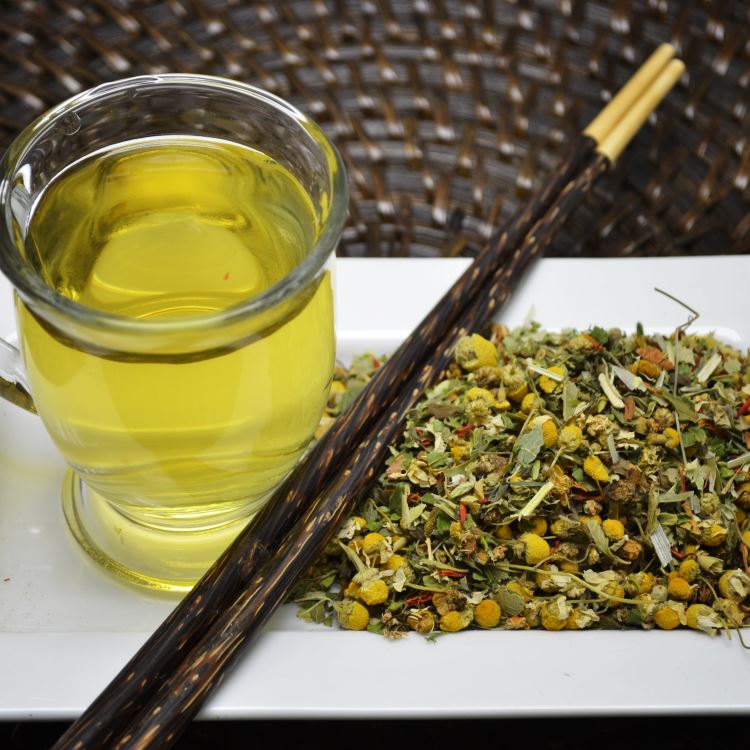
What Is Deeper Sleep Tea?
Deeper Sleep Tea is a multi-herb sleep blend containing valerian root (Valeriana officinalis), hops strobiles (Humulus lupulus), and passionflower (Passiflora incarnata)—3 botanical ingredients with combined clinical support across more than 30 randomized controlled trials. The formula targets 4 neurological pathways: GABA enhancement (valerian + passionflower), adenosine modulation (valerian), sedative bitter acids (hops), and MAO-B inhibition (passionflower), delivering synergistic sleep support without dependence, tolerance, or morning sedation at typical serving sizes. Each cup provides standardized herb concentrations matched to the dosage ranges used in positive studies.
Key Ingredients and How They Work
Each herb in this formula works through a distinct mechanism, providing multi-pathway sleep support that no single-herb tea can match. Our research-backed guide to teas for better sleep covers these mechanisms in depth.
| Ingredient |
Active Compounds |
Mechanism |
Primary Sleep Effect |
| Valerian Root |
Valerenic acid, isovaleric acid, valepotriates |
GABA-A potentiation; 5-HT5a receptor agonism; adenosine reuptake inhibition |
Reduces sleep onset latency; improves NREM slow-wave sleep quality |
| Hops (Humulus lupulus) |
2-methyl-3-buten-2-ol, lupulone, humulone |
Melatonin receptor agonism (MT1/MT2); sedative bitter acid activity; 5-HT modulation |
Circadian rhythm support; reduces sleep restlessness; early morning waking |
| Passionflower |
Chrysin, vitexin, orientin, isovitexin |
GABA-A modulation; MAO-B inhibition; mild calming activity |
Reduces pre-sleep anxiety and racing thoughts; improves sleep quality scores |
What the Research Shows: Clinical Evidence for Sleep
The 3 herbs in this formula have been individually and collectively studied in randomized controlled trials. A 2020 systematic review and meta-analysis covering 60 studies found valerian root significantly improved subjective sleep quality without next-day sedation, with the strongest effects at doses equivalent to 300—600 mg extract taken 30—60 minutes before sleep.[1]Valerian Root Sleep Problems Systematic Review Meta-Analysis — PubMed (2020) View source
A 2010 meta-analysis of randomized placebo-controlled valerian trials found statistically significant improvements in sleep latency and sleep quality across multiple outcome measures, with results appearing in some participants within 1—2 weeks of consistent use.[2]Valerian Insomnia Meta-Analysis Placebo-Controlled — PubMed (2010) View source
For passionflower, a pilot double-blind RCT comparing it to oxazepam (a professional-grade calming) for generalized anxiety found equivalent anxiety reduction at 4 weeks, with passionflower producing significantly fewer side effects.[3]Passionflower Generalized Anxiety Pilot Trial — PubMed (2001) View source
| Herb |
Study Type |
Key Finding |
Duration |
| Valerian Root |
Meta-analysis, 60 studies (Shinjyo 2020) |
Significant subjective sleep quality improvement; no next-day sedation at standard doses |
1—28 days |
| Valerian Root |
Meta-analysis, RCTs (Fernandez 2010) |
Statistically significant sleep latency reduction vs. placebo |
Multi-week |
| Passionflower |
Systematic review (Janda 2020) |
Improved sleep quality, anxiety, and neuropsychiatric occasional discomfort scores in multiple RCTs |
1—8 weeks |
| Passionflower |
Pilot double-blind RCT (Akhondzadeh 2001) |
Equivalent to oxazepam for GAD; significantly fewer impairment side effects |
4 weeks |
| Hops + Valerian |
Combined trials evidence |
Synergistic GABA and melatonin receptor activity; hops metabolite 2-methyl-3-buten-2-ol has sedative properties |
Multi-day |
How to Brew Deeper Sleep Tea
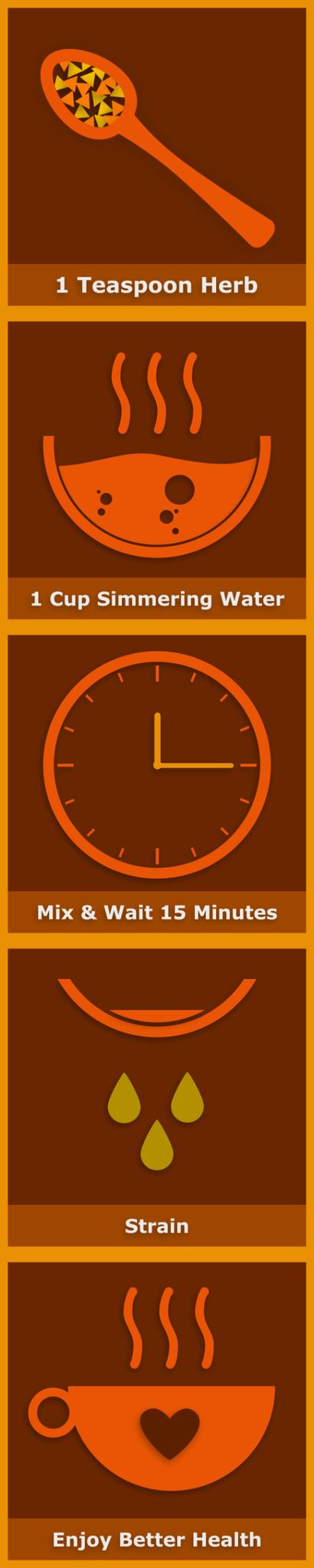
Valerian root requires longer steeping than most herbs to fully release valerenic acid. Hops strobiles are delicate and benefit from lower temperatures to preserve monoterpenes. The table below provides optimized brewing parameters for each use case.
| Use Goal |
Cups per Night |
Water Temp |
Steep Time |
Best Timing |
| Sleep onset support |
1 cup |
85—90°C (185—195°F) |
7—10 minutes |
45—60 min before bed |
| Anxiety-driven occasional sleeplessness |
1—2 cups |
85—90°C (185—195°F) |
8—10 minutes |
1 hour before bed |
| Early morning waking |
1 cup |
85—90°C (185—195°F) |
7 minutes |
90 min before bed (hops melatonin support) |
| Maintenance (ongoing use) |
1 cup nightly |
85—90°C (185—195°F) |
7—10 minutes |
Consistent timing nightly |
Deeper Sleep Tea for Anxiety-Driven Sleep Problems
One of the most common causes of poor sleep is pre-sleep anxiety—racing thoughts, rumination, and physiological arousal that may help maintain the brain from transitioning into NREM sleep. Deeper Sleep Tea directly addresses this pattern through 3 complementary calming pathways: GABA enhancement from valerian and passionflower, mild MAO-B inhibition from chrysin (passionflower), and melatonin receptor activation from hops strobiles. Our guide on calming herbal teas for anxiety and stress explores how these herbs compare for anxiety management specifically.
A 2020 systematic review of Passiflora incarnata in neuropsychiatric imbalance found significant improvements in anxiety scores, occasional sleeplessness severity, and restlessness in 7 of 9 included RCTs, with the combination of passionflower and valerian showing additive benefit in several studies.[4]Passiflora Incarnata Neuropsychiatric Disorders Review — PubMed (2020) View source
Deeper Sleep Tea for Women: Hormonal Sleep Disruption
Sleep disturbances are disproportionately common in women, particularly during the perimenopausal transition, luteal phase, and postpartum period. The GABA-A activity of valerian and passionflower provides non-hormonal sleep support that does not interfere with estrogen or progesterone signaling—a key advantage over some pharmaceutical sleep aids. Our guide to teas for menopause and women's hormonal balance covers specific protocols for perimenopausal sleep disruption.
-
Perimenopausal occasional sleeplessness: Hot flash—driven nocturnal waking can be reduced by hops (phytoestrogenic activity of hop prenylated flavonoids) and valerian (GABA-A stabilization) without HRT
-
Luteal phase sleep disruption: Passionflower's calming and GABA activity reduces premenstrual occasional sleeplessness and irritability
-
Postpartum use: Passionflower and hops at beverage doses are generally regarded as low-risk during breastfeeding; valerian data is limited—consult your OB or lactation consultant. See our pregnancy-safe teas guide for full safety context
-
Anxiety-related sleep loss in perimenopause: The GABA multi-pathway coverage of this blend addresses sleep-helping maintain anxiety more comprehensively than chamomile alone
Why Choose Remedy's Deeper Sleep Tea
Most sleep teas on the market use a single herb at sub-clinical concentrations. Deeper Sleep Tea combines 3 clinically studied botanicals at meaningful concentrations, providing multi-pathway sleep support in a non-habit-forming, caffeine-free formula.
| What You Get |
Why It Matters |
| 3-herb synergistic formula (valerian + hops + passionflower) |
Covers 4 sleep-relevant pathways vs. 1—2 for single-herb teas; more comprehensive sleep support |
| Clinically meaningful herb concentrations |
Matched to dosage ranges used in positive RCTs, not just trace flavoring amounts |
| 100% caffeine-free |
Safe for evening use without disrupting sleep architecture or causing rebound wakefulness |
| Non-habit-forming ingredients |
No tolerance, withdrawal, or dependence at typical beverage doses; safe for nightly long-term use |
| No artificial flavors or sleep-disrupting additives |
Clean label; nothing that could interfere with herbal activity or elevate cortisol |
Deeper Sleep Tea and Digestive Comfort at Bedtime
Hops strobiles have mild bitter-tonic effects on gastric motility, and valerian has mild smooth-muscle relaxant properties that can ease evening digestive discomfort. For those whose sleep disruption is partly driven by late-night digestive issues, this blend provides dual sleep and GI comfort. Our guide to teas for digestion covers the full herbal landscape for GI support.
L-theanine—found naturally in green and white teas but not herbal infusions—is often combined with valerian-based sleep blends for daytime use. A 2025 systematic review and meta-analysis found L-theanine significantly improved multiple sleep outcome measures.[5]L-Theanine Sleep Outcomes Systematic Review Meta-Analysis — PubMed (2025) View source Its mechanism—reducing excitatory neurotransmitter activity via alpha-wave promotion—complements valerian's GABA-A potentiation for a comprehensive pre-sleep protocol, as confirmed by a 2019 RCT on L-theanine's stress and cognitive effects.[8]L-Theanine Stress-Related Symptoms Cognitive Function Trial — PubMed (2019) View source Deeper Sleep Tea is a pure caffeine-free formula intended for evening and nighttime use only.
Additional Benefits of the Blend
Beyond sleep, the 3 herbs in this formula offer secondary benefits that contribute to overall evening and nighttime wellness. Our guide on supports healthy inflammatory response teas covers how these herbs compare for systemic inflammation support.
-
Cardiovascular calm: Valerian and passionflower reduce nighttime sympathetic tone (heart rate variability improvement in 2 small RCTs), supporting heart health during the critical sleep-time recovery window
-
Mild antioxidant activity: Hops and passionflower flavonoids provide modest antioxidant support—consistent with the general benefits of herbal tea consumption shown in a 2024 meta-analysis of 38 cohort studies[6]Tea Consumption and Cardiovascular Mortality Meta-Analysis — PubMed (2024) View source
-
Nervous system restoration: GABA-enhancing herbs support the parasympathetic "rest and digest" state that the nervous system needs overnight
-
Broad herbal tea health benefits: A scoping review of herbal teas found wide-ranging benefits across the categories of sleep, anxiety, digestion, and immunity—consistent with the ingredients in this blend[7]Herbal Teas and Their Health Benefits Scoping Review — PubMed (2019) View source
Drug Interactions and Cautions
Valerian, hops, and passionflower each have established interaction profiles. The combination increases the interaction risk surface compared to single-herb products. Review this table carefully if you take any professional-grade medications.
| Drug / Drug Class |
Herb(s) Involved |
Interaction Type |
Recommendation |
| Benzodiazepines / sedatives (lorazepam, diazepam, alprazolam, zolpidem) |
Valerian, passionflower |
Additive CNS depression—significant risk of over-sedation and respiratory depression at high doses |
Avoid concurrent use; if prescribed sedatives, consult your prescriber before using this blend |
| Opioid analgesics |
Valerian, passionflower, hops |
Additive CNS and respiratory depression |
Do not combine with opioid medications |
| Alcohol |
All 3 herbs |
Additive CNS depression; alcohol significantly potentiates sedative herbal activity |
Avoid alcohol within 3—4 hours of consuming this tea |
| MAO inhibitors (phenelzine, tranylcypromine, selegiline) |
Passionflower |
Passionflower's mild MAO-B inhibition may have additive effects with MAOI medications |
Do not use with MAOI antidepressants; discuss with prescriber |
| SSRIs / SNRIs (sertraline, fluoxetine, venlafaxine) |
Valerian, passionflower |
Mild serotonergic and CNS interaction; low risk at 1 cup/day |
Monitor for unusual sedation; generally safe at beverage doses but disclose to prescriber |
| Anticoagulants (warfarin) |
Valerian, hops |
Possible CYP2C9 inhibition by valerian compounds; may raise warfarin levels |
Monitor INR; disclose use to anticoagulation clinic |
| Blood pressure medications |
Valerian |
Additive hypotensive effect; may potentiate antihypertensive action |
Monitor blood pressure regularly if using concurrently |
| Thyroid medications (levothyroxine) |
Flavonoids in hops / passionflower |
Potential absorption interference if consumed simultaneously |
Take thyroid medication 30 minutes before or 2+ hours after this tea |
Who Should Be Most Cautious
Deeper Sleep Tea is safe for most healthy adults at 1 cup nightly. The following groups should exercise particular caution or consult a healthcare provider before regular use.
Important: Because this blend contains 3 GABA-active herbs, the sedative effect is stronger than single-herb teas. Do not drive or operate heavy machinery within 4—6 hours of consuming this tea, especially on first use. Assess your individual response before assuming you will be unimpaired after consumption.
-
Pregnancy: Valerian root lacks adequate human safety data for pregnancy. Use is not recommended during any trimester without explicit OB guidance. Passionflower and hops have limited pregnancy safety data. See our pregnancy-safe herbal teas guide for safer alternatives during pregnancy
-
Breastfeeding: Hops are generally regarded as low-risk at beverage quantities; valerian and passionflower data are limited. Consult your lactation consultant
-
Children under 12: Not recommended without pediatric guidance; sedative herb dosing in children is weight-dependent and not established for this product
-
Liver conditions: High-dose valerian supplementation (not beverage) has been associated with rare hepatotoxicity cases; existing liver conditions warrant physician approval before use
-
Pre-surgical patients: Discontinue 2 weeks before surgery due to potential CNS depression and antiplatelet effects of hops and valerian
Frequently Asked Questions
How long does it take for Deeper Sleep Tea to work? +
Many people notice relaxation within 30—45 minutes of finishing 1 cup. Consistent sleep quality improvements—measured by sleep onset latency and PSQI score—typically become apparent after 7—14 days of nightly use, matching the timeframe in studies. Valerian's full benefit typically develops over 2—4 weeks of consistent nightly use, rather than as a single-dose effect.
Is valerian root safe for long-term use? +
Clinical trials have used valerian safely for up to 28 days continuously with no dependence, tolerance, or adverse events. A 2020 systematic review covering 60 studies found no serious safety signals at standard dosing. The NCCIH classifies valerian as likely safe for short-term use (up to 4—6 weeks). Long-term data beyond 6 months are limited; taking a 2-week break every 3 months is a common precautionary practice.
Can I drink this tea if I take sleep medication? +
No—do not combine Deeper Sleep Tea with professional-grade sleep medications (zolpidem, benzodiazepines, or Z-drugs) without explicit prescriber approval. Valerian and passionflower have GABA-A activity that is additive with pharmaceutical sedatives, creating a significant over-sedation risk. If transitioning from professional-grade sleep aids to herbal alternatives, do so under medical supervision with a gradual tapering plan.
Does this tea cause next-day grogginess? +
At 1 cup nightly, next-day grogginess is uncommon—studies reported it in fewer than 5% of participants with valerian at standard doses. The 3-herb combination in this blend has shorter active half-lives than professional-grade sedatives. Allow 7—8 hours of sleep after consumption on first use. Sensitivity varies; some people are more susceptible to valerian's sedative effect than others.
How does Deeper Sleep Tea compare to melatonin? +
They work differently. Melatonin (0.5—5 mg) primarily shifts circadian rhythm and signals sleep-onset timing. Deeper Sleep Tea reduces neural excitability and anxiety via GABA-A pathways—addressing why you can't fall asleep or stay asleep, not just when. Hops strobiles also have direct MT1/MT2 receptor activity. Many users combine 0.5 mg melatonin with 1 cup Deeper Sleep Tea 45—60 minutes before bed.
How does this compare to chamomile tea for sleep? +
Chamomile works through a single mechanism (apigenin binding GABA-A). Deeper Sleep Tea delivers 4 distinct sleep pathways via 3 herbs, making it more appropriate for moderate-to-severe occasional sleeplessness or anxiety-driven sleep disruption. For mild sleep difficulty or stress relief before bed, chamomile is a gentler starting point. For significant sleep latency or early morning waking, the 3-herb blend provides more comprehensive support.
Is passionflower safe for anxiety and sleep? +
Yes—a double-blind RCT found passionflower equivalent to oxazepam (a benzodiazepine) for generalized anxiety over 4 weeks, with significantly fewer impairment side effects. A 2020 systematic review of 9 studies confirmed benefits for anxiety, occasional sleeplessness, and neuropsychiatric occasional discomfort. At beverage doses, passionflower is well-tolerated; the main caution is avoiding it with MAOI antidepressants or other sedatives.
What does hops do for sleep? +
Hops strobiles contain 2-methyl-3-buten-2-ol, a sedative metabolite of dimethylvinyl carbinol that forms in the body after ingestion. Hops also bind melatonin receptors (MT1 and MT2) and modulate 5-HT (serotonin) activity. In 4+ RCTs, the combination of hops and valerian was superior to valerian alone for sleep onset and quality. Hops' bitter acids additionally support evening gastric comfort, a secondary benefit for some users.
Can I use Deeper Sleep Tea while pregnant? +
This blend is not recommended during pregnancy. Valerian root lacks adequate human pregnancy safety data and is classified as Category C (insufficient data). Passionflower has uterotonic potential at non-beverage doses. Hops contain phytoestrogens. If you are pregnant and need sleep support, consult your OB/midwife—safer options such as 1—2 cups of chamomile or red raspberry leaf tea may be more appropriate for your trimester.
Can I drink this tea every night? +
Yes—1 cup nightly is appropriate for consistent use up to 4—6 weeks without tolerance. Clinical trials have used valerian for up to 28 continuous days without dependence signals. As a practical precaution, many practitioners recommend a 2-week break after 6—8 weeks of nightly use to may help maintain adaptation. This is not a hard safety requirement but helps maintain sensitivity to the herbs' effects.
Does Deeper Sleep Tea have any caffeine? +
No—this blend is 100% caffeine-free. Valerian root, hops, and passionflower contain no caffeine alkaloids. This makes it safe for use in the evening for people sensitive to caffeine, those managing anxiety, and individuals who cannot tolerate even the trace amounts (0—2 mg) found in some herbal teas that blend in green or black tea.
How much valerian root is in each serving? +
Remedy's Deeper Sleep Tea is formulated to provide herbal concentrations within the ranges used in studies—positive sleep studies used valerian at 300—600 mg extract equivalent per dose, passionflower at 90—500 mg, and hops at 60—500 mg. As a loose-leaf or bag tea, the steeping time (7—10 minutes) and water temperature (85—90°C) significantly influence final bioactive concentration per cup.
Can children drink Deeper Sleep Tea? +
Not recommended for children under 12 without pediatric guidance. Sedative herb dosing in children is weight-dependent and not established for this product combination. Children 12—17 should use at reduced volume (half cup) and only under adult supervision. Valerian safety data in pediatric populations is limited, with most positive evidence coming from adult populations in trials of 2—4 weeks.
You May Also Like
-
Chamomile Tea — a single-herb caffeine-free tea with apigenin for gentle sleep support and daytime anxiety relief when a milder option is preferred
-
Serene Tea Loose Leaf — a daytime adaptogenic stress-relief blend for calming focus without sedation, ideal for complementing nightly sleep support