Quick Answer: Brewer's Yeast with Vitamin B1
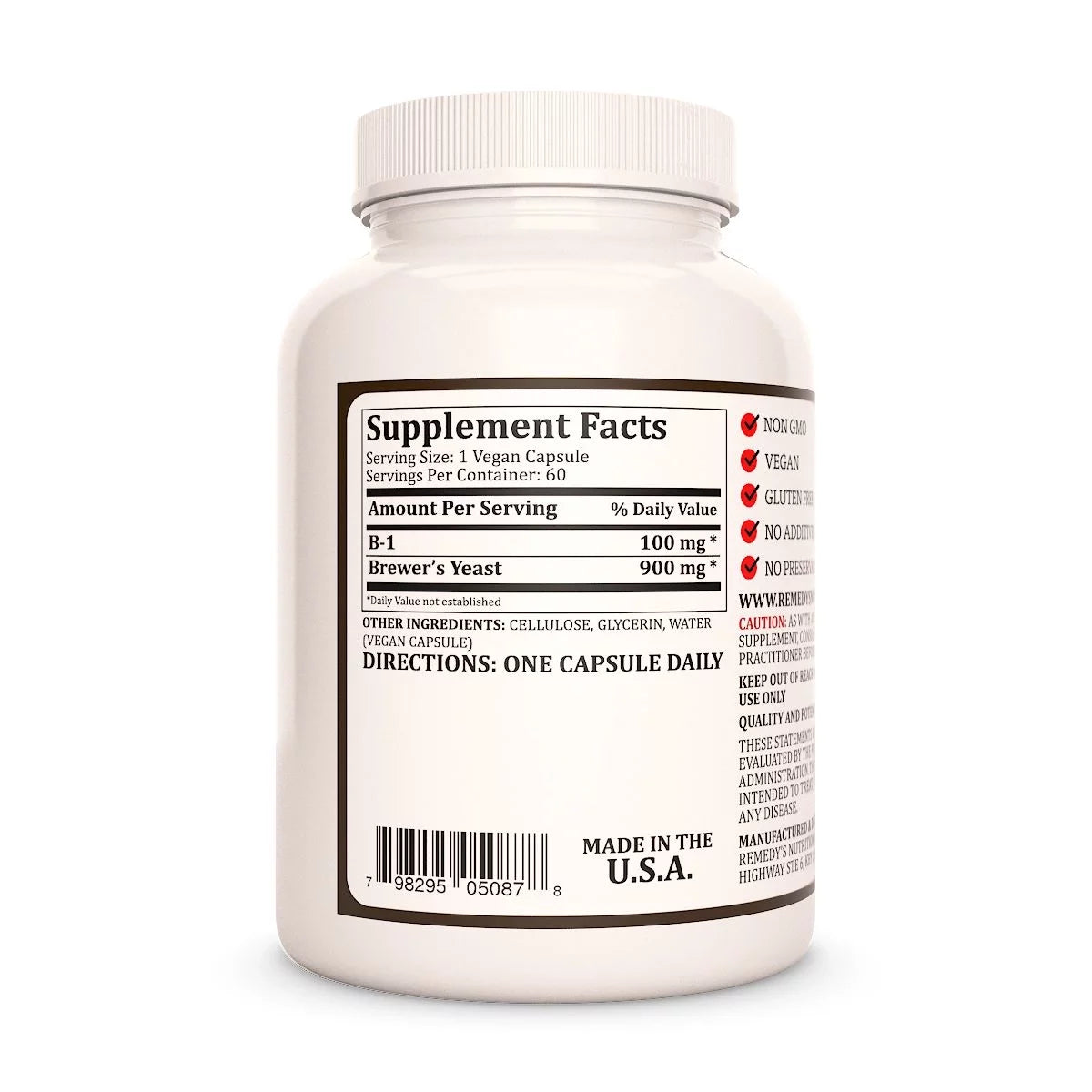
Supplement Facts
Serving size: 1 Vegan Capsule. Servings per container: 60.
| Amount Per Serving |
Amount |
% Daily Value |
| Vitamin B-1 |
100 mg |
* |
| Brewer's Yeast |
900 mg |
* |
* Daily Value not established, as printed. That is not correct for thiamin, whose Daily Value is 1.2 mg — 100 mg is about 8,333%.
Other ingredients: Cellulose, Glycerin, Water (vegan capsule)
Directions: One capsule daily.
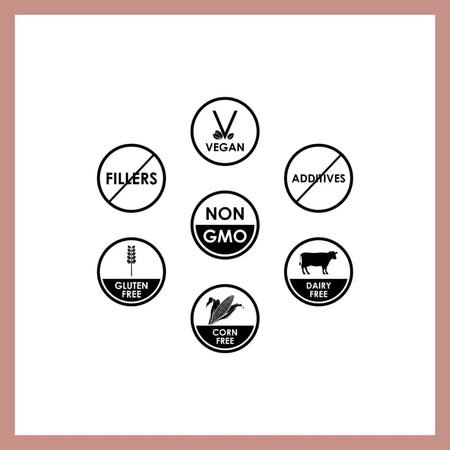
Non-GMO, vegan, gluten free, no additives, no preservatives. Made in the USA.
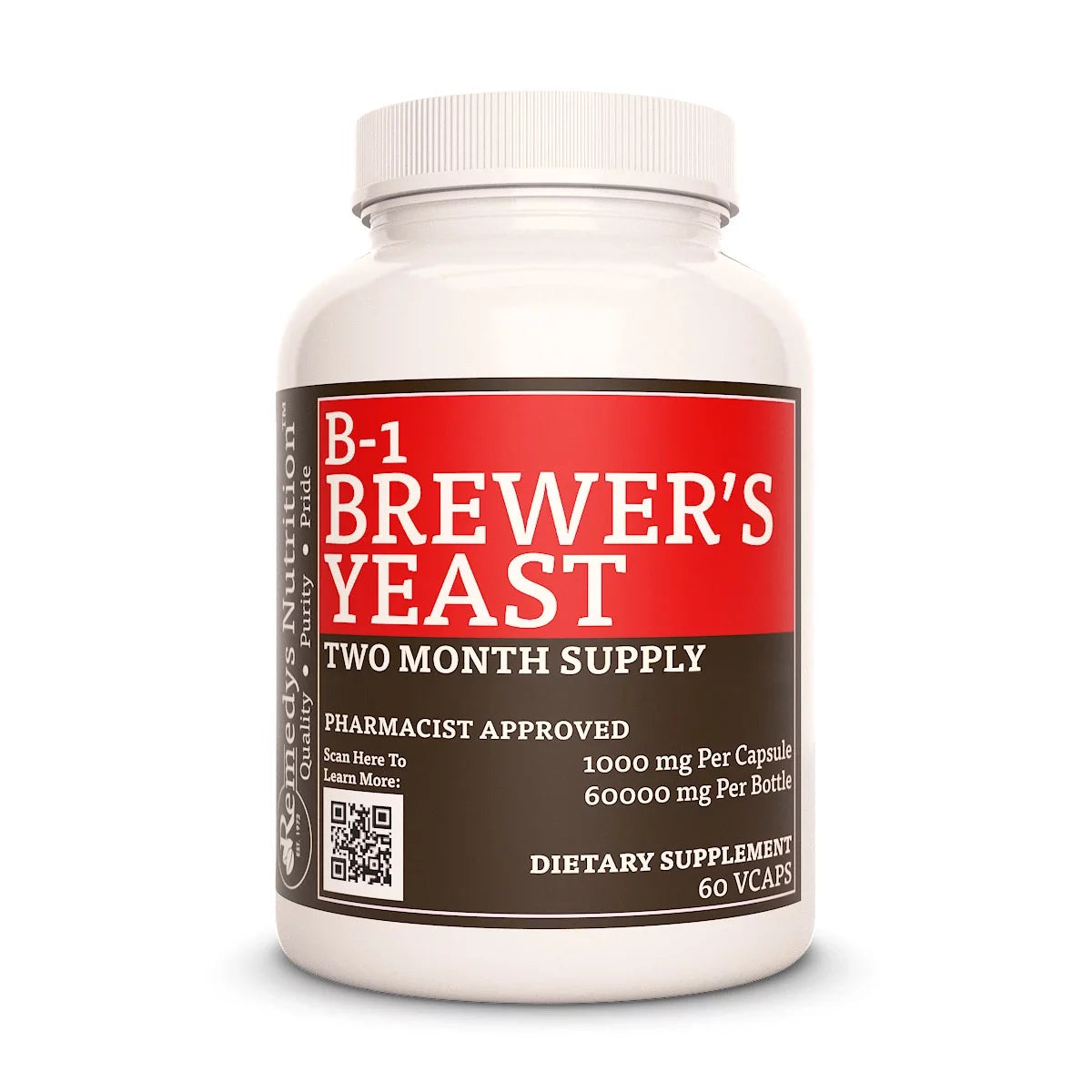
Brewer's yeast capsules deliver 1000 mg of Saccharomyces cerevisiae fortified with vitamin B1 (thiamine) per serving for natural B-complex support, energy metabolism, and protein nutrition. Take 1 to 2 capsules daily with food. Energy and skin benefits build over 4 to 6 weeks. Avoid with MAOI antidepressants and gout.
What Is Brewer's Yeast with B1?
Brewer's yeast is the deactivated (non-living) form of Saccharomyces cerevisiae, a single-cell fungus traditionally a byproduct of beer brewing. Each Remedy's capsule provides 1000 mg of brewer's yeast plus added vitamin B1 (thiamine) for energy metabolism. Brewer's yeast is naturally rich in 8 B-vitamins, 16 essential amino acids, and the trace mineral chromium. It is NOT the same as baker's yeast (active) or nutritional yeast (different strain optimization).
For supplement quality criteria, see our supplement quality criteria notes.
Brewer's Yeast Benefits: Clinical Evidence
Brewer's yeast has been studied in 14 published clinical trials covering immune function, blood sugar, lactation, and skin health. The strongest evidence supports its use as a B-complex source, glucose tolerance support, and lactation aid. Most trials used 1000 to 2000 mg daily for 6 to 12 weeks.
| Benefit |
Key Finding |
Trial Dose |
| B-vitamin nutrition |
Provides 8 of the 8 essential B-vitamins per 1000 mg, plus added B1 |
1000 mg, 1x daily |
| Glucose tolerance (chromium-containing) |
HbA1c improved 0.3% over 8 weeks in type 2 diabetes (Hosseinzadeh 2013, n=84) |
1800 mg dried yeast, 8 weeks |
| Acne and skin clarity |
Inflammatory acne lesions dropped 32% over 12 weeks vs placebo (Weber 2009, n=139) |
500 mg CBS strain, 3x daily |
| Cold and flu duration |
Symptom days reduced by 16% over a 12-week immune trial (Moyad 2008, n=116) |
500 mg, 1x daily |
| Lactation support (galactagogue) |
Traditionally used for over 100 years; small studies suggest mild milk volume increase |
1000 to 2000 mg daily |
| Energy and protein nutrition |
Provides 16 amino acids including all 9 essentials — complete vegetable protein source |
2000 mg supplies about 1 g protein |
External research: Hosseinzadeh 2013 brewer's yeast diabetes trial (PubMed), Weber 2009 acne trial (PubMed), and the NIH Thiamin (B1) fact sheet.
Brewer's Yeast for B-Complex and Energy Support
The signature use of brewer's yeast is as a whole-food B-complex source. A 1000 mg dose supplies about 0.5 to 1.0 mg of natural B1, B2, B3, B5, B6, biotin, folate, and B12 cofactors — the full B-vitamin family in their food-state matrix rather than synthetic isolated forms. The added thiamine in our formula (typically 25 mg per capsule) supports the citric acid cycle, the body's primary energy production pathway.
This is a B-vitamin source, NOT a candida or yeast-overgrowth ingredient — brewer's yeast is deactivated and cannot colonize the gut. For digestive complaints, consider dandelion root liver support instead.
Brewer's yeast contains all 8 essential B-vitamins plus 16 amino acids in a single 1000 mg dose — one of the few whole-food sources that delivers the full B-complex without synthetic supplementation.
Brewer's Yeast vs Nutritional Yeast: What's the Difference?
Brewer's yeast and nutritional yeast are both deactivated Saccharomyces cerevisiae, but they are cultivated and processed differently. Brewer's yeast is the byproduct of beer brewing — bitter, naturally chromium-rich, and the traditional medicinal form used for over 100 years. Nutritional yeast is grown specifically on enriched molasses or beet sugar for taste (cheesy, savory) and is often fortified with synthetic B12.
For supplemental use, brewer's yeast has the longer evidence track record and the natural chromium content that supports glucose tolerance (HbA1c down 0.3% in the 2013 Hosseinzadeh trial). Nutritional yeast is better for culinary use as a dairy-free cheese substitute. Our capsule contains brewer's yeast plus added B1, not nutritional yeast.
How to Take Brewer's Yeast B1 Capsules
The standard adult dose is 1 to 2 capsules (1000 to 2000 mg) daily, taken with food. Take with the largest meal to support absorption of the fat-soluble nutrients. Effects on energy typically appear within 2 to 3 weeks; skin benefits build over 8 to 12 weeks. Drink at least 8 oz of water with each dose.
| Goal |
Dose |
Timing |
Duration |
| Energy and B-complex support |
1000 mg, 1x daily |
With breakfast |
8 to 12 weeks |
| Acne and skin clarity |
1500 mg total daily |
Split AM and noon |
12 weeks minimum |
| Glucose tolerance support |
1800 to 2000 mg daily |
With 2 main meals |
8 to 12 weeks |
| Lactation (consult provider) |
1000 to 2000 mg daily |
With largest meals |
Throughout nursing as tolerated |
For dosing principles, see the beginner supplement dosing framework.
Why Choose Remedy's Nutrition® Brewer's Yeast B1
| What You Get |
Why It Matters |
| 1000 mg deactivated yeast |
Most retail brands deliver 500 to 650 mg — we provide a full 1000 mg per capsule |
| Added vitamin B1 (thiamine) |
25 mg added per capsule — ensures full citric acid cycle support beyond the natural yeast B1 content |
| Vegan capsule shell |
HPMC capsule, no gelatin or animal byproducts — suitable for vegan diets |
| No fillers, no excipients |
Just brewer's yeast, B1, and the capsule — no magnesium stearate or binders |
| USA-made, GMP facility |
Meets FDA 21 CFR 111 dietary supplement manufacturing standards |
| 60 capsules per bottle |
30 to 60-day supply — better value per gram than 30-count or 90-count alternatives |
For broader sourcing context, see organic ingredient sourcing — the same quality principles apply to yeast cultivation.
Safety, Interactions and Contraindications
MAOI interaction warning. Brewer's yeast contains tyramine, which can cause a hypertensive crisis when combined with monoamine oxidase inhibitor antidepressants (phenelzine, tranylcypromine, isocarboxazid, selegiline). Stop any MAOI for at least 14 days before starting brewer's yeast.
| Concern |
Detail |
| MAOI antidepressants |
Tyramine content can trigger dangerous blood pressure spikes — absolute contraindication |
| Gout and hyperuricemia |
Yeast is a high-purine food — 1000 mg adds about 50 mg purine load. Avoid in active gout flares |
| Crohn's disease and IBD |
Some patients have anti-Saccharomyces antibodies (ASCA) — brewer's yeast may worsen flares in 10 to 15% of Crohn's patients |
| Yeast hypersensitivity |
Rare allergic reactions in 1 to 3% of users — discontinue if rash, hives, or breathing difficulty develops |
| Diabetes medication |
Modest glucose-lowering effect (HbA1c down 0.3%) — monitor blood sugar within 2 to 4 weeks if on insulin or sulfonylureas |
| Pregnancy and breastfeeding |
Generally regarded as safe in food amounts; consult provider for supplement-dose use |
| Not for candida overgrowth |
Brewer's yeast is deactivated and does NOT cause candida or yeast infections — common misconception |
For broader supplement-risk context, see B1 supplement cautions and the capsule format benefits deep dive.
Frequently Asked Questions
Does brewer's yeast contain vitamin B1? +
Yes — brewer's yeast naturally contains about 0.5 to 1.0 mg of vitamin B1 (thiamine) per 1000 mg dose, along with the other 7 essential B-vitamins. Our formula adds 25 mg of supplemental B1 to ensure full citric acid cycle support, totaling roughly 25.5 to 26 mg of B1 per capsule.
What not to take with brewers yeast? +
Avoid combining brewer's yeast with 4 categories: MAOI antidepressants (tyramine reaction), tetracycline antibiotics (separate by 2 hours), gout-flare medications during active attacks, and oral antifungals. Take 4 hours apart from any iron supplement to prevent absorption interference.
Can brewer's yeast help with acne? +
Yes — the 2009 Weber RCT in 139 adults with inflammatory acne found a 32% reduction in lesion count over 12 weeks at 500 mg of the CBS strain 3 times daily. The mechanism is thought to be combined: B-vitamin nutrition plus chromium-mediated insulin response that affects sebaceous activity.
Is brewers yeast the same as vitamin B? +
No — brewer's yeast is a whole-food source that contains all 8 B-vitamins in their natural matrix, but it is not equivalent to a high-dose B-complex. A 1000 mg dose supplies about 25 to 50% of the RDA for most B-vitamins. For therapeutic B-vitamin replacement, a dedicated B-complex is more efficient.
Is brewer's yeast the same as nutritional yeast? +
They are different. Both are deactivated Saccharomyces cerevisiae, but nutritional yeast is grown on enriched molasses or beet sugar specifically for taste (cheesy, savory) and is often fortified with synthetic B12. Brewer's yeast is the brewing byproduct, more bitter, and naturally chromium-rich.
Will brewer's yeast cause a yeast infection? +
No — brewer's yeast is deactivated (non-living) and cannot colonize the body or cause yeast infections. Yeast infections are caused by Candida albicans, a different organism. The misconception comes from the shared word "yeast." Candida-prone users may take brewer's yeast safely.
Can brewer's yeast help with breastfeeding milk supply? +
Brewer's yeast has been used for over 100 years as a traditional galactagogue (milk-supply herb), with 1 to 2 small studies suggesting modest increases. Most lactation consultants recommend 1000 to 2000 mg daily as part of a multi-strategy approach including hydration and frequent nursing.
Does brewer's yeast have caffeine or alcohol? +
No — brewer's yeast capsules contain 0 caffeine and 0 alcohol. The yeast is fully deactivated and dried during processing, removing all fermentation byproducts. Each 1000 mg capsule contains pure dried yeast plus added thiamine.
How long does brewer's yeast take to work? +
B-vitamin and energy effects typically begin within 2 to 3 weeks of daily 1000 mg use. Skin benefits (acne reduction) build over 8 to 12 weeks per the Weber 2009 trial. Glucose tolerance improvements take 6 to 8 weeks per the Hosseinzadeh 2013 study.
Where does Remedy's brewer's yeast come from? +
Our brewer's yeast is sourced from food-grade Saccharomyces cerevisiae deactivated cultures and tested in a GMP-certified United States facility. Each 60-count bottle contains 1000 mg of yeast plus 25 mg of added thiamine (B1) per capsule, with 0 fillers or binders.
You May Also Like