What Is Alpha Lipoic Acid?
Alpha lipoic acid (ALA) is a naturally occurring antioxidant your mitochondria make in small amounts and use as a cofactor for pyruvate dehydrogenase, the enzyme that starts glucose conversion into cellular energy. Unlike single-solubility antioxidants, ALA dissolves in both water and fat, letting it recycle vitamin C, vitamin E, glutathione, and CoQ10 — extending the working life of all 4[1]Lipoic Acid Biological Activity and Therapeutic Potential — PubMed View source.
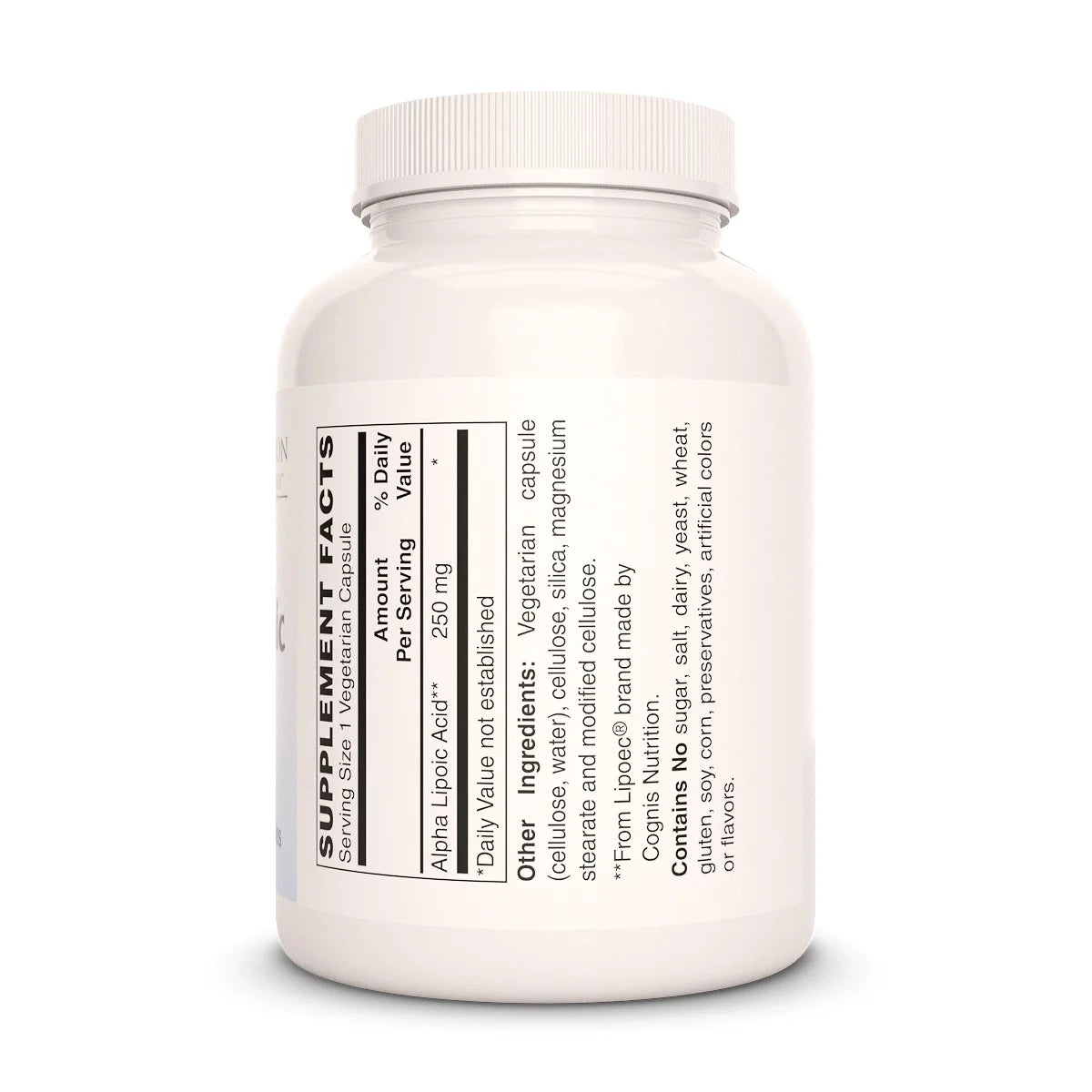
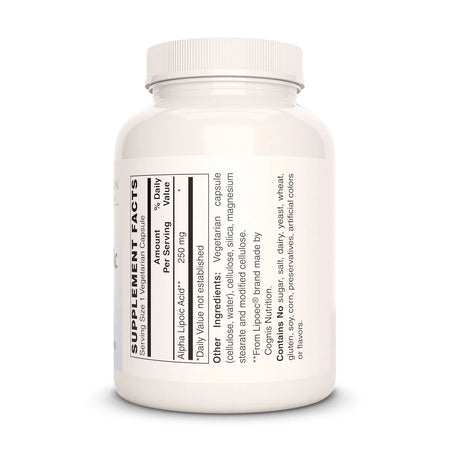
Supplement Facts
Serving size: 1 Vegetarian Capsule. Servings per container: -.
| Amount Per Serving |
Amount |
% Daily Value |
| Alpha Lipoic Acid (Lipoec® brand) |
250 mg |
* |
* Daily Value not established. From Lipoec® brand, made by Cognis Nutrition.
Other ingredients: Vegetarian capsule (cellulose, water), cellulose, silica, magnesium stearate and modified cellulose. Contains no sugar, salt, dairy, yeast, wheat, gluten, soy, corn, preservatives, artificial colors or flavors.
Directions: One capsule daily.
Vegetarian capsules. Made in the USA.
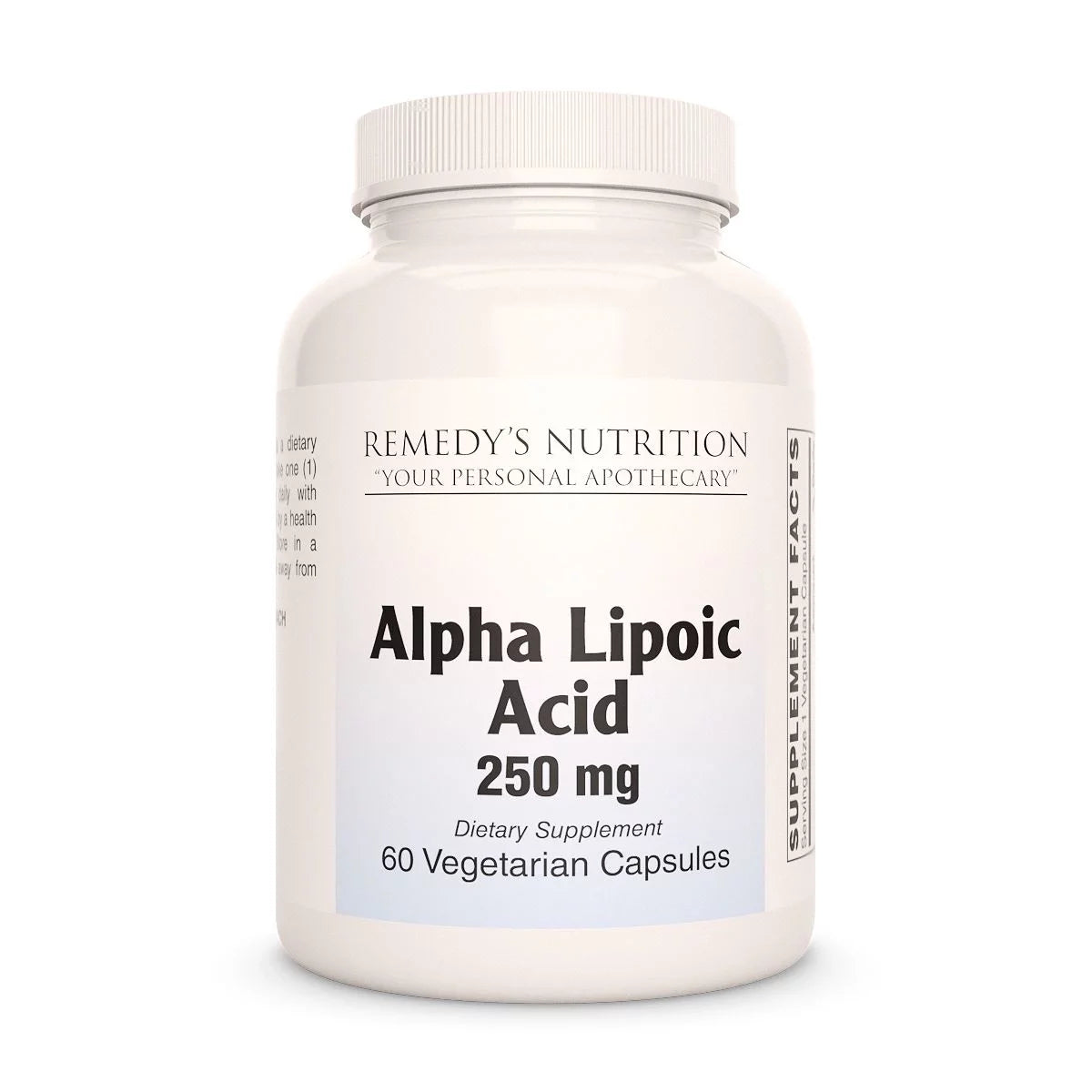
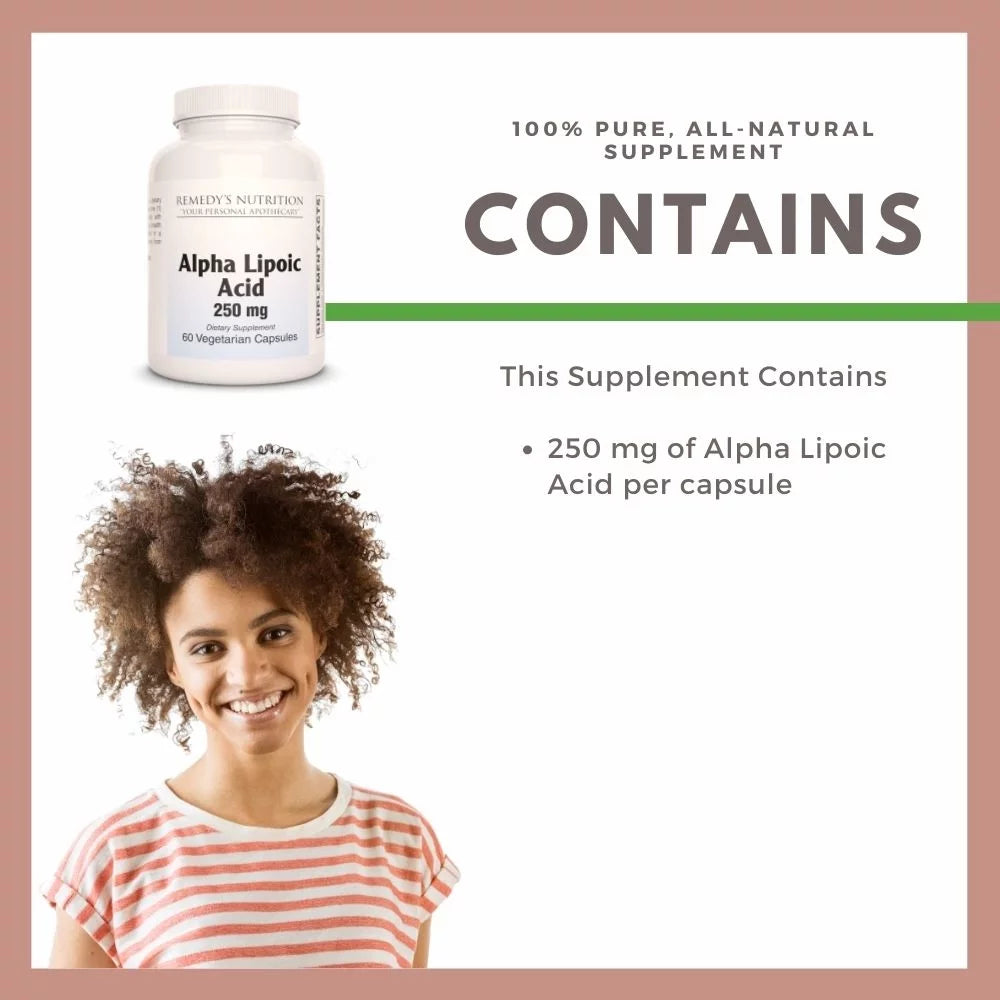
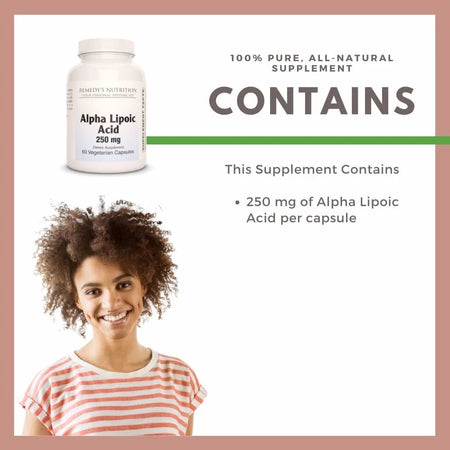
Remedy's Nutrition Alpha Lipoic Acid (ALA) 250 mg, 60 vegan capsules delivers the pharmaceutical-grade racemic R/S form in every capsule — the same form used in most of the clinical trials cited on this page[2]Lipoic Acid Physiological Role and Clinical Application — PubMed View source. One 60-capsule bottle is a 2-month supply at the 1-capsule daily antioxidant serving. For the full identity and history breakdown, see our complete alpha lipoic acid guide.
- Water- and fat-soluble — works inside and outside the cell membrane
- Cofactor for pyruvate dehydrogenase, the enzyme that starts glucose-to-ATP conversion
- Remedy's capsule: 250 mg racemic R/S ALA, 60 vegan capsules per bottle
- Most-studied use case: diabetic peripheral neuropathy, with over 30 years of German clinical data
ALA occurs in trace amounts in foods like spinach, broccoli, and organ meats, but food-form ALA is bound to protein and delivers only a fraction of a milligram per serving. Every clinical trial referenced on this page used a free-form, unbound supplement dose — the same delivery form as this 250 mg capsule.
Alpha Lipoic Acid Benefits: Clinical Evidence
Alpha lipoic acid's benefit profile is strongest for diabetic nerve health and blood sugar support, with 6-plus decades of German and international trial data behind those 2 uses specifically. The table below summarizes the highest-quality evidence by benefit area, including where the picture is mixed.
| Benefit Area |
Key Clinical Finding |
Dose Used in Trial |
| Diabetic Neuropathy (IV) |
The ALADIN trial found 600 mg IV ALA produced an 82.5% symptom-response rate vs 57.6% for placebo over 3 weeks[3]ALADIN Study: IV Alpha-Lipoic Acid for Diabetic Neuropathy — PubMed View source
|
100/600/1200 mg IV, 3 weeks |
| Diabetic Polyneuropathy (IV then oral) |
ALADIN III confirmed symptom improvement across a 7-month multicenter RCT using IV loading followed by oral maintenance[4]ALADIN III Trial: Alpha-Lipoic Acid for Diabetic Polyneuropathy — PubMed View source
|
600 mg IV then oral, 7 months |
| Diabetic Polyneuropathy (oral only) |
SYDNEY 2 — the key oral-only trial — found once-daily oral ALA improved sensory symptom scores in 181 patients over 5 weeks[5]SYDNEY 2 Trial: Oral Alpha-Lipoic Acid for Diabetic Polyneuropathy — PubMed View source
|
600/1200/1800 mg oral daily, 5 weeks |
| Diabetic Polyneuropathy (4-year oral, honesty flag) |
NATHAN 1 followed 460 patients for 4 years on 600 mg oral daily; the primary composite endpoint was NOT statistically significant (P=0.105)[6]NATHAN 1 Trial: 4-Year Oral Alpha-Lipoic Acid Outcome — PubMed View source
|
600 mg oral daily, 4 years |
| Blood Sugar / Insulin Sensitivity |
Early mechanism trial found ALA improved insulin-stimulated glucose disposal in people with type 2 diabetes[8]Alpha-Lipoic Acid Enhances Glucose Disposal in Type 2 Diabetes — PubMed View source
|
600-1800 mg, varied protocols |
| Weight and BMI |
A meta-analysis through January 2020 found ALA reduced body weight by 2.29 kg on average, with a more pronounced effect in women[14]Alpha-Lipoic Acid and Obesity Risk Meta-Analysis — PubMed View source
|
300-1800 mg daily, trial-dependent |
| Skin (honesty flag — topical, not oral) |
A positive anti-wrinkle result used a topical nanostructured ALA dispersion — not an oral capsule like this one[15]Topical Alpha-Lipoic Acid Anti-Wrinkle Efficacy — PubMed View source
|
Topical dispersion, not comparable to oral dose |
- Strongest evidence: diabetic peripheral neuropathy and blood sugar/insulin sensitivity
- Most positive neuropathy trials used IV dosing or IV-to-oral loading, not oral-only
- The largest 4-year oral-only trial (NATHAN 1, 460 patients) missed its primary endpoint
- Weight-loss effect is modest (-2.29 kg average) and more pronounced in women
460 patients were followed for 4 full years in the NATHAN 1 trial — the longest oral ALA study ever run for diabetic neuropathy — and the primary composite endpoint did not reach statistical significance (P=0.105) at 600 mg daily[6]NATHAN 1 Trial: 4-Year Oral Alpha-Lipoic Acid Outcome — PubMed View source.
For a benefit-by-benefit evidence grade — including the weaker skin and burning-mouth-syndrome uses — see our full alpha lipoic acid benefits breakdown.
How Alpha Lipoic Acid Works
ALA's antioxidant action runs through 2 pathways: direct free-radical scavenging in both watery and fatty cell compartments, and indirect "recycling" of vitamin C, vitamin E, glutathione, and CoQ10 back into their active forms. Its mitochondrial cofactor role feeds pyruvate dehydrogenase and alpha-ketoglutarate dehydrogenase, 2 enzyme complexes central to converting glucose into usable ATP.
This dual antioxidant-plus-cofactor mechanism is why ALA shows up in both blood-sugar research and nerve-health research — oxidative stress and impaired glucose metabolism are core drivers of diabetic nerve damage, and ALA addresses both simultaneously rather than working through a single narrow pathway.
- Racemic ALA (R,S-ALA)
- The naturally occurring 50/50 mixture of the R- and S- mirror-image forms (enantiomers) of alpha lipoic acid. This is the pharmaceutical-grade form used in the majority of published clinical trials, including ALADIN, SYDNEY 2, and NATHAN 1, and it is the form in this 250 mg capsule.
- R-ALA (R-enantiomer)
- The single "right-handed" isomer, marketed as more bioavailable. Pharmacokinetic data on that claim is mixed and age-dependent rather than a simple universal advantage.
- Enantiomer
- One of 2 mirror-image versions of the same molecule. R- and S-ALA have the same chemical formula but different 3D shape, which can change how enzymes and receptors process them.
- Pyruvate dehydrogenase
- A mitochondrial enzyme complex that converts pyruvate (from glucose breakdown) into acetyl-CoA, the entry point into the energy-producing citric acid cycle. ALA is a required cofactor for this step.
Alpha Lipoic Acid for Neuropathy and Nerve Health
Neuropathy is ALA's most-researched use, and the honest picture depends heavily on delivery route. The 3 trials with the clearest positive results — ALADIN, ALADIN III, and SYDNEY 2 — used intravenous dosing or an IV-to-oral loading protocol, not oral capsules from day 1[3]ALADIN Study: IV Alpha-Lipoic Acid for Diabetic Neuropathy — PubMed View source[5]SYDNEY 2 Trial: Oral Alpha-Lipoic Acid for Diabetic Polyneuropathy — PubMed View source.
NATHAN 1, the largest oral-only trial, followed 460 patients for 4 years on 600 mg daily; the primary composite endpoint missed significance, though a secondary impairment score improved[6]NATHAN 1 Trial: 4-Year Oral Alpha-Lipoic Acid Outcome — PubMed View source. A critical appraisal of the ALADIN/SYDNEY/NATHAN trial series called the evidence real but more modest than the IV studies alone suggest[7]Critical Appraisal of Alpha-Lipoic Acid for Diabetic Polyneuropathy — PubMed View source.
- ALADIN (IV): 82.5% symptom response at 600 mg over 3 weeks
- SYDNEY 2 (oral): sensory symptom improvement in 181 patients over 5 weeks
- NATHAN 1 (oral, 4 years): primary endpoint missed significance (P=0.105)
- Oral bioavailability runs roughly 30-40% and drops further when taken with food
The practical takeaway: oral ALA capsules like this one deliver a real but more modest effect than the headline IV trial numbers imply, and consistency over 8-12 weeks matters more than any single high dose. Our alpha lipoic acid neuropathy guide breaks down dosing protocols study-by-study for anyone using an oral alpha lipoic acid supplement for nerve support.
Alpha Lipoic Acid for Diabetes and Blood Sugar Support
ALA is a complementary blood-sugar tool, not a substitute for prescribed diabetes medication. In people with type 2 diabetes, ALA improved insulin-stimulated glucose disposal in early mechanism research, supporting its role as an add-on rather than primary therapy[8]Alpha-Lipoic Acid Enhances Glucose Disposal in Type 2 Diabetes — PubMed View source.
A broader review of ALA in type 2 diabetes management covers both glycemic and neuropathy endpoints together, reflecting how closely blood sugar control and nerve health are linked in this population[9]Alpha-Lipoic Acid in Type 2 Diabetes Management — PubMed View source. A 2022 meta-analysis of oral ALA supplementation trials in type 2 diabetes evaluated efficacy and safety together across the pooled data[10]Oral Alpha-Lipoic Acid for Type 2 Diabetes Meta-Analysis — PubMed View source.
- Never stop or reduce prescribed diabetes medication to add ALA alone
- Monitor glucose closely for the first 2 weeks after starting a 250 mg capsule
- Coordinate any insulin or sulfonylurea dose change with your provider
- ALA is complementary, not a replacement for A1c-lowering prescription therapy
Hypoglycemia risk is the most important safety issue for diabetics. ALA's blood-sugar-lowering effect can stack with insulin, sulfonylureas (glyburide, glipizide), and metformin, sometimes requiring a dose adjustment to avoid lows.
Anyone managing type 2 diabetes with medication should read our full alpha lipoic acid and blood sugar guide before adding a 250 mg alpha lipoic acid capsule to an existing regimen.
R-ALA vs Racemic Alpha Lipoic Acid: What You're Actually Getting
Remedy's Nutrition capsule contains racemic R,S-ALA, the pharmaceutical-grade 50/50 mixture used in the ALADIN, SYDNEY 2, and NATHAN 1 trials above — not an isolated R-ALA extract. A pilot pharmacokinetic study found the bioavailability advantage often claimed for R-ALA is age- and gender-dependent, not a consistent, universal win[11]Age and Gender Dependent Bioavailability of R-ALA vs Racemic ALA — PubMed View source.
One stabilized formulation, sodium R-lipoate, showed higher plasma concentration and absorption than standard R-ALA or racemic ALA — but that applies to this specific salt, not to R-ALA labeling generally[12]Plasma Pharmacokinetics of Sodium R-Lipoate — PubMed View source. A separate study in progressive multiple sclerosis patients directly compared GI tolerability and absorption between R-ALA and racemic ALA[13]GI Tolerability of R-ALA vs Racemic ALA in MS — PubMed View source.
| Factor |
Racemic ALA (this product) |
Isolated R-ALA |
| Clinical trial backing |
Used in ALADIN, ALADIN III, SYDNEY 2, NATHAN 1 |
Limited pharmacokinetic pilot data, not major RCTs |
| Bioavailability claim |
Standard, well-characterized |
Mixed, age- and gender-dependent in pilot data |
| Typical cost per mg |
Lower |
Higher, often 2-3x |
For most people, a standard racemic ALA supplement at an adequate dose delivers the same clinical benefit documented in the major trials, at a lower cost per milligram than isolated R-ALA. Anyone who wants the full pharmacokinetic study breakdown should read our R-ALA vs alpha lipoic acid comparison before switching to standard racemic ALA capsules.
Alpha Lipoic Acid for Weight Loss and Metabolism
ALA is a modest metabolic support tool, not a fat-burner. A meta-analysis pooling randomized trials through January 2020 found ALA supplementation reduced body weight by a weighted mean difference of 2.29 kg and BMI by 0.49 kg/m2 compared with placebo, with the effect more pronounced in women[14]Alpha-Lipoic Acid and Obesity Risk Meta-Analysis — PubMed View source.
That is a real but small effect — roughly 5 pounds on average across pooled trial data, not the dramatic fat-loss result some marketing implies. Waist-circumference change was duration-dependent, meaning longer trials showed more consistent results than short ones.
- Average weight change across pooled trials: -2.29 kg (about 5 pounds)
- Average BMI change: -0.49 kg/m2
- Effect more pronounced in women than men across the pooled data
- Best framed as a modest metabolic-support add-on to diet and activity, not a standalone solution
A daily alpha lipoic acid supplement paired with diet and activity changes is the realistic use case here. Our alpha lipoic acid weight loss guide covers the full study data and realistic timelines for this specific use.
Why Choose Remedy's Alpha Lipoic Acid
Remedy's Nutrition Alpha Lipoic Acid is a single-ingredient, filler-free formula built around the 250 mg dose that flexes from a daily antioxidant baseline up to the 600-1200 mg range used in neuropathy protocols when 2-4 capsules are combined. It keeps the label simple on purpose, with no proprietary blend hiding the actual ALA content per capsule.
| What You Get |
Why It Matters |
| 250 mg pharmaceutical-grade racemic ALA per capsule |
Matches the form and concentration used in the majority of the clinical trials on this page |
| 60 vegan capsules per bottle |
A 2-month supply at the standard 1 capsule daily antioxidant-baseline serving |
| No fillers, binders, or preservatives |
Clean label; nothing padding out the capsule beyond the active ingredient |
| Free from gluten, dairy, soy, and GMO ingredients |
Suitable for most common dietary restrictions |
| Vegan hypromellose capsule shell |
No gelatin, hypoallergenic alternative to standard capsules |
This flexible-dose alpha lipoic acid supplement lets a single SKU cover both the low-dose antioxidant use case and the higher, split-dose neuropathy or blood-sugar protocols described in the dosage table below, without needing to stock multiple strength options.
Alpha Lipoic Acid Dosage: How Much to Take Per Day
Clinical protocols for ALA span a wide range: 250 mg daily covers a general antioxidant baseline, while diabetic neuropathy studies used 600-1800 mg daily, most often split into 2-3 doses because ALA's plasma half-life is only 30-60 minutes[5]SYDNEY 2 Trial: Oral Alpha-Lipoic Acid for Diabetic Polyneuropathy — PubMed View source.
| Goal |
Daily Dose |
Timing |
Duration to Judge Effect |
| General antioxidant baseline |
250 mg (1 capsule) |
Empty stomach, 30 min before breakfast |
Ongoing daily use |
| Blood sugar / insulin support |
300-600 mg (1-2 capsules) |
Split before 2 meals, empty stomach |
8-12 weeks |
| Diabetic peripheral neuropathy |
600-1200 mg (2-4 capsules) |
Split across 2-3 pre-meal doses |
3-5 weeks for initial signal, 8-12 for full effect |
| Weight/metabolism support |
300-1800 mg, trial-dependent |
Split doses with diet/activity plan |
Several months, per meta-analysis data |
Take a 250 mg alpha lipoic acid capsule on an empty stomach roughly 30 minutes before a meal — food, especially a high-carbohydrate meal, can reduce absorption by 30-40%. Never exceed 1800 mg in a single day. Full details on splitting doses and timing are in our alpha lipoic acid dosage guide.
- Short plasma half-life (30-60 minutes) is why higher doses get split, not taken as one large dose
- Food reduces absorption 30-40%, especially high-carbohydrate meals
- Give any regimen at least 8-12 weeks before judging nerve or blood-sugar results
- 1800 mg/day is the upper limit used in clinical trials — do not exceed it
Safety and Drug Interactions
Hypoglycemia is the single most important interaction to know. ALA's blood-sugar-lowering action can stack with diabetes medications strongly enough to cause lows if doses are not adjusted with medical guidance.
| Drug Class |
What to Do |
| Insulin and sulfonylureas (glyburide, glipizide) |
Additive blood-sugar-lowering effect; monitor glucose closely and coordinate dose changes with your provider |
| Metformin and other oral hypoglycemics |
Similar stacking effect; start at the 250 mg baseline dose and track glucose for 2 weeks before increasing |
| Levothyroxine and thyroid medications |
ALA may affect thyroid hormone conversion; separate dosing times and have TSH monitored periodically |
| Chemotherapy agents |
Theoretical antioxidant interference with some regimens; consult an oncologist before use |
| Alcohol use disorder / thiamine (B1) deficiency risk |
ALA and thiamine share metabolic cofactor pathways; a targeted clinical citation for this specific interaction does not exist in the published literature, so treat it as a hedged mechanistic caution — supplement with B-complex and consult a provider if malnutrition is a concern |
Reported side effects across trials are generally mild: stomach upset, nausea, and occasional skin rash are the most common, usually resolved by lowering the dose or taking with a small amount of water[1]Lipoic Acid Biological Activity and Therapeutic Potential — PubMed View source. Anyone on diabetes medication or thyroid therapy should read our full alpha lipoic acid side effects guide for the complete drug-by-drug breakdown before starting clean, filler-free alpha lipoic acid capsules.
Who Should Avoid Alpha Lipoic Acid
ALA is well tolerated by most healthy adults at label doses, but several groups need medical clearance first or should avoid it entirely.
| Group |
Why It Matters |
| People on insulin or sulfonylureas |
Hypoglycemia risk from additive blood-sugar-lowering effects; needs medical supervision, not avoidance alone |
| Pregnant or breastfeeding people |
Insufficient safety data exists for this population; avoid without physician guidance |
| People on thyroid medication |
Potential effect on thyroid hormone conversion; separate dosing and monitor TSH |
| People undergoing chemotherapy |
Theoretical antioxidant interference with some treatment regimens; consult an oncologist first |
| Children and teens under 18 |
Not studied in this age group at supplement doses; keep out of reach of children |
If any of these apply to you, talk with your physician or pharmacist before adding a daily alpha lipoic acid supplement to your routine, particularly if you are already managing blood sugar with prescription medication.
Frequently Asked Questions
How much alpha lipoic acid should I take per day? +
250 mg covers a general antioxidant baseline for most healthy adults. Clinical protocols use 300-600 mg daily for blood sugar support and 600-1200 mg for diabetic peripheral neuropathy, split across 2-3 doses because ALA's half-life is only 30-60 minutes. Never exceed 1800 mg in a single day.
Is alpha lipoic acid good for diabetic patients? +
Yes, as a complementary tool alongside prescribed medication, not a replacement for it. Research shows ALA improves insulin-stimulated glucose disposal and has decades of German clinical data for diabetic neuropathy at 600-1800 mg daily. Anyone on insulin or sulfonylureas should monitor blood sugar closely for hypoglycemia risk.
Can alpha-lipoic acid reverse neuropathy? +
No, but it can reduce symptoms in many cases. IV trials like ALADIN showed an 82.5% symptom-response rate at 600 mg over 3 weeks, while the largest 4-year oral trial (NATHAN 1, 460 patients) missed its primary endpoint (P=0.105). ALA supports nerve comfort; it does not regenerate damaged nerve tissue.
How long does it take for alpha-lipoic acid to help neuropathy? +
Initial signals appear in 3-5 weeks with adequate oral dosing (600 mg or more daily), based on the SYDNEY 2 trial timeline. Full effects typically build over 8-12 weeks of consistent use. IV protocols in clinical settings show faster results than oral capsules taken at home.
Is R-ALA really better than standard alpha lipoic acid? +
Not consistently. A pilot pharmacokinetic study found R-ALA's bioavailability advantage is age- and gender-dependent rather than a universal win. Remedy's 250 mg capsule uses racemic R,S-ALA, the exact form used in the ALADIN, SYDNEY 2, and NATHAN 1 trials, typically at a lower cost per milligram than isolated R-ALA.
What cannot mix with alpha-lipoic acid? +
Insulin and sulfonylurea diabetes medications top the list because ALA's own blood-sugar-lowering effect can stack and cause hypoglycemia. Thyroid medications like levothyroxine and some chemotherapy regimens also warrant medical supervision. Never combine any of these 3 categories without provider guidance and glucose monitoring for the first 2 weeks.
Is alpha-lipoic acid hard on the kidneys? +
At standard doses up to 1800 mg daily used in clinical trials, ALA has not shown kidney toxicity in healthy adults or in the diabetic populations studied over periods up to 4 years (NATHAN 1). People with pre-existing kidney disease should still confirm any new supplement, including a 250 mg capsule, with their nephrologist first.
Does alpha-lipoic acid burn belly fat? +
Not directly. A meta-analysis of pooled randomized trials found ALA reduced average body weight by 2.29 kg (about 5 pounds) and BMI by 0.49 kg/m2 versus placebo, with waist-circumference change dependent on trial duration. This is a modest metabolic-support effect, not a targeted fat-burning action.
How long does it take for alpha-lipoic acid to lower blood sugar? +
Mechanism studies show measurable improvement in insulin-stimulated glucose disposal within weeks of starting 300-600 mg daily, though most trials evaluate glycemic markers at 8-12 weeks for a stable reading. Consistency at the right split dose matters more than any single high dose given ALA's 30-60 minute half-life.
Should I take alpha lipoic acid with food? +
No, take it on an empty stomach about 30 minutes before a meal. Food, especially a high-carbohydrate meal, can reduce ALA absorption by 30-40%. If you notice mild stomach upset on a truly empty stomach, a small amount of water or a very light snack is fine.
Can I take alpha lipoic acid with diabetes medication? +
Only with provider supervision. ALA's blood-sugar-lowering effect can stack with insulin, metformin, and sulfonylureas like glyburide or glipizide, sometimes desirable but requiring dose adjustments to prevent lows. Start at 250 mg, monitor glucose for 2 full weeks, and never stop a prescribed medication to substitute ALA alone.
What are the main side effects of alpha lipoic acid? +
The most common side effects reported across clinical trials are mild stomach upset, nausea, and occasional skin rash, all usually resolved by lowering the dose. Hypoglycemia is the more serious concern for anyone combining a 250 mg capsule with diabetes medication. Serious adverse events are uncommon at label doses up to 1800 mg daily.
Who should avoid alpha-lipoic acid entirely? +
People on insulin or sulfonylureas need medical supervision rather than outright avoidance, due to added hypoglycemia risk. Pregnant or breastfeeding people should avoid ALA because of insufficient safety data. Anyone undergoing chemotherapy or under 18 years old should also get physician clearance before starting a daily alpha lipoic acid supplement.
You May Also Like
-
Ceylon Cinnamon Bark 1000 mg — a complementary blood-sugar-support botanical that pairs with alpha lipoic acid's glucose-disposal mechanism
-
Ginkgo Biloba 1000 mg — a circulation-focused antioxidant that many nerve-health customers stack alongside a racemic alpha lipoic acid supplement