What Is Sea Buckthorn Oil?
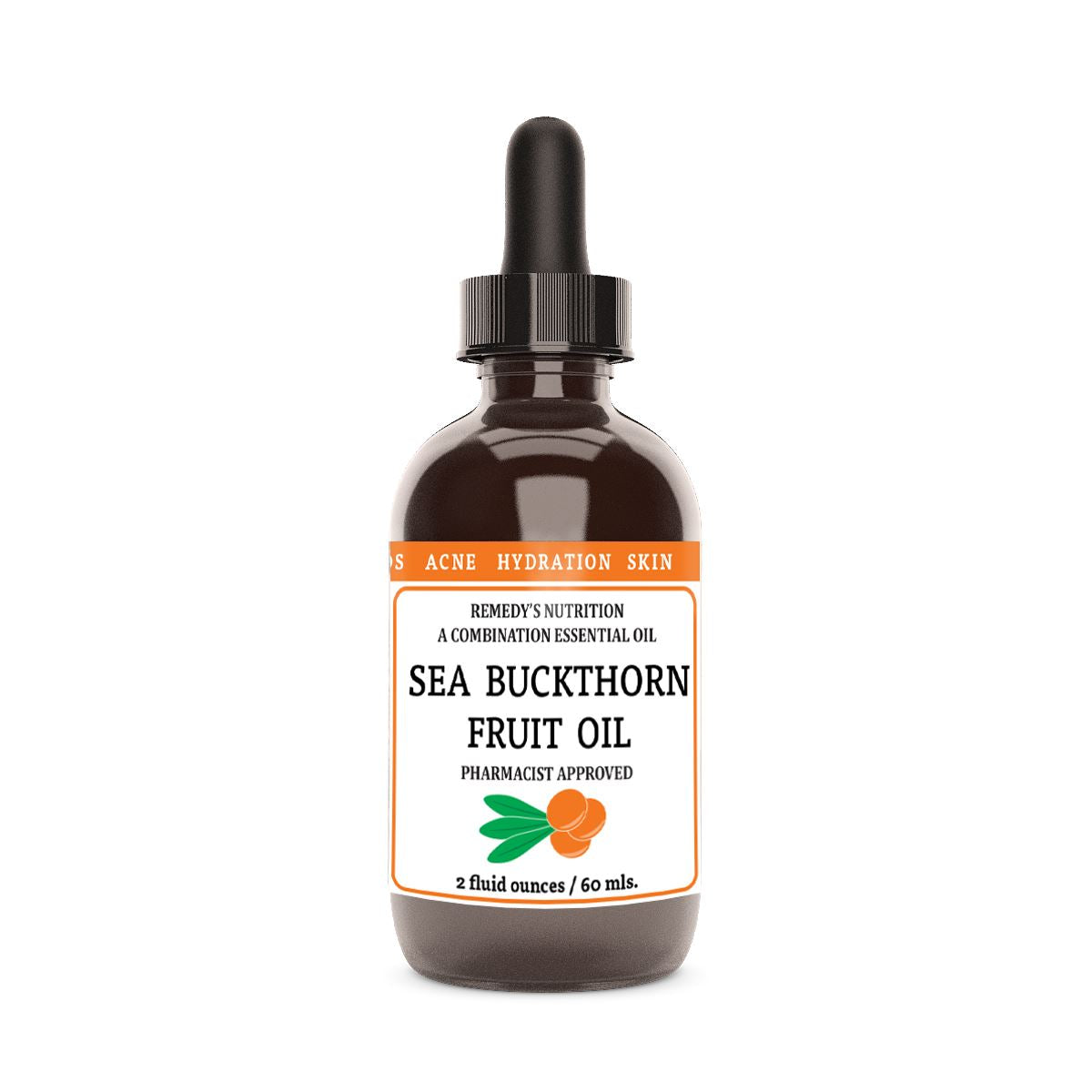
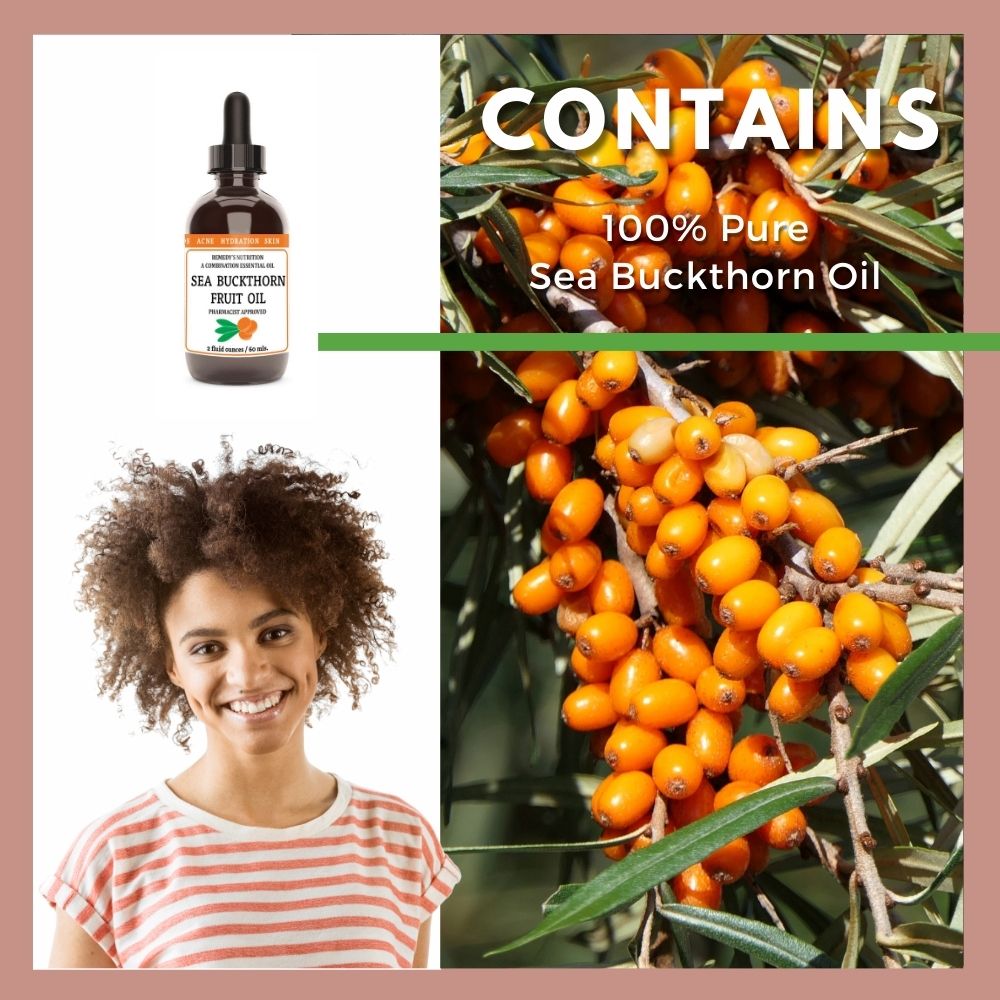
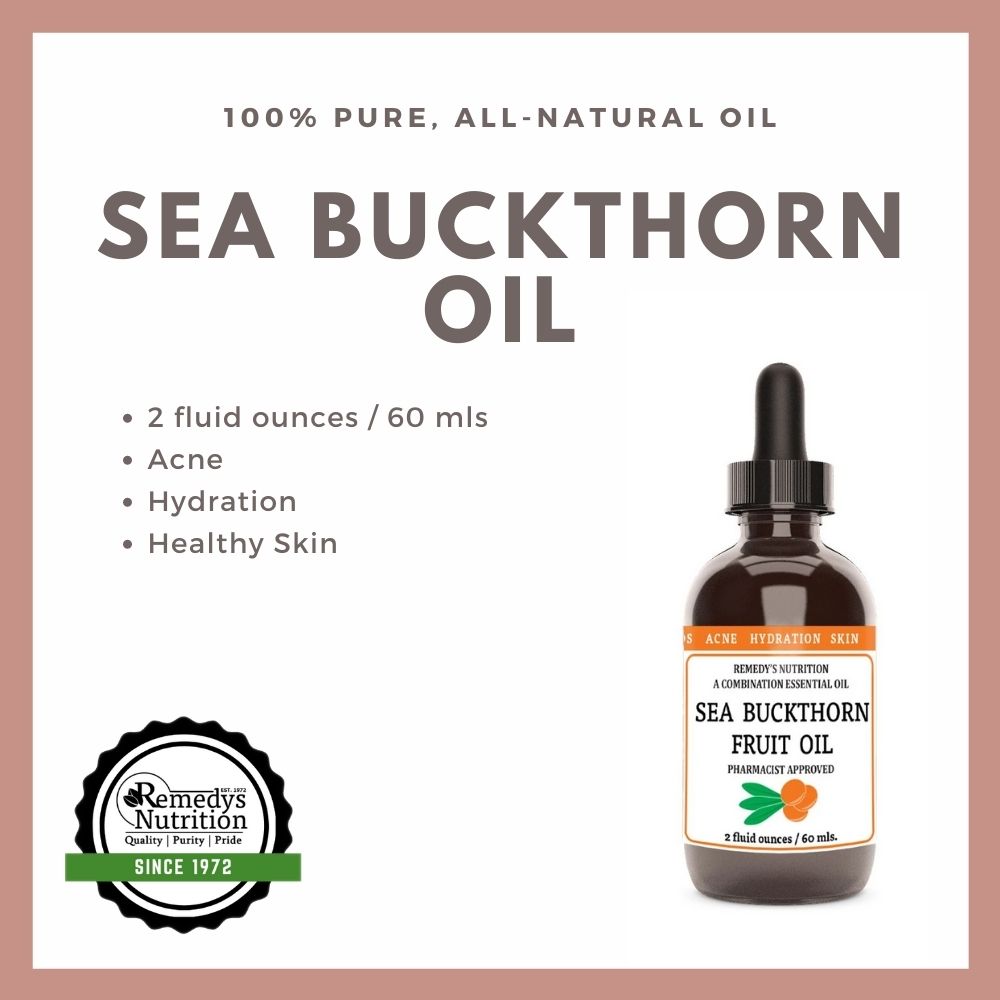
Sea buckthorn oil is cold-pressed from Hippophae rhamnoides berries. It contains the rare omega-7 palmitoleic acid at 20 to 40% in berry oil — one of the highest plant-source concentrations — alongside carotenoids, tocopherols, and a near 1:1 omega-3 to omega-6 ratio that distinguishes it from all other botanical skin oils.
What separates sea buckthorn from most botanical oils is the presence of omega-7 fatty acid — specifically palmitoleic acid. Most plant oils contain omega-3, -6, and -9 combinations, but omega-7 is rare in plant sources. Sea buckthorn berry oil can contain 20 to 40% palmitoleic acid, making it 1 of only a handful of plant-derived omega-7 sources available commercially.
The carotenoid content — beta-carotene, lycopene, zeaxanthin, and over 190 bioactive compounds identified in research — gives the berry oil its vivid orange color. This same pigment concentration is responsible for its potent antioxidant capacity and its well-documented effect on skin barrier repair and collagen support.
Sea Buckthorn Oil Benefits: Evidence Summary
The research base for sea buckthorn in dermatology and nutrition spans more than 3 decades of clinical and laboratory investigation. The 5 most evidence-supported benefits are summarized below.
| Benefit |
Key Finding |
Typical Use |
| Skin barrier repair |
Palmitoleic acid (omega-7) is a structural component of human skin sebum — topical application replenishes barrier lipids depleted by aging, UV, or environmental damage |
Dry, mature, or compromised skin; post-radiation care |
| Anti-aging and collagen support |
A 2009 double-blind trial showed sea buckthorn supplementation improved skin elasticity scores by approximately 20% over 90 days |
Fine lines, loss of firmness, sun-damaged skin |
| Rosacea and reactive skin |
Carotenoids and tocopherols reduce toll-like receptor activation associated with rosacea flares; small open-label studies report reduced redness and flushing episodes |
Rosacea, perioral dermatitis, reactive or red-prone skin |
| Eczema and dry skin conditions |
Omega-3 and omega-6 content supports prostaglandin synthesis; a 2011 study found improvement in dryness and itch in 45 of 49 participants using topical sea buckthorn |
Atopic dermatitis, psoriasis, xerosis |
| Scar and wound healing |
Beta-carotene accelerates re-epithelialization; faradiol-like triterpenoids reduce scar fibrosis markers in animal models; used clinically in burn centers in Europe since the 1980s |
Post-acne scars, minor burn aftercare, stretch marks |
How Sea Buckthorn Oil Works
Sea buckthorn oil works through 3 primary biological pathways. The first is direct lipid replenishment. Human skin sebum naturally contains palmitoleic acid (omega-7), and its concentration declines with age — by approximately 50% between the ages of 20 and 50 in most individuals. Applying sea buckthorn oil topically restores this fatty acid to the stratum corneum, where it integrates into the intercellular lipid matrix and reduces transepidermal water loss.
The second pathway is antioxidant quenching via carotenoids and vitamin E isomers. Sea buckthorn berry oil contains up to 300 mg of carotenoids per 100 g — among the highest concentrations of any plant oil. These pigments absorb free radicals generated by UV exposure and environmental pollution, protecting collagen and elastin fibers from oxidative cross-linking that produces fine lines and uneven texture.
The third pathway is prostaglandin modulation via its omega-3 and omega-6 balance. The 1:1 ratio of omega-3 to omega-6 in the seed oil is considered near-ideal for supporting anti-inflammatory eicosanoid production in skin tissue. This balance is associated with reduced inflammatory cytokine activity in keratinocytes, which is relevant for both acne-prone and eczema-prone skin.
Sea Buckthorn Oil for Anti-Aging and Skin Repair
For users focused on skin aging, sea buckthorn oil is one of the most nutrient-dense topical options available. Its combination of carotenoids, tocopherols (vitamin E), and omega-7 addresses 3 of the 4 structural changes that produce visible skin aging: barrier thinning, collagen loss, and oxidative damage. The 4th — loss of facial volume — is not addressable topically.
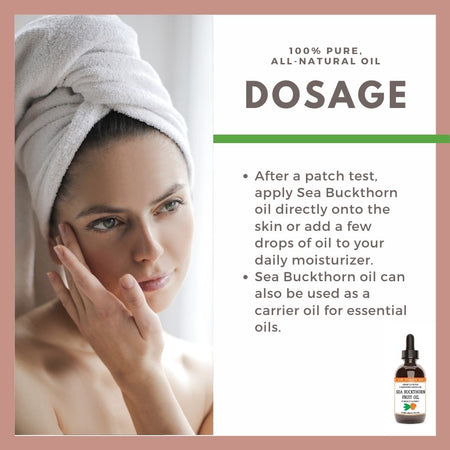
Applied at a 1 to 3% dilution in a light carrier such as almond carrier oil or jojoba, sea buckthorn delivers its carotenoids and omega-7 to the upper dermal layers. At this concentration, most users do not experience lasting orange tinting, though a temporary warmth in skin tone immediately after application is normal and fades within 15 to 20 minutes.
For more intensive repair — post-acne scarring, stretch marks, or skin recovering from radiation — a higher concentration of 3 to 5% applied nightly is often recommended in clinical naturopathic literature. At this level, application should be limited to the affected area rather than the entire face to minimize temporary staining.
Combining sea buckthorn with rose hip oil creates a complementary anti-aging pairing: rose hip contributes trans-retinoic acid precursors (vitamin A) while sea buckthorn adds carotenoids and omega-7 — 2 mechanisms that reinforce each other for collagen support and skin renewal.
Sea Buckthorn Oil for Rosacea and Reactive Skin
Rosacea affects approximately 415 million people worldwide and is characterized by persistent facial redness, flushing, and in some subtypes, visible broken capillaries. The condition involves dysregulation of innate immune signaling — specifically toll-like receptor 2 activation — and chronic low-grade inflammation in the dermal vasculature.
Sea buckthorn's carotenoid and tocopherol fraction helps modulate toll-like receptor signaling, which is why it appears in integrative dermatology protocols for rosacea management. It is not a cure — rosacea requires medical diagnosis and management — but as an adjunct topical it supports the compromised barrier that allows trigger penetration and provides antioxidant protection against flushing-related oxidative stress.
For rosacea-prone skin, a 1% dilution of sea buckthorn in a minimal-ingredient carrier is the recommended starting point. Apply to cooled skin after flushing episodes, avoiding the central nose where concentration is already highest. Adding 1 drop of frankincense essential oil per 10 ml of carrier is a combination used by several integrative practitioners for its complementary anti-inflammatory activity.
Important — orange staining: Sea buckthorn berry oil will stain skin, fabrics, and surfaces orange. Always dilute to 1 to 3% maximum for facial use and apply at night to allow absorption before contact with pillowcases or clothing. Using a white pillowcase during the first week of use helps gauge staining at your chosen dilution. At concentrations above 3%, temporary orange skin tone is expected and may persist for 1 to 2 hours.
Why Choose Remedy's Sea Buckthorn Oil
| What You Get |
Why It Matters |
| Cold-pressed from Hippophae rhamnoides berries |
Cold pressing preserves heat-sensitive carotenoids and tocopherols; heat extraction can destroy up to 40% of beta-carotene content |
| Rich orange color — indicator of carotenoid density |
Deep orange indicates high carotenoid concentration; pale or yellow oils have been bleached or are seed-only with lower pigment |
| Omega-7 (palmitoleic acid) as primary differentiator |
Omega-7 is found in fewer than 5 widely available plant oils at therapeutically meaningful concentrations; sea buckthorn berry oil contains 20 to 40% |
| No synthetic additives or antioxidant preservatives |
Added antioxidants such as BHT can compete with the oil's natural tocopherol activity and may irritate sensitive skin |
| 12-month shelf life from production date |
Carotenoid-rich oils oxidize faster than clear oils; a production-dated batch ensures potency within the active window |
How to Use Sea Buckthorn Oil
| Goal |
Dose |
Method |
Notes |
| General anti-aging (face) |
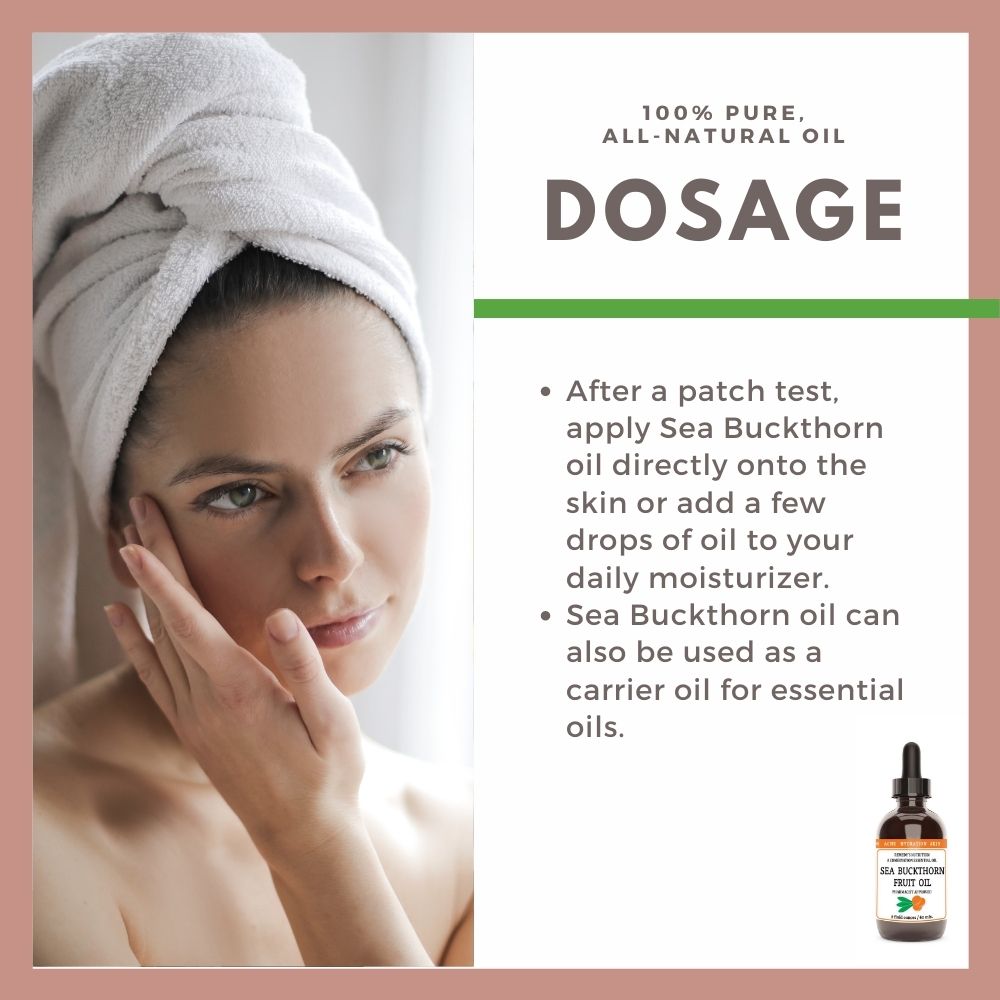
1 to 2 drops sea buckthorn in 5 ml carrier (1% dilution) |
Apply to clean face at night; press gently rather than rubbing to minimize flushing |
Allow 15 to 20 minutes before lying on pillow; temporary warmth in skin tone is normal |
| Intensive scar or repair treatment |
2 to 4 drops in 5 ml carrier (2 to 3% dilution) |
Apply nightly to targeted area only — not full face — for 4 to 8 weeks |
Combine with clary sage essential oil (1 drop per 10 ml) for added hormonal skin support |
| Rosacea support |
1 drop in 10 ml carrier (0.5% dilution) |
Apply to redness-prone areas after skin has cooled; start every other night for 2 weeks |
Patch-test 48 hours before facial use; avoid applying during active flushing episode |
| Body skin repair (eczema, dry patches) |
3 to 5 drops in 10 ml carrier (1.5 to 2.5% dilution) |
Massage into affected area 1 to 2 times daily; darker clothing recommended while using on limbs |
Staining on body skin is less of a concern than on face; still dilute to manage orange tint |
| Post-radiation skin care |
3% dilution in neutral carrier |
Under medical supervision; apply to irradiated area after each session once skin is clean and dry |
Do not apply to open or blistered skin; consult oncology team before use |
Sea Buckthorn Oil FAQ
What does sea buckthorn oil do for skin?+
Sea buckthorn supports 3 skin functions: barrier repair via omega-7 palmitoleic acid, antioxidant protection via up to 300 mg carotenoids per 100 g, and inflammation modulation via its near 1:1 omega-3 to omega-6 ratio. It is especially effective for dry, mature, or sun-damaged skin. Barrier-related dryness typically improves within 5 to 10 days of nightly use.
Will sea buckthorn oil stain my skin orange?+
At above 3% concentration, temporary orange tinting may last 1 to 2 hours. At 1% dilution (1 to 2 drops per 5 ml carrier), most users see only a slight warmth that fades within 15 to 20 minutes. Applying at night and allowing 30 minutes to absorb before bedding contact eliminates most staining at the recommended dilution.
What is omega-7 and why does it matter for skin?+
Omega-7 is palmitoleic acid, naturally present in human sebum at 10 to 20% of fatty acid composition. It is found at meaningful concentrations in fewer than 5 plant oils. Sea buckthorn berry oil contains 20 to 40% palmitoleic acid, allowing topical application to replenish a barrier lipid that declines by roughly 50% between ages 20 and 50.
How do I dilute sea buckthorn oil properly?+
For facial anti-aging, dilute to 1% by adding 1 to 2 drops to 5 ml of a neutral carrier such as almond or jojoba. For intensive body repair or scarring, a 2 to 3% dilution works well — add 3 to 6 drops per 10 ml of carrier. Never apply undiluted sea buckthorn to the face; the carotenoid pigment concentration at 100% will produce obvious orange staining that can persist for several hours.
Can sea buckthorn oil help rosacea?+
Sea buckthorn's carotenoids modulate toll-like receptor 2 signaling dysregulated in rosacea. Open-label studies report reduced flushing in approximately 60 to 70% of participants using it as an adjunct to standard care. Rosacea requires a dermatologist — this is not a treatment, but supports the compromised barrier. Start at 0.5% dilution every other night.
How long before I see results from sea buckthorn oil?+
Barrier-related dryness typically improves within 5 to 10 days of nightly use. Anti-aging effects on fine lines take 4 to 8 weeks, aligned with the 28-day skin cell turnover cycle. Rosacea redness reduction varies most; consistent open-label data suggests a minimum of 6 to 8 weeks of daily use before assessing impact.
How long does a bottle of sea buckthorn oil last?+
Shelf life is 12 months unopened. Once opened, use within 6 months — high carotenoid content makes it more prone to oxidation than clear oils. At a 1% dilution of 1 to 2 drops per application, a standard bottle provides 60 to 120 doses. A rancid or fishy smell indicates the omega fatty acids have oxidized; discard at that point.
What makes Remedy's sea buckthorn oil different from other brands?+
Cold pressing preserves carotenoids that degrade by up to 40% under expeller or solvent extraction. Remedy's uses berry oil rather than seed-only oil, delivering the full omega-7 and carotenoid profile. The deep orange color confirms no bleaching or deodorization — seed-only oils are pale, lower in beta-carotene, and contain less palmitoleic acid.
In-Depth Reading