What Is Glucosamine HCL?
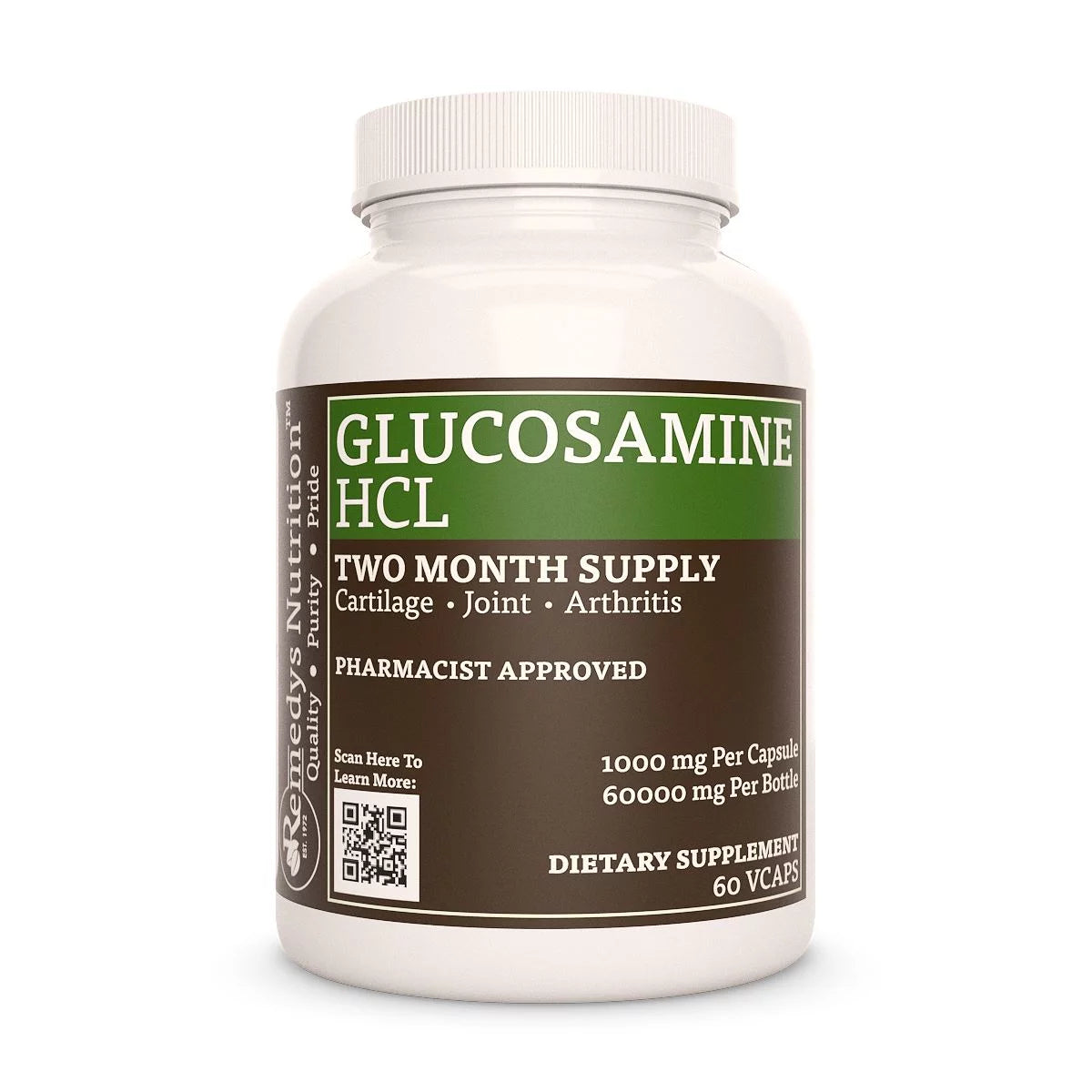
Glucosamine HCL (hydrochloride) is a single-ingredient glucosamine supplement that supplies the building blocks your body uses to maintain cartilage. The HCL form is notable for its higher glucosamine concentration per gram than the sulfate form, which means more glucosamine in a smaller capsule.
This is a clean, no-frills option for people who want glucosamine on its own, without chondroitin or MSM. It suits a simple daily routine and a shellfish-free preference when clearly labeled vegetarian.
-
Single ingredient — glucosamine HCL only, no extras
-
Higher concentration — about 83% glucosamine per gram
Quick Facts
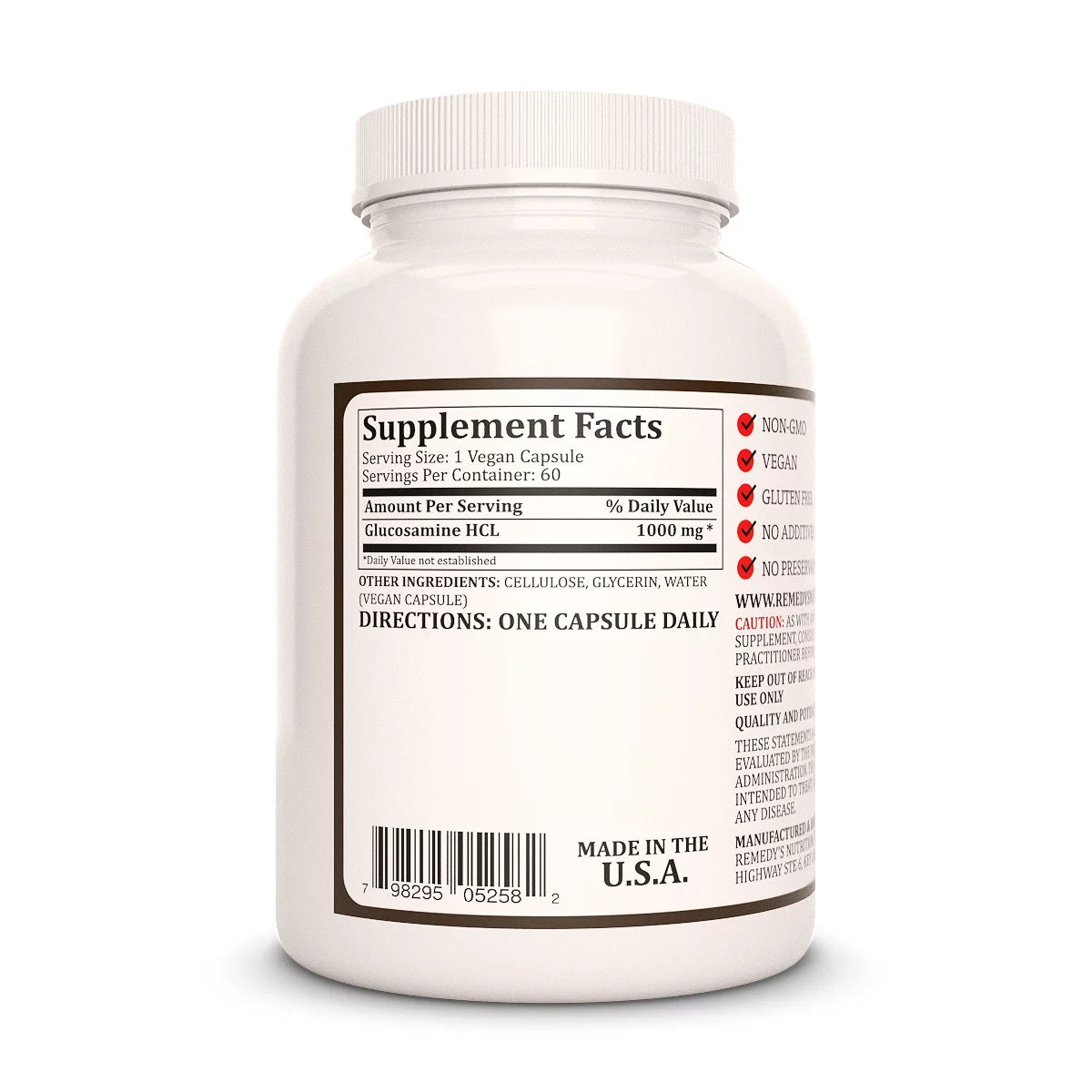
1,000 mg glucosamine HCL per vegan capsule, no fillers, made in the USA, 60 capsules per bottle. For a multi-ingredient option, see our Glucosamine Chondroitin & MSM.
HCL vs Sulfate: An Honest Comparison
This is the most important thing to understand before buying. Glucosamine HCL has a higher concentration per gram, but glucosamine sulfate has the stronger clinical-trial record — the long-term studies showing slowed joint-space narrowing used the sulfate form[1]Glucosamine Sulfate Slows Knee OA Progression — The Lancet (Reginster 2001) View source.
By contrast, an 8-week HCL trial did not show a significant pain reduction versus placebo[2]Glucosamine Hydrochloride for Knee OA Pain — J Rheumatol (Houpt 1999) View source. We tell you this plainly: if symptom evidence is your priority, sulfate is the better-supported choice; HCL appeals more to those wanting a concentrated, single-ingredient capsule.
| Factor |
Glucosamine HCL |
Glucosamine Sulfate |
| Glucosamine per gram |
Higher (~83%) |
Lower (~65% in stabilized salt) |
| Trial evidence |
Weaker; some null results |
Stronger; long-term progression data |
| Best for |
Concentrated single ingredient |
Symptom and structure evidence |
For a deeper breakdown, read our full glucosamine HCL vs sulfate comparison.
How Glucosamine HCL Supports Joints
Glucosamine is a natural compound your body uses to build glycosaminoglycans, a key component of cartilage. Supplementing supplies extra building blocks that may help support cartilage maintenance. In lab studies, glucosamine influences aggrecan and cartilage-degrading enzymes[3]Glucosamine Sulfate Modulates Aggrecan and MMP-3 — Osteoarthritis and Cartilage (Dodge 2003) View source.
What glucosamine contributes inside the joint:
-
Building blocks — raw material for cartilage glycosaminoglycans
-
Enzyme modulation — influences aggrecan and MMP-3 in lab studies
For the bigger picture on joint nutrition, see our complete joint health supplements guide and our overview of how glucosamine works in cartilage.
Glucosamine HCL for Knee and Joint Comfort
Glucosamine is most studied for knee osteoarthritis, which affects roughly 33 million US adults. Evidence for the HCL form specifically is mixed, so set realistic expectations: it may support comfortable, flexible movement over months of consistent use rather than acting as a fast painkiller.
Realistic expectations for the HCL form:
-
Gradual support — works over months, not days
-
Mixed evidence — an 8-week HCL trial showed no clear pain benefit
-
Best as maintenance — pair with weight management and movement
For symptom-targeted guidance, see our guides to the best supplements for knee pain and joint supplements for arthritis and osteoarthritis.
Why Choose Remedy's Glucosamine HCL
| What You Get |
Why It Matters |
| 1,000 mg glucosamine HCL per capsule |
Concentrated single-ingredient dose |
| Vegan capsules, no fillers |
Clean label with 0 artificial binders |
| 60 capsules per bottle |
Up to a 2-month supply at 1 capsule daily |
| No gluten, corn, or dairy |
Suitable for many restricted diets |
| Made in the USA |
Made under US quality-control standards |
Glucosamine HCL Dosage
Take 1 capsule daily, with or without food. Because most positive trials used 1,500 mg/day of glucosamine, some people split into 2 capsules[4]Safety and Efficacy of Glucosamine and Chondroitin in Humans — Nutrients (Baden 2025) View source. Consistency over 12 weeks matters most.
-
Maintenance: 1 capsule daily
-
Active joints / moderate OA: 1 to 2 capsules daily
-
Timing: morning or evening, with food if sensitive
See our full glucosamine dosage guide for detail on how much and when.
Who Should Choose Glucosamine HCL
Glucosamine HCL fits people who specifically want a concentrated, single-ingredient glucosamine and understand the evidence trade-off. If your priority is the strongest symptom and structure data, the sulfate form is the better-supported choice.
-
Single-ingredient preference — glucosamine only, no chondroitin or MSM
-
Want concentration — about 83% glucosamine per gram
-
Already know the trade-off — sulfate has the stronger trial record
If you would rather have the better-studied form combined with chondroitin, consider our Glucosamine + Chondroitin 2-in-1.
Safety and Side Effects
Glucosamine HCL is well tolerated, with side effects usually mild — nausea, heartburn, or constipation in a small share of users. The key interaction is with warfarin, where glucosamine has been linked to raised INR[5]Glucosamine-Warfarin Interaction Raises INR — Pharmacotherapy (Knudsen 2008) View source. Talk to a doctor first if you:
- Have a shellfish allergy (most glucosamine is shellfish-derived)
- Take warfarin or other blood thinners
- Are pregnant or breastfeeding
- Have surgery planned within 2 weeks
Read more about glucosamine side effects before you take it.
Frequently Asked Questions
Is HCL or sulfate the better form of glucosamine? +
HCL has a higher glucosamine concentration per gram, but sulfate has the stronger trial evidence. The long-term studies showing slowed joint-space narrowing over 3 years used the sulfate form. If symptom evidence is your priority, sulfate is the better-supported choice.
How long does glucosamine HCL take to work? +
Glucosamine works gradually, not overnight. Most people who respond need 8 to 12 weeks of daily use before noticing a change, with the full effect building over 12 to 24 weeks. It is not a fast-acting painkiller; consistency over months is essential.
How many capsules should I take? +
Take 1 capsule daily for maintenance. Because most positive trials used 1,500 mg/day, some people split into 2 capsules for active joints or moderate OA. Stay consistent for at least 12 weeks before deciding whether it helps you.
Is glucosamine HCL safe long-term? +
Yes for most healthy adults. Glucosamine has been studied for up to 36 months without major safety concerns, and side effects appear in under 5% of users. People with shellfish allergy, diabetes, or on warfarin should consult a doctor first.
Is it safe with a shellfish allergy? +
About 80% of glucosamine comes from shellfish shells, a concern if you are allergic. The molecule itself lacks the allergen protein, but cross-contamination is possible. If you have a shellfish allergy, choose a clearly labeled vegetarian glucosamine and check the allergen disclosure first.
Does glucosamine HCL affect blood sugar? +
Usually not. A 90-day trial in well-controlled type 2 diabetes found no rise in HbA1c. A small minority may see minor shifts. If you have diabetes, monitor your blood sugar for the first 2 weeks of daily use and talk to your prescriber.
Can I take it with ibuprofen? +
Yes for short-term use. Glucosamine and NSAIDs work on different pathways, so many people use this daily plus occasional ibuprofen for flares. Over 6 months, glucosamine is gentler than continuous NSAIDs on the gut and heart. Ask your doctor about chronic pain plans.
Should I stop before surgery? +
Yes. Stop at least 2 weeks before any planned surgery because glucosamine has mild blood-thinning potential. Tell your surgeon every supplement you take, and resume only once cleared, usually 1 to 2 weeks after the procedure.
Can I take it with warfarin? +
Only with medical supervision. Glucosamine has been linked to raised INR in warfarin users in case reports. If you take warfarin, do not start without your prescriber's approval and more frequent INR monitoring, at least for the first 2 to 4 weeks.
Should I take glucosamine HCL with food? +
It can be taken with or without food. Taking it with a meal can cut the chance of mild GI upset by roughly half in sensitive users. Many people take it with breakfast as the 1 daily dose they will not forget, which helps keep use consistent.
Do I need chondroitin and MSM too? +
Not necessarily. This is a 1-ingredient option. If you want water-holding support from chondroitin or inflammation support from MSM, our 3-in-1 formula adds both. Many people start simple with glucosamine and step up to a fuller formula after 12 weeks if they want more.
How does glucosamine help cartilage? +
Glucosamine supplies building blocks for glycosaminoglycans, a key part of cartilage. In lab studies it influences aggrecan production and cartilage-degrading enzymes. In people, the structural benefit is most evident with the sulfate form over 2 to 3 years of consistent use.
What is the difference vs your 2-in-1 formula? +
This HCL product is glucosamine only. The 2-in-1 adds chondroitin (the sulfate form) for water-holding support, and the 3-in-1 adds MSM on top. If you want the better-studied sulfate form combined with chondroitin, the 2-in-1 is a strong step up.
You May Also Like